Home Blog

Beyoncé, Taylor Swift, Weezer, The Go-Go’s and 21 More Recordings Enter the Library of Congress National Recording Registry

0

The Library of Congress has announced its 2026 class of National Recording Registry inductees, and the 25 selections span 70 years of American sound. From a 1944 novelty record to Taylor Swift’s blockbuster 2014 album ‘1989’, this year’s class is one of the most wide-ranging in the registry’s history.

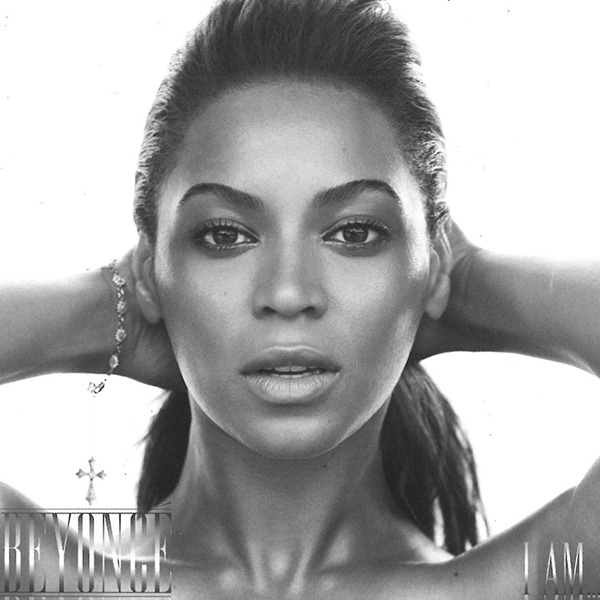
The class marks the first recordings by both Swift and Beyoncé to enter the registry. Swift’s ‘1989’ joins Beyoncé’s 2008 anthem “Single Ladies (Put a Ring on It)” as the newest additions chronologically. Weezer’s self-titled debut, known as ‘The Blue Album’, was among the most nominated recordings from the public, with fans submitting more than 3,000 nominations total this year.

Acting Librarian of Congress Robert R. Newlen made the final selections from a list compiled by the National Recording Preservation Board, describing the chosen recordings as “audio treasures worthy of preservation for all time.” NPRB chair Robbin Ahrold noted the class “beautifully captures the scope of the American experience” as the country approaches its 250th anniversary.

The Go-Go’s 1981 debut ‘Beauty and the Beat’ earned its place alongside a roster of genre-defining records. Belinda Carlisle called the induction a gift to music history. Bandmate Jane Wiedlin put it more directly: “There is literally no other all-female band that went No. 1 on the charts, play their own instruments and write their own songs. None.”

Chaka Khan reflected on the convergence that made her 1984 recording of “I Feel for You” something beyond a hit. “Prince’s genius, Stevie’s harmonica, Grandmaster Melle Mel’s rap, and whatever God put in me that day,” she said. “For the Library of Congress to say this recording belongs in the permanent collection of American sound heritage, that means it wasn’t just a hit, it was history.”

Vince Gill’s 1994 single “Go Rest High on That Mountain” also joins the registry, a song he wrote about the loss of his brother. “I’ve been writing songs for over 50 years, and if you asked me straight up what’s the one song you’d want to be remembered for, I would pick this one, hands down,” he said. The induction also marks a historic first: Johnny Cash’s ‘At Folsom Prison’ entered the registry in 2003, making this the first time a father and daughter have both been included.

The full class covers country, pop, jazz, Latin, folk, funk, R&B, classical crossover, video game composition, and a landmark sports broadcast. The sole non-musical selection is the 1971 radio broadcast of “The Fight of the Century” between Muhammad Ali and Joe Frazier at Madison Square Garden.

The National Recording Registry now holds 700 entries, representing roughly 0.01% of the Library’s 4 million collected recordings. Nominations for the 2027 class close October 1, 2026.

2026 National Recording Registry Inductees:

“Cocktails for Two” – Spike Jones and His City Slickers (1944)

“Mambo No. 5” – Pérez Prado (1950)

“Teardrops from My Eyes” – Ruth Brown (1950)

“Fly Me to the Moon (In Other Words)” – Kaye Ballard (1954)

“Put Your Head On My Shoulder” – Paul Anka (1959)

‘The Blues and the Abstract Truth’ – Oliver Nelson (1961)

‘Modern Sounds in Country and Western Music’ – Ray Charles (1962)

“Turn! Turn! Turn! (To Everything There Is a Season)” – The Byrds (1965)

“Amen, Brother” – The Winstons (1969)

“Feliz Navidad” – José Feliciano (1970)

“The Fight of the Century: Ali vs. Frazier” (March 8, 1971)

“Midnight Train to Georgia” – Gladys Knight and the Pips (1973)

‘Chicago’ Original Cast Album (1975)

“The Devil Went Down to Georgia” – The Charlie Daniels Band (1979)

‘Beauty and the Beat’ – The Go-Go’s (1981)

‘Texas Flood’ – Stevie Ray Vaughan and Double Trouble (1983)

“I Feel For You” – Chaka Khan (1984)

“Your Love” – Jamie Principle (1986) / Jamie Principle and Frankie Knuckles (1987)

‘Rumor Has It’ – Reba McEntire (1990)

‘The Wheel’ – Rosanne Cash (1993)

‘Doom’ Soundtrack – Bobby Prince, composer (1993)

“Go Rest High on That Mountain” – Vince Gill (1994)

‘Weezer (The Blue Album)’ – Weezer (1994)

“Single Ladies (Put a Ring on It)” – Beyoncé (2008)

‘1989’ – Taylor Swift (2014)
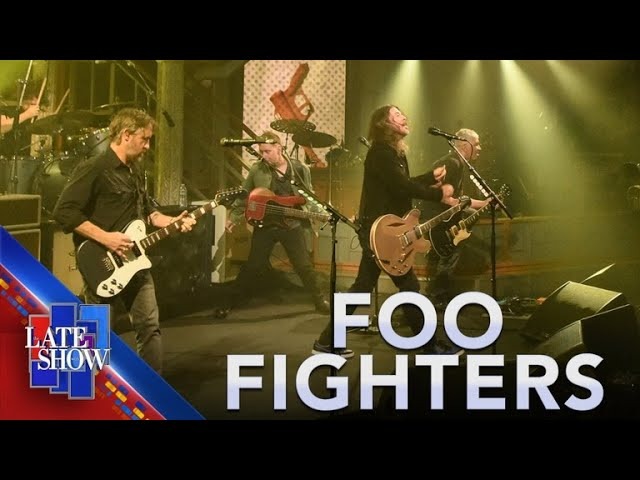
Foo Fighters Close the Loop on The Late Show With a Medley 31 Years in the Making

0

Some performances carry more history than a single night can hold. When Foo Fighters took the Late Show stage on May 4 for a web-exclusive medley of “This Is a Call” and “Everlong,” they weren’t just playing two songs. They were closing a 31-year chapter.

The medley bookends one of the most storied relationships between a band and a late-night host in television history. “This Is a Call” marked Foo Fighters’ first-ever national TV performance when they played it on Late Show with David Letterman on August 14, 1995. “Everlong” was the last song the band played on that same stage, during Letterman’s final episode on May 20, 2015.

Stephen Colbert introduced the set directly: “Performing a medley of the first song they played on this stage on The Late Show 31 years ago, ‘This Is a Call,’ and the last one on Letterman in 2015, ‘Everlong,’ ladies and gentleman, Foo Fighters.”

The connection between Grohl and Letterman runs deep. After debuting “Everlong” on the show in 1997, the band famously paused their international Sonic Highways tour to perform it again when Letterman returned from open-heart surgery in 2000. Letterman had credited the song with helping him through his five-week recovery. “When we found out he actually liked our music, that he actually was a fan, I was really blown away,” Grohl recalled. “It felt like something we had to do.”

Letterman ultimately introduced Foo Fighters on his final episode as “my favorite band, playing my favorite song.” That moment, and this new medley, sit together as one of the more genuinely moving throughlines in late-night history.

The timing carries extra weight. The Late Show with Stephen Colbert airs its final episode on May 21, making this Foo Fighters performance almost certainly their last on that stage, closing the full arc of the show’s run across both hosts.

The band is fresh off the April release of ‘Your Favorite Toy’, which also produced “Caught in the Echo” and “Window,” performed during the televised portion of their May 4 appearance. A North American stadium tour launches in August, with support from Queens of the Stone Age.

Nashville Punk Favorites Be Your Own Pet Hit the Road for Their Self-Titled Debut’s 20th Anniversary

0

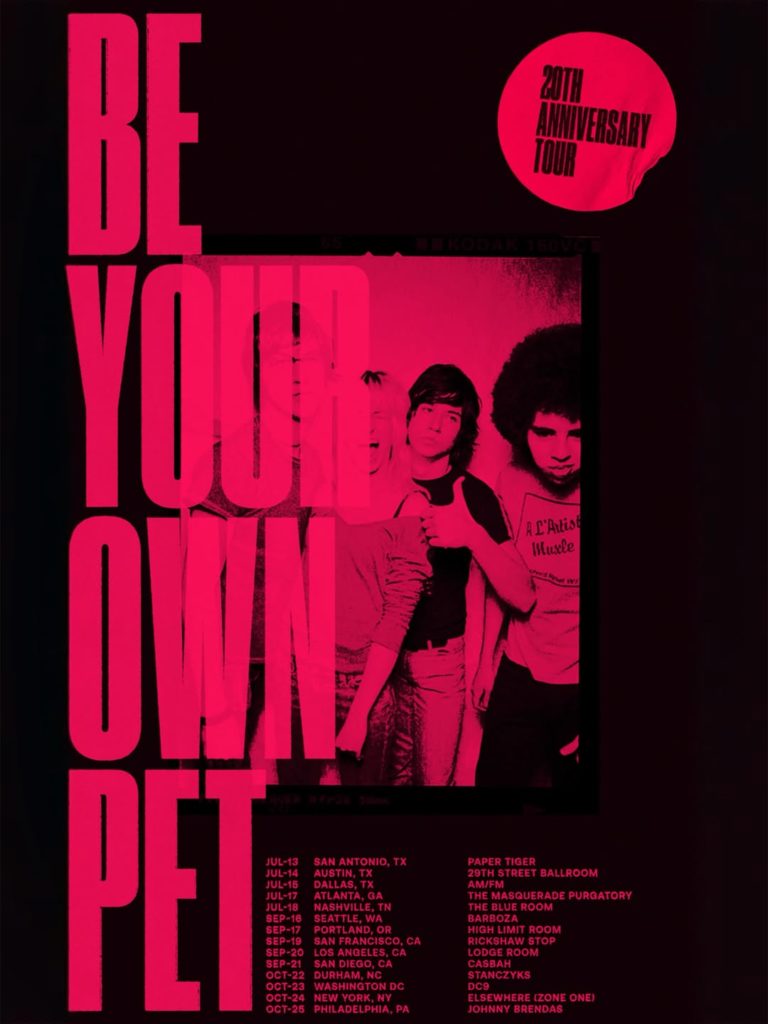
Be Your Own Pet are back, and they’re bringing the full debut with them. The Nashville punk favorites have announced a 14-date US tour celebrating the 20th anniversary of their self-titled debut album, running across three legs this summer and fall. Tickets for select dates go on sale Friday, May 15 at 10 AM local time.

The format is two sets per night, and the band is making it count. “We’re gonna do this a little different and play the first album in its entirety, the good, the bad, the lazy, and the ugly, and then a second set of all our favs from the other albums,” the band shared. Show-only merch described as “extra special and rare” will also be available exclusively at each date.

The run opens in July across the South and Southwest, hitting San Antonio, Austin, Dallas, Atlanta, and Nashville. September brings a West Coast leg through Seattle, Portland, San Francisco, Los Angeles, and San Diego. October closes things out on the East Coast with stops in Durham, Washington D.C., New York, and Philadelphia.

Be Your Own Pet first reunited in 2022 after 15 years away, a return that quickly gathered momentum and led to ‘Mommy’ in August 2023, their third album and first new music in over a decade. This tour adds another chapter to what has become a full-on comeback.

The self-titled debut remains a raw, urgent snapshot of a band operating on pure instinct, and hearing it performed front to back is the kind of live experience that doesn’t come around often.

2026 Tour Dates:

July 13 @ Paper Tiger, San Antonio, TX

July 14 @ 29th Street Ballroom, Austin, TX

July 15 @ AM/FM, Dallas, TX

July 17 @ The Masquerade Purgatory, Atlanta, GA

July 18 @ The Blue Room, Nashville, TN

September 16 @ Barboza, Seattle, WA

September 17 @ High Limit Room, Portland, OR

September 19 @ Rickshaw Stop, San Francisco, CA

September 20 @ Lodge Room, Los Angeles, CA

September 21 @ Casbah, San Diego, CA

October 22 @ Stanczyks, Durham, NC

October 23 @ DC9, Washington, D.C.

October 24 @ Elsewhere (Zone One), New York, NY

October 25 @ Johnny Brenda’s, Philadelphia, PA

Marshall and Jimi Hendrix Team Up for a Limited 60th Anniversary Collection Built for the Ages

0

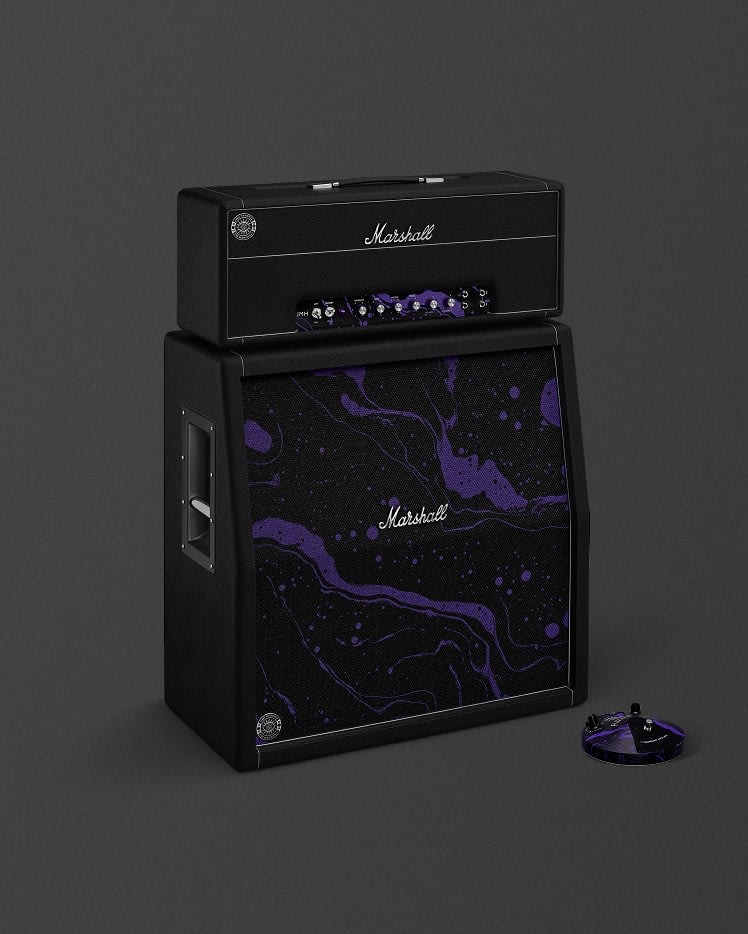
Six decades of Marshall and Hendrix, and the connection still crackles. Marshall has launched the Marshall x Hendrix 60th Anniversary Collection, a limited-edition stack built to honour one of the most storied relationships in rock history. Pre-orders are open now, with shipping beginning June 1.

The centrepiece is the 1959 Handwired Head, a 100W head delivering the same high-gain distortion tones Hendrix used to rewrite the rules of electric guitar. Paired with the 1960 AHW Handwired Angled Cabinet, loaded with 4 Celestion G12H 30 12-inch speakers, the combination recreates Hendrix’s signature Marshall stack setup, tight low-end, punchy mids, and stunning highs.

Completing the collection is the JMH-1 Fuzz Face Distortion, a limited-edition Dunlop pedal offered exclusively with the stack. It carries the same oil-in-water design as the rest of the collection and delivers the snarling, snappy tones that defined Hendrix’s legendary Isle of Wight performance.

The design language across the collection is unmistakable. Psychedelic, celestial artwork draws from the themes central to Hendrix’s creative world: space, the cosmos, and the colour purple. It’s visually striking and entirely fitting for a collection of this scale.

To mark the launch, recording artist Zach Person performed through the anniversary collection at Washington Hall in Seattle, one of the few remaining venues where Hendrix himself played. The performance demonstrates exactly what this gear can do in the right hands.

The Marshall x Hendrix 60th Anniversary Collection is priced at £3,799.99 and available for pre-order now at marshall.com.

Sarah Harmer, Begonia and Terra Lightfoot Headline Northern Lights Festival Boréal’s Bold 2026 Lineup

0

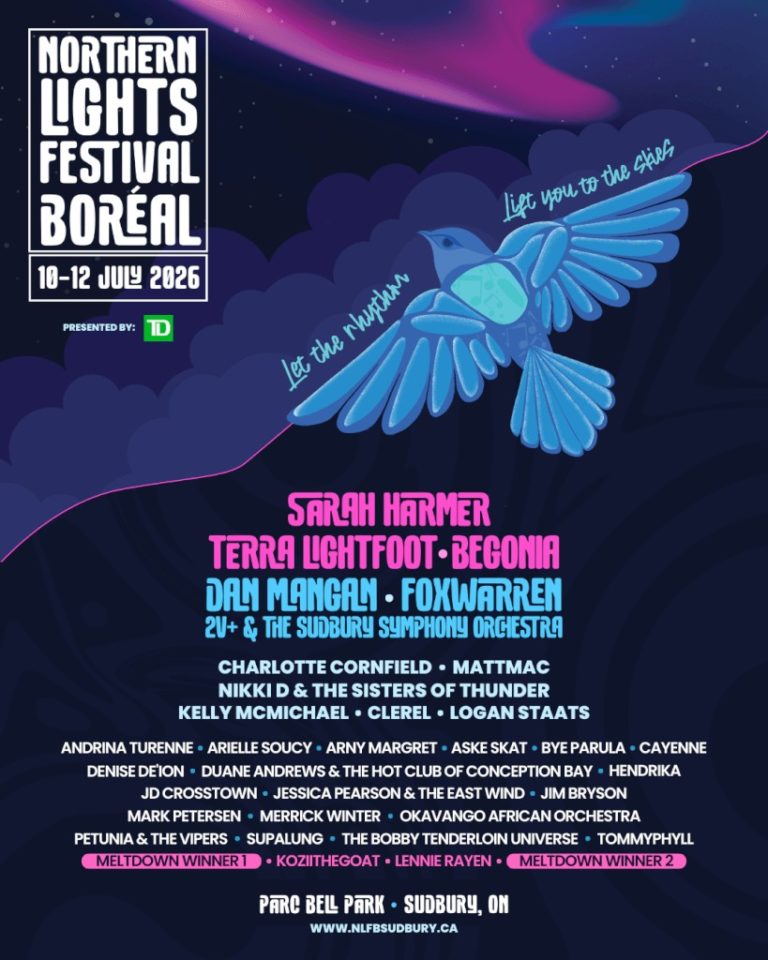
Northern Lights Festival Boréal turns 54 this summer, and it’s arriving at Bell Park in Sudbury, Ontario with one of the most ambitious lineups in the festival’s history. Running July 10–12, 2026, NLFB 2026 brings together Sarah Harmer, Begonia, and Terra Lightfoot as headliners, backed by a program that spans folk, roots, indie, hip hop, afrobeats, and global music, plus a classical crossover collaboration that nobody is going to see coming.

This is also the first lineup curated by incoming Artistic Director Kerri Stephens, and she wasted no time making a statement. “Every artist was carefully chosen to complement the lineup as a whole,” Stephens explains. “I can’t wait for attendees to rediscover old favourites and fall in love with new ones.”

Sarah Harmer opens Friday night, one of Canada’s most respected singer-songwriters, with decades of luminous folk and roots music behind her. Also on the Friday bill is a bold classical crossover concert pairing 2V+ with the Sudbury Symphony Orchestra, weaving 3 centuries of music into a single set.

Saturday belongs to Sarah Harmer and Dan Mangan, whose deeply human songwriting has long bridged folk, indie rock, and orchestral textures. Mangan’s presence here is exactly the kind of mid-card anchor that elevates an entire day’s programming.

Sunday closes the weekend with Begonia and Foxwarren. Fronted by Winnipeg vocalist Alexa Dirks, Begonia brings soaring, soul-infused indie pop built on fearless emotional honesty. She’s a JUNO Award winner and one of the most compelling live performers working in Canadian music today. Foxwarren, the celebrated collective led by Andy Shauf, rounds out the day with their signature blend of folk storytelling and experimental production.

Terra Lightfoot anchors Friday as a headliner, and her reputation as a commanding guitarist and powerhouse vocalist makes her a natural closer. Gritty blues-rock energy, sharp songwriting, magnetic stage presence: Lightfoot delivers every time.

Beyond the headliners, the full lineup stretches across genres and generations. Mattmac, Logan Staats, Okavango African Orchestra, Charlotte Cornfield, Petunia & The Vipers, Duane Andrews & The Hot Club of Conception Bay, Nikki D & The Sisters of Thunder, and more than a dozen additional artists fill out a schedule that genuinely rewards festival-goers who arrive early and stay late.

Full Festival Passes are on sale now at nlfbsudbury.ca. Full Pass $145, Youth $110. Kids 14 and under get in free with a ticket-bearing adult. Gates open at 5pm on July 10 and 11am on July 11 and 12. An accommodations package including 3 nights at the Best Western and 2 full festival passes is also available.

2026 Festival Dates:

Friday, July 10 @ Bell Park, Sudbury, ON

Saturday, July 11 @ Bell Park, Sudbury, ON

Sunday, July 12 @ Bell Park, Sudbury, ON

3x GRAMMY Winners Dan + Shay Get Personal on Their Sixth Studio Album ‘Young’

0

Dan + Shay have a new album coming, and they’re not holding anything back. The 3x GRAMMY Award-winning country hitmakers have announced ‘Young’, their sixth studio album, arriving August 21 and available for pre-order now. The title track is out tonight.

The duo made the announcement Thursday morning on TODAY, and the album arrives with immediate context. “Young is by far our most personal album yet, and we are beyond excited for our fans to hear it,” Dan Smyers and Shay Mooney shared. “Every song is inspired by a true story, and gives a real-time snapshot of exactly where we are in our lives.”

‘Young’ follows Smyers and Mooney through family, faith, and chasing dreams during one of the most active stretches of their 13-year career. Co-produced by Smyers alongside longtime collaborator Scott Hendricks, the album moves through the universal rhythms of life with the kind of directness that has defined their best work.

The lead single, “Say So,” is Top 30 and climbing at radio. The track addresses suicide prevention, a timely and important conversation, and its music video, conceptualized and directed by Smyers, gives viewers space to process and respond on their own terms. Dan + Shay perform “Say So” at the ACM Awards this Sunday, May 17, where they’re also nominated for Duo of the Year.

‘Young’ follows their critically acclaimed fifth studio album, ‘Bigger Houses’, which included the GRAMMY-nominated number one single “Bigger Houses” and added another chapter to one of the most decorated runs in modern country music.

The numbers behind this duo are staggering. More than 14 billion global streams. 139 worldwide career Multi-Platinum, Platinum, and Gold sales certifications. Eight American Music Awards for Favorite Country Duo, four ACM Awards for Duo of the Year, and 3 consecutive GRAMMY wins for Best Country Duo/Group Performance, a first in the category’s history.

“Say So” is a strong, emotionally grounded entry that shows exactly where Dan + Shay are as artists right now, confident, purposeful, and still swinging for something that matters.

Shrek Composers Harry Gregson-Williams and John Powell Get a 25th Anniversary Picture Disc

0

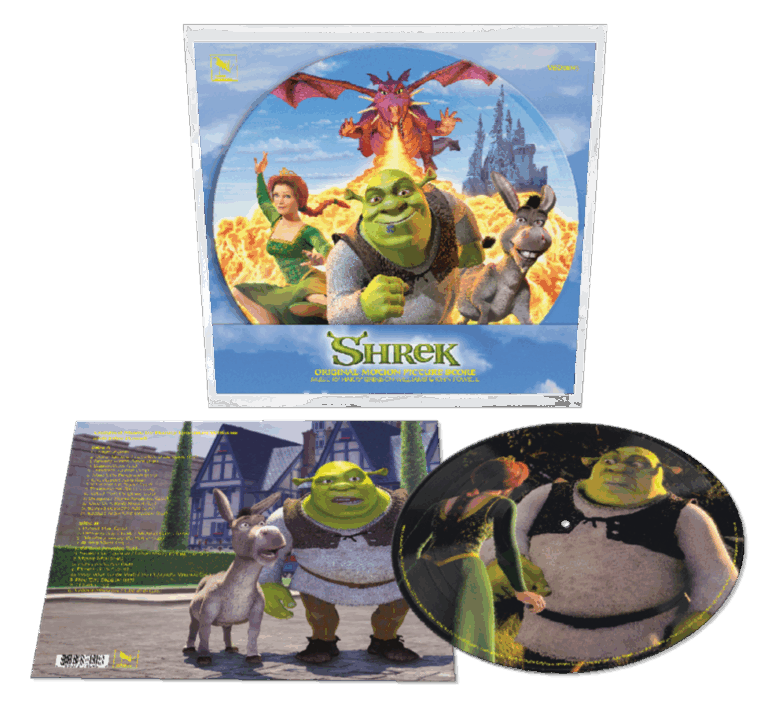
Twenty-five years on, the score for Shrek still hits differently. Varèse Sarabande and Craft Recordings are marking the milestone with a brand-new collector’s edition picture disc of Harry Gregson-Williams and John Powell’s original score, arriving August 28 and available for pre-order now.

The wide-release vinyl features newly designed character artwork, with a hero image of the film’s protagonists on side A and Shrek and Fiona on side B. A Barnes & Noble-exclusive variant offers alternate film imagery. A newly reissued CD edition drops alongside the vinyl, and the score is streaming now across digital platforms.

The release arrives as Universal Pictures returns Shrek to theaters for a special 25th anniversary screening run beginning May 15. Local listings are available through Fandango and cinema websites.

When Shrek landed on May 18, 2001, it redefined what animated filmmaking could do. Irreverent, emotionally sharp, and musically inventive, it launched a franchise that became the first animated series to cumulatively surpass $3 billion at the global box office. The score was central to that achievement.

Powell described the balancing act of writing the music with characteristic honesty. “Making music for this film required us to walk a thin line between sentiment and subversion, truthful emotion and sticky sap, comedy and action, fruits and nuts,” he recalled. “But like Shrek and Donkey, we got to the other side and wondered what all the hollering had been about.”

Co-director Vicky Jenson put it plainly: “Harry and John created for us some of the most heartbreakingly beautiful themes as well as some of the most exciting passages I can remember hearing in any film.” Co-director Andrew Adamson added that the composers embraced the film’s eclectic nature and delivered something “at the same time beautiful and magical.”

Music supervisor Marylata E. Jacob spoke to the specific challenge of weaving a score around the film’s now-iconic song selections. “Our composers, Harry and John, having great wit, extraordinary talent and a keen sense of adventure, blended these songs with their original underscore to create a one-of-a-kind musical journey,” she said.

Gregson-Williams, reflecting on the franchise’s staying power, pointed to the heart of it: the relationship between Fiona and Shrek. “It’s always been irreverent,” he said. “You believe you’re in a classic fairy tale, then something happens to make you realize that it’s not the case at all.” That tension is exactly what makes the score endure.

Pre-order the Shrek 25th Anniversary Edition Picture Disc and CD at VareseSarabande.com.

LP Tracklist:

Side A:

  1. “Fairytale”
  2. “Ogre Hunters / Fairytale Deathcamp”
  3. “Donkey Meets Shrek”
  4. “Eating Alone”
  5. “Uninvited Guests”
  6. “March Of Farquaad”
  7. “The Perfect King”
  8. “Welcome To Duloc”
  9. “Tournament Speech”
  10. “What Kind Of Quest”
  11. “Dragon! / Fiona Awakens”
  12. “One Of A Kind Knight”
  13. “Saving Donkey’s Ass”
  14. “Escape From The Dragon”

Side B:

  1. “Helmet Hair”
  2. “Delivery Boy Shrek / Making Camp”
  3. “Friends Journey To Duloc”
  4. “Starry Night”
  5. “Singing Princess”
  6. “Better Out Than In / Sunflower / I’ll Tell Him”
  7. “Merry Men”
  8. “Fiona Kicks Ass”
  9. “Fiona’s Secret”
  10. “Why Wait To Be Wed / You Thought Wrong”
  11. “Ride The Dragon”
  12. “I Object”
  13. “Transformation / The End”

Concepción Huerta Turns Magnetic Tape Into Memory on New Album ‘No Queda Nada, Todo Resuena’

0

Concepción Huerta works where sound becomes physical. The Mexico City and Berlin-based artist has announced her new album ‘No Queda Nada, Todo Resuena’, arriving July 3 via Signal Noise, and shared the complete B-side, “Todo Resuena,” as a first listen. Listen here.

The album consists of 2 side-long tracks built around a Buchla 200 system, magnetic tape, and 4-track cassette processes. Huerta draws directly from British composer Daphne Oram’s writing, specifically the idea that recorded sound functions as a form of written memory. Each pass through tape alters information. Each bounce reveals something shifting and unstable.

“Electricity printed onto magnetic tape,” Huerta explains. “It’s like photographic memory: materiality, light, and frequencies impregnated in the material. Memory as a signal that occurred in time.” That framework shapes everything on this record.

The album emerged from a residency at Elektronmusicstudion in Stockholm, where Huerta accessed a room of rare antique gear while studying sonology in The Hague. She altered patches with voltage and feedback, pushing the equipment into producing drifts, ghosts, and galactic variations from oscillation. “Multitrack machines function here as extensions of the body and time,” she says. “They are not neutral tools, but surfaces of friction where the signal wears away, duplicates itself, deviates.”

“Todo Resuena” is kinetic, whirring, and unmistakably alive. It captures Huerta at her most focused, turning tape processes into something genuinely visceral and transporting.

For more than a decade, the Guanajuato-born photographer and sound artist has worked at the intersection of the physical and the auditory. Her collaborators include Estrelle del Sol of Mint Field, Jiyoung Wi, Daniela Huerta, Eve Matin, and cellist Mabe Fratti, across multiple projects.

Pitchfork called her work “narrative-driven ambient and experimental music executed with grace and care,” and Bandcamp praised her “refined ability to create vast, chasmic sonic landscapes.” ‘No Queda Nada, Todo Resuena’ is her first full-length for Signal Noise, and it carries that weight.

Huerta is currently mid-way through a European tour. The run wraps May 23 at Cafe OTO in London alongside Mexico-born, New York-based electronic producer and DJ Debit. The album is available for preorder now.

Tour Dates:

7 May @ NoGlucoase Festival, Bologna, Italy

9 May @ NUMU, Baden, Switzerland

11 May @ FILEC, Berlin, Germany

13 May @ Divadlo 29, Pardubice, Czech Republic

14 May @ Synth Library, Prague, Czech Republic

15 May @ Punctum, Prague, Czech Republic

20 May @ Silent Green w/ Huerta Ensamble, Berlin, Germany

21 May @ RCA, Porto, Portugal

22 May @ Cosmos, Lisbon, Portugal

23 May @ Cafe OTO, London, UK

Tracklist:

01 “No Queda Nada”

02 “Todo Resuena”

The Milk Carton Kids Built ‘Lost Cause Lover Fool’ From the Room Up

0

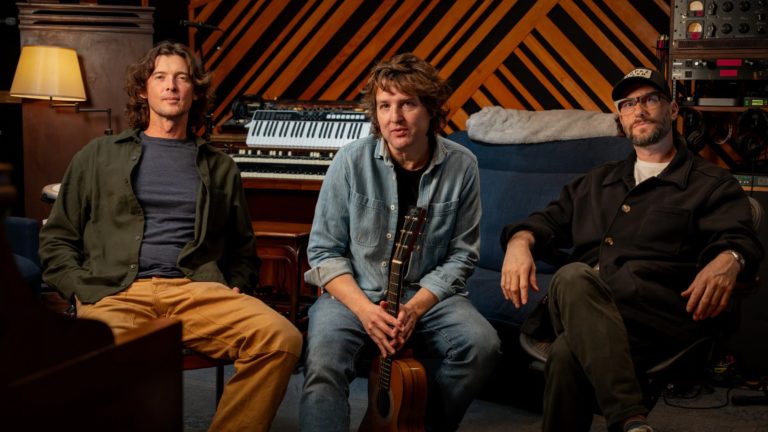
The Milk Carton Kids have always trusted the room. On their new album ‘Lost Cause Lover Fool’, that trust becomes the entire philosophy, and the result is a record that sounds like it was caught, not constructed.

The Los Angeles folk duo, Kenneth Pattengale and Joey Ryan, recorded the album using AEA N22 and N28 ribbon microphones alongside AEA TRP3 preamps, building a stereo image that places the listener directly inside the performance. Vocals and guitars were tracked live together, letting each element breathe and interact naturally within the space.

Recording engineer Jason Cupp drove that approach with precision. Rather than isolating sources and assembling them later, he focused on microphone placement, phase relationships, and how each element sat within the combined image. “There’s a real symbiotic relationship between the way things sound and the way the song gets performed,” Cupp explains. “They really inform each other.”

The process was iterative and deliberate. A song would be played through several times, with each pass allowing Cupp to refine placement and balance until the stereo picture felt complete and dimensional. The N22 covered electric guitar, mandolin, and kick drum. The N28 handled drums and guitar, contributing to an image that feels physically present.

Midway through sessions, aging vintage equipment began introducing noise and dropouts, pulling focus away from the music. Cupp suggested cutting the problem entirely. Pattengale reached out to AEA, and 12 channels of TRP3 preamps arrived the following morning. The old signal chain came out. The sessions moved forward.

“It was a really great and inspired choice of Jason’s, solving a problem but also making the record sound so much better,” Pattengale recalls.

Grammy-winning mastering engineer Kim Rosen noticed the difference at the finish line. After mastering, she sent a note to the band specifically highlighting the stereo image and how naturally the drums translated. For Pattengale and Ryan, that confirmation meant the spatial decisions made in the room had carried all the way through.

‘Lost Cause Lover Fool’ delivers exactly what the process promises: a warm, alive, fully realized sound that rewards close listening. The duo’s chemistry comes through in every exchange between guitar and voice, and the recording gives that chemistry room to resonate.

“It’s about finding the simple beauty in things and presenting them in a way that feels alive,” Pattengale says. That’s precisely what this album does.

82 Facts About George Lucas

0

5:37 AM

Claude responded: Happy birthday to George Lucas, who turns 82 today, born May 14, 1944, in Modesto, California.

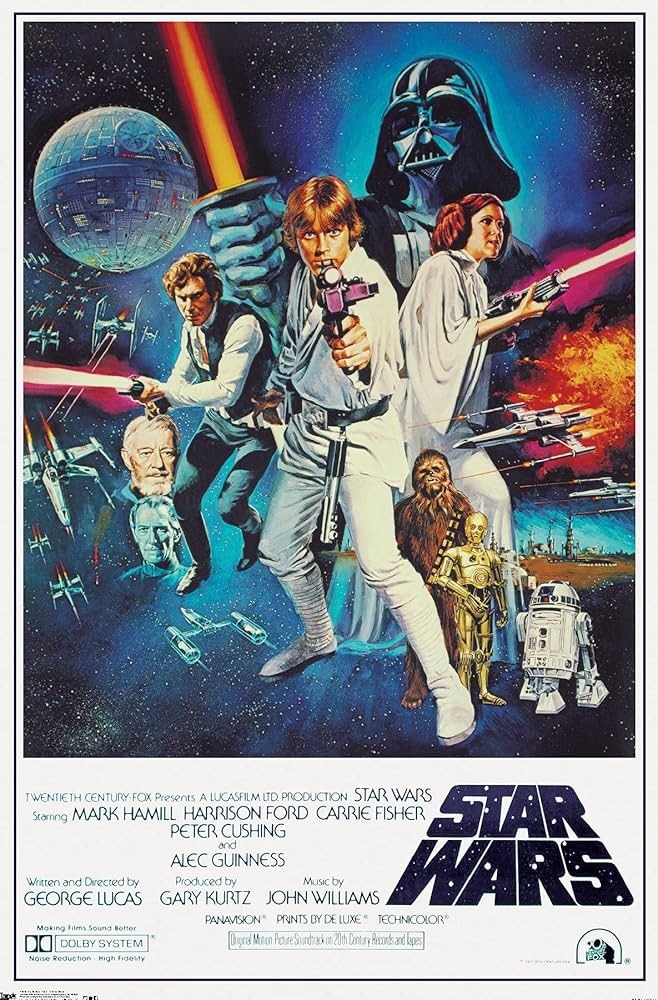
Happy birthday to George Lucas, who turns 82 today, born May 14, 1944, in Modesto, California. He is the man who created Star Wars, co-created Indiana Jones, founded Lucasfilm, Industrial Light & Magic, LucasArts, and THX, and in doing so didn’t just make movies but rebuilt the entire infrastructure of modern cinema from the ground up. His decisions were consistently contrarian: he traded a director’s fee for merchandise rights, self-funded films that studios refused to touch, invented the companies that invented the tools every blockbuster now depends on, and ultimately walked away from the franchise he built rather than lose control of it. Few filmmakers have left a mark so deep and so wide. Here are 82 facts in his honour.


82 Facts About George Lucas

In honour of his 82nd birthday, May 14, 2026


  1. George Walton Lucas Jr. was born on May 14, 1944, in Modesto, California, a small agricultural city in the Central Valley.
  2. Before film, his great passion was cars. He spent most of his high school years racing on underground circuits at fairgrounds and hanging around garages.
  3. On June 12, 1962, just days before his high school graduation, Lucas was broadsided while driving his Autobianchi Bianchina. His seatbelt snapped and ejected him, which saved his life.
  4. The crash left him with a punctured lung, severe internal injuries, and a temporary loss of heartbeat. He was initially presumed dead and required four months of recovery.
  5. The accident ended his racing ambitions entirely and redirected his energy toward filmmaking as a safer outlet for his drive and creativity.
  6. His father, George Sr., owned a small office supply business and expected his son to take it over at 18. Lucas refused flatly and declared he would be a millionaire by 30.
  7. He made that deadline early, becoming a millionaire at 28 after the success of American Graffiti, which grossed over $140 million on a budget of $777,000.
  8. Lucas attended Modesto Junior College, where he studied anthropology, sociology, and literature, and began shooting with an 8mm camera, including footage of car races.
  9. He transferred to the University of Southern California School of Cinematic Arts, one of the earliest universities to have a dedicated film school, on the recommendation of a childhood friend.
  10. At USC, he shared a dorm room with Randal Kleiser and became part of a tight clique of film students known as The Dirty Dozen, which included Walter Murch, Caleb Deschanel, John Milius, and Matthew Robbins.
  11. He met Steven Spielberg when Spielberg attended a USC screening in early 1968 and was impressed by Lucas’s student short Electronic Labyrinth: THX 1138 4EB.
  12. One of his earliest student films, Freiheit (1966), was a 2-minute-48-second silent short depicting a lone figure’s futile dash across a fortified border inspired by the Berlin Wall.
  13. His 1967 student short The Emperor was a 20-minute black-and-white documentary about a San Francisco radio DJ, produced in ten weeks using purely observational footage.
  14. Electronic Labyrinth: THX 1138 4EB won first prize in the dramatic category at the 1967 to 1968 National Student Film Festival, earning Lucas a scholarship from Warner Bros. to observe a film of his choosing.
  15. The film he chose for that scholarship was Finian’s Rainbow (1968), which happened to be directed by Francis Ford Coppola, who was already revered among film students as someone who had made it in Hollywood.
  16. In 1969, Lucas was one of the camera operators on the Rolling Stones concert film Gimme Shelter.
  17. He co-founded American Zoetrope with Coppola in 1969, intending to create a liberating environment for filmmakers outside the perceived oppressive control of the Hollywood studio system.
  18. His feature debut, THX 1138 (1971), was produced on approximately $777,000, a budget that Coppola reportedly chose partly because of his affection for the number seven.
  19. THX 1138 was shot entirely on location in the San Francisco Bay Area using industrial spaces to evoke a sterile, subterranean dystopia, with no studio sets.
  20. The film grossed only about $2.4 million worldwide, making it a commercial failure despite considerable critical praise for its atmosphere and formal ambition.
  21. The sound design for THX 1138 was crafted by Walter Murch, who layered mechanical drones, distorted voices, and amplified environmental noises to create a sense of alienating immersion.
  22. Lucas married film editor Marcia Lou Griffin on February 22, 1969, after they met while he was working at the United States Information Agency. She later won an Academy Award for editing Star Wars.
  23. American Graffiti (1973) was directly autobiographical, inspired by Lucas’s own teenage years cruising the streets of Modesto in hot rods, listening to rock and roll radio, and racing at drive-ins.
  24. The film’s soundtrack featured over 40 authentic early rock hits licensed for roughly $90,000 through flat-fee deals with record labels, and the soundtrack album sold millions of copies separately.
  25. American Graffiti earned five Academy Award nominations including Best Picture and Best Director for Lucas, and introduced Harrison Ford to the world in one of his earliest significant roles.
  26. Lucas used his profits from American Graffiti, along with a mortgage on his home, to fund post-production on Star Wars, bypassing studio interference by financing it himself.
  27. He originally wanted to adapt the Flash Gordon serials he loved as a child. When he couldn’t secure the rights, he created his own space opera instead.
  28. Lucas drafted a 13-page treatment titled The Star Wars in April 1973, which he then pitched to multiple studios, receiving rejections from nearly all of them.
  29. Only Alan Ladd Jr. at 20th Century Fox, who admired American Graffiti, pushed through a production and distribution deal. It would go on to restore Fox to financial stability after a string of failures.
  30. Star Wars was heavily influenced by Akira Kurosawa’s samurai films, particularly The Hidden Fortress (1958), as well as Spaghetti Westerns and classic sword-and-sorcery fantasy.
  31. Lucas drew on Joseph Campbell’s monomyth framework in The Hero with a Thousand Faces when structuring the Star Wars saga, particularly the hero’s journey that drives Luke Skywalker’s arc.
  32. Rather than take a higher director’s fee, Lucas negotiated to retain ownership of licensing, merchandising, and sequel rights. That single decision generated billions of dollars over the following decades.
  33. Lucasfilm’s licensed games, toys, and collectibles from the Star Wars franchise have earned hundreds of millions of dollars, with the original trilogy’s merchandise alone eventually totalling over $12 billion.
  34. ILM was founded on May 26, 1975, in an empty warehouse in Van Nuys, California, staffed initially by college students, artists, and engineers assembled by effects supervisor John Dykstra.
  35. The name Industrial Light and Magic came from a zoning map. When Lucas saw the warehouse location was classified as light industrial, he simply named his new effects company accordingly.
  36. ILM pioneered the Dykstraflex, the first computer-controlled motion-control camera system for film, which enabled precise, repeatable model movements that produced the dynamic space battle sequences in Star Wars.
  37. Star Wars (1977) required over 360 visual effects shots, which ILM completed under intense time and budget pressure. The effects alone cost around $750,000 of the film’s total budget.
  38. The lightsaber sound was created by sound designer Ben Burtt by combining the hum of an old projector motor with interference feedback from a television set near a microphone.
  39. The blaster sound effects were made by hitting the guy-wire of a radio antenna with a hammer, recorded and manipulated by Burtt into the distinctive laser zap heard throughout the films.
  40. Star Wars won six Academy Awards at the 50th Oscars in 1978, including a Special Achievement Award for visual effects, recognising ILM’s groundbreaking work on the film.
  41. During the editing of Star Wars, Lucas suffered chest pains that were initially feared to be a heart attack. They turned out to be hypertension and exhaustion caused by the pressures of post-production.
  42. He also contracted stress-induced pneumonia during the production of Star Wars, which contributed to his decision not to direct the sequels, citing the toll it had taken on his health.
  43. Lucas received an initial $50,000 advance from 20th Century Fox to develop his Star Wars treatment into a full screenplay, with a development contract signed on August 21, 1973.
  44. Marcia Lucas co-edited Star Wars (1977) and won a shared Academy Award for Best Film Editing, one of the most significant contributions to the film’s pacing and emotional rhythm.
  45. Marcia and George divorced in 1983, after the completion of the original trilogy. The strains of production on the Star Wars films were a contributing factor to the breakdown of their marriage.
  46. Lucas adopted his first child, daughter Amanda Lucas, in 1981. Following his divorce he adopted two more children as a single parent: daughter Katie Lucas in 1988 and son Jett Lucas in 1993.
  47. He has no biological children. His youngest daughter, Everest Hobson Lucas, was born via surrogate in August 2013, with his second wife Mellody Hobson.
  48. The THX sound system was developed at Lucasfilm in 1983 by Tomlinson Holman to standardise cinema playback quality for Return of the Jedi, imposing rigorous criteria on speaker calibration, noise floors, and frequency response.
  49. By the late 1980s, THX certification had been adopted by over 2,000 theatres worldwide, measurably improving dynamic range and spatial accuracy in cinema sound reproduction.
  50. Pixar began as the Graphics Group, the computer division of Lucasfilm, founded in 1979. Steve Jobs purchased it in 1986 for $5 million, plus a $5 million capital injection into the company.
  51. Lucas sold Pixar partly because he needed to stop funding expensive long-term research projects and wanted his company to focus on entertainment production rather than technology tools.
  52. Lucasfilm’s EditDroid, launched in the mid-1980s, was a pioneering non-linear video editing system using laserdisc storage that allowed random access to footage, foreshadowing the digital editing workflows that now dominate the industry.
  53. LucasArts, originally called Lucasfilm Games, began releasing titles in 1984 and became celebrated for adventure games including the Monkey Island series, built on the innovative SCUMM scripting engine.
  54. Skywalker Ranch, Lucas’s 4,700-acre creative compound in Marin County, was developed after the release of The Empire Strikes Back in 1980 and designed as a secluded, pastoral retreat for film production and post-production work.
  55. The ranch features Victorian-style architecture blended with state-of-the-art production facilities and is not Lucas’s primary residence but a working creative hub and private sanctuary.
  56. Lucas was rejected by the United States Air Force after graduation because of his numerous speeding tickets. He was later drafted by the Army but exempted after medical tests revealed he had diabetes.
  57. He produced and served as executive producer on Kurosawa’s Kagemusha (1980), helping to bring the Japanese master’s work to international audiences at a point when Kurosawa was struggling to secure funding.
  58. He was executive producer on Jim Henson’s Labyrinth (1986), Ron Howard’s Willow (1988), and Don Bluth’s The Land Before Time (1988), among many other projects during his hiatus from directing.
  59. His biggest producing flop was Howard the Duck (1986), directed by Willard Huyck, which became one of the most notorious box office failures of the 1980s and remains a cult object for that reason.
  60. Lucas returned to directing in 1999 for the first time in over two decades with Star Wars: Episode I, The Phantom Menace, which opened to $64.8 million domestically and grossed over $1 billion worldwide.
  61. The Phantom Menace contained over 2,000 visual effects shots, including 448 fully CGI sequences, representing a fundamental shift away from the practical effects that defined the original trilogy.
  62. Jar Jar Binks is Lucas’s own favourite character in the Star Wars saga. He has stated this publicly on multiple occasions, including to the BBC, to the bafflement of much of the fanbase.
  63. The prequel trilogy collectively grossed over $2.5 billion worldwide, making it a commercial success despite the persistent and vocal critical disappointment from many fans of the originals.
  64. Lucas hired Jonathan Hales, a writer from The Young Indiana Jones Chronicles, to polish the first draft of Attack of the Clones, which was completed just weeks before principal photography began.
  65. By the early 2000s, reevaluations of the prequel trilogy began to emerge among younger viewers who had grown up with them, and by the 2020s, the prequels had undergone a substantial critical rehabilitation.
  66. Lucas co-wrote the story for Raiders of the Lost Ark (1981) with Steven Spielberg and Lawrence Kasdan. The character was originally called Indiana Smith before the name was changed to avoid similarity to Nevada Smith.
  67. Raiders of the Lost Ark grossed approximately $390 million worldwide on a $20 million budget and was the highest-grossing film of 1981, earning Academy Awards for Best Visual Effects, Best Sound Editing, and Best Sound.
  68. Indiana Jones and the Temple of Doom (1984) was so violent that it prompted the Motion Picture Association to introduce the PG-13 rating, a direct consequence of its scenes of human sacrifice and child labour.
  69. Indiana Jones and the Last Crusade (1989) is the highest-grossing of the original Indiana Jones trilogy, earning $474 million worldwide and ranking as the top film of 1989.
  70. In 1997, to celebrate the 20th anniversary of Star Wars, Lucas re-released the original trilogy as Special Editions with CGI enhancements, new scenes, and alterations including the infamous change to the Han and Greedo confrontation.
  71. The phrase “Han shot first” emerged from fan backlash against that edit and became a rallying cry for resistance to Lucas’s retroactive alterations, spawning fan-edited restorations using pre-1997 footage.
  72. Lucas defended all revisions consistently, stating that his films with his name on them need to be the way he wants them, and that authorial intent takes precedence over the versions audiences originally experienced.
  73. He donated $175 to $180 million to USC in 2006, the largest single gift ever made to a film school anywhere in the world, to expand the School of Cinematic Arts.
  74. Lucas founded the George Lucas Educational Foundation in 1991 to advance K-12 education through project-based learning, and its media outlet Edutopia launched in 1999 and has since influenced teacher training programmes internationally.
  75. He testified before the United States House of Representatives in 2008 as head of his foundation, advocating for a free wireless broadband educational network for schools.
  76. Lucas joined the Giving Pledge in 2010, committing to donate the majority of his wealth to philanthropic causes, with education as his primary focus.
  77. He sold Lucasfilm to The Walt Disney Company on October 30, 2012, for $4.05 billion, structured as roughly 50 percent cash and 50 percent Disney stock, making him Disney’s second-largest individual shareholder at the time.
  78. He stated that the majority of the proceeds would go to his philanthropic endeavours, writing: “For 41 years, the majority of my time and money has been put into the company. As I start a new chapter in my life, it is gratifying that I have the opportunity to devote more time and resources to philanthropy.”
  79. Lucas married Mellody Hobson, president of Ariel Investments and chairwoman of Starbucks, on June 22, 2013, at Skywalker Ranch in Marin County, California.
  80. The Lucas Museum of Narrative Art, self-funded at an estimated cost of $1 billion with a $400 million endowment, houses his personal collection of over 40,000 works focused on visual storytelling, including illustration, comics, and animation. It is due to open in Los Angeles in 2026.
  81. In July 2025, Lucas made his very first appearance at San Diego Comic-Con, where he previewed the museum and showcased pieces including original Iron Man comic drawings, Indiana Jones concept art, Frida Kahlo paintings, and Peanuts sketches.
  82. His net worth is estimated at $5.1 billion, making him one of the wealthiest people in the entertainment industry. He identifies religiously as “Buddhist Methodist,” a term he coined himself to describe the blend of traditions that have shaped his worldview and the mythology of his work.