

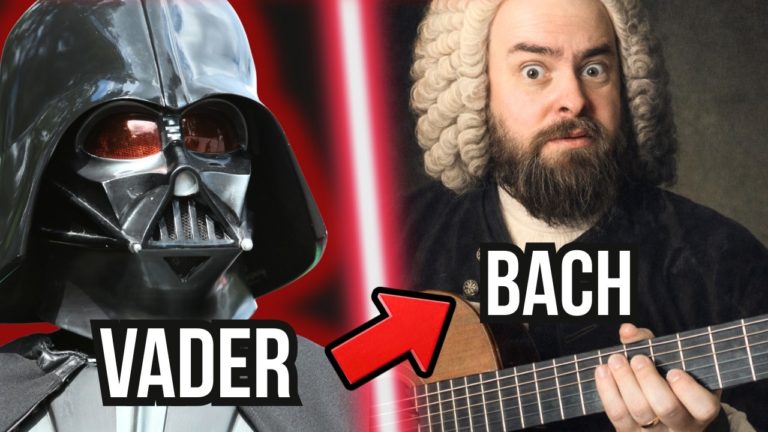
Guitarist Lucas Brar took “The Imperial March” from Star Wars and rebuilt it from the ground up as a Johann Sebastian Bach-style fugue, and the reason it works so cleanly comes down to pure music theory: both share a 4/4 time signature, making the structural translation more natural than it might first appear. The result is unsettling in the best possible way, Darth Vader’s ominous theme rendered with the measured, interlocking complexity of baroque counterpoint, and the footage is exactly the kind of musical rabbit hole that justifies the internet’s existence.
Experimental Artist Graham Dunning Turns Ball Bearings and a Spinning Turntable Into a Live MIDI Drum Machine
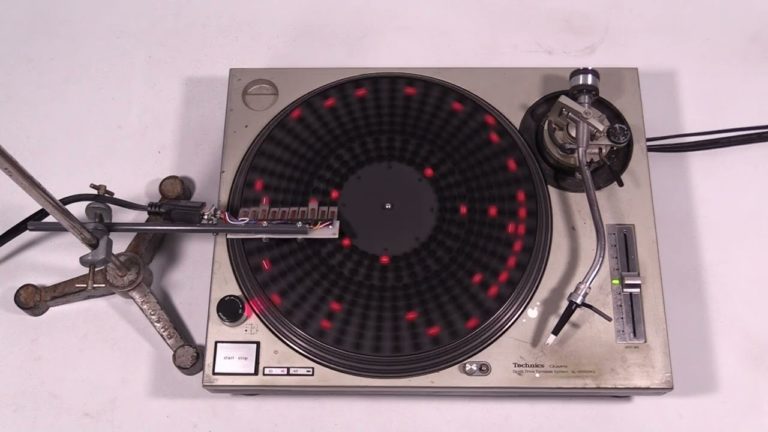
Graham Dunning has been pushing the turntable well beyond its intended purpose for years, and his latest experiment is the most elegant demonstration yet of what that research actually looks like in practice. By placing ball bearings on a spinning turntable, Dunning triggers a series of switches that feed directly into a Roland TR-8 drum machine via MIDI, generating a continuous stream of 16th-note triplets from an entirely mechanical process. It’s simultaneously absurd and completely logical, and the footage is genuinely hard to stop watching.
Indie Rock Favorites knitting Are Back With Sophomore Album ‘Souvenir’ on Mint Records
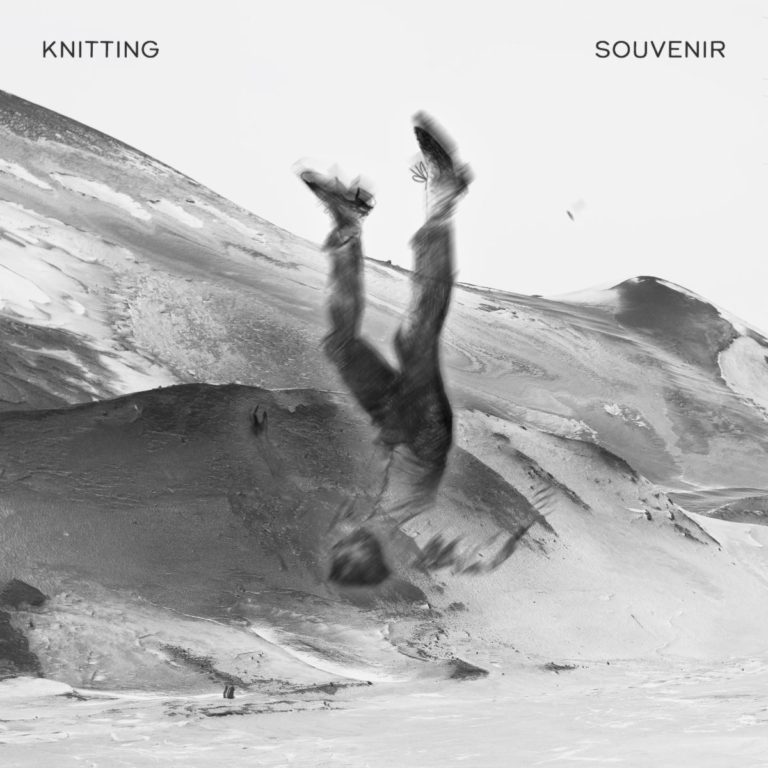
knitting has been busy. The Montreal-based indie rock outfit spent the better part of two years touring, playing SXSW and New Colossus Festival, and quietly building something new. That something is ‘Souvenir,’ their sophomore album for Mint Records, arriving June 26, 2026. It’s the follow-up to their 2024 debut ‘Some Kind of Heaven,’ and it sounds like a band who’ve figured out exactly what they want to say.
Frontperson Mischa Dempsey wrote the bones of every track during whatever downtime the touring cycle allowed. Guitarist and engineer Sarah Harris (Ultra Far), bassist Piper Curtis (Sunforger), and drummer Andy Mulcair (Andy and the Dannys, Lovelet) then shaped those sketches into full songs across sessions in St. John’s, NL and Montreal, QC. Harris engineering her own sessions meant the band never had to translate their internal language to an outsider, and longtime friend Rhys Climenhage handled the mix.
‘Souvenir’ keeps the introspective, slightly grungy centre of ‘Some Kind of Heaven’ but opens the frame considerably. Drum machines and synthesizers from Harris’ studio appear throughout, not as gimmicks but as logical extensions of what the band needed to say. Mulcair’s drumming has grown more textured and unpredictable. The Montreal DIY scene’s sonic diversity is all over this record, and knitting wears that influence with confidence.
“Personal yet sharp, tumultuous yet even-keeled, referential yet original,” wrote Stereogum. Exclaim noted the album expands their sound while keeping the introspective core intact. Nardwuar called them “a wonderful band,” which, coming from Nardwuar, lands differently. ‘Souvenir’ is nine tracks of a group honing their craft on their own terms, and it’s worth your full attention.
‘Souvenir’ Track Listing:
- I Want To Remember Everything
- Sunrise
- Here Comes
- Photocopy
- I Wasn’t Fully Cooked
- Shuffle
- Gift Horse
- Sequel
- Exit Desire
Why Teasing Music Too Far in Advance Is Hurting Your Release Strategy

There’s a moment every artist knows. You finish a song, you’re excited, and you want the world to feel what you’re feeling right now. So you post a clip. Then another. Then a countdown. Then a snippet of the video. By the time the actual release arrives, three weeks or three months later, the people who were most excited about it have already moved on. The algorithm has moved on. The moment is gone.
Teasing music too far in advance is one of the most common mistakes independent artists make, and it comes from a genuine place. Excitement is real, the instinct to share is healthy, but the strategy fails because attention doesn’t hold the way it used to. Social media feeds move at a pace that makes yesterday feel ancient. A snippet that generated real excitement two weeks before release doesn’t warm that audience up, it burns through them. By the time the song is actually available to stream, the people who would have been your most enthusiastic first-day listeners have already processed their feelings about it and scrolled past.
The data on this is consistent. Songs perform best when the gap between announcement and availability is short. A 24 to 72 hour window between announcement and release gives the algorithm something to work with, keeps the emotional momentum intact, and respects the way people actually consume content in 2026. Spotify’s algorithm rewards velocity, meaning a concentrated burst of streams in the first few days matters more than a slow build over weeks. Burning through your most engaged listeners before the release date even arrives is the opposite of what a smart release strategy needs.
There’s also a psychological dimension that doesn’t get talked about enough. When you tease something repeatedly and the payoff keeps getting delayed, you’re training your audience to feel frustrated rather than excited. Anticipation only works when the wait feels intentional and the payoff feels worth it. Most teaser campaigns don’t clear that bar. They feel like filler while the real thing isn’t ready yet, and audiences sense that even when they can’t articulate it.
The artists who are winning right now are releasing with confidence and immediacy. They’re announcing and dropping within days, sometimes within hours, building heat through the release itself rather than through weeks of pre-release content that cannibalizes its own audience. Save the energy. Save the clips. Put everything into the release window and let the music do what the teasers were supposed to do.
Five Artists Who Write Song Lyrics Like Novelists
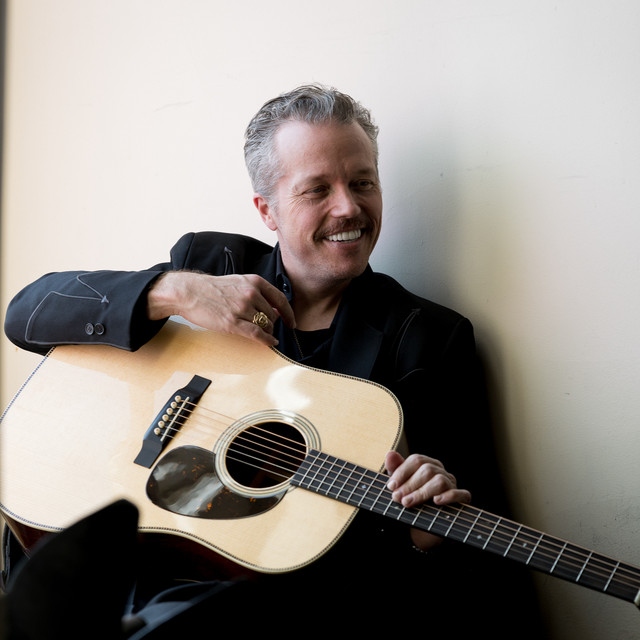
Most songs give you a feeling. The best songs give you a world. There’s a handful of artists working across genres who approach lyric writing the way novelists approach a blank page, with fully realized characters, specific details, narrative arcs, and emotional interiors that take multiple listens to fully absorb. These aren’t writers who trade in vague sentiment. They’re writers who trust that the specific is always more powerful than the general, and their catalogs prove it.
Joni Mitchell set the standard that everyone else is still chasing. Her 1971 album ‘Blue’ is essentially a confessional novel in song form, written in the first person with the emotional precision of someone who had decided that honesty was more important than comfort. Songs like “A Case of You” and “River” don’t describe feelings, they inhabit them. Mitchell understood that the right concrete detail, a bar in Paris, a particular winter, a specific face, carries more emotional weight than any abstract declaration of love or loss ever could. She was doing in three minutes what it takes most novelists three hundred pages to attempt.
Jason Isbell works in the Southern literary tradition as much as he works in country or rock. His 2013 album ‘Southeastern’ is a masterclass in character-driven songwriting, particularly “Elephant,” a song about watching a friend die of cancer that contains some of the most precise and devastating writing in contemporary American music. Isbell never reaches for the easy emotional payoff. He earns every feeling through accumulation of detail, the way a short story writer builds toward a gut punch you didn’t see coming. His characters have backstories, contradictions, and interiors. They feel like people you’ve met.
Kendrick Lamar approaches albums the way ambitious novelists approach structure. ‘good kid, m.A.A.d city’ is a coming-of-age narrative set in Compton with a cast of recurring characters, shifting points of view, and thematic threads that reward close reading across the full runtime. ‘To Pimp a Butterfly’ goes further, building an extended conversation between Lamar and the ghost of Tupac Shakur while weaving in poetry, jazz, and political theory. These aren’t collections of songs. They’re constructed works with internal logic, and the writing at the line level, the wordplay, the perspective shifts, the callbacks, operates the way the best literary fiction operates.
Sufjan Stevens builds entire narrative universes and then invites you to get lost inside them. His 2005 album ‘Illinois’ is ostensibly a concept record about a state, but it’s really a collection of short stories, ghost stories, true crime, personal memory, and American mythology stitched together with orchestral arrangements and an emotional generosity that feels almost overwhelming. “John Wayne Gacy, Jr.” might be the most disturbing character study in modern pop music, ending with a turn that implicates the narrator himself. Stevens writes with a novelist’s patience, letting scenes breathe, letting characters exist beyond the edges of the song.
Taylor Swift gets underestimated as a writer because her work is so commercially successful, but her best lyrics operate at a level of narrative specificity that most songwriters never reach. “All Too Well” is the most obvious example, a song that captures the texture of a specific relationship with the kind of detail, a scarf left at a sister’s house, a birthday in December, dancing in a refrigerator light, that only means something because it meant something to someone real. The ten-minute version released in 2021 deepens the narrative further, adding scenes and perspective shifts that turn a breakup song into something closer to a short story. Swift understands that emotional truth lives in the specific, and she never lets a lyric settle for the generic when the precise is available.
Why Your Email List Is Still One Of The Most Valuable Things You Own As An Artist
Every few years someone declares email dead. They’re wrong every time, and artists who believed them have paid for it. Streaming platforms change their algorithms without warning. Social media accounts get shadowbanned, suspended, or simply stop reaching the people who followed you. TikTok can disappear from an app store overnight. None of that happens with an email list. When someone gives you their email address, they’re giving you direct access to their attention, and no platform can take that away from you.
The numbers back this up. Email consistently outperforms social media for open rates, click-through rates, and conversion. A post on Instagram might reach five percent of your followers on a good day. An email lands in an inbox, and if your subject line is any good, a significant portion of your list will actually read it. That’s not a small thing. That’s the difference between announcing a show to your real audience and shouting into an algorithm.
Building the list is the part most artists avoid because it feels slow. It doesn’t have to be complicated. Start with your show: collect emails at the merch table with a simple sign-up sheet or a tablet running a form. Add a sign-up link to every platform you’re on, your Instagram bio, your Linktree, your Bandcamp page, your website footer. When you release something new, make the email list the first place it lands, before social media, before streaming. Give your subscribers a reason to be on the list that nobody else gets, a demo, an early ticket window, a handwritten note, something that makes the subscription feel like access rather than a newsletter.
Platforms like Mailchimp, Substack, and Bandcamp all offer tools that make this manageable even for artists without a team. Substack in particular has changed the conversation because it gives artists a built-in discovery mechanism alongside the list itself. You don’t need a massive budget or a label behind you to run an effective email program. You need consistency and a reason for people to open what you send.
The artists who have survived every platform shift, every algorithm change, every industry upheaval, are the ones who own their relationship with their audience. A Spotify follower is borrowed. An email subscriber is yours. Start building that list today, treat the people on it like they matter, and you’ll have something no streaming deal or social media strategy can replicate.
Sid Krofft, Visionary Co-Creator of H.R. Pufnstuf and Land of the Lost, Dies at 96
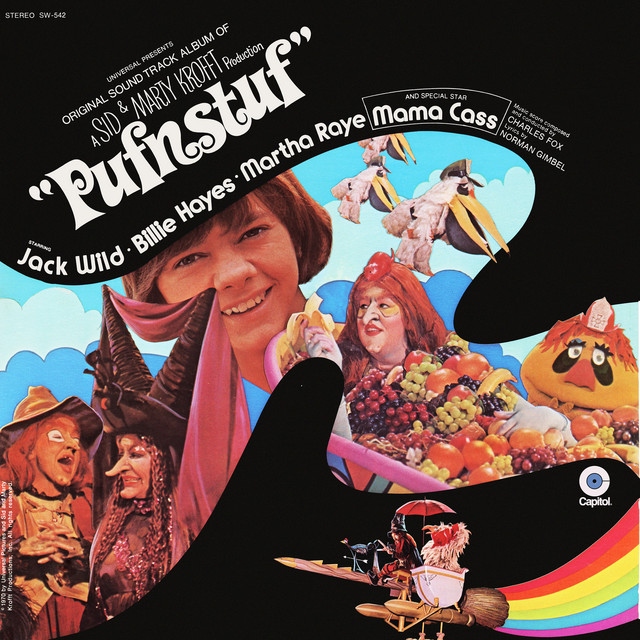
Sid Krofft, the Canadian-born puppeteer and television visionary who partnered with his younger brother Marty to build one of the most distinctive creative empires in the history of children’s television, died Friday at the Los Angeles home of his friend and business partner Kelly Killian. He was 96. Marty had died in November 2023 at age 86. With Sid’s passing, an era ends completely.
Together, the Krofft brothers created a body of work that was impossible to categorize and impossible to forget. H.R. Pufnstuf, The Bugaloos, Sigmund and the Sea Monsters, Land of the Lost, Lidsville — these weren’t just Saturday morning shows. They were full worlds, built from scratch with big-headed puppets, psychedelic colour, low-budget ingenuity, and a genuine creative recklessness that network television has never quite replicated. The shows ran for short original broadcast runs and then lived for decades in reruns, burrowing into the memories of every kid who watched them. H.R. Pufnstuf alone ranked 27th in a 2007 TV Guide poll of all-time cult favorites.
The brothers always denied the obvious question. “You can’t do a show stoned,” Marty told The Hollywood Reporter. “We’re bizarre, that’s all.” Bizarre was the right word, and it was always meant as a compliment. Their shows had an edge that Disney never touched, vivid and slightly unsettling in ways that kids couldn’t name but absolutely felt. The Beatles reportedly requested full tape sets of Pufnstuf episodes. McDonald’s copied their aesthetic so directly for McDonaldland that the Kroffts sued, winning a reported seven-figure settlement in 1977.
Sid was the dreamer. Marty was the one who made the dreams survivable. “I get a dream, and Marty gets it done,” Sid said in a 2000 TV Academy Foundation interview. That division worked for decades. Sid was performing at clubs in New York by age 15, working for Ringling Bros. by 20, and running a wildly popular adults-only burlesque puppet show, Les Poupées de Paris, by the early 1960s. That show drew an estimated 9.5 million viewers in its first decade and played world’s fairs in Seattle, New York, and San Antonio. Richard Nixon attended during his presidential run. Shirley MacLaine was at opening night.
When NBC recruited them to design costumes for The Banana Splits Adventure Hour in 1968, the Krofft era of television had effectively begun. H.R. Pufnstuf followed in 1969, running 17 episodes before NBC’s low rights offer ended the run. The show outlasted that cancellation by generations. Their variety work, including The Donny & Marie Show, The Brady Bunch Hour, and Barbara Mandrell and the Mandrell Sisters, showed they could work across formats. As recently as 2015, Mutt & Stuff was a genuine hit on Nickelodeon, proving the Krofft sensibility hadn’t aged out of anything.
In 2018, the brothers received a Daytime Emmy Lifetime Achievement Award. In 2020, they were honored with a star on the Hollywood Walk of Fame. Sid had been working on two books at the time of his death, one from his perspective as a performer, one from behind the scenes.
“I loved Sid with my whole heart,” Killian said. “He taught me more than I could ever put into words, about the art of Hollywood, the magic of the stage, and the depth and complexity of human nature. I wish so very much that I had more time with him.”
Survivors include his three nieces, Marty’s daughters Deanna, Kristina, and Kendra.
Why Luther Vandross and R&B Artists Belong in the Rock & Roll Hall of Fame
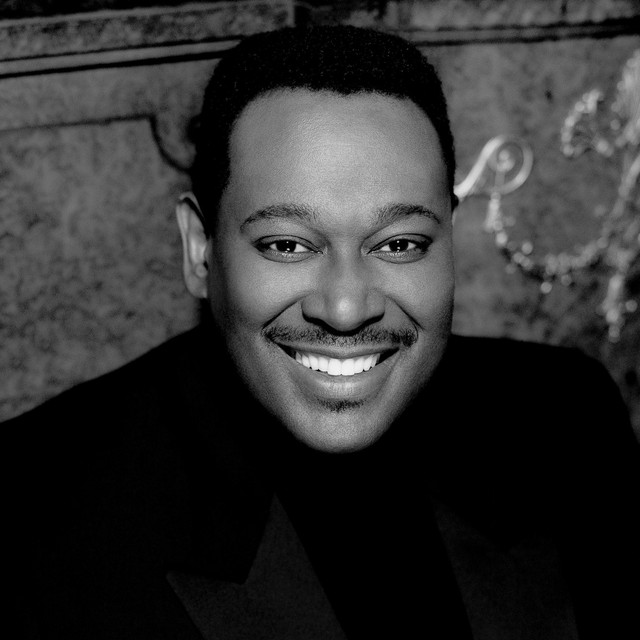
Every year the Rock & Roll Hall of Fame inducts an R&B artist, someone raises an eyebrow and asks whether they really belong. This year it’s Luther Vandross. The question itself reveals a fundamental misunderstanding of what the Hall is, where it came from, and what it was always meant to celebrate. Here’s why the argument against R&B in the Rock Hall is – quite simply – absurd.
The Hall’s own origin story is inseparable from rhythm and blues. Chuck Berry, Little Richard, and Fats Domino were all R&B artists first. Keeping R&B out of the Rock Hall would mean dismantling the foundation the whole institution was built on.
“Rock & Roll” was never just a musical descriptor, it was a cultural one. The Hall exists to honor artists who moved the culture forward, shaped how people listened, and changed what was possible. Luther Vandross did all three, in his own lane, on his own terms.
Luther’s vocal approach shaped generations of artists across pop, gospel, country, and yes, rock. When an artist’s influence bleeds that far and that wide, genre classification becomes beside the point. The Hall is supposed to honor impact, not categories.
The Hall has inducted Marvin Gaye, Stevie Wonder, James Brown, Whitney Houston, and Aretha Franklin. Drawing a line at Luther Vandross would be arbitrary at best and embarrassing at worst. The precedent was set decades ago and it was the right call every time.
Nobody hears “Dance With My Father” or “Here and Now” and thinks those records don’t belong in a conversation about the greatest popular music ever made. The Hall of Fame exists for exactly that conversation. Luther belongs in it.
Linda Creed Deserved Her Rock & Roll Hall of Fame Induction a Long Time Ago
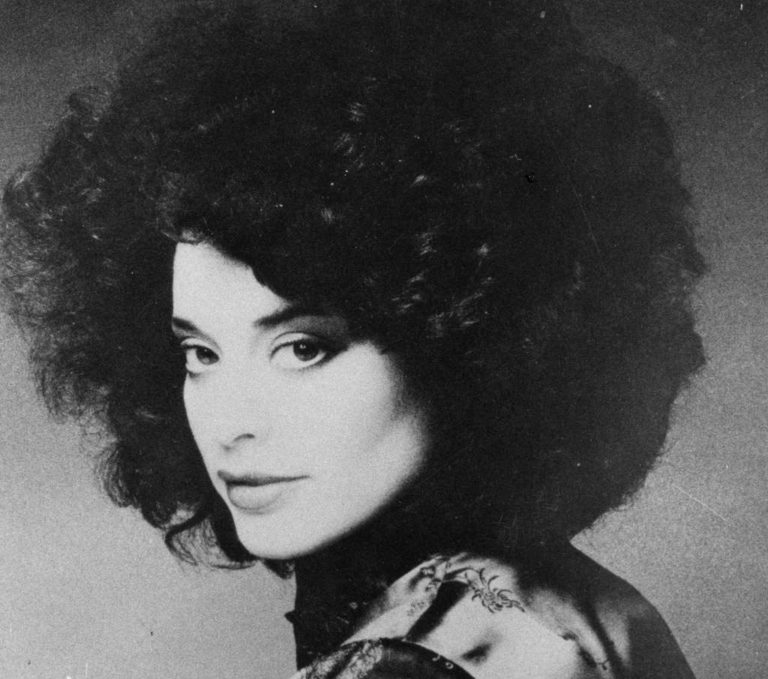
Linda Creed wrote “The Greatest Love of All” while dying of breast cancer at 37. She never saw Whitney Houston take it to #1. She was gone weeks before it happened. That single fact tells you everything about the kind of artist she was, and the kind of injustice that took four decades to correct.
Creed was the lyrical backbone of Philadelphia soul. Working alongside producer Thom Bell at Philadelphia International Records, she co-wrote the songs that defined an era: “You Are Everything,” “Betcha by Golly, Wow,” “Break Up to Make Up,” and “You Make Me Feel Brand New” for the Stylistics, and “The Rubberband Man” and “Ghetto Child” for the Spinners. These weren’t album cuts. They were the records people built their lives around. She wrote them with a melodic instincts and emotional precision that made them feel inevitable.
She did all of this while fighting breast cancer from age 26. She kept writing, kept collaborating, kept delivering. The diagnosis didn’t slow her output. It deepened it. “The Greatest Love of All,” written for a Muhammad Ali biopic in 1977, carries the full weight of someone who understood survival not as a concept but as a daily practice. George Benson recorded it first. Whitney Houston made it immortal. Creed wrote every word.
The Songwriters Hall of Fame inducted her posthumously in 1992, six years after her death. The Rock & Roll Hall of Fame took until 2026. That’s a long time to wait for someone whose fingerprints are all over some of the most beloved records in American music history. The Musical Excellence Award is the right category, and the recognition is genuine and deserved, but the timeline is worth acknowledging. Linda Creed was one of the great songwriters of the 20th century. The Hall of Fame finally said so out loud.
Phil Collins, Oasis, Iron Maiden, Wu-Tang Clan, and Sade Lead the 2026 Rock & Roll Hall of Fame Inductees

Tonight, the Rock & Roll Hall of Fame Foundation announced its 2026 Inductees, spotlighting a standout group of artists whose impact has left a lasting mark on music and culture. Revealed live on ABC and Disney+ by Ryan Seacrest and 2022 Inductee Lionel Richie during the Rock & Roll Hall of Fame-themed episode of American Idol, the announcement kicks off the countdown to celebrate music’s highest honor.
The 2026 Rock & Roll Hall of Fame Induction will tape on Saturday, November 14th at the Peacock Theater in Los Angeles, California. The 2026 ceremony will then debut in December on ABC and Disney+. In 2027, the Induction Ceremony will return to Cleveland.
“Induction into the Rock & Roll Hall of Fame is music’s highest honor. We look forward to celebrating these remarkable artists at this year’s ceremony – it’s going to be an unforgettable night,” said John Sykes, Chairman of the Rock & Roll Hall of Fame.
Phil Collins, Luther Vandross and Wu-Tang Clan are first-time nominees. Billy Idol, Iron Maiden, Joy Division/New Order, Oasis, and Sade have all been nominated in the past. Ticket on-sale information for the 2026 Induction Ceremony will be announced at a later date.
2026 Rock & Roll Hall of Fame Inductees:
Performer Category:
Phil Collins
Billy Idol
Iron Maiden
Joy Division/New Order
Oasis
Sade
Luther Vandross
Wu-Tang Clan
Early Influence Award:
Celia Cruz
Fela Kuti
Queen Latifah
MC Lyte
Gram Parsons
Musical Excellence Award:
Linda Creed
Arif Mardin
Jimmy Miller
Rick Rubin
Ahmet Ertegun Award:
Ed Sullivan