Home Blog Page 16

Why Taylor Swift’s Songwriting Still Sets the Standard

0

In April 2026, the New York Times polled more than 250 music insiders and named Taylor Swift one of the 30 Greatest Living American Songwriters, alongside Bob Dylan, Bruce Springsteen, Dolly Parton, and Carole King. A few weeks later, she became the youngest woman ever inducted into the Songwriters Hall of Fame. She is 36 years old, and the music world is still catching up to her.

She writes with extraordinary detail

Taylor Swift understands that specificity is what makes a song feel true. She writes about a scarf left at a sister’s house, a refrigerator light, a parking lot on a Tuesday. These precise, lived-in details are what pull listeners in and keep them there. Over 90 percent of her songs use action-driven imagery that roots the listener in a specific place and time. That is craft, deliberate and repeatable, and it is one of the reasons her songs connect so deeply with so many people.

She builds real stories

Swift thinks like a novelist. From the Romeo and Juliet reimagining of Love Story at age 17, to the full character study of The Last Great American Dynasty, to the ten-minute emotional journey of All Too Well, she builds songs with genuine narrative arc. Her bridges deserve special mention. They are extended emotional turns that reframe the entire song and leave listeners somewhere completely different from where they started. Few writers working today can build a bridge the way Taylor Swift can.

For her Songwriters Hall of Fame induction, Swift personally chose five songs to represent the full range of her craft: Love Story, Blank Space, Anti-Hero, All Too Well (10 Minute Version), and The Last Great American Dynasty. Together they cover narrative storytelling, satire, confessional writing, long-form emotional depth, and character-driven historical perspective. That range across a single career is remarkable.

She grows across every album

From the country warmth of Fearless to the pop precision of 1989 to the indie-folk intimacy of Folklore and Evermore to the late-night introspection of Midnights, Swift has moved freely across genres while keeping her voice, her wit, and her emotional honesty fully intact. She has been doing this for twenty years, and each record finds a new way to surprise. Artists who sustain that level of creative restlessness across two decades belong in a very short conversation.

She writes melodies that make the words land

Swift writes melodies that serve her lyrics rather than compete with them. Her verses tend to be conversational, sitting close to just a few notes, so that the words arrive first and the melody carries them forward. When the chorus opens up, you feel the release. This approach, where every syllable lands exactly where it should, is a quality shared by the greatest pop songwriters of any era. It is also why her songs are so easy to sing along with and so hard to forget.

She writes with genuine honesty

Swift writes about self-doubt, about power imbalances in relationships, about the way the world treats women differently depending on how much success they have. She writes these things directly, and then wraps them in melodies that reach millions of people. That combination of emotional transparency and pure songwriting craft is what places her in the same conversation as the writers who shaped popular music across generations.

She is already shaping the next generation

Artists including Gracie Abrams, Maisie Peters, and Phoebe Bridgers carry clear elements of Swift’s songwriting approach in their work: the specificity, the melodic restraint, the confessional honesty, the bridge that changes everything. A generation of writers learned how to write songs by listening to hers, and that influence will keep moving forward long after the current era ends.

Taylor Swift wrote Love Story at 17. She spent years restoring All Too Well before releasing the full ten-minute version to the world. The New York Times called her one of the greatest living American songwriters. The Songwriters Hall of Fame opens its doors to her in June 2026. Twenty years in, her songwriting keeps setting the pace.

5 Budget Hacks for Seeing More Live Shows Without Going Broke

0

Live music is one of the best things in the world. The bad news? The average concert ticket now costs over $135 — and that’s before fees, drinks, parking, and a t-shirt you absolutely didn’t need but bought anyway.

The good news is that with a little strategy, you can see a lot more shows for a lot less money. Here’s how.

1. Master the presale

Presale tickets give you access to seats before the general public — and sometimes at better prices. The trick is knowing where to look. Sign up for artist newsletters and fan clubs, which often come with presale codes. Your credit card may already have you covered too: Citi, American Express, Capital One, and Chase all offer presale access and concert perks to cardholders. T-Mobile and Verizon do the same for their customers.

On Ticketmaster, you can follow your favourite artists directly and get notified the moment a presale opens. Treat it like a race — have your payment info ready, use your fastest internet connection, and be at your screen the moment the window opens.

Live Nation’s Concert Week typically runs each May and offers tickets to thousands of shows for around $25–$30. It’s one of the best deals of the year for live music fans. Keep an eye out for it.

2. Buy at the box office

This one sounds old-fashioned, but it works. Buying tickets directly at the venue’s physical box office lets you skip the service fees that platforms like Ticketmaster tack on — fees that routinely add 30% or more to the base price. Not every venue has a walk-up box office, but for those that do, it’s worth the trip. Bring a valid ID and check the venue’s website for box office hours before you go.

3. Go on a weeknight

Weekend shows cost more. It’s that simple. Demand drops on Tuesday, Wednesday, and Thursday nights, and ticket prices often follow. Weeknight concerts are also less crowded, easier to get to, and — honestly — a little more fun. You’re there for the music, not the Friday night chaos. If your schedule has any flexibility at all, this is one of the easiest ways to save 15–20% without changing anything else about your concert experience.

4. Wait until the last minute — strategically

For shows that aren’t completely sold out, the day before or the day of can be the best time to buy. Ticket holders who can no longer attend often drop prices sharply to move their seats fast. Platforms like Ticketmaster, StubHub, SeatGeek, Vivid Seats, and Gametime are worth checking in the final 24–48 hours. Gametime in particular has built its entire model around last-minute deals and is a solid app to have on your phone.

A word of caution: this strategy works best for shows where you’re not heartbroken if you miss out. For the artists you absolutely can’t miss, buy early.

5. Think of festivals as a bundle deal

A festival pass that gets you two or three days of music — including headliners, up-and-coming acts, and artists you’d never have discovered otherwise — often costs the same as a single premium ticket to one arena show. Instead of treating a festival as a splurge, think of it as the smartest value in live music. You spread the cost across an entire weekend, discover new favourites, and get more memories per dollar than almost any other option out there.

Michael Pennington, Star Wars Actor and Shakespearean Giant, Dead at 82

0

Michael Pennington, the celebrated British actor who brought quiet menace to the role of Moff Jerjerrod in Star Wars: Episode VI – Return of the Jedi and devoted a lifetime to the works of Shakespeare, has died at the age of 82.

His passing was announced on May 10, 2026. No cause of death was given.

To millions of moviegoers, Pennington was the cold, composed Death Star commander confronted by Darth Vader in Return of the Jedi — a small role, unforgettably played. But to the theatre world, he was something far larger: one of the most respected Shakespearean actors of his generation, a founder of the English Shakespeare Company, and an Honorary Associate Artist of the Royal Shakespeare Company.

Born Michael Vivian Fyfe Pennington on June 7, 1943, in Cambridge, England, he joined the RSC upon graduating from Trinity College, Cambridge, and never really left the stage for long. He played Hamlet, King Lear, Macbeth, Coriolanus, Richard II — the great roles, again and again, with a dedication that defined his career.

That dedication was perhaps never more apparent than in 1980, when he turned down the opportunity to star opposite Meryl Streep in The French Lieutenant’s Woman — simply because he could not let Hamlet go. “I realised I couldn’t let Hamlet go,” he later said, calling the role “one of the prizes.” He would eventually share the screen with Streep years later, playing Michael Foot in The Iron Lady.

In 1986, alongside director Michael Bogdanov, Pennington co-founded the English Shakespeare Company, an ambitious venture aimed at bringing large-scale classical productions to wider audiences through touring. The company’s Wars of the Roses cycle toured worldwide and was televised, cementing his place in theatrical history.

He was also a gifted collaborator. He worked frequently with Dame Judi Dench — it was watching her play Ophelia as a young man, he said, that first inspired him to pursue the theatre. “There’s no one quite like Judi,” he told The Independent in 2015. “For her, acting is playing.”

Beyond the stage, Pennington was a prolific author, writing ten books including guides to Hamlet, Twelfth Night, and A Midsummer Night’s Dream, as well as a memoir on acting, Let Me Play the Lion Too. He lectured, directed, and performed internationally — in Japan, Romania, Argentina, the United States, and beyond.

His final screen role came in 2022, voicing The Trust in five episodes of Ridley Scott’s sci-fi series Raised by Wolves.

Actress Miriam Margolyes, who knew him from their Cambridge days, said simply: “A very fine actor, brilliant, wise, clear. I am sad beyond measure. Bless your dear memory, old chum.”

Michael Pennington is survived by his son. His partner, Prue Skene, predeceased him in 2025.

He was 82. The stage is quieter for his absence.

How to Get More Streams on Apple Music

Hey, friends! If you’re an independent artist trying to grow your streams on Apple Music, first of all — you’re in the right place, and you’re asking exactly the right question.

Apple Music is a massive opportunity. With an estimated 95 to 110 million paying subscribers worldwide as of 2026, and a per-stream payout roughly double what Spotify pays (around $0.008 to $0.010 per stream), it’s one of the most artist-friendly platforms out there right now. Every single listener is a paying subscriber — there’s no free tier diluting your royalties.

So how do you actually grow there? Let’s go through it, step by step.

1. Claim and optimize your Apple Music for Artists profile

This is step one, and I cannot stress it enough. Your Apple Music profile is your digital home — the first thing a new listener or a playlist curator sees when they find your music.

Here’s what a great profile looks like:

  • A compelling bio that tells your story, highlights your milestones, and reflects who you are as an artist. Keep it descriptive but concise — the longer it is, the fewer people will actually read to the end.
  • High-quality, professional press photos that grab attention.
  • Links to all your social media platforms, so curious new fans can follow you everywhere.
  • Accurate genres and subgenres — think of these as directional signs that guide listeners to your music through search and discovery.

Once you’ve claimed your profile through Apple Music for Artists, you’ll also unlock access to analytics and the ability to pitch your music to editorial teams.

2. Pitch to Apple Music playlists — early and thoughtfully

Getting onto an Apple Music editorial playlist can absolutely transform your stream counts. Apple’s editorial playlists are curated by real human teams, and they’re among the most influential in the world.

Here’s how to approach pitching:

  • Submit at least 10 days before your release date for full editorial consideration. There’s a hard cutoff at 7 days prior for late adds.
  • You get one pitch per song, and it cannot be edited after submission — so take your time and do it right.
  • Your pitch should have a clear shape: open with the genre and closest reference artist. Describe what makes the song distinctive — the hook, a production choice, the lyrical angle. Close with your credentials: prior streaming numbers, past playlist placements, any press or sync highlights. Keep it factual, not hype-y.
  • Fill in every metadata field: mood, genre, subgenre, instrumentation, Spatial Audio details, lyrics. The more context you give, the better Apple’s editorial team can match your music to the right playlist.

Don’t have direct access to the pitch tool? Work with your music distributor — companies like DistroKid, TuneCore, CD Baby, and AWAL often have direct relationships with Apple Music and can pitch on your behalf.

3. Use pre-adds to build momentum before release

Apple Music’s pre-add feature is the equivalent of a Spotify pre-save, and it’s a secret weapon a lot of artists don’t use enough. When fans pre-add your upcoming release, the music is automatically added to their library the moment it goes live — which means an immediate surge of streams on release day. That surge gets noticed. By curators. By algorithms. By everyone.

Ask your fans to pre-add through your social channels, your email list, and anywhere else you connect with them. Make it easy with a direct link.

4. Use Apple Music for Artists analytics — seriously

The analytics inside Apple Music for Artists are deeper than most people realize, and using them strategically can genuinely change how you make decisions. For every track, you can see streams, listeners, and Shazam activity, average completion rates broken into 25/50/75/100% buckets, the top playlists driving your streams, and which regions are responding most to your music.

The completion rate data is especially valuable. Apple’s editorial team weighs first-listen retention heavily — a track that holds 70%+ of listeners past the halfway point signals a well-structured song. If your drop-off happens at the 25% mark, you might have an intro problem worth addressing in your next release. Use the regional data, too. If a particular city or country is lighting up for you, that’s a market to lean into with targeted promotion.

5. Leverage Shazam integration

Here’s one that’s unique to Apple Music: Shazam matters. When someone Shazams your music — whether they heard it at a coffee shop, in a store, or on a friend’s speaker — they can be directed immediately to your Apple Music track. That seamless discovery can directly increase your stream counts.

Encourage your fans to Shazam your songs when they hear them out in the world. And make sure your music is properly registered — Shazam is owned by Apple, and its activity feeds directly into Apple Music’s recommendation systems.

6. Promote on social media — with purpose

“Post more” isn’t actually the advice — it’s post smarter. What works:

  • Behind-the-scenes content that shows your creative process and makes fans feel connected to you.
  • Music previews and teaser clips that create excitement before release.
  • Apple Music’s own promotional tools — badges, smart links, embeddable players, and audio cards for Twitter/X that let people preview directly.
  • Tagging playlists and curators when you get a placement — it builds relationships and tells the algorithm something good is happening.

And here’s a tip: Tuesdays and Wednesdays are the best days to do your pitching pushes, since editorial teams tend to prep playlists by Thursday. Align your social media energy around that rhythm.

7. Collaborate with other artists

Collaborations are one of the fastest ways to reach new audiences — and they’re underused. A feature or joint release introduces you to your collaborator’s entire fanbase overnight. Beyond that, collaborative momentum builds the kind of organic traction that catches playlist curators’ attention. When your listener numbers are growing consistently, curators become more likely to take a chance on you.

8. Release consistently — not just once in a while

Both Apple Music’s editorial teams and its algorithmic systems reward artist consistency. Releasing music every 6–8 weeks keeps you in rotation, signals to the platform that you’re an active artist, and gives curators a reason to come back to your profile. You don’t need to reinvent yourself every release. Just keep showing up.

9. Consider Dolby Atmos / Spatial Audio

Here’s a bonus tip that most artists overlook: releasing in Dolby Atmos earns you an additional royalty bump of approximately 10% on top of the baseline rate for Atmos streams. Apple has invested heavily in Spatial Audio and actively promotes it. If your music can be mixed in Atmos, it’s worth exploring — both for the listener experience and the financial upside.

Growing on Apple Music isn’t magic — it’s strategy, consistency, and genuinely connecting with your audience. Claim your profile. Pitch early and thoughtfully. Use your analytics. Build pre-add campaigns. Collaborate. Show up on social. And keep releasing music. The listeners are there, the payout is there — and with the right approach, your music can be there too.

Good luck out there. I’m rooting for you. 

AI-Song.ai: The Ultimate AI Song Generator and AI Music Generator for Modern Creators

0

By Mitch Rice

The music industry is changing faster than most people can keep up with. What once required studios, expensive equipment, trained musicians, and long production hours can now be done in minutes using artificial intelligence. At the center of this transformation are tools like AI-Song.ai, a next-generation platform built as an AI Song Generator and AI Music Generator designed for creators, businesses, and everyday users.Whether you are a YouTuber needing background music, a marketer creating ads, or just someone experimenting with sound, AI-Song.ai represents a shift in how music is created, consumed, and monetized.

What is AI-Song.ai?

AI-Song.ai is an AI-powered platform that allows users to generate original music tracks automatically using artificial intelligence. It functions as both an AI Song Generator and an AI Music Generator, meaning it can create:

  • Full songs with structure (intro, verse, chorus)
  • Instrumental background music
  • Genre-based compositions (pop, lo-fi, hip-hop, EDM, classical, etc.)
  • Mood-based soundtracks (happy, sad, energetic, cinematic)

Instead of manually composing music, users simply input preferences such as style, mood, or keywords, and the AI generates a complete track.In simple terms, AI-Song.ai is like having a digital music producer who never sleeps, never complains, and somehow still understands your vibe better than you do.

Why AI Song Generators Are Becoming Popular

The rise of AI Song Generator tools is not random. It is driven by real-world needs:

  • Content creators need constant music
  • Businesses need copyright-free audio
  • Game developers need dynamic soundtracks
  • Social media demands fast production

Traditional music production is slow and expensive. AI music tools solve this problem by offering instant results with minimal effort.AI-Song.ai stands out because it combines speed, creativity, and usability in one system.

How AI-Song.ai Works (AI Music Generator Technology Explained)

Behind the simple interface of AI-Song.ai is a complex system of machine learning models and neural networks.

Here is a simplified breakdown of how an AI Music Generator like AI-Song.ai works:

1. User Input Stage

The user provides input such as:

  • Genre (e.g., hip-hop, jazz, pop)
  • Mood (e.g., calm, energetic, emotional)
  • Purpose (e.g., YouTube video, advertisement, podcast)

2. AI Processing Stage

The system analyzes the input using trained datasets of millions of music samples. It understands:

  • Rhythm patterns
  • Melody structures
  • Instrument combinations
  • Emotional tone

3. Composition Generation

The AI then generates:

  • Melody
  • Harmony
  • Beat structure
  • Instrument layers

4. Output Stage

The final result is a complete audio file that can be:

  • Downloaded
  • Edited
  • Used commercially (depending on licensing)

This entire process takes seconds or minutes instead of hours or days.

Key Features of AI-Song.ai

AI-Song.ai is not just another experimental tool. It is built for practical use cases. Here are its main features:

1. AI Song Generator

Creates full songs with vocals and structure depending on settings.

2. AI Music Generator

Generates instrumental tracks for background use in videos, ads, or games.

3. Genre Flexibility

Supports multiple music styles including:

  • Pop
  • Hip-hop
  • EDM
  • Classical
  • Cinematic
  • Lo-fi

4. Mood-Based Creation

Users can generate music based on emotional tone such as:

  • Happy
  • Sad
  • Romantic
  • Motivational

5. Fast Output Generation

Music is created in minutes, not hours.

6. Beginner-Friendly Interface

No music theory knowledge required.

7. Customization Options

Allows adjustment of tempo, instruments, and style variations.

Benefits of Using AI Song Generator Tools Like AI-Song.ai

The advantages of using an AI Song Generator are significant, especially for modern digital creators.

1. Saves Time

Traditional music production can take days. AI reduces it to minutes.

2. Cost Effective

No need for expensive studios or producers.

3. No Technical Skills Required

Even beginners can create professional-quality music.

4. Unlimited Creativity

You can generate endless variations without creative burnout.

5. Copyright-Free Potential

Many AI-generated tracks can be used safely in commercial projects.

6. Scalable for Businesses

Agencies and brands can produce bulk audio content quickly.

7. Accessibility

Anyone with internet access can create music.

Real-World Use Cases of AI Music Generator

AI-Song.ai is not just a tech demo—it has real applications across industries.

1. YouTube Content Creation

Creators use AI-generated music as:

  • Background music
  • Intro/outro themes
  • Vlog soundtracks

2. Advertising & Marketing

Businesses create:

  • Brand jingles
  • Promotional music
  • Social media ad soundtracks

3. Gaming Industry

Developers use AI Music Generator tools for:

  • Background game music
  • Level-based sound changes
  • Immersive audio environments

4. Podcasts & Media

Podcasters use AI music for:

  • Intro music
  • Transition sounds
  • Branding identity

5. Social Media Content

Short-form video creators use AI music for:

  • Reels
  • TikTok videos
  • Instagram content

AI Music Generator vs Traditional Music Creation

To understand the impact of AI-Song.ai, it is important to compare it with traditional music production.

FeatureAI Music Generator (AI-Song.ai)Traditional Music Creation
SpeedMinutesDays to weeks
CostLow or freeHigh (studio, artists, tools)
Skill RequiredNoneHigh musical knowledge
FlexibilityUnlimited variationsLimited by human effort
CreativityAI-assisted patternsPure human creativity
AccessibilityGlobal, instantRestricted to professionals

Key Insight:

Traditional music is still unmatched in emotional depth, but AI wins in speed, affordability, and accessibility.

Limitations of AI Song Generators

Even powerful tools like AI-Song.ai are not perfect.

  • Emotional depth may feel artificial
  • Some outputs may sound repetitive
  • Requires human editing for premium results
  • Licensing rules may vary

AI is powerful, but it is still a tool—not a replacement for human creativity.

Why AI-Song.ai is Different

Among many AI Music Generator tools, AI-Song.ai stands out because it focuses on:

  • Ease of use
  • Fast output generation
  • Versatile music styles
  • Beginner accessibility

It is designed for users who want results quickly without learning complex production software.

Future of AI Music Generation

The future of AI music is not science fiction anymore—it is already happening.

In the next few years, we can expect:

1. Real-Time Music Generation

Music will adapt instantly to videos, games, and environments.

2. AI + Human Collaboration

Musicians will use AI as a co-producer instead of a replacement.

3. Hyper-Personalized Music

Songs generated specifically for individual moods and preferences.

4. Voice Cloning & Vocal AI

AI will generate realistic singing voices for custom songs.

5. Full Industry Integration

Streaming platforms may include AI-generated categories.

AI-Song.ai is part of this evolution, not just a standalone tool.

FAQs about AI-Song.ai

1. What is AI-Song.ai used for?

It is used to generate music automatically using AI, including songs and instrumental tracks.

2. Is AI-Song.ai free to use?

Some features may be free, while advanced features may require a paid plan.

3. Can I use AI-generated music commercially?

It depends on the licensing terms of the platform.

4. Do I need music skills to use AI Song Generator tools?

No, AI-Song.ai is designed for beginners with no technical background.

5. What makes AI-Song.ai different from other AI music tools?

It focuses on simplicity, speed, and versatility for both beginners and professionals.

6. Can AI replace human musicians?

Not completely. AI supports creativity but cannot fully replace emotional human expression.

7. What type of music can I create?

You can create multiple genres including pop, EDM, hip-hop, cinematic, and more.

Conclusion: The Future of Music is AI-Driven

AI-Song.ai represents a major shift in how music is created. As both an AI Song Generator and AI Music Generator, it removes traditional barriers like cost, skill, and time.While human musicians will always remain essential for emotional storytelling and artistic depth, AI is rapidly becoming the fastest way to produce high-quality music for digital use.The future of music will not be human versus AI—it will be human with AI. And tools like AI-Song.ai are leading that transformation quietly but powerfully.In a world where content is created every second, speed and creativity matter more than ever. AI music generation is not just a trend it is the new standard.

Data and information are provided for informational purposes only, and are not intended for investment or other purposes.


Why Music Fans Should Understand Payout Rules Before Trusting Online Platforms

0

By Mitch Rice

Music fans are used to fast digital access. A new single drops at midnight, a tour announcement hits social media, a limited vinyl variant sells out in minutes, and a livestream link can travel across fan communities before a press release even lands. The modern music experience moves quickly because fans expect convenience.

That same expectation now follows fans into every online service they use. They buy tickets, support artists, subscribe to platforms, send money to friends, purchase merch, join livestreams, and sometimes explore broader online entertainment platforms that involve deposits, balances, rewards, or payouts. When money is involved, speed feels important, but clarity matters even more.

A payment app or payout claim can look simple in a headline. The real experience usually depends on rules that are less exciting to read: verification, payment-method support, account status, limits, fees, withdrawal conditions, and location requirements. For music fans who already know the value of reading liner notes, credits, and tour details, payment terms deserve the same attention.

Digital Music Culture Runs on Instant Access

Streaming changed how fans think about timing. People no longer wait weeks to hear a new album unless the artist chooses that kind of rollout. Songs appear instantly, playlists update daily, and social clips can push a track around the world in hours.

That speed has shaped user expectations outside music too. If fans can discover a song, buy a ticket, or support an artist from a phone, they expect other platforms to feel just as smooth. A confusing payment page or unclear payout policy can make an otherwise polished platform feel unreliable.

The problem is that financial features are not the same as content access. Listening to a song is immediate, but moving money can involve banks, payment apps, fraud checks, identity verification, and platform rules. Users should not assume that every digital action moves at the same speed just because it happens on the same phone.

Cash App Feels Familiar, but Context Still Matters

Cash App is familiar to many users because it is built around everyday money movement. Cash App’s own support explains that users can send and receive money, add funds, and link supported debit cards, while the Cash App Card can be used online and in stores where accepted. That familiarity can make the app feel simple and approachable.

Familiarity, however, can create false confidence. Sending money to a friend after a concert is different from using a payment method on an online entertainment platform. A platform may support one type of transaction but not another, and deposits, purchases, refunds, and withdrawals can all follow different rules.

This is why users should separate the payment brand from the platform policy. A known payment name can be useful, but it does not answer every practical question. Users still need to check whether the method is accepted, whether it supports payouts, whether verification is required, and whether restrictions apply to their location.

Why Cash App Payout Details Need Extra Attention

Payouts are different from payments. A user may fund an account quickly, but cashing out can involve additional checks. In many online platforms, withdrawals depend on identity verification, account ownership, payment eligibility, platform reviews, bonus rules, and sometimes legal or location-based requirements.

This matters in casino-style and gaming-related environments because money movement is tied to age rules, responsible-use protections, withdrawal limits, payment methods, and account status. A fast payout claim may be accurate only after approval, only for verified users, or only with selected payment options. That is why users should read beyond the headline before relying on any cashout promise.

CasinosAnalyzer is one example of a comparison-led platform that organizes casino information around practical user questions such as payment options, payout timing, bonus terms, platform access, and withdrawal conditions. This kind of structure helps readers look beyond a familiar payment name and focus on the rules that affect the real user experience.

For readers researching Cash App-connected withdrawals in casino and online entertainment contexts, these details on cash app casino payouts give a focused example of what users should review before relying on a payment method. The useful habit is to check whether Cash App or a related card option is actually supported, whether withdrawals are available, and what verification steps may apply.

A responsible reader should still verify the operator’s official terms before acting. Comparison content can make research easier, but it should not replace checking legal availability, age rules, payment support, withdrawal conditions, bonus restrictions, limits, fees, and responsible-gaming information.

Music Fans Already Understand the Value of Terms

Music fans know that the details behind a release matter. A deluxe edition is not the same as a standard album, a presale code may work only for selected dates, and a VIP package may include specific benefits but not others. The headline creates excitement, but the terms explain what is actually included.

Online payouts work the same way. A platform may promote fast withdrawals, easy payments, or convenient mobile cashouts, but users need to understand what those phrases mean in practice. If the terms are vague, the offer is less useful no matter how attractive the wording sounds.

This mindset is especially important when bonuses are involved. A promotion can affect withdrawal rules, add wagering requirements, create expiry dates, or limit which payment methods can be used. Reading the payment and bonus terms before depositing is the safest way to avoid confusion later.

Scams Often Use Familiar Payment Language

Music fans are used to seeing online scams around tickets, merch drops, fake meet-and-greets, streaming links, and impersonator accounts. Payment apps can appear in these scams because they feel quick and informal. A scammer may create urgency, pretend to be support, or ask for payment outside an official checkout flow.

The Federal Trade Commission warns that scammers use mobile payment apps and advises users to slow down, verify who is receiving money, and avoid sending funds to people they do not recognize. That advice applies to fan communities, ticket groups, marketplace listings, and entertainment platforms alike.

A legitimate platform should not pressure users to move money through unofficial channels. It should explain its payment process clearly, keep users inside secure flows, and make support information easy to find. If a payment request feels rushed, vague, or disconnected from the official site, users should pause.

Responsible Entertainment Should Stay Part of the Conversation

Entertainment should remain entertainment. That applies to music, livestreams, games, fantasy contests, betting, and casino-style platforms where legal. Once money is involved, users need clearer boundaries and better habits.

The National Council on Problem Gambling provides responsible-gambling resources and standards focused on reducing gambling-related harm. This matters because payment convenience should never encourage users to treat gambling as income, ignore limits, or chase losses.

A responsible platform should make age rules, location restrictions, payment terms, withdrawal conditions, and support resources easy to find. A responsible user should set limits, read terms, and avoid using any platform that hides important information behind promotional language.

What Online Platforms Can Learn From the Music Industry

The music industry knows that trust is built through clarity. Fans want to know what they are buying, when tickets go on sale, what format an album comes in, whether a merch item is limited, and what is included in a package. Confusion creates disappointment, even when the artist or product is strong.

Online platforms that handle payments should apply the same principle. They should separate deposits from withdrawals, show processing times, explain verification steps, list eligible payment methods, and make limits or fees visible before users commit money. That kind of clarity reduces support issues and builds confidence.

For platforms that mention Cash App or any other familiar payment method, the standard should be simple. Do not rely on the brand name to create trust. Explain how the method works in that exact context and what users should expect before they act.

What Users Should Check Before Trusting a Payout Claim

The first thing to check is whether the platform is legal and available in the user’s location. A site being visible online does not mean every user can legally or safely use it. Location, licensing, age requirements, and account rules should be clear before money is deposited.

The second thing to check is whether the payment method supports withdrawals. Users should not assume that a method used for deposits will automatically work for payouts. They should also check whether the payment account must match the platform account name and whether identity verification is required before the first cashout.

The third thing to check is whether bonuses change the payout process. A bonus may add wagering requirements, withdrawal limits, expiry dates, or eligible-game restrictions. If those conditions are unclear, the payout claim should be treated with caution.

Final Thoughts

Music fans understand that details matter. A song credit, a tour note, a presale rule, or a vinyl pressing detail can change how a fan understands the release. The same careful reading should apply to online payment and payout terms.

Cash App is familiar, but familiarity does not remove the need to check platform rules. Payouts can depend on verification, payment eligibility, location, account status, and bonus conditions. A smart user reads those details before relying on any fast-cashout claim.

The safest habit is simple: enjoy digital entertainment, but read the payment terms before money moves. In music, the liner notes tell part of the story. Online, the payout terms often do the same.

Data and information are provided for informational purposes only, and are not intended for investment or other purposes.

Bruce Dickinson’s ‘Skunkworks’ and ‘Tattooed Millionaire’ Get the Dolby Atmos Treatment

0

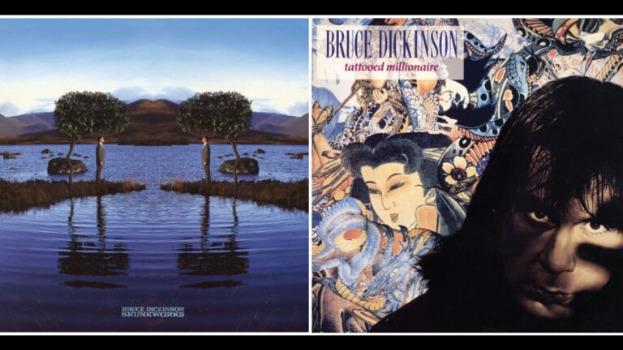
Bruce Dickinson’s solo catalog keeps getting bigger, literally. BMG Records has released Dolby Atmos versions of 2 of his solo albums, ‘Skunkworks’ and ‘Tattooed Millionaire,’ both newly mixed by Brendan Duffey, the same engineer behind the acclaimed Atmos version of Dickinson’s most recent solo album, ‘The Mandrake Project.’

‘Skunkworks,’ originally released in 1996 and produced by Nirvana’s Jack Endino, has grown considerably in reputation since its initial divisive reception. The album pushed Dickinson into experimental and alternative territory, pulling in grunge, progressive, and psychedelic influences at a time when that kind of genre-blending was genuinely unusual in metal circles. Dickinson is unambiguous about where he stands on it now: “It will blow your socks off. It’s a record of which I’m immensely proud. In many ways, it was a bit advanced for its time because we were bringing in all kinds of influences that other people in metal were scared of. It’s very emotional and quite dark in places.”

‘Tattooed Millionaire,’ Dickinson’s 1990 solo debut, came together with a very different energy. Written in 2 weeks with Janick Gers and produced by Chris Tsangarides, it delivered a more direct hard-rock sound and generated 4 UK Top 40 singles, including a cover of David Bowie’s “All The Young Dudes.” Dickinson describes the Atmos upgrade plainly: “Now with modern technology, we can beef it all up and make it BIG in Atmos world. The album sonically sounds really good.”

Both releases follow last year’s critically acclaimed Dolby Atmos reworking of ‘More Balls To Picasso,’ continuing a methodical and rewarding deep dive into Dickinson’s solo output with the kind of audio care these records deserve.

Mariposa Folk Festival Announces Superb 2026 Lineup With Father John Misty, Sharon Van Etten, St. Paul & The Broken Bones, and More

0

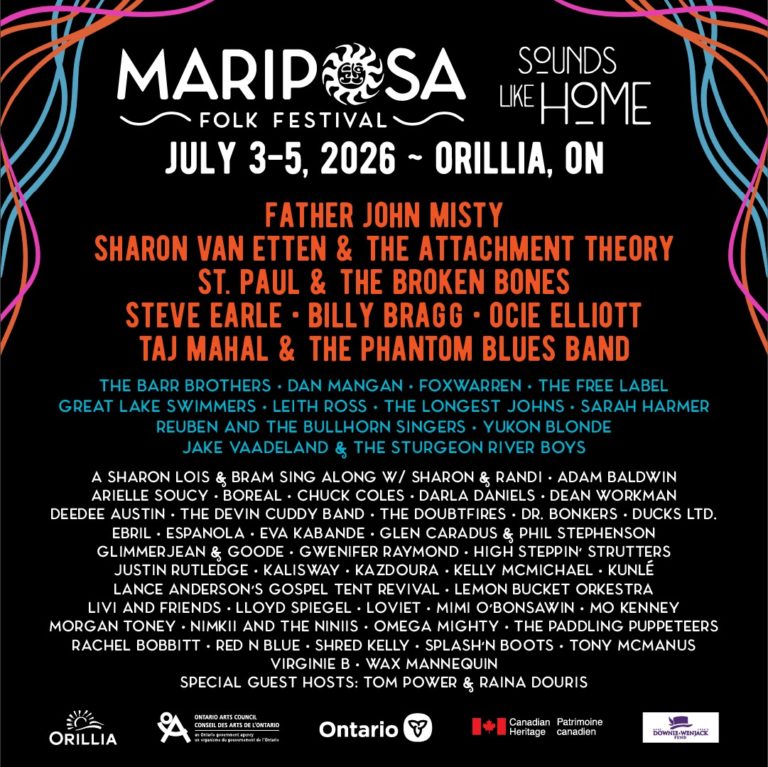
Mariposa Folk Festival has a lineup this year that demands your attention. The iconic Orillia festival returns July 3-5 to Tudhope Park on the shores of Lake Couchiching with a roster that blends legendary names, beloved returning artists, and fresh voices making their Mariposa debut, all under the theme Sounds Like Home.

Artistic Director Spencer Shewen put it directly: “This year, I really wanted to speak to something that’s always been at the heart of Mariposa: real music made by real people. There’s no A.I. here, just real musicians who’ve spent years honing their craft.” The result is a lineup that feels both carefully considered and genuinely alive.

Making their Mariposa debut are Father John Misty, Sharon Van Etten & The Attachment Theory, St. Paul & The Broken Bones, Ocie Elliott, Foxwarren, Leith Ross, and The Longest Johns. Returning to the festival are Steve Earle, Taj Mahal & The Phantom Blues Band, Billy Bragg, Sarah Harmer, The Barr Brothers, Dan Mangan, Great Lake Swimmers, Yukon Blonde, and many more.

Festival President Pam Carter captures the spirit of the weekend: “Whether you’re a longtime festival goer or a first-timer looking to discover your next favourite artist, Mariposa wraps us all in a warm blanket, just like coming home from a long time away.”

The 3-day festival features 11 music stages plus presentations of story, dance, and craft. Children 12 and under are admitted free, with special pricing available for youth and young adults. Onsite camping is available.

Tickets are on sale now at mariposafolk.com.

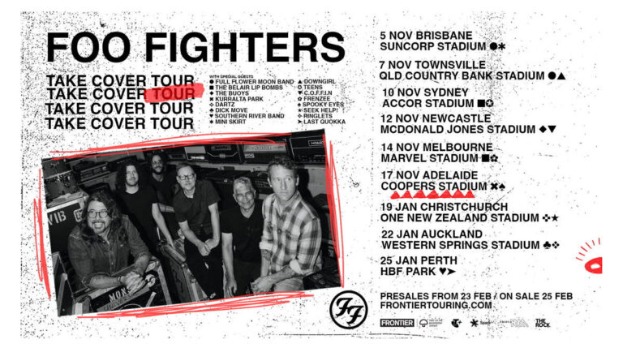
Foo Fighters Bring the Take Cover Tour to Australia and New Zealand This November

0

Foo Fighters are heading back down under, and they’re doing it at full stadium scale. The Rock and Roll Hall of Fame inductees have announced the Take Cover Tour, a massive run through Australia and New Zealand spanning November 2026 into January 2027, hitting Brisbane, Townsville, Sydney, Newcastle, Melbourne, Adelaide, Christchurch, Auckland, and Perth.

The tour adds 2 regional cities, Townsville and Newcastle, to the itinerary, a direct nod to the band’s commitment to reaching fans beyond the major centres. Foo Fighters are also bringing 16 of the region’s hottest rising acts along for the ride, each one handpicked by the band themselves.

One stop deserves special mention. The Christchurch date lands at One New Zealand Stadium, the city’s newly built state-of-the-art venue on track for completion in April. Foo Fighters will be among the first major international acts to take that stage.

Tickets are on sale now.

Foo Fighters 2026-2027 Australia and New Zealand Take Cover Tour Dates:

Nov 5 – Brisbane @ Suncorp Stadium

Nov 7 – Townsville @ QLD Country Bank Stadium

Nov 10 – Sydney @ Accor Stadium

Nov 12 – Newcastle @ McDonald Jones Stadium

Nov 14 – Melbourne @ Marvel Stadium

Nov 17 – Adelaide @ Coopers Stadium

Jan 19 – Christchurch @ One New Zealand Stadium

Jan 22 – Auckland @ Western Springs Stadium

Jan 25 – Perth @ HBF Park

Luke Combs Brings Category 10 to Universal Orlando Resort’s CityWalk

0

Luke Combs is building something bigger than a brand. Opry Entertainment Group and the Grand Ole Opry member have announced plans to open a Category 10 location at CityWalk at Universal Orlando Resort, the third venue in the growing concept and the first to plant its flag in Florida.

Combs captures the moment in his own way: “I have a line in my song ‘1, 2 Many,’ ‘there’s no stopping me once I get goin.’ Well, I guess you can say the same about Cat 10 now. I know Orlando is a worldwide destination spot, so I’m super pumped and humbled that we’re getting to open a location there. My wife is from Florida, so we’re both super excited about this.”

The Category 10 brand takes its name from Combs’ eight-times platinum debut No. 1 hit “Hurricane,” and the Orlando location will carry that DNA throughout. The approximately 33,000 square-foot, three-story venue will feature experiential areas drawn directly from Combs’ music and personal passions, with groundbreaking targeted for summer 2026 and an opening planned for late 2027.

OEG Executive Chairman Colin Reed underscores the strategic thinking: “Country music is reaching more people nationally and internationally than ever before, driven in large part by superstars like Luke Combs. With Orlando welcoming millions of visitors from around the globe each year, expanding the Category 10 footprint into this world-class entertainment destination allows us to introduce visitors to an authentic country music experience inspired by Luke’s Carolina roots.”

The Orlando location joins the flagship Category 10 in Nashville and a Las Vegas location debuting in fall 2026, making this a genuinely national footprint for a concept that’s moving fast.