Home Blog Page 1783

Toronto’s PRESCILLA UNA Soars To A “Better Place Than Heaven” In Her New Double-Single

0

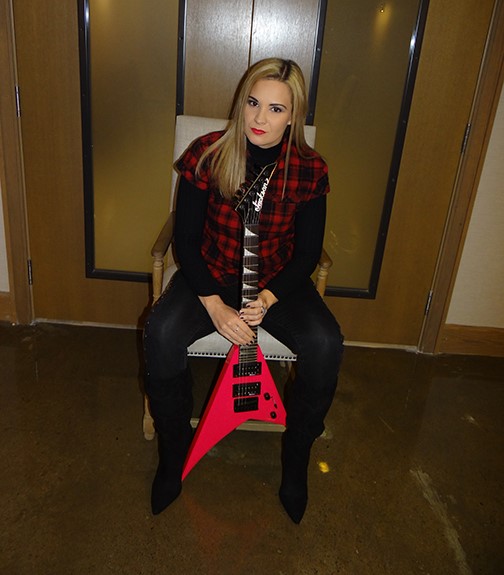
Prescilla Una soars off to a “Better Place Than Heaven” in this, the new double-single from her sophomore album, Enlighten.

“Better Place Than Heaven” is an extremely emotional acoustic track, which is sporadically backed by a bone-chilling piano melody and a haunting vocal performance found within the chorus.

“’Better Place Than Heaven’ came to me in a dream,” Una says, in regards to the songwriting process. “I picked up my guitar immediately to find the chords, notes and proper strumming techniques, to catch the song before I lost it.”

The majority of the tune’s somber music video sees the Toronto-based artist laying on a tufted violet couch as she strums and sings her troubles away. The remixed music video (that’s right, there are two music videos), on the other hand? Accompanied by producer Sandro Peres’s upbeat, dance remix of the powerful song, Una can be seen in a sparkling silver dress as she dances around the same colourful environment as before — except this time, with a wide grin on her face as she sings along.

In regards to the vividly theatrical music videos, Una revealed they were recorded at a friend’s recording studio in Vaughan, ON. She was inspired to create the short after a trip to Brazil and said while it took only a day to shoot, it involved months of planning.

Though “Better Place Than Heaven” was released as her latest single, Una’s second album, Enlighten, actually dropped last December — six months after her debut record, Music Therapy (2014). The long-awaited pop album includes some of the up-and-coming star’s more-recent singles, like “Someone,” “Up” and “Home,” among a few others. Enlighten was released as three individual albums: the first includes all 11 of the original songs; the second consists of 10 unique remixes; and the final features every song, however, just the instrumental tracks.

On why she stepped away from the spotlight for so long, Una revealed that the financial strains of being a mother, work and other roadblocks in her life set her back more than she had initially hoped.

“I started writing more songs after the release of ‘Music Therapy,’” says the musician, who added that Enlighten was completed during the COVID-19 pandemic, “in hard, political times.

“There were also some songs I didn’t complete and that just didn’t fit the first album.”

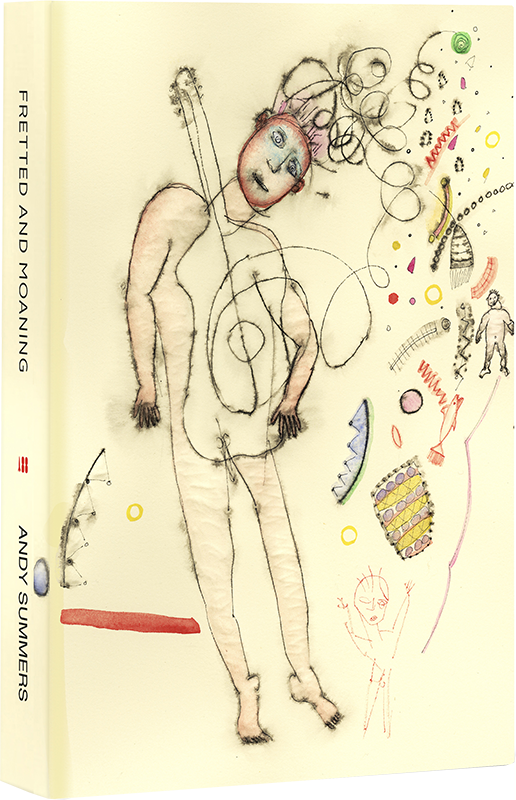
My Next Read: “Fretted And Moaning” by Andy Summers

0

Musician, composer, photographer, guitarist and… author. Andy Summers has written short stories ever since he became a member of The Police, and they are as smart, witty and unexpected as his music and photography. For the first time they will be available in two special hardback editions, one of which will be signed and include a limited art print of an Andy Summers photograph.

Andy’s 45 stories in Fretted & Moaning reveal a cast of characters drawn from the world of music, chief among them guitarists. Every tale has at its heart music or a guitar and a person whose ambition, hopes, dreams, loves, hates, failures and successes are revealed in uncanny, funny, and never expected ways.

You can get it here.

Everything You Need To Know About Copyrighting A Script

0

So, you think you are the next Stephen Spielberg.  Well, if you are concerned about someone else stealing your new movie script, obtaining a Copyright from the US Copyright Office before sharing your script is an absolute must.

Of course, it is entirely understandable that after a lot of hard work, you are looking forward to sending that script of yours to agents and producers and dreaming of making the big bucks!. However, you need to make sure that your script is well protected from IP theft before sending it all over the internet.

Through copyright registration, a record of ownership is created and the author is on record with the US Government that the script does indeed belong to the author. When you copyright a script or a screenplay, you are fundamentally developing a paper trail of evidence and proof of original creation. Once a registered copyright of your work is created, you will not only have a record of the ownership of the script but also a slew of other essential rights related to the enforcement of your IP.

What Exactly Is a Copyright?

The principal purpose of a copyright is to protect an author’s “original work of authorship”, which includes songs, lyrics, books, scripts and screenplays. Unlike, a trademark, which protects a brand identity (name, logo, slogan), copyrights attach the minute the work is fixed in a “tangible form” rather than from the time the trademark is used in conjunction with a sales event.  However, ideas in the abstract cannot be protected by a copyright – only the particular written work is subject to copyright. Thus, a copyright can never protect a script writer’s concept or general idea for a TV show or a movie.

Again, the moment a script is written, it obtains a preliminary “Copyright”, even if the script is never actually submitted to the Copyright Office. Generally, the author of the script has the copyrights unless he wrote it as function of his job requirement or if he signed a Work-For-Hire agreement while writing for someone else. The Copyright not only provides with owner with the sole right to the work but also the exclusive right to re-create, copy, distribute, make derivative works, and publicly perform/ display the work.

Advantages Of Copyright Registration

Despite the script already being copyrighted the moment it is finished being recorded, registering with the United States Copyright Officers provides the author with several important advantages.

When you register your work with the Copyright Office, it will form a public record of the copyright ownership, including the script’s creation date (providing you developed the script first!).

Critically, in order to sue a person for copyright infringement in Federal Court, you are required to have a Registered Copyright, rather than the traditional Copyright that is accrued from the moment the work is fixed in a tangible form.

If you have registered your Copyright before the infringement has occurred, you will be able to sue for extra damages, including attorney, if you prevail in the suit. Of course, Registering your copyright will make things a lot easier in court when it comes to proving that you’re the copyright owner.

The Five Steps To Copyrighting Your Script

1. Register With The Copyright Office Electronic System

eCO is the online system that’s part of the copyright office that allows an individual to register their copyright electronically. While the Copyright Applicant also have the option to register via mail, it is a longer, more cumbersome process which will invariably cost more money. Electronic registrations are cheaper and processed much quicker. In order to start the electronic registration process, you’re required to create a username and password if you want to log into the eCO system. Next, it is time to start inputting the administrative info of the applicant and his representative (which if he has other IP, may be his Trademark Lawyer).

2. Complete Your Application

When you apply through the eCO system, you will be asked to log in and complete your application online. If you chose to apply by mail, you are required to download and fill ‘Form PA,’ which is for performing arts works.  Here, you will need to input your name, citizenship, address, name of work etc. The idea is to provide the Copyright Office with a complete profile of the applicant.

3. Pay Your Fee

The government filing fee for the copyright registration will varies according to the number of “works” submitted and whether or not the work/s are already published. You can roughly expect the cost to file the Copyright registration to be in the range of $35 to $55 (for electronic filings). Paper applications cost $85. You can pay for online registrations using a debit card/credit card. You can also pay via ACH transfer through Pay.gov. For mail registrations, you can pay via money order or by check.

4. Present A Copy Of The Work You Did

Next, you need to provide the Copyright Office with the actual work that you’d like to obtain a Copyright on.  Here, you may send a copy or copies of your work to the copyright office either digitally or by slow-mail. How you do this will depend on your script being unpublished or published and the extent to which your “work” is the sort of thing that can be easily transmittable through the internet.  The majority of individuals who are looking to copyright a script for a movie will have a script that’s unpublished and which can be submitted electronically.

If you are registering online, you can submit your unpublished script’s copy. You can visit the copyright office website to get more information regarding size limitations and file types that are acceptable (typicaly, expect to submit your script as a PDF or .doc file). If you’ve registered through mail or have a published script, then you are required to submit paper copies.

5. Wait For The Registration Process To Be Completed

Congratulations! You have made it to the end of the online-filing process and if you’ve done everything correctly, you may expect to receive a confirmation email confirming that your application has been received. However, mail applicants do not get any confirmation from the copyright office.

Hopefully, you will not run into any objections from the Copyright Office but in the event that they any questions regarding your application, you will be contacted with the issue. If not, then it is merely a matter of waiting a number of months for your copyright registration to fully mature and issue.


 

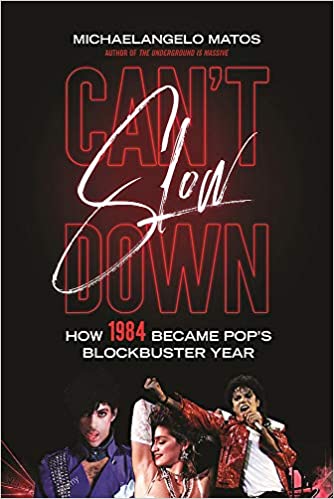
My Next Read: “Can’t Slow Down: How 1984 Became Pop’s Blockbuster Year” by Michaelangelo Matos

0

Everybody knows the hits of 1984 – pop music’s greatest year. From “Thriller” to “Purple Rain,” “Hello” to “Against All Odds,” “What’s Love Got to Do with It” to “Wake Me Up Before You Go-Go,” these iconic songs continue to dominate advertising, karaoke nights, and the soundtracks for film classics (Boogie Nights) and TV hits (Stranger Things). But the story of that thrilling, turbulent time, an era when Top 40 radio was both the leading edge of popular culture and a moral battleground, has never been told with the full detail it deserves – until now. Can’t Slow Down is the definitive portrait of the exploding world of mid-eighties pop and the time it defined, from Cold War anxiety to the home-computer revolution. Big acts like Michael Jackson (Thriller), Prince (Purple Rain), Madonna (Like a Virgin), Bruce Springsteen (Born in the U.S.A.), and George Michael (Wham!’s Make It Big) rubbed shoulders with the stars of the fermenting scenes of hip-hop, indie rock, and club music.

Rigorously researched, mapping the entire terrain of American pop, with crucial side trips to the UK and Jamaica, from the biz to the stars to the upstarts and beyond, Can’t Slow Down is a vivid journey to the very moment when pop was remaking itself, and the culture at large – one hit at a time.

Introducing Allied Music Centre, Home of historic Massey Hall

0

With enormous gratitude, Massey Hall today announces that Allied Properties (TSX:AP.UN), a Canadian provider of creative urban workspace, has made a landmark contribution to the Massey Hall Revitalization. This transformative support expands the project’s original scope and introduces Canada’s premiere multi-purpose performance facility, Allied Music Centre, home of historic Massey Hall.

“We’re truly grateful for the opportunity to partner with historic Massey Hall,” said Michael Emory, President & CEO of Allied. “This partnership will enable us to contribute meaningfully to our communities. It will also enable us to propel our vision over an extended period of time and to enrich the experience of the many creative organizations and people who use our urban workspace across the country.”

Massey Hall will always be called Massey Hall, but Allied’s significant investment to the Revitalization is the catalyst for the creation of Allied Music Centre. Featuring NEW state-of-the-art performance venues and dedicated spaces for Artist Development and Education & Outreach initiatives, all located in the 7-storey tower adjacent to the National Historic Site.

These previously unannounced additional spaces include:

The Theatre. An entirely new and intimate venue that will be a welcome addition to Toronto’s music ecosystem, serving as a launch pad for emerging artists and a home for community programming and engagement. With retractable seating akin to Massey Hall’s revitalized orchestra level, it easily transforms from traditional theatre for more intimate performances and presentations – seating 100, into a standing room club or education workshop setting.

The Studio. With the acoustic treatment and technical capability you would expect of a professional recording facility, The Studio has multi-function flexibility for educational programming and artistic development at the core of its design.

The Studio adapts to a range of these uses, whether as a “wired” classroom for education programs delivered in person or remotely, as space for emerging artists to create, or as a sequestered rehearsal space for acts performing at any of the venues.

Artists’ Lab. A suite of dedicated resources for creators providing all the modern tools needed to develop their craft. Featuring professionally appointed digital audio workstations, a unique instrument library, acoustically treated practice rooms, and more – a home for artists.

The Lounge. A gathering place for artists, industry, and fans alike, the Lounge will offer a casual gathering place for the music community by day and will be abuzz at night as concert-goers and creatives mingle and take in the awe-inspiring view of the city.

This extraordinary investment is a testament to Allied’s on-going commitment to creativity and connectivity and a bold extension of their Make Room for the Arts program, an initiative providing much-needed affordable spaces to the artistic community.

“In Allied, we have found a partner who shares our values, believes in our mission, and from day one wanted to know what they could do to make the Massey Hall Revitalization even more impactful to the community,” said Jesse Kumagai, President & CEO, The Corporation of Massey Hall and Roy Thomson Hall. “As a result, their insightful and meaningful investment is not only bringing Massey Hall a significant step closer to reopening, but also serving as the catalyst for expanded scope, adding a new performance venue and dedicated spaces for artist development and music education. We are immeasurably grateful for this remarkable contribution to Canada’s music scene!”

When complete, Allied Music Centre will play a profound role in our cultural ecosystem, creating inspiring new opportunities for artists and music fans at every step along their journeys. From emerging artists making their debut to the world’s most celebrated stars, young students discovering a passion for music to lifelong fans soaking in the energy of live performance, Allied Music Centre will be a home for all music and all people.

As previously announced, the Massey Hall Revitalization will restore and renew both the interior and exterior of this National Historic Site, unveil over 100 restored original stained glass windows, introduce new music venues, feature archives and exhibits located throughout and, offer a new retractable seating option on the orchestra level of the Allan Slaight Auditorium for energy charged performances.

Also previously announced, the new seven-story tower – in addition to today’s announcement will feature; a new 500-capacity club with incredible sightlines to the city, additional patron amenities that will include accessible seating options throughout and, state-of-the-art production facilities with turnkey content capture, wired to every stage and studio in Allied Music Centre.

For more information, visit www.alliedmusiccentre.com.

New Report Outlines Devastating Impact of COVID-19 on Canadian Independent Music Industry

0

A new report details just how much the COVID-19 pandemic has impacted Canadian independent musicians. Among the most shocking revelations: the evaporation of the live music scene has led to a decline in revenue of CAD 280 million in just six months and that the industry will likely not recover to pre-COVID levels until at least 2023.

The report, entitled The Impact of COVID-19 on Canadian Independent Music, was conducted by Nordicity on behalf of the Canadian Independent Music Association (CIMA) and shines a light on the various impacts of the COVID-19 pandemic on the Canadian independent music sector.

The key challenges include:

  • Drop in revenue: Since the start of the pandemic in March, independent music in Canada has seen a drop in revenue of CAD 280 million. The revenue loss has been most acute for emerging artists and their representatives:
  • The live sector has been the hardest hit, with a 79% drop in income from 2019;
  • Independent sound recording and publishing companies will see a 41% decline in revenue from 2019
  • Almost 2,000 FTE (full-time equivalent) jobs lost in six months
  • Long recovery: In a best-case scenario, industry revenue will not recover to pre-COVID levels until 2023-2024, and only with further emergency financial supports;
  • Lack of audience development: With new musicians unable to promote their work in concerts, the commercial viability of their projects will suffer. As such, the longer this impact continues, the longer the impact will be on the industry ability to generate revenue in the future;
  • Need for greater diversity: While not a new issue, the pandemic (and events that occurred during it) have highlighted the need for the industry to improve access to different voices. Anecdotal evidence suggests that many Black, Indigenous and People of Colour have not seen the same funding support as the rest of their peers – both as artists and as music industry entrepreneurs.
  • Policy and regulatory uncertainty: Between the variable funding levels at the Canada Music Fund, the potential reforms to the Copyright Act, and the recently introduced Broadcasting Act legislation (Bill C-10), there is uncertainty surrounding how Canadian independent music companies will be supported as they recover from the pandemic.

As part of the Nordicity report, CIMA includes several recommendations for additional supports that can back the independent music industry as it recovers from the COVID-19 pandemic. Among the recommendations:

  • Extending and enhancing the Canada Music Fund’s Annual and Supplemental Funding.
  • Increasing flexibility in how funding is disbursed;
  • Enhancing financial and technical support for audience development;
  • Providing wage support for workers in the Canadian music sector;
  • Creating tailored financing for underrepresented groups; and
  • Enhancing support for online training for new and emerging music professionals

Mister Rogers’ Rare Words From 1983 on Death and Childhood Illness

0

Spoken Word with Electronics is an audio series of unusual stories.

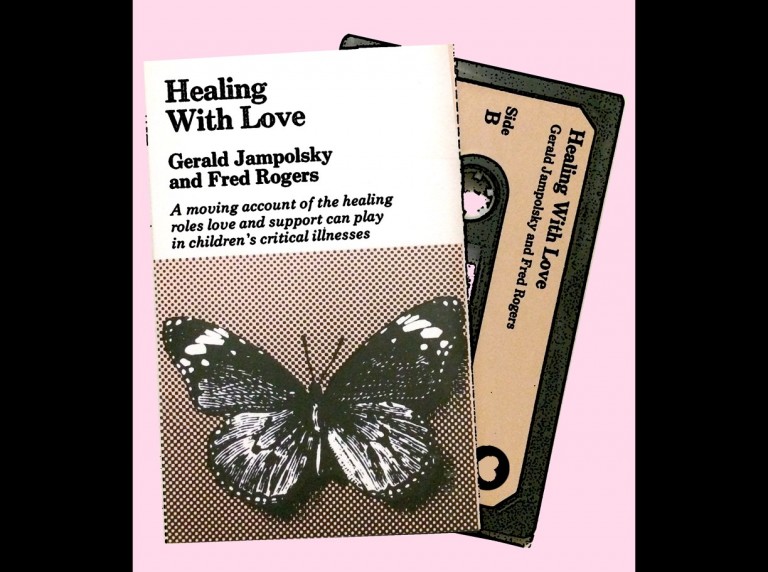
Hi, everyone, welcome back to the show. This week is a tribute to Mr Rogers. I have one rare tape on Mr Rogers in my library of unusual records, and when I share this with people I present it as “a side of Mr Rogers you may have never heard.” Most listeners agree: This is a very incredible album. Specifically, this is Fred Rogers translating the complexity of death and pain into helping parents deal with a huge fear: The death of their kids. He also relates similar comfort to kids themselves. And then you meet the children, who are all wonderful, happy, and seemingly more aware of the moment than many adults three times their age. I’m posting it this week because we need more compassion in the world, presently.

This is what the 1983 cassette “Healing with Love” is all about, and its obscure placement in the Mr Rogers discography only makes it more interesting. This wasn’t work for PBS. It was seemingly only intended for the patients and their parents, and copies of the tape were produced in small numbers. There is no way this topic would have made it onto his show (though Bruce Haack on Mr Rogers is a favorite in that category)

This tape celebrates the word of Dr Gerald Jampolsky, who is a kindred spirit of Fred Rogers. You are introduced to Jampolsky, his group of patients, their parents, and then encounter some frightening moments with a parent grieving a dead child. Dr Jampolsky manages a phone hotline for terminally ill children and consoles parents, both those grieving a death or managing stress, and Jampolsky’s love and care for everyone is to be admired. Hear the entire tape here.

Of course, we had to make a tribute to all of this, and that can be found in Side A for this week, “Mr Roger’s Metaphysical Phone Hotline” including some of the more intense Mr Rogers sentences I’ve ever heard. Here’s one: “Do you consider death an enemy?” – Wild.

Side B for this week continues our serial Charlie Pickle. (Hear all the story up to this point) – This week introduces you to your first day’s work at Company Statistics, where both you and Charlie work, and you’re given some tips on helping everyone out with the coffee.

Black Pumas: Tiny Desk (Home) Concert

0

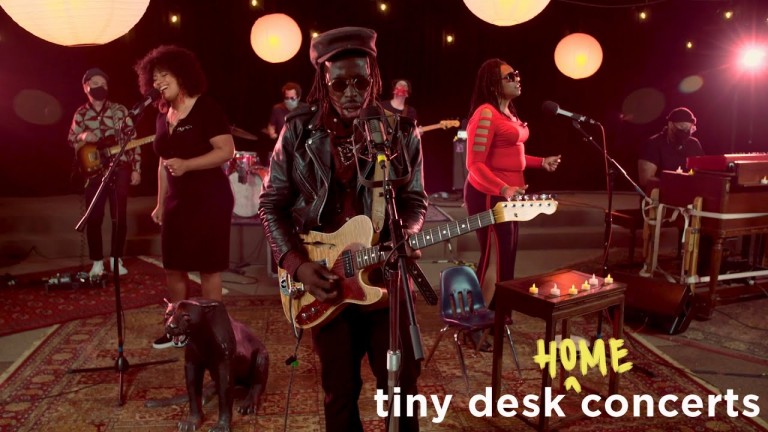
The Austin-based rock band Black Pumas are having a good 2020. The group, led by singer Eric Burton and guitarist Adrian Quesada, was just nominated for three Grammys, including album of the year for Black Pumas (Deluxe Edition), and both record of the year and best American roots performance for the track “Colors.” The band’s turn behind a tiny desk (and chair) shows why its debut album — now more than a year old — is receiving so much recognition right now.

SET LIST
“Red Rover”
“Fire”
“OCT 33”
“Colors”

1-minute tip for artists: Online Release Parties!

Why taped is better than live, bring a host, and don’t forget your merch table!

“Music For The Movement/Black History Always” Set For Release February 26

0

The “Music For The Movement/Black History Always” EP is set for release February 26. The EP is the second volume of the ongoing project between The Undefeated, ESPN’s content initiative exploring the intersection of sports, race and culture, and Hollywood Records. The EP aligns with ESPN’s “Black History Always” initiative which was announced yesterday.

Thematically, Volume II balances the realities of Black America’s continued struggles, while also celebrating Black beauty and offering messages of hope. The “Black History Always” EP is the follow up to “I Can’t Breathe/Music For the Movement,” which was released last fall and drew national attention from Associated Press and ABC’s Good Morning America.

Like Vol. I (I Can’t Breathe),”Black History Always” features reimagined, historically significant songs, as well as an original song and a spoken word piece, made by and for Black America with contemporary artists. The message of hope is that everyone sees the beauty and history in Black culture. Each track has original artwork, created by Black artists.

Though Black History Month is celebrated in February, Black history is made every day, and the EP celebrates that in music and art. With “HERstory” being made this month with former California Senator Kamala Harris becoming the first woman of color to hold the office of Vice President of the United States, the theme of Black History Always is even more significant.

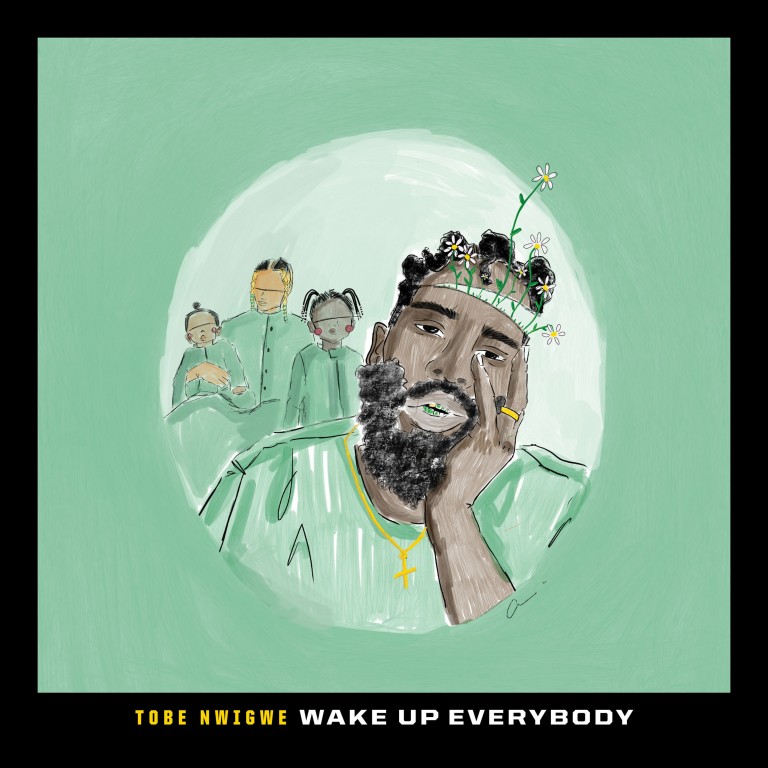
Tobe Nwigwe’s interpretation of Melvin & The Blue Notes’ (featuring Teddy Pendergrass) “Wake Up Everybody,” is plaintive and celebratory at once, and is available now. The song explores society’s shortcomings and encourages humanity to fight for a brighter future in which we take care of our elderly, education is prioritized, and drug addiction is eradicated. Houston-based Nwigwe captured the nation’s attention with a transcendental live rendition of “Wake Up Everybody” on the Presidential Inauguration Committee’s “We Are One” livestream event.

Grammy-nominated Brent Faiyaz‘ original song, “Eden,” will be released February 12. This soulful R&B track ponders a common observation many have about their Creator; why doesn’t God simply intervene to make the world a better place? With subtle nods to police brutality and hardship, the song wonders whether the Black community’s prayers are going unanswered. Singer/Songwriter Faiyaz hails from Columbia, Maryland, and was recently named one of YouTube’s Black Voices for 2021.

Grammy and BET-nominated singer/songwriter Tinashe offers a contemporary recording of “I’m Every Woman.” Originally released in 1978, “I’m Every Woman” was Chaka Khan’s iconic debut solo single. The song embodies female strength and empowerment, and the connectedness of all women. At a time when Black women deserve their flowers the most, this record stands tall. Tinashe is from Lexington, Kentucky, and has collaborated with many artists, from Ty Dolla Sign to Britney Spears, making her a much sought-after R&B artist.

Grammy-nominated, critically acclaimed, and Gary, Indiana native, Freddie Gibbs recorded Gil Scott Heron’s “Winter In America.” Originally released in 1975, the song in an unapologetic examination of American colonialism, the absence of democracy, and racism. The song depicts America as a dystopian state in which, “Democracy is rag-time on the corner,” The forest is burned beneath the highway,” “Robins are perched in barren treetops,” and “No one is fighting because no one knows what to save.” Tragically, these themes still resonate today, over 45 years later.

Rounding out the “Black History Always” EP, is a spoken word piece from Roc Nation’s Infinity Song, aptly named “Undefeated.” The thought provoking “Undefeated” is an important call to action track expressing the urgent need for the reframing of the Black narrative and being the authors of Black history. Infinity Song is a five-piece sibling band that formed in 2014 in New York. All talented singers, songwriters and musicians, Infinity Song has collaborated with Jon BatisteKanye WestTori Kelly and many others.

The Undefeated is ESPN’s multiplatform content initiative exploring the intersections of sports, race and culture. The digital hub, www.TheUndefeated.com, which launched in May 2016, combines innovative long-form and short-form storytelling, original reporting and provocative commentary to enlighten and entertain African Americans, as well as sports fans seeking a deeper understanding of Black athletes, culture and related issues. In addition to its cutting-edge content, The Undefeated seeks to be a thought-leader on race, sports and culture in the country – convening insightful forums to discuss and debate topical issues affecting sports and race in America.