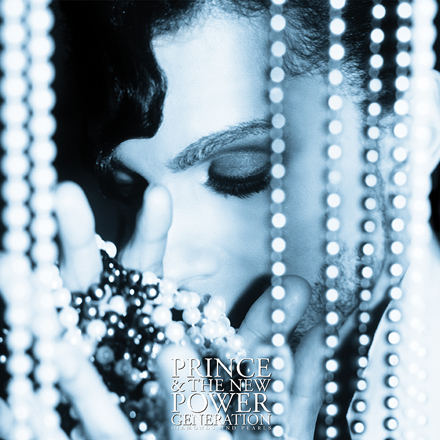
Diamonds And Pearls is the thirteenth studio album by Prince, and was the first with his new backing band, The New Power Generation. Featuring six massive international singles, including the hits “Gett Off”, “Cream”, and the iconic title track, the album was a worldwide smash reaching multi-platinum status in the USA and the UK, where it remains his best-selling album.
This October 27, Paisley Park Enterprises, in partnership with Sony Music Entertainment and Warner Records, will reissue Diamonds And Pearls via all physical, digital, and streaming partners, with the classic album remastered for the very first time, and featuring 47 previously unreleased tracks, as well as a previously unreleased 2+ hours of video concert performances from Prince’s legendary vault. Pre-order HERE
The reissue suite will be comprised of the following formats:
- Super Deluxe Edition (7CD+Blu-ray / 12LP+Blu-ray / audio-only download and streaming)
- Deluxe Edition (2CD / 4LP 180g vinyl)
- Remastered album (1CD / 2LP 180g off-white “Pearl” vinyl (USA only) / 2LP 180g clear “Diamond” vinyl (ex. USA) / download and streaming)
Following the successful release of the 1999 Super Deluxe Edition (2019), and Sign O’ The Times Super Deluxe Edition (2020), the Diamonds And Pearls Super Deluxe Edition represents the third deep dive into Prince’s vault. It includes a total of 75 audio tracks across 7x CDs and 12x 180g vinyl records.
The set offers a newly remastered version of the album, plus 15 of the incredible remixes and B-sides from the era, including the never commercially released “Gett Off (Damn Near 10 Min.)” mix. The Super Deluxe Edition also features 33 previously unheard studio gems from Prince’s Illustrious vault, ranging from alternate versions of album tracks, to numbers Prince gave away to other artists, and songs recorded while on the road in 1990.
Prince & The NPG previewed the Diamonds And Pearls Tour at Prince’s Minneapolis club, Glam Slam, on January 11, 1992. The sweaty, sold-out, last-minute show captures the sheer joy and sense of endless possibility that came to define this era. This previously unreleased live concert performance has been mixed from the 24 track master and rounds out the audio content of the 7CD and 12LP sets.
This same previously unreleased concert is also presented in stunning 2K video on the Blu-ray disc that accompanies both Super Deluxe Edition formats, in Stereo, 5.1 Dolby True HD, and Dolby ATMOS audio formats. The Blu-ray also features Prince & The New Power Generation’s performance at The Special Olympics at the Metrodome in Minneapolis in July 1991 (also in Stereo, 5.1, and ATMOS), as well as a previously unseen soundcheck. The Blu-ray is completed by the long out of print Diamonds And Pearls Video Collection, originally released on VHS and LaserDisc in 1992.
The 120-page hardback book which accompanies the SDE set features unseen photos by Randee St. Nicholas, and essays by: author & broadcaster Andrea Swensson; Archivist and Senior Researcher for the Prince Estate Duane Tudahl; British music critic and Prince expert Jason Draper; De Angela L. Duff, an Industry Professor at NYU Tandon School of Engineering in Brooklyn; Social Media Personality KaNisa Williams; and an introduction from Public Enemy founder, Chuck D.
The Diamonds And Pearls Super Deluxe Edition holds a magnifying glass to the prolific output of this truly unique musician, songwriter, producer, and performer who started the 1990s writing and recording at such a rapid pace that his next album would be practically complete by the time the Diamonds And Pearls Tour debuted in Tokyo that April.
In addition, there will be a brand-new Dolby ATMOS mix of Diamonds And Pearls. This marks the very first time a Prince studio album has been mixed in ATMOS, and it will feature on an audiophile Blu-ray, featuring the album in Dolby ATMOS and HD Stereo (24bit / 44.1kHz) formats.
As a companion collector piece, fans have the opportunity to order a numbered 7” singles boxed set, strictly limited to 1,991 units. Containing remastered audio for six official singles released in 1991 & 1992, the set contains a brand new 7” single comprising two previously unreleased tracks, “Alice Through The Looking Glass” and “Horny Pony (Version 2)”. The set is available to order now, exclusively via the official Prince Store.
“Alice Through The Looking Glass” is now available on all digital download and streaming platforms. Featured on the Super Deluxe set, the track was recorded on May 28, 1991 at Larrabee Sound Studios, Studio A. Listen HERE
Also available now on all digital download and streaming platforms is “Insatiable (Early Mix – Full Version)”, which also appears on the Diamonds And Pearls Super Deluxe Edition. This previously unreleased 8’02” mix features lyrics that were ultimately edited out and reveals how “Insatiable” originally sounded on its initial mix, since it contains a variety of instruments that were eliminated in the final version. Listen HERE
Unlike previous Prince albums, the majority of Diamonds And Pearls was recorded with The New Power Generation, a group he had assembled largely from the Twin Cities area. They shared cultural backgrounds and localised experiences, and helped Prince connect his past influences to the present creating a new uplifting blend of hip-hop, dance, gospel, and pop that would bring him to the top of the charts worldwide.
The New Power Generation was a band that Prince believed in so wholeheartedly that he gave them co-credit on the cover of Diamonds And Pearls, something he’d only done previously with one other band, The Revolution. The group consisted of Sonny Thompson (vocals & bass), Damon Dickson (vocals & percussion), Rosie Gaines (vocals & keyboards), Michael Bland (drums), Kirk Johnson (vocals & percussion), Tony M (vocals), Levi Seacer, Jr. (bass, guitar & vocals), and Tommy Barbarella (keyboards).
Diamonds And Pearls was unveiled to the world on October 1, 1991, and it instantly had a huge commercial and cultural impact, becoming the biggest selling non-soundtrack album of Prince’s career. Over the past three decades, the reasons for its enormous success have been discussed extensively. Not least of these was Prince’s decision to finally engage with major television exposure and an extensive tour of Europe, Japan and his first trip to Australia. The album also offered a diverse collection of sounds that could appeal to a wide variety of listeners. Diamonds And Pearls had something for everyone.
PRINCE & THE NEW POWER GENERATION DIAMONDS AND PEARLS SUPER DELUXE EDITION
(7CD+Blu-ray / 12LP+Blu-ray / Digital *)
CD1 / LP1&2: DIAMONDS AND PEARLS (REMASTERED)
- Thunder
- Daddy Pop
- Diamonds And Pearls
- Cream
- Strollin’
- Willing And Able
- Gett Off
- Walk Don’t Walk
- Jughead
- Money Don’t Matter 2 Night
- Push
- Insatiable
- Live 4 Love
CD2 / LP3&4: SINGLE MIXES & EDITS (REMASTERED)
- Gett Off (Damn Near 10 Min.)
- Gett Off (Houstyle)
- Violet The Organ Grinder
- Gangster Glam
- Horny Pony
- Cream (N.P.G. Mix)
- Things Have Gotta Change (Tony M Rap)
- Do Your Dance (KC’s Remix)
- Insatiable (Edit)
- Diamonds And Pearls (Edit)
- Money Don’t Matter 2 Night (Edit)
- Call The Law
- Willing And Able (Edit)
- Willing And Able (Video Version)
- Thunder (DJ Fade)
CD3-5 / LP5-9: VAULT I, II, III
VAULT I
- Schoolyard
- My Tender Heart
- Pain
- Streetwalker
- Lauriann
- Darkside
- Insatiable (Early Mix – Full Version)
- Glam Slam ’91
- Live 4 Love (Early Version)
- Cream (Take 2)
- Skip To My You My Darling
- Diamonds And Pearls (Long Version)
All tracks previously unreleased
VAULT II
- Daddy Pop (12″ Version)
- Martika’s Kitchen
- Spirit
- Open Book
- Work That Fat
- Horny Pony (Version 2)
- Something Funky (This House Comes) (Band Version)
- Hold Me
- Blood On The Sheets
- The Last Dance (Bang Pow Zoom And The Whole Nine)
- Don’t Say U Love Me
All tracks previously unreleased
VAULT III
- Get Blue
- Tip O’ My Tongue
- The Voice
- Trouble
- Alice Through The Looking Glass
- Standing At The Altar
- Hey U
- Letter 4 Miles
- I Pledge Allegiance To Your Love
- Thunder Ballet
All tracks previously unreleased
CD6&7 / LP10-12: LIVE AT GLAM SLAM, 1992
- Thunder
- Daddy Pop
- Diamonds And Pearls
- Willing And Able
- Jughead
- The Sacrifice Of Victor
- Nothing Compares 2 U
- Thieves In The Temple
- Sexy M.F.
- Insatiable
- Cream/Well Done/I Want U/In The Socket (Medley)
- 1999/Baby I’m A Star/Push (Medley)
- Gett Off
- Gett Off (Houstyle)
All tracks previously unreleased
BLU-RAY
LIVE AT GLAM SLAM, 1992
MINNEAPOLIS, MINNESOTA, JANUARY 11, 1992
- Thunder
- Daddy Pop
- Diamonds And Pearls
- Willing And Able
- Jughead
- The Sacrifice Of Victor
- Nothing Compares 2 U
- Thieves In The Temple
- Sexy M.F.
- Insatiable
- Cream/Well Done/I Want U/In The Socket (Medley)
- 1999/Baby I’m A Star/Push (Medley)
- Gett Off
- Gett Off (Houstyle)
All tracks previously unreleased
SPECIAL OLYMPICS, METRODOME, MINNEAPOLIS, MINNESOTA, JULY 1991
SOUNDCHECK – JULY 19, 1991:
- Let’s Go Crazy/Baby I’m A Star/Push (Medley)
All tracks previously unreleased
SHOW – JULY 20, 1991:
- Diamonds And Pearls
- Let’s Go Crazy/Baby I’m A Star/Push (Medley)
All tracks previously unreleased
DIAMONDS AND PEARLS VIDEO COLLECTION
- Introduction
- Thunder (Live)
- Gett Off
- Cream
- Diamonds And Pearls
- Dr. Feelgood (Live)
- Call The Law
- Willing And Able
- Jughead (Live)
- Insatiable
- Strollin’
- Money Don’t Matter 2 Night
- Live 4 Love (Live)
Blu-ray is presented in: Stereo, 5.1 Dolby True HD (Special Olympics show and Glam Slam only) and Dolby ATMOS (Special Olympics show and Glam Slam only).
* N.B. video content is exclusive to the physical Blu-ray and will not appear on digital download or streaming versions of the Super Deluxe Edition set.
PRINCE & THE NEW POWER GENERATION DIAMONDS AND PEARLS DELUXE EDITION (2CD / 4LP)
CD1 / LP1&2: DIAMONDS AND PEARLS (REMASTERED)
- Thunder
- Daddy Pop
- Diamonds And Pearls
- Cream
- Strollin’
- Willing And Able
- Gett Off
- Walk Don’t Walk
- Jughead
- Money Don’t Matter 2 Night
- Push
- Insatiable
- Live 4 Love
CD2 / LP3&4: SINGLE MIXES & EDITS (REMASTERED)
- Gett Off (Damn Near 10 Min.)
- Gett Off (Houstyle)
- Violet The Organ Grinder
- Gangster Glam
- Horny Pony
- Cream (N.P.G. Mix)
- Things Have Gotta Change (Tony M Rap)
- Do Your Dance (KC’s Remix)
- Insatiable (Edit)
- Diamonds And Pearls (Edit)
- Money Don’t Matter 2 Night (Edit)
- Call The Law
- Willing And Able (Edit)
- Willing And Able (Video Version)
- Thunder (DJ Fade)
PRINCE & THE NEW POWER GENERATION DIAMONDS AND PEARLS REMASTERED
(1CD / 2LP off-white “Pearl” 180g vinyl (USA only) /
2LP clear “Diamond” 180g vinyl (ex. USA) / Audiophile Blu-ray * / Digital Download / Streaming)
CD1 / LP1&2 / Audiophile Blu-ray *: DIAMONDS AND PEARLS (REMASTERED)
- Thunder
- Daddy Pop
- Diamonds And Pearls
- Cream
- Strollin’
- Willing And Able
- Gett Off
- Walk Don’t Walk
- Jughead
- Money Don’t Matter 2 Night
- Push
- Insatiable
- Live 4 Love
* Audiophile Blu-ray presented in Dolby ATMOS and HD Stereo (24bit / 44.1kHz) audio formats