


YouTuber and guitarist Davidlap doesn’t need anyone else to recreate a band.
Johnny Marr on his relationship with guitars

“There’s politics in it, there’s obsession in it, there’s romanticism in it, there’s poetry in it, and there’s your own personal relationship to it. It’s an entire world really.”
In this episode, Johnny Marr discusses his inspirations in music and guitar and his relationship with Ernie Ball from the beginning.
My Next Read:
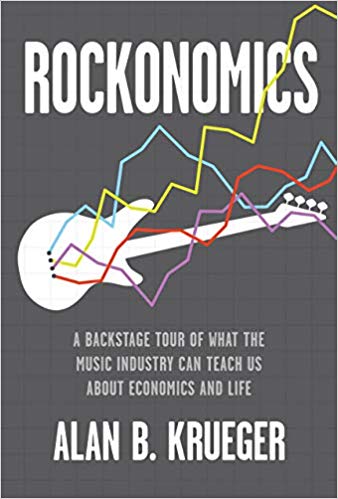
Alan Krueger, a former chairman of the president’s Council of Economic Advisers, uses the music industry, from superstar artists to music executives, from managers to promoters, as a way in to explain key principles of economics, and the forces shaping our economic lives in his new book Rockonomics: A Backstage Tour of What the Music Industry Can Teach Us about Economics and Life.
The music industry is a leading indicator of today’s economy; it is among the first to be disrupted by the latest wave of technology, and examining the ins and outs of how musicians create and sell new songs and plan concert tours offers valuable lessons for what is in store for businesses and employees in other industries that are struggling to adapt.
Drawing on interviews with leading band members, music executives, managers, promoters, and using the latest data on revenues, royalties, streaming tour dates, and merchandise sales, Rockonomics takes readers backstage to show how the music industry really works–who makes money and how much, and how the economics of the music industry has undergone a radical transformation during recent decades.
Before digitalization and the ability to stream music over the Internet, rock stars made much of their income from record sales. Today, income from selling songs has plummeted, even for superstars like James Taylor and Taylor Swift. The real money nowadays is derived from concert sales. In 2017, for example, Billy Joel earned $27.4 million from his live performances, and less than $2 million from record sales and streaming. Even Paul McCartney, who has written and recorded more number one songs than anyone in music history, today, earns 80 percent of his income from live concerts. Krueger tackles commonly asked questions: How does a song become popular? And how does a new artist break out in today’s winner-take-all economy? How can musicians and everyday workers earn a living in the digital economy?
You can get it here.
Liz Phair discuss her career and upcoming memoir Horror Stories

Emerging from the indie-rock boys club of Chicago in the early 1990s, Liz Phair made her name with her 1993 masterpiece Exile in Guyville, a song-by-song response to the Rolling Stones’ Exile on Main Street. Exile in Guyville was a whip-smart double-album full of sharp melodies and blunt truths about female sexuality, longing, and power. It made her a star. This year, Exile Guyville turns 25. To celebrate, Phair’s label Matador released a collection of the home-recorded tapes that she made leading up to Exile in Guyville, under the name Girlysound–which offer a detailed look at the process and genius behind a feminist rock classic. In this interview she sits down with writer Jenn Pelly at the Chicago Athletic Association to discuss her career and an upcoming memoir called Horror Stories.
Video: Ringo Starr Remembers Being Asked to Join the Beatles

Ringo Starr tells Howard Stern about how he came to be in the Beatles after John Lennon, Paul McCartney, and George Harrison had already begun playing together.
Video: Queen Rehearsing ‘We Are The Champions’ In The Studio
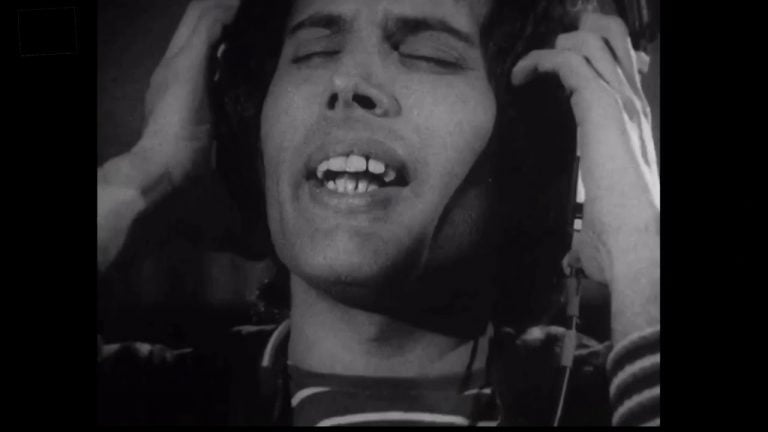
Queen in the studio rehearsing the News Of The World album, including footage of Brian May playing the solo and Freddie Mercury at the Piano and sound desk mixing tracks.
https://youtu.be/r8_vCgbn9Uo
Photo Gallery: Michelle Obama at Toronto’s Scotiabank Arena

All photos by Mini’s Memories. You can contact her at minismemories@hotmail.com








Video: Jeff Beck Destroys His Guitar In Antonioni’s ‘Blow-Up’ Movie
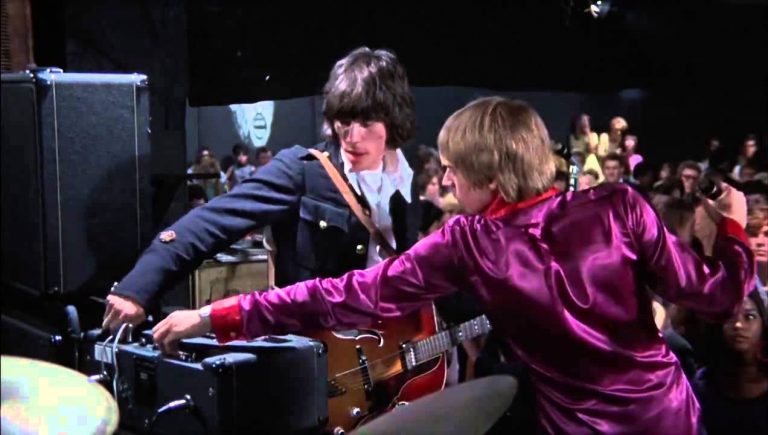
The most widely noted cameo in Michelangelo Antonioni’s Blow-Up’ movie was by The Yardbirds, who perform “Stroll On” in the last third. Antonioni first asked Eric Burdon to play that scene but he turned it down. As Keith Relf sings, Jimmy Page and Jeff Beck play to either side, along with Chris Dreja. After his guitar amplifier fails, Beck bashes his guitar to bits, as The Who did at the time. Antonioni had wanted The Who in Blowup as he was fascinated by Pete Townshend’s guitar-smashing routine. Steve Howe of The In Crowd recalled, “We went on the set and started preparing for that guitar-smashing scene in the club. They even went as far as making up a bunch of Gibson 175 replicas … and then we got dropped for The Yardbirds, who were a bigger name. That’s why you see Jeff Beck smashing my guitar rather than his!” Antonioni also considered using The Velvet Underground (signed at the time to a division of MGM Records) in the nightclub scene, but, according to guitarist Sterling Morrison, “the expense of bringing the whole entourage to England proved too much for him”.
Michael Palin of Monty Python can be seen briefly in the sullen nightclub crowd and Janet Street-Porter dances in stripy Carnaby Street trousers.
Video: David Bowie Criticizes MTV for Not Playing Videos by Black Artists

David Bowie has some questions and criticisms about MTV’s lack of videos featuring black artists in this 1983 interview with Mark Goodman.
The greatest album covers of jazz

Blue Note captured the refined sophistication of jazz during the early 60s, giving it its signature look in the process.
When asked to visualize what jazz looks like, you might picture bold typography, two tone photography, and minimal graphic design. If you did, you’re recalling the work of a jazz label that single-handedly defined the “look” of jazz music in the 1950s and1960s: Blue Note.
Inspired by the ever present Swiss lettering style that defined 20th century graphic design (think Paul Rand), Blue Note captured the refined sophistication of jazz during the early 60s, particularly during the hard bop era, and gave it a definitive visual identity through album covers.
Some songs don’t just stick in your head, they change the music world forever. Join Estelle Caswell on a musical journey to discover the stories behind your favorite songs.