Home Blog Page 2271

Sharon Van Etten on Writing Songs Again After The Birth Of Her Baby

0

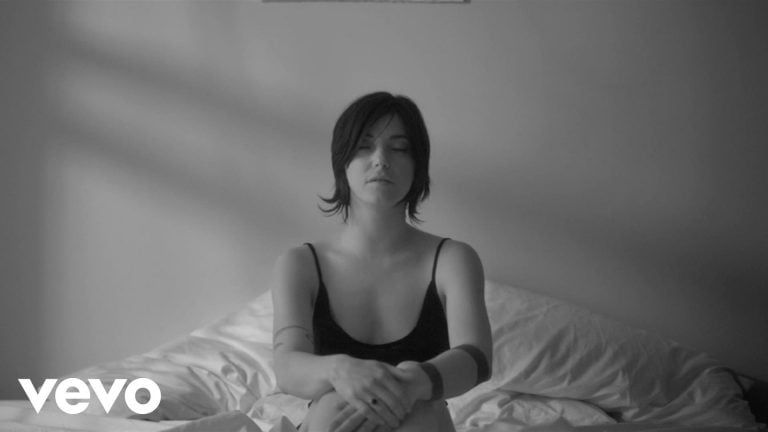
Sharon Van Etten iimbues her songs with the naked emotion that other singer-songwriters might iron out of their recordings. She wants us to hear the humanity of her work, the imperfections that make it palpable, the longing and heartache we’ve all nursed at some point.

As a musician, as a songwriter, and a player, how has your processed changed from how you wrote songs and performed them back then to how you do things now?

Sharon Van Etten: Honestly, they all start from the same place. Over the years I’ve honed it a little bit, realizing what it is. I always write from a place of therapy, and whenever I’m feeling something, I sit down and come up with a chord progression and a melody and then I let myself go stream-of-conscious. Now, I can look at it and understand what it is that I’m trying to say and then think of the things that I’m saying subconsciously and shape that into more of a song, and be able to consciously admit to myself what it is I’m going through: Obviously, having a kid and being happy and trying to pursue a career, I mean the realities of what’s ahead of you is heavier than some people will admit to themselves.

I feel like that’s going to be a big change for me. Literally, next week I’m about to go into the studios to start recording my next record. As I’m talking to you, with a bottle in my baby’s mouth and oatmeal all over my hands, I think about how hard it’s going to be to step away and go back to work and the state of the world and what I have to offer this guy. My perspective has changed in that way, but my process is the same, maybe now it’s just whittled down to 20-minute increments. I’m just squeezing in that time in different places now.

I’m a Pisces and a wanderer by nature, but I feel like I’m the kind of person that needs a little bit of structure. Not to say that I have a baby who’s structured, but I’m excited to see how we both develop, as we learn about each other’s schedule, and as we both progress this year and for our lifetime.
Via

Video: The only time John Coltrane performed ‘A Love Supreme’ live

0

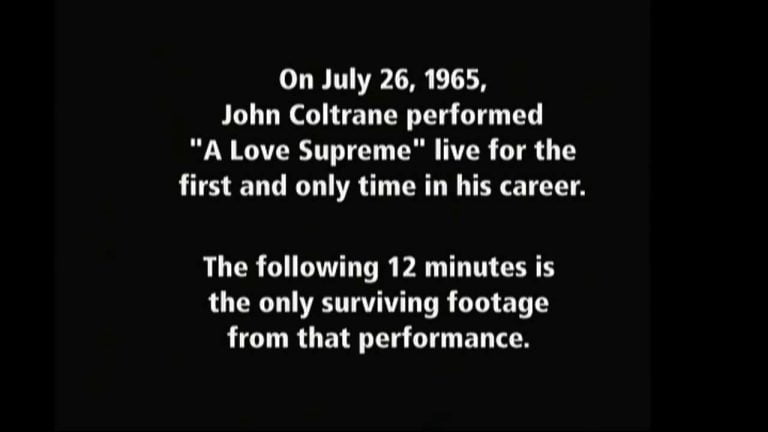
Here is the only surviving footage from John Coltrane’s first and only live performance of “A Love Supreme” on July 26, 1965.

John Coltrane – A Love Supreme only once in own concert (1965) from Jean CECE on Vimeo.

What The Future Sounded Like

0

Post-war Britain rebuilt itself on a wave of scientific and industrial breakthroughs that culminated in the cultural revolution of the 1960’s. In this atmosphere was born the Electronic Music Studios (EMS), a radical group of avant-garde electronic musicians who utilized technology and experimentation to compose a futuristic electronic sound-scape for the New Britain.

What The Future Sounded Like colours in a lost chapter in music history, uncovering a group of composers and innovators who harnessed technology and new ideas to re-imagine the boundaries of music and sound. Features music from Pink Floyd, Hawkwind, Roxy Music and The Emperor Machine.

What The Future Sounded Like from Closer Productions on Vimeo.

That Time In 1992 When Sub Pop Hoaxed The New York Times

0

That time in 1992 when Megan Jasper from Sub Pop hoaxed The New York Times into printing what they thought was an authentic “Lexicon of Grunge,” a string of ridiculous slang phrases she fabricated on the spot.

That Time John Lennon, Eric Clapton, Keith Richards, and Mitch Mitchell Formed A Supergroup

0

Just after the album The Beatles came out in late 1968 containing Yer Blues, Lennon performed the song at The Rolling Stones Rock and Roll Circus with a supergroup dubbed “The Dirty Mac,” a one-shot supergroup comprised of John Lennon, Eric Clapton, Keith Richards, and Mitch Mitchell. Just before the song, though, a kinda awkward conversation between Lennon and Mick Jagger for your bonus viewing.

https://youtu.be/Iuy-10Ejck4

Rush’s Geddy Lee Curates A Big Beautiful Book Of His Bass Guitars

0

Rock ‘n’ Roll Hall of Famer and Rush bassist Geddy Lee celebrates rock music’s thunderous, rumbly bottom end—the bass—in Geddy Lee’s Big Beautiful Book of Bass, this unique, lavishly illustrated, full-color compendium showcasing over two hundred rare, iconic, beautiful, and sometimes eccentric bass guitars from his extensive collection. It gets released on November 13, 2018

In this luxurious keepsake volume, Geddy Lee chronicles the fascinating history of one of rock music’s foundation instruments, the bass guitar. Written with arts journalist Daniel Richler, gorgeously photographed by Richard Sibbals, and with insight from Geddy’s trusted bass tech and curator, John “Skully” McIntosh, Geddy Lee’s Big Beautiful Book of Bass profiles over two hundred classic basses from Geddy’s extensive collection. The book combines knowledge and observations gleaned from Geddy’s long, successful career with new and behind-the-scenes photos, ranging from his earliest days to Rush’s sold-out 40th anniversary tour in 2015, plus personal interviews with some of the world’s top bassists and collectors.

A musician and guitar freak, Geddy has acquired the magnificent bass models that have been the backbone of the world’s greatest popular music, from greats such as Paul McCartney, John Entwistle, and Jack Bruce. The book features vintage basses from 1950 through the mid-1970s—the golden age of guitar making.

Suffused with Geddy’s intelligence, taste, and disarming wit, Geddy Lee’s Big Beautiful Book of Bass is also an entertaining look at a legend’s career on stage, in the studio, and at home. Geddy shares his views of the role of the bass guitar in his life and in the lives of the great players who’ve influenced him, revealing his passions and motivations, and ultimately broadening fans’ appreciation of his beloved instrument.

You can preorder it here.

Gene Simmons May Have It Right: ““Look — you’re not affecting me, I’m doing okay. My rent’s paid. But you’re killing the new band, you’re killing the next Beatles, and that breaks my heart.”

0

From an interview with Gene Simmons and Fox Business host Maria Bartiromo. I mean, he’s not wrong

Maria Bartiromo: Gene, you have been a student of this industry for a long time, and have participated in it. You’re seeing this world change so much because of streaming. You own your own music.  So do streaming services hurt artists when it comes to ownership, when it comes to earnings?  Because the whole world is changing around you.

Gene Simmons: It’s a disaster. It’s a disaster because the fans have decided — and they’ve been trained — to not pay for music. And that means that the next Beatles and the next Elvis —

Bartiromo: — they think it’s free.

Simmons: — it’s free.  Imagine a supermarket.  Farmers have worked all their lives to grow the fruit, and the trucks, and the unions that bring it to the stores, and the beautiful stories and the people that work there. Imagine being able to walk in there and walking out with anything you want without paying for it. How long is the farmer gonna stay in business, how long is retailer gonna stay in business?  So everything is dying because fans have trained themselves not to pay for the music.

Bartiromo: But now, it’s not longer the customer’s fault. Now this is what they can do. And you’re going to do whatever you can do, and if you’re —

Simmons: I think legislation is the answer.

Here’s the full video:

The ‘Tetris’ Theme Song Sung by Animals

0

The music for the massively popular video game, Tetris, actually has a name – “Korobeiniki”, and based on a poem of the same name by Nikolay Nekrasov, which was first printed in the Sovremennik magazine in 1861. Its increasing tempo and the associated dance style led to it quickly becoming a popular Russian folk song.

Star Wars Parking Restrictions Crawl

0

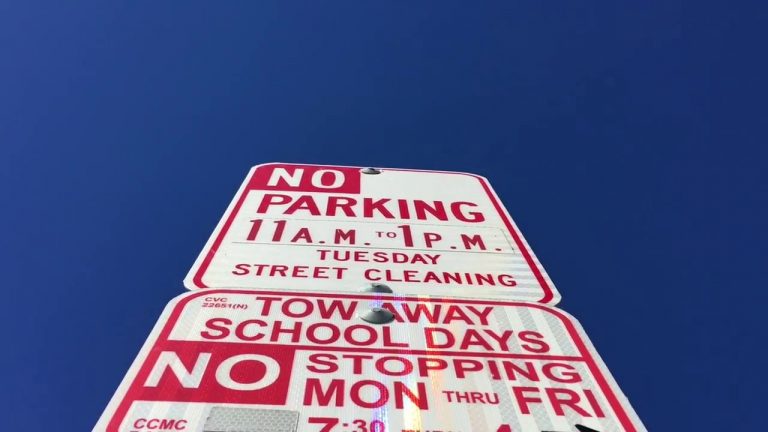
A long time ago in Culver City…

Why Peter Buck From R.E.M. Doesn’t Go Online

0

Sometimes, as R.E.M. guys did, taking that break and unplugging and getting back to your life and recalibrating yourself is so valuable. Because everything is so in-your-face and 24-7, it’s hard to do that.

Peter Buck: I try not to go online — I literally do not know how to turn the television on, ’cause there are, like, four of those zappers. I don’t listen to the radio — I listen to either CDs or an iPod in my car. I don’t read newspapers. My circle of friends, we might be pissed off about whatever asshole move Trump or his people is pulling, but it’s not a big part of my life. But still, all this shit, it is. It seeps in.

We were in Baja and driving through mountains, so you wouldn’t see another car for like an hour, and then we’d stay in some so roach motel in a town of like 1,000 people and wander around. I don’t know — there’s a place where I live in my head that sometimes, I’ve got to make that literal and disappear out there in the real world. And, I gotta say, I feel 100 percent better after it.

The day [of ] the [Las Vegas] shooting, I woke up, and that just was so insane to me. And then I got a phone call that Tom Petty’s dead. Ten minutes later, Chris Martin called me — I was going to go see Coldplay [in Portland]. And he goes, “You want to play ‘Free Fallin'” tonight?” and I said, “Yeah, sure.” I got out my guitar and played the record and figured it out. I was playing a Tom Petty song for a couple of hours.

You know, I hadn’t been in front of 20,000 people in years. We walk onstage, there’s a moment of silence. And then we played “Free Fallin’,” and I just kind of broke down, you know?

And it was everything else — there’s a bunch of other stuff like that going on in my life. I was just . . . [makes noise of being at loss for words] Just had trouble getting a handle on it. So we got in the car and got the fuck out.

By the time I got back, after three weeks, I met Joseph Arthur in Todos Santos and we wrote this group of songs, played them at a bar there, and then we drove to Los Angeles and played them at his [art] opening. It felt like, okay, I’m bringing something living out of this death and sadness. I guess that’s what my life has always been about — life’s sad, and being able to touch some of that in your heart or your soul or whatever it is, and bring it out in some way. I don’t know if it makes the world a better place, or makes me a better or happier person. It worked, whatever it was.

Via