Home Blog Page 2449

CIMA Releases Study Of Canadian Independent Music In The Latin American Market

0

On September 28, the Canadian Independent Music Association (CIMA) released its of a one of a kind study and report funded by The Department of Canadian Heritage, A Continent of Opportunities: Canadian Independent Music in the Latin American Market with a special presentation in Toronto. CIMA was joined by Jordi Puy, a market specialist from Sound Diplomacy who presented key information from the report, followed by a discussion panel of experts to the region led by global music industry consultant Robert Singerman.

Established in 1975 and the first of its kind in the world, CIMA is the not-for-profit national trade association representing the English-language, Canadian-owned sector of the music industry. CIMA represents a diverse membership consisting of Canadian-owned companies and their ambassadors, all of whom are involved in every aspect of the music, sound recording and music-related industries. They are exclusively small businesses which include: record producers, record labels, recording studios, managers, agents, licensors, music video producers and directors, creative content owners, artists and others professionally involved in the sound recording industry. CIMA’s mandate is to develop and advocate policies and services that serve to support a strong and economically stable Canadian independent music and sound recording industry, ensuring the long-term development of the sector and to raise the profile of Canadian independent music both in Canada and around the world.

A Continent of Opportunities: Canadian Independent Music in the Latin American Market explores the most profitable and structured market opportunities across Latin and South America for Canadian independent artists. As one of the largest untapped music markets for Canadian businesses and artists, this in-depth, country-by-country analysis of Latin America provides key information on genres that chart on the radio, festivals and music companies that make each market tick. As part of the report, Sound Diplomacy, in partnership with in-market professionals, developed 10 country guides that extensively detail their respective music markets including, Argentina, Brazil, Costa Rica, Chile, Colombia, Cuba, Mexico, Panama, Peru and Puerto Rico.

“Music is global and we are thrilled to provide this in-depth analysis of Latin American market opportunities for Canadian independent artists and music companies, to further expand their opportunities abroad,” said Stuart Johnston, President of CIMA. “As one of the largest untapped markets, we hope that this study shines a light on areas of potential growth that our Canadian independent music community can benefit from.”

The study revealed that Latin America as a whole for the fifth consecutive year had the highest level of growth in recorded music revenues. Digital revenues in Latin America rose 44.5%, more than four times the global average, while streaming revenue increased by 80.4%. The report also noted that Argentina has the second largest recorded music market in Latin America after Brazil, while the music market had a trade value of $141.6 million USD in 2015, 58% of which came from performing rights.

Additional key findings include the use of streaming services has seen an increase by 34.8% since 2015, with Spotify being leading streaming platform in Argentina. The most popular genres as shown in the study in Argentina include electronic and roots, indie and psychedelic rock, afrobeat and dance roots.

A copy of the report, A Continent of Opportunities: Canadian Independent Music in the Latin American Market, can be found here.

Dunlop Tires Once Used The Velvet Underground For A TV Ad

0

No matter what the conditions, Dunlop Tires work like magic. This commercial clearly showcases the enormous endurance that Dunlop and its entire range of tires are very well known for, the world over. And they have great music taste, by using The Velvet Underground’s Venus In Furs as their soundtrack.

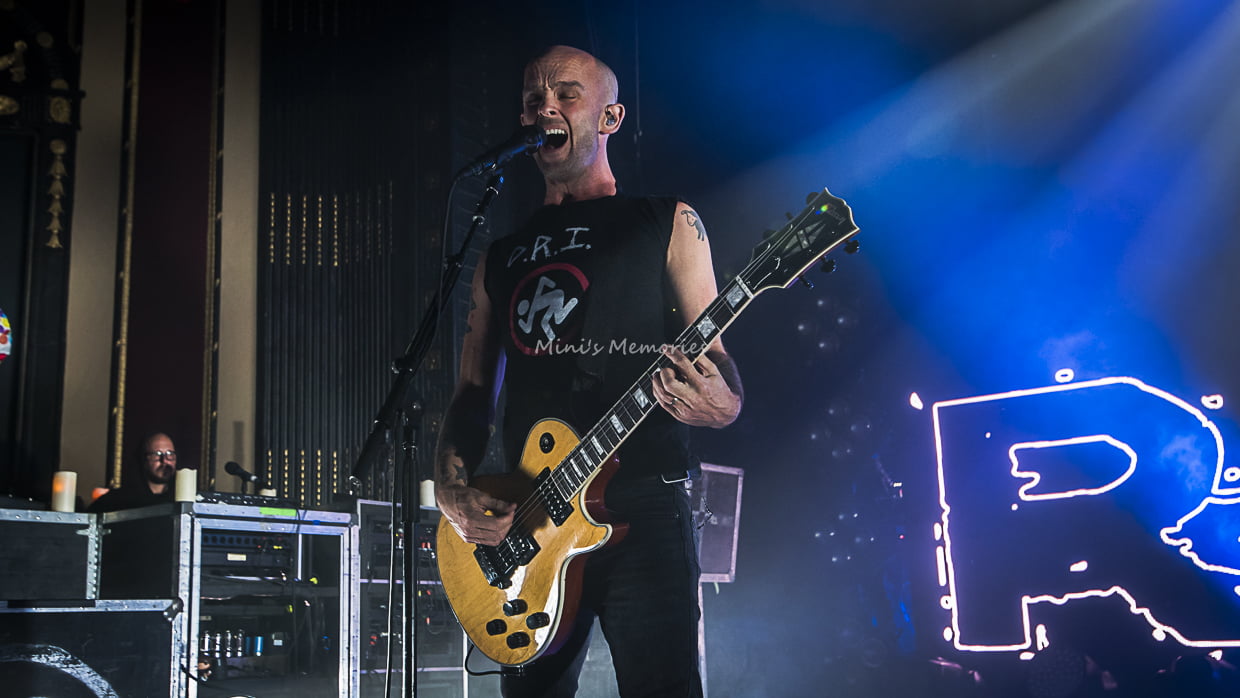
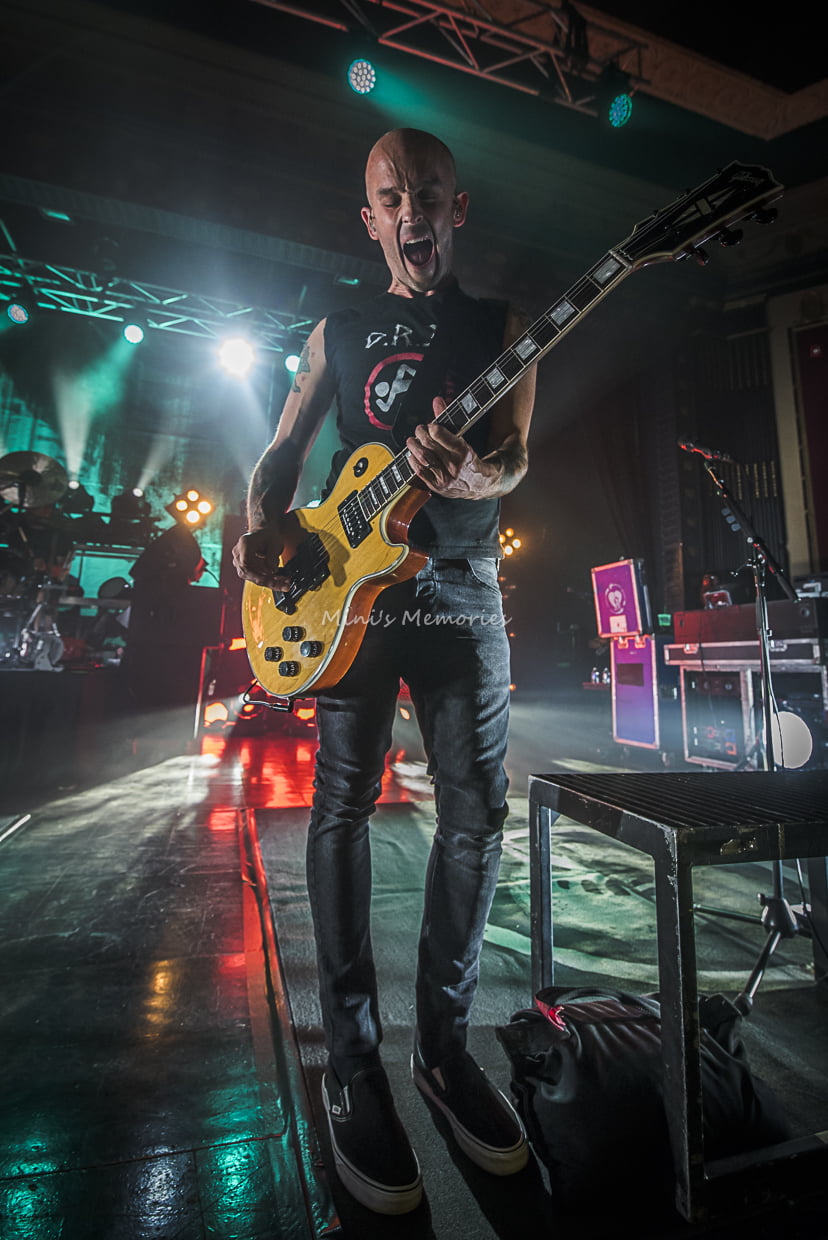
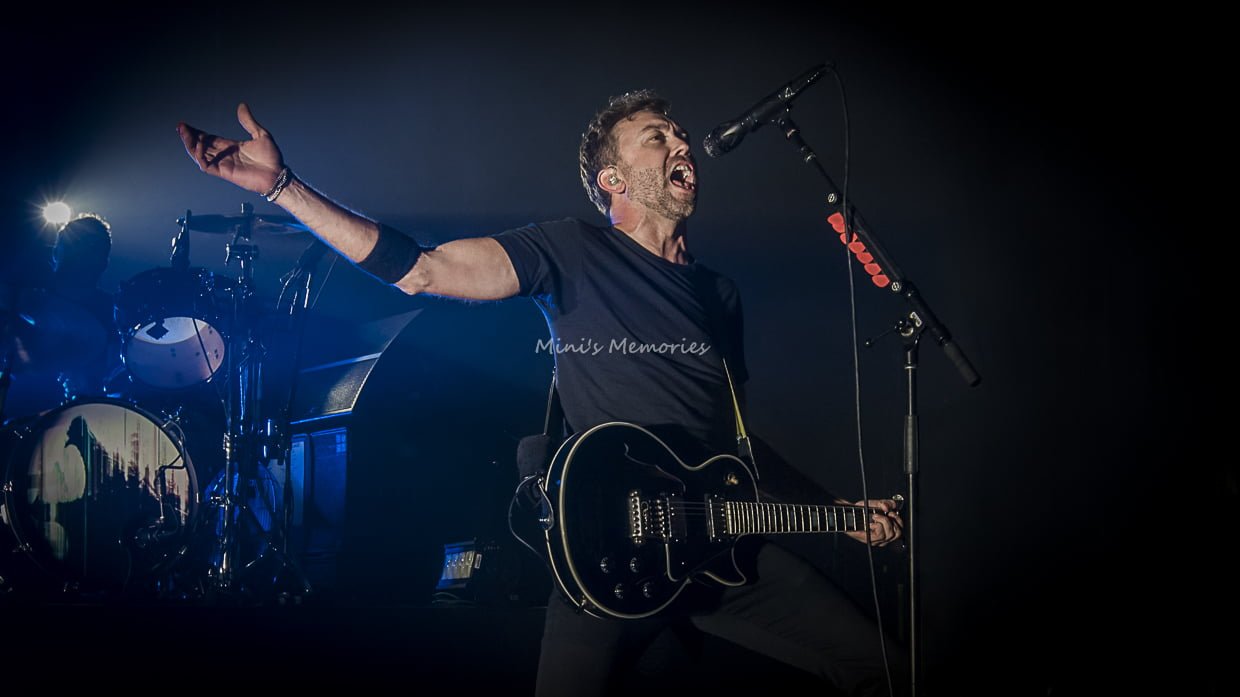
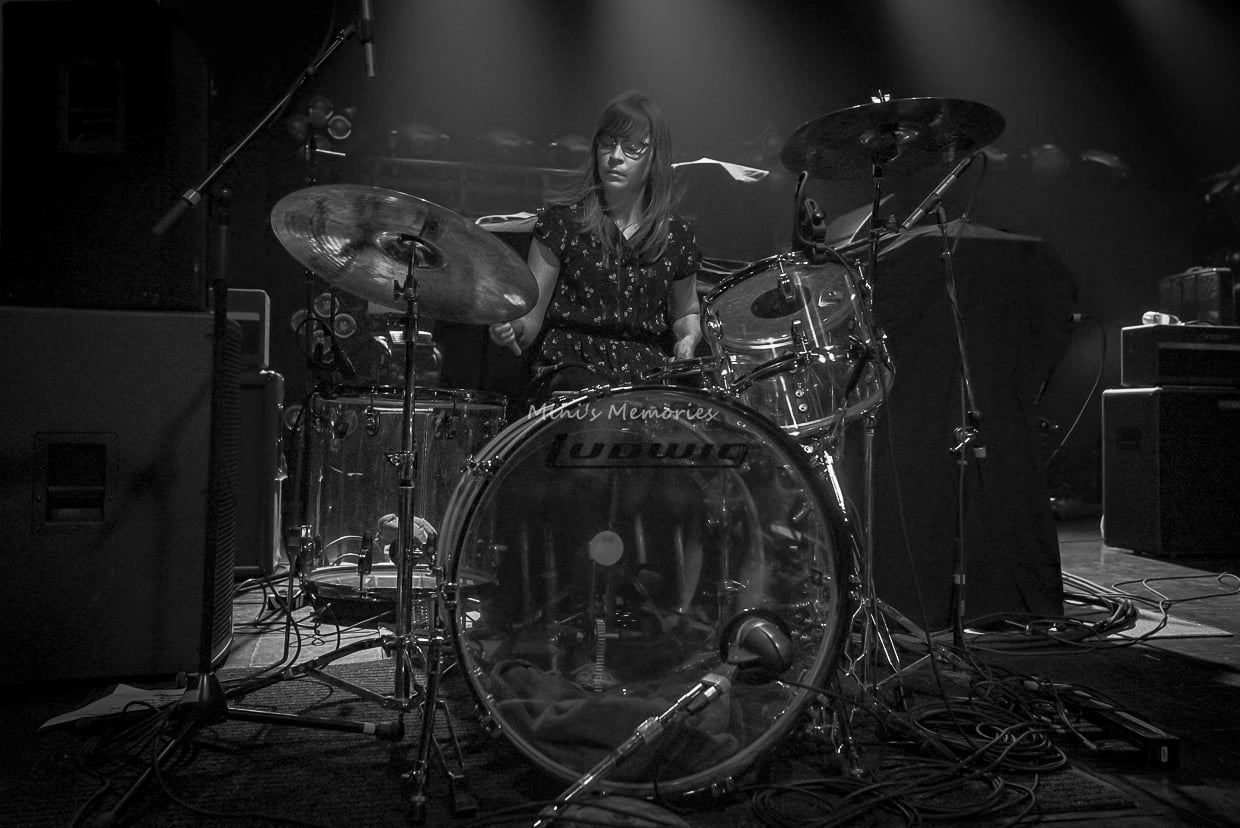
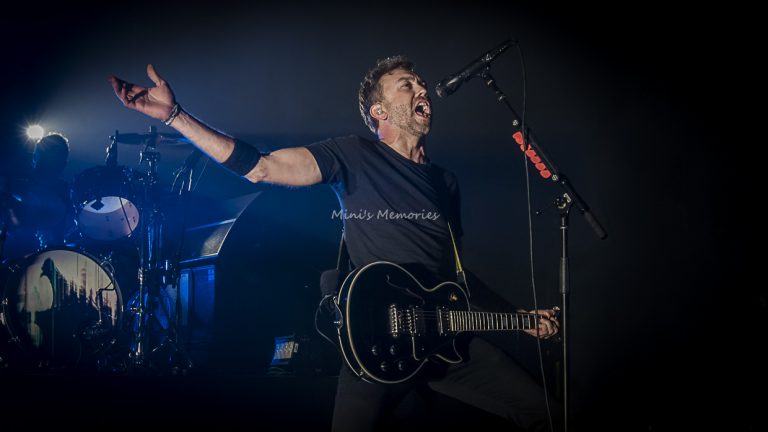
Photo Gallery: Rise Against with Pierce The Veil and White Lung at Niagara Falls’ Rapids Theatre

0

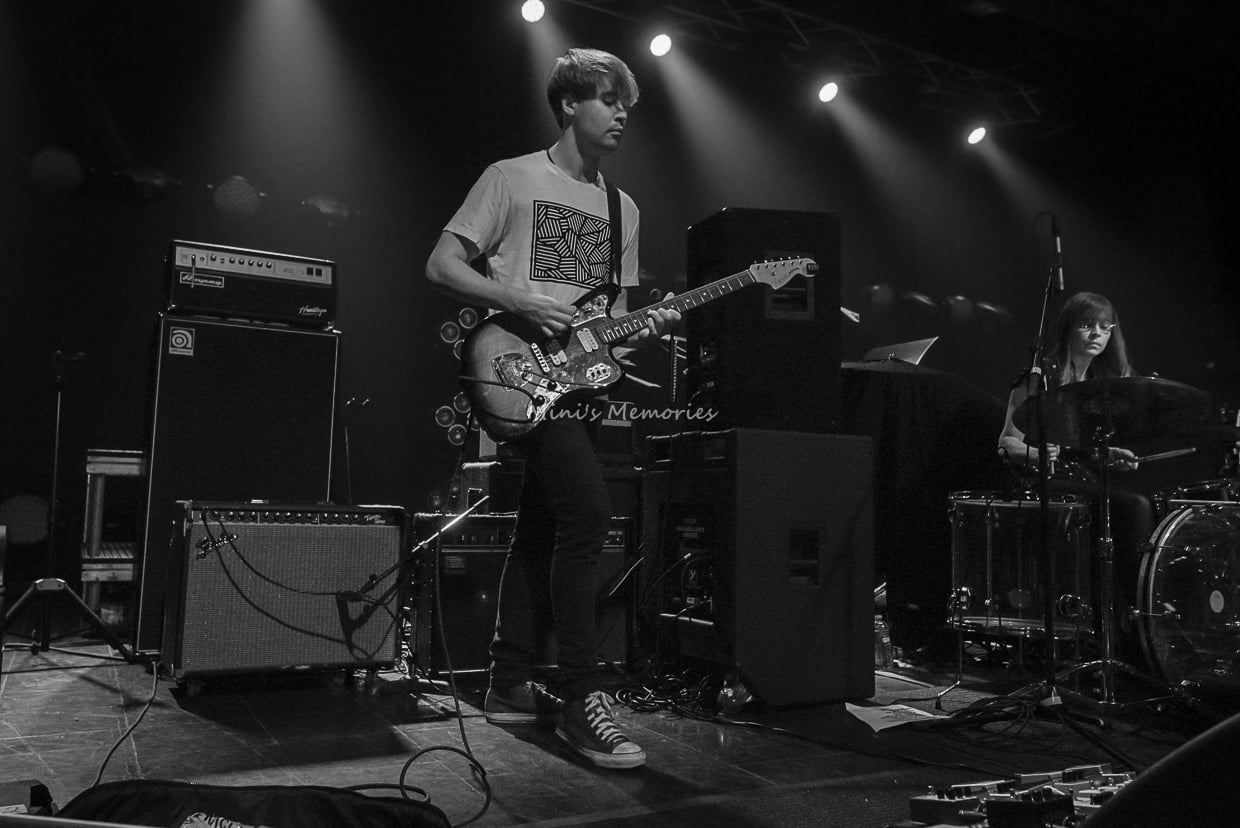
All photos taken by Mini’s Memories. You can contact her at minismemories@hotmail.com

Rise Against
Rise Against
Rise Against
Rise Against
Rise Against
Rise Against
Rise Against
Rise Against
Rise Against
Rise Against
Pierce The Veil
Pierce The Veil
Pierce The Veil
Pierce The Veil
Pierce The Veil
Pierce The Veil
White Lung
White Lung
White Lung
White Lung
White Lung

U2 Strolls Down The Streets In NYC For New Video, “You’re The Best Thing About Me”

0

Here’s the official video for ‘You’re The Best Thing About Me’, the first single from U2’s forthcoming new studio album ‘Songs of Experience’.

George Harrison’s Sitar From 1965 Is Going Up For Auction

0

George Harrison’s sitar from 1965, almost certainly the one he used to record ”Norwegian Wood”, is going up for auction. The Beatles song that not only launched ”The Great Sitar Explosion” in rock music, but also deepened Harrison’s involvement with Indian music, its culture and the Hindu religion that would shape the rest of his life. More than any guitar that Harrison used during his career with the Beatles and as a solo artist, the sitar is perhaps the instrument most closely associated with Harrison, who was first introduced to it in August of 1965 by David Crosby before buying his own and using it to record ”Norwegian Wood” on 12 October 1965.

Harrison’s purchase of his first sitar (sometime between August-October 1965) is best explained in his own words, from ”The Beatles Anthology”: ”I went and bought a sitar from a little shop at the top of Oxford Street called Indiacraft – it stocked little carvings, and incense. It was a real crummy-quality one, actually, but I bought it and mucked about with it a bit. Anyway, we were at the point where we’d recorded the Norwegian Wood backing track and it needed something. We would usually start looking through the cupboard to see if we could come up with something, a new sound, and I picked the sitar up – it was just lying around; I hadn’t really figured out what to do with it. It was quite spontaneous: I found the notes that played the lick. It fitted and it worked.” Over the next several months Harrison continued to play the sitar and decided to exchange his older-style ”crummy-quality one” with a more sophisticated style designed to play better into microphones.

In the meantime, Harrison married Pattie Boyd in January 1966 and left for Barbados with her for their honeymoon. While in Barbados, George and Pattie were hosted by Pattie’s friend, George Drummond, who lived on the island and to whom Harrison gave this sitar. Drummond, the Godson of King George VI whose full name is George Albert Harley de Vere Drummond, is featured in the book “Beatles ’66: The Revolutionary Year” by Steve Turner. Turner describes the events on the island leading up to the gift, ”During the days Pattie sunbathed and George practiced on his sitar. George even had a better sitar flown to Barbados for him, and when it arrived he gave his old one – probably the one he had bought from Indiacraft – to Drummond as a gift.”

The sitar is accompanied by two letters of authenticity, one from Pattie Boyd and one from George Drummond. Pattie not only confirms the authenticity of the sitar, but writes that George used it to play ”Norwegian Wood” to her on their honeymoon. She writes, ”Before we left Barbados, George Harrison gifted the Sitar to George de Vere Drummond.” Drummond’s LOA likewise confirms that Harrison gave him this sitar in February 1966 and that it’s ”remained in my possession until I consigned it to Nate D. Sanders Auctions.”

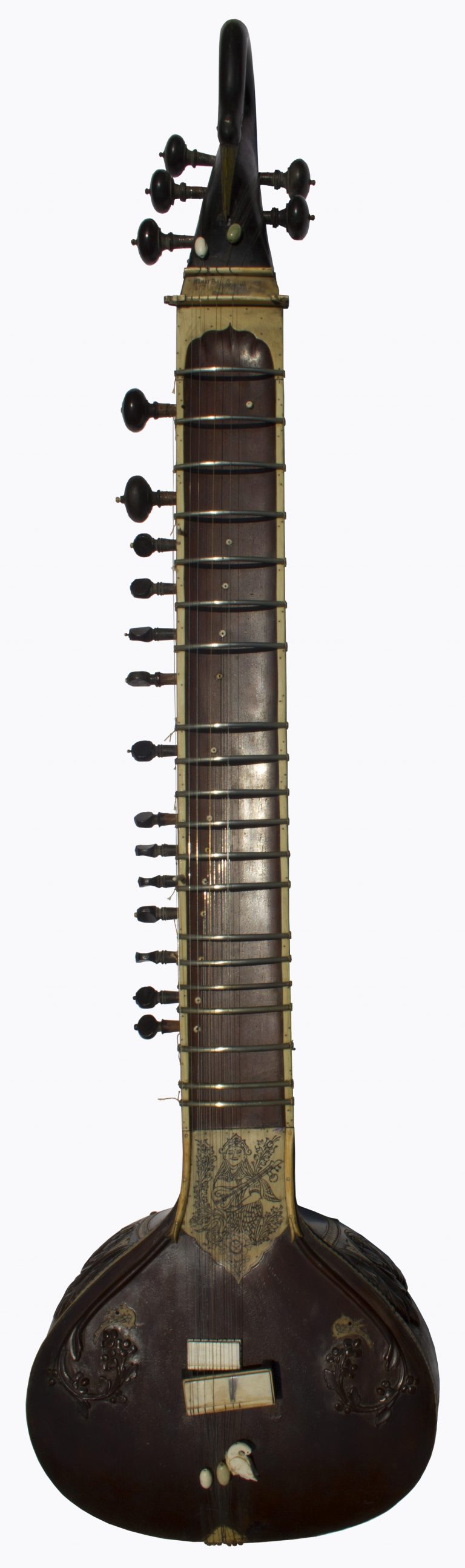
Despite Harrison’s misgivings about its sound quality, visually the sitar is a stunning display of craftsmanship, made by the sitar company of Kanai Lal & Brother of Calcutta, and was approximately 10 years old – made in the late 1940s or 1950s – when Harrison played it. Elaborate wood carvings appear on the tumba and tabkandi (similar to the headstock and body of a guitar), with the tumba formed in the shape of a swan’s neck and head. A plaque below the tumba reads, ”Kanai Lal & Brother / 377 Upper Chitpur Road / Calcutta”. Ornamentation at the top of the tabkandi shows an ancient figure playing a sitar, below which wood carvings appear in relief. More elaborate wood carvings appear on the kaddu, a bulbous, gourd-shaped area on the back of the tabkandi which serves as a resonator for the sitar. The sitar measures 53” long, 13” at its widest point and 10” deep at the kaddu.

Via

Watch The Outtakes From George Michael’s ‘Freedom ’90’ Video

0

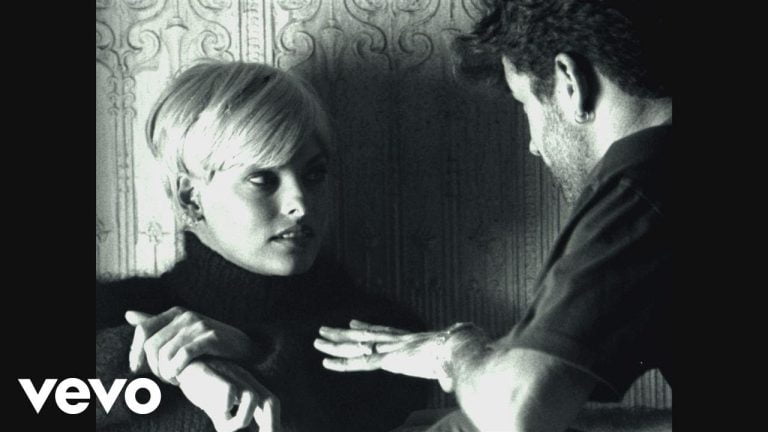
The documentary, George Michael: Freedom, premieres on Showtime on Oct. 21. This film isn’t a mish-mash of footage, either, as it completed before Michael’s death. The documentary focuses on the years after Michael’s solo breakout Faith, as he recorded and released the 1990 album Listen Without Prejudice Vol. 1.

Oreo Cookie Made A Vinyl Record Player That Looks Good Enough To Eat

0

Oreo is famous around the world as the brand that inspires people to see wonder everywhere.

But how about hearing wonder? Introducing Oreo Vinyl!

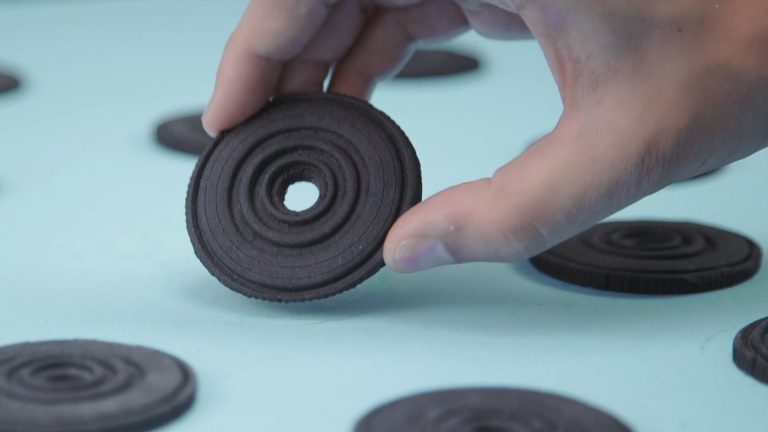
Yes, that’s right. An Oreo that plays music by replacing the classic embossing with grooves on the cookies surface that work as a vinyl record. The cookie company placed these music embossed Oreos in special Oreo Music Packs. Each cookie in the pack plays the Oreo anthem in a different musical style bringing wonder to their ears.

This is a real deliverable of Oreo Vinyl with Oreo Vinyl Record Player.

The Oreo cookie is tailor made for this project. They embossed the pattern and sound on the cookie to make it a readable one and a real eatable vinyl.

Borrowing the concept and mechanics of vinyl record, the data on the cookie is embossed with a mod which is made with laser cutting and engraving technique. And they wrote a program to transform the music into a pattern. After that, they made it into a laser-engraving friendly format and produce the mod for the Oreo Vinyl production.

A conversation with Archie Shepp about jazz, race, and culture

0

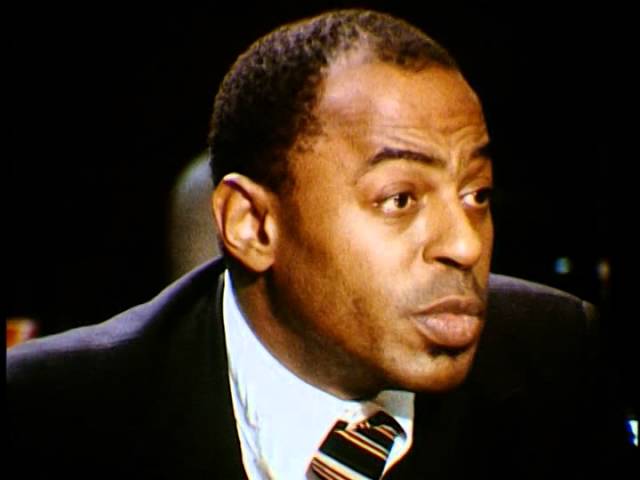
This is interview and lecture footage of jazz saxophonist and social activist Archie Shepp at Florida State University. Mr. Shepp comments on jazz music trends, poverty, politics, civil rights, culture and society. The interview segment is conducted by newscaster Lucius Gant.

Gene Simmons Says There’ll Never Be Another Beatles

0

What music moves you the most?
My favorite kinds of tunes are the new pop tunes. I don’t know much of them, I mean Tame Impala is OK, but because there’s no such thing as the record industry anymore, because generations of fans have trained themselves to download and file-share and stream for free, the new guys of the world will never get a chance. So there will not be another Beatles. You can play the game, 1958 until 1988 is thirty years, Elvis, the Beatles, Rolling Stones, Madonna, Prince, Jackson, U2, ACDC, maybe Kiss, and from 1988 until today, give me the new Beatles.

Do you stand by your statement a couple of years ago that rock is dead?
I’m going to ask you again, from 1988 until today, who’s the new Beatles?

I think groups like Pearl Jam and Radiohead…
Hold on, hold on hold on hold on. You’re talking to a big fan. If Thom Yorke walked down the street in Pasadena, what would happen?

I think a lot of people would be shocked and thrilled to see him.
I think you’re delusional. I’ve been with Dave Grohl when he was walking down the street and nobody knew, and he’s a big star. No, that’s not what a star is. Prince was a star. You could see him coming from a mile ahead. There are successful artists. Pearl Jam, by any standard, is very successful…how about this: more people would know Mötley Crüe walking down the street than Radiohead. Of course, I don’t mean they are better.

Look, the system is broken, and because the system is broken. New rock bands are very fragile. They’re like babies. You need to give them love and caring and give them a chance to come up with their better stuff so that they start with “Love Love Me Do” end up writing “A Day in the Life.” The same band. They had the time to mature and grow. But if they were living in their mother’s basement and had to work for a living, which is what’s going on today, it’s not going to happen. Yeah, rock is dead. Not that it can’t come back to life, but the business is dead. If the business is dead, rock is dead.

You know what’s not dead? Pop. Lots of pop divas, little girls buy the material. Black music, especially rap, their fans buy the music. Country, yup, their fans buy the music. Rock, no.

Via

Haim Performing “Something To Tell You,” “Nothing’s Wrong” & “Right Now” In New Paul Thomas Anderson-Directed Video

0

The cool Haim adding drum circle and an intimate short film from Paul Thomas Anderson to do a few songs from their new LP Something to Tell You being recorded.