The Recording Industry Association of America (RIAA) today released its mid-year 2020 report showing growth in paid subscription streaming more than offsetting revenue declines in other areas of the U.S. recorded music market, and detailing ways the COVID-19 pandemic has affected the market for music.
Among the key findings, total first-half 2020 revenues from recorded music in the U.S. increased 5.6% to $5.7 billion. Paid streaming subscriptions continued to drive the growth as the number of paid subscriptions increased by 24% to more than 72 million on average, growing subscription streaming revenues for first-half 2020 by 14% versus first-half 2019. At the same time, with advertising markets slowing across the economy due to the COVID-19 pandemic, growth in ad-supported streaming revenues slowed dramatically. Physical sales, including vinyl albums and compact discs, were also affected by the pandemic and fell 23%.
Throughout 2020, RIAA and its members have worked for measures supporting those parts of the music community most deeply affected by the COVID-19 pandemic, such as the landmark CARES Act, the RESTART and SOS Acts (to keep local venues alive), and legislation to solve the “mixed earner” issue that limits the reach of unemployment assistance for independent artists and session performers.
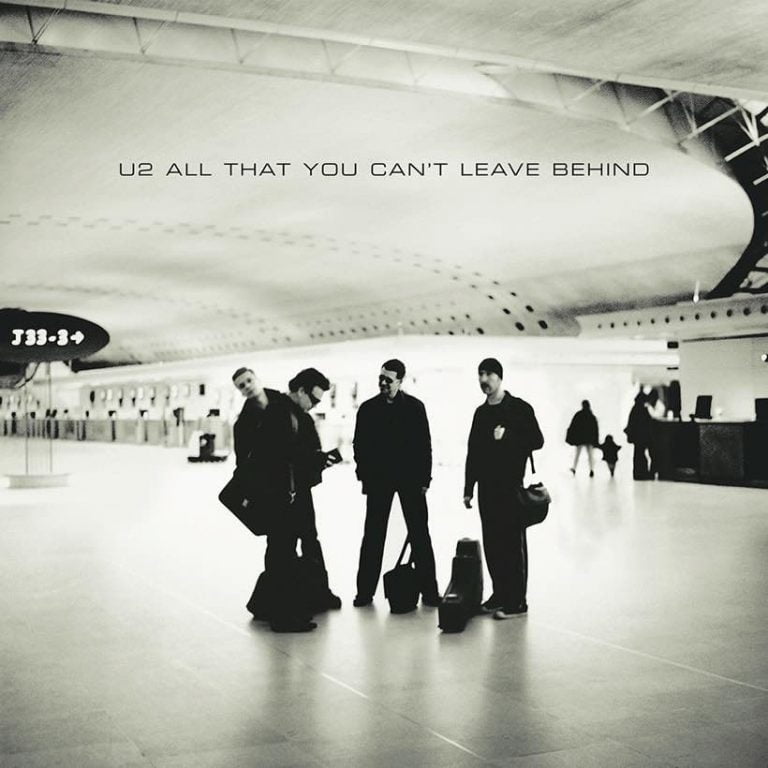
U2 have announces the 20th Anniversary reissue of their global smash hit album All That You Can’t Leave Behind. This multi-format anniversary edition release, featuring a brand new 12-track remaster of the record and a 51-track Super Deluxe box set is to be released on the actual date of the 20th anniversary, 30th October 2020. The anniversary also sees the release of an acoustic version of “Stuck In A Moment You Can’t Get Out Of.”
All That You Can’t Leave Behind is the tenth studio album from U2. Released in October 2000, the original 11-track record included the hit singles ‘Beautiful Day’, ‘Stuck In A Moment You Can’t Get Out Of’, ‘Elevation’ and ‘Walk On’ and went to Number 1 in 32 countries around the world. Produced by Daniel Lanois and Brian Eno and recorded in Dublin and France, All That You Can’t Leave Behind won 7 Grammy Awards, including Best Rock Album, and is the only album in history to have multiple tracks win the award for Record Of The Year (‘Beautiful Day’ in 2001 and ‘Walk On’ in 2002).
The brand new remaster of the album is available as a 12-track version and includes an additional track “The Ground Beneath Her Feet” in all formats of the reissue.
Super Deluxe Box Set highlights include:
• a 32-page hardback book from longtime friend and collaborator Anton Corbijn featuring many previously unseen images of the band along with hand-written notes by Anton, plus a double-sided poster.
• 39 additional bonus tracks, including remastered B-sides (‘Summer Rain’, ‘Always’, ‘Big Girls Are Best’, ‘Don’t Take Your Guns To Town’).
• out-takes from the album sessions (‘Levitate’, ‘Love You Like Mad’, ‘Flower Child’), as well as the track ‘Stateless’ which featured on The Million Dollar Hotel soundtrack; plus an acoustic version of ‘Stuck In A Moment You Can’t Get Out Of’.
• the complete 19-track live audio of the band’s Elevation Tour performance, recorded at the Fleet Center, Boston, Massachusetts in June 2001. The set includes 7 tracks from All That You Can’t Leave Behind.
• a collection of 11 remixes which features four previously unheard versions recently unearthed in the band’s Dublin archives: ‘Walk On (Wyclef Jean Remix)’, ‘New York (Carnegie’s Deli Mix)’, ‘New York (Superman Kicks Ativan Mix)’ and ‘When I Look At The World (Picante Remix)’.
Remastered Album Tracklisting:
1. Beautiful Day
2. Stuck In A Moment You Can’t Get Out Of
3. Elevation
4. Walk On
5. Kite
6. In A Little While
7. Wild Honey
8. Peace On Earth
9. When I Look At The World
10. New York
11. Grace
12. The Ground Beneath Her Feet
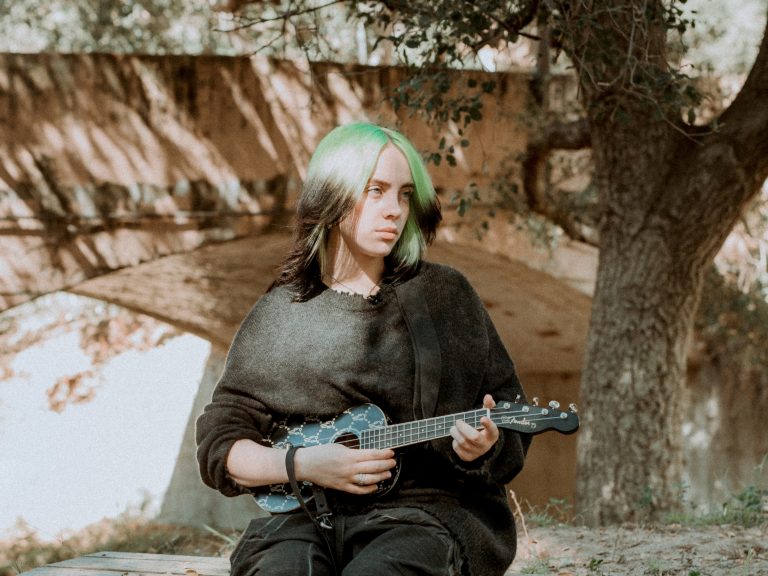
Fender Musical Instruments Corporation (FMIC) today released the all-new Billie Eilish Signature Ukulele. This is Billie Eilish’s first artist signature model with the iconic guitar brand and it completely embodies Eilish’s preferred specs and distinct aesthetic with her distinct “blohsh” symbol patterned across the ukulele. In over a year, Eilish has exploded onto the music scene with her debut album ‘WHEN WE ALL FALL ASLEEP, WHERE DO WE GO?’ earning her five Grammy
wins, including Song of the Year (bad guy) and Album of the Year. Designed in collaboration with Eilish herself, the ukulele embodies her uniquely bold style that fans know and love, and can now take home in ukulele form. Watch Billie – with her adopted Pitbull puppy, Shark – play her Fender Signature Ukulele, while she reminisces about the first song she wrote on the ukulele.
“The ukulele was the first instrument I learned,” said Billie Eilish. “It’s where I started writing, and where I found new ways of writing that I had never tried before. It inspires a different kind of writing. The rules of the ukulele are simple, and basically if you know three chords you can play almost any song. I hope my Fender Signature ukulele inspires people to start playing, and start writing; anyone can do it.”
The Billie Eilish Signature Ukulele is a stage-ready concert body ukulele built with a Sapele top, back and sides featuring a black matte finish and Fishman Kula preamp for those looking to plug in. Additional specs include a walnut fingerboard, white dot inlays and Nickel hardware. Whether a player is an experienced musician or looking to pick up their first instrument, the ukulele can be enjoyed by any skill level.
Inspired by her parents and brother’s love of music, Billie Eilish began her musical journey at a very young age, when other kids her age were just starting kindergarten. The Los Angeles native first gained attention in 2015 at the age of thirteen after uploading the song ocean eyes to Soundcloud, which was written and produced by her brother Finneas. Billie’s debut EP, dont smile at me, released in 2017, was a slow-burning hit and laid the groundwork for her debut full length album, WHEN WE ALL FALL ASLEEP, WHERE DO WE GO?, which debuted atop the Billboard 200 and became the best-performing album of 2019 in the US. Billie is not only the youngest and second person ever to win the four main Grammy categories – Best New Artist, Record of the Year, Song of the Year and Album of the Year – in the same year but also the first female to do so.
Eilish’s ascent to pop stardom started with the ukulele, the first instrument she learned to play and write songs on, making this an ode to her humble beginnings in the music world. The launch of Eilish’s signature ukulele coincides with the recent addition of six of her songs (for guitar and uke only) to Fender Play, the complete online learning app for guitar, bass and ukulele. Fans around the world can start their musical journey and play their very own Billie Eilish ukulele while learning her songs, including &burn, my strange addiction, ocean eyes, Six Feet Under, watch and when the party’s over. Billie has been a big advocate for mental health and awareness and recently Fender Play users have shared they are also utilizing the app as a way to destress, reduce anxiety.
In true tradition, the Fender Artist Signature Series honors iconic musicians through product progression and storytelling, creating instruments inspired by the unique specifications of the world’s greatest guitarists and bassists. Fender discusses the all-new Billie Eilish Signature Ukulele specs and all details in an episode of Fender’s serialized social video series, Fender Demos. Fender Demos is an educational video series focused on providing a deep dive into Fender’s newest products. The series focuses on showcasing not only the key features and benefits, but also the sonic quality of Fender’s instruments, amplifiers and pedals. In addition to product demos, the series also provides valuable beginner, intermediate and advanced tone tips, set-up and maintenance guides and insights to getting the most out of your Fender gear.
In recognition of Billie’s connection to the ukulele as her first instrument and the history of the ukulele in Hawaii, Billie and Fender are making a gift to the Aloha Mele Fund, a newly-established fund of the Hawaii Community Foundation. The funding will be distributed to nonprofit organizations who are working to support coronavirus relief efforts for Native Hawaiian and Pacific Islander communities in Hawaii. Fans are invited to donate to this effort in any amount their situation allows by visiting https://www.hawaiicommunityfoundation.org/alohamelefund. “All of us at Hawaii Community Foundation are extremely grateful to Billie Eilish and Fender for this meaningful contribution to our Native Hawaiian and Pacific Islander communities,” says Micah Kane, CEO and President of Hawaii Community Foundation. “In Hawaii, we practice aloha, which among many things, means that we take care of one another. This gift is a reminder of the generosity and kindness that all of us can show at this critical time.”
Learn more about the Billie Eilish Signature Ukulele and access product descriptions here; product photos and images of Billie Eilish with her Signature Ukulele can be found here.
For technical specs, additional information on new Fender products and to find a retail partner near you, visit www.fender.com. Join the conversation on social media by following @Fender.
Billie Eilish Signature Ukulele– $299.99As soon as she burst onto the scene with her 2015 single “ocean eyes”, it was clear that Billie Eilish is a force to be reckoned with. In the years since, she has established herself as a new kind of pop culture icon, taking the fashion and music industries by storm on her own terms. Billie’s meteoric ascent to pop stardom started with the ukulele, the first instrument she learned to play. Designed in collaboration with Billie Eilish, her Signature Ukulele is a stage-ready instrument that embodies Billie’s bold, unmistakable style. This concert ukulele is built with sapele top, back, and sides, featuring a matte black finish with Billie’s “blohsh” symbol. It also includes a Fishman Kula preamp for those looking to plug in. Whether you’re an experienced musician or looking to pick up your first instrument, one thing is true: you can play anything on the ukulele.
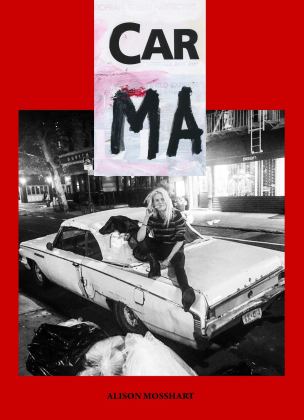
CAR MA is artist and musician Alison Mosshart’s first printed collection of paintings, photographs, short stories, and poetry. It is a book about cars, rock n’ roll, and love. It’s a book about America, performance, and life on the road. It’s a book about fender bender portraiture, story tellin’ tire tracks, and the never- ending search for the spirit under the hood. Mosshart imagines the auto body shop like some other Coney Island. And America’s highways- the last great roller coasters. Shows us that the engine on fire is connected to the guitar feeding back since birth. And the sensation of walking on stage and facing an audience is like the laugh before the scream in a car without brakes. She ruminates that automobiles- with their doors and mirrors and windows, engines and wheels and radios- portray us. Mirror our need to be in or to exit, our inward reflections and outward visions, our lifetimes of tinkering with the mysterious heart. That which runs until it doesn’t. Throughout history the car has been a symbol of freedom and hopeful adventure. It stands to reason it is also a symbol of our subsequent spinning out… over things we never thought could happen during a song that fucking good with the volume up that fucking loud. If you’ve ever found yourself feeling holy, pulling out of the gas station with a full tank, like the last beautiful free soul on this planet- This book is for you. In fact it’s probably about you.
This October, the incredible life of Harry Chapin will be seen like never before in Harry Chapin: When In Doubt, Do Something. This documentary, directed by Rick Korn and released by Greenwich Entertainment (Jimmy Carter Rock & Roll President, Creem: America’s Only Rock ‘n’ Roll Magazine, Gordon Lightfoot: If You Could Read My Mind), follows the renowned GRAMMY-nominated folk singer from childhood – spent under the shadow of his jazz drummer father – throughout his tragically short life and captures the up-and-down spirit of one of folk’s great humanitarians. The film’s theatrical release is set for October 16 on World Food Day — a fitting coincidence for a man who co-founded the influential hunger non-profit WhyHunger.
Told through archival footages and new interviews, When In Doubt, Do Somethinge xplores like never before the key moments in Chapin’s life, including performing with his brothers and working on the Academy Award-nominated documentary Legendary Champions, to his solo success with hits like “Taxi,” “W.O.L.D.” and “Cat’s In The Cradle” and his tireless philanthropic work, which included his efforts with WhyHunger and a seemingly endless run of benefit performances, all of which led to him being posthumously awarded the Congressional Gold Medal. This documentary paints a new picture of the singer-songwriter who used his fame as a launching point to help others and influence politics. It features testimonials from Chapin’s family (including Tom Chapin and Steve Chapin), as well as peers including Billy Joel, Bruce Springsteen, Pete Seeger, Kenny Rogers, Robert Lamm (Chicago), Darryl “DMC” McDaniels, Pat Benatar, Bob Geldof, Ken Kragen, longtime bassist John Wallace, and WhyHunger co-founder Bill Ayres.
A portion of proceeds from the film will go to both WhyHunger and The Harry Chapin Foundation. The film was produced by Korn, S.A. Baron, and Chapin’s son, Jason Chapin.
Harry Chapin sold over 16 million records, had 14 hit singles, and garnered two GRAMMY nominations. In 1977 he was a key participant in the creation of the Presidential Commission on World Hunger. In 1986, he was posthumously awarded the GRAMMY President’s Merit Award. He was inducted into the GRAMMY Hall of Fame in 2011.
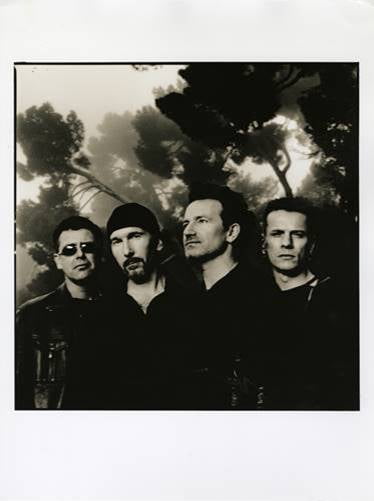
U2’s Official YouTube Channel has re-launched with weekly releases of the band’s most iconic music videos and never before seen content on YouTube, all remastered at the highest possible standard. Over the course of the next year and beyond, the band’s music video catalog will be remastered in HD and launched exclusively on YouTube in that format.
The first phase of the relaunch will celebrate the upcoming 20th anniversary of the band’s tenth studio album, the GRAMMY Award-winning global smash hit, All That You Can’t Leave Behind; leading with the re-release of one of the album’s most seminal tracks, “Stuck In A Moment You Can’t Get Out Of” remastered in 4K as a premium music video (PMV) and Premiering tomorrow at 12 PM ET BELOW.
Throughout their career, U2 has been known for their unparalleled creative vision and artistry when bringing their music to life on screen. As new and remastered content is added over the next year, their YouTube channel will evolve as a hub to celebrate the band’s 40-year legacy and the evolution of their approach to video. Highlights will include previously unreleased live, behind the scenes, and remixed content, and some of their best-known music videos upgraded to HD for the first time ever, up to 4K quality whenever possible. The project will result in hundreds of new and upgraded videos being added to the channel, and a curated experience for fans to be able to explore the depth of the catalog.
The Edge said, “U2 has worked with some incredible filmmakers and directors over the years, and it’s always been a lot of fun. Like a lot of people, I’m partial to a tumble down a YouTube rabbit hole…I hope you enjoy.”
In 2019, YouTube Music and Universal Music Group announced a joint initiative to remaster some of the most iconic music videos of all time with the goal of ensuring that current and future generations get to enjoy timeless classics as they’ve never before been experienced. Today, U2 joins this initiative with their vast catalog of music videos and creative content relaunching on a weekly basis at the highest available video and audio quality.
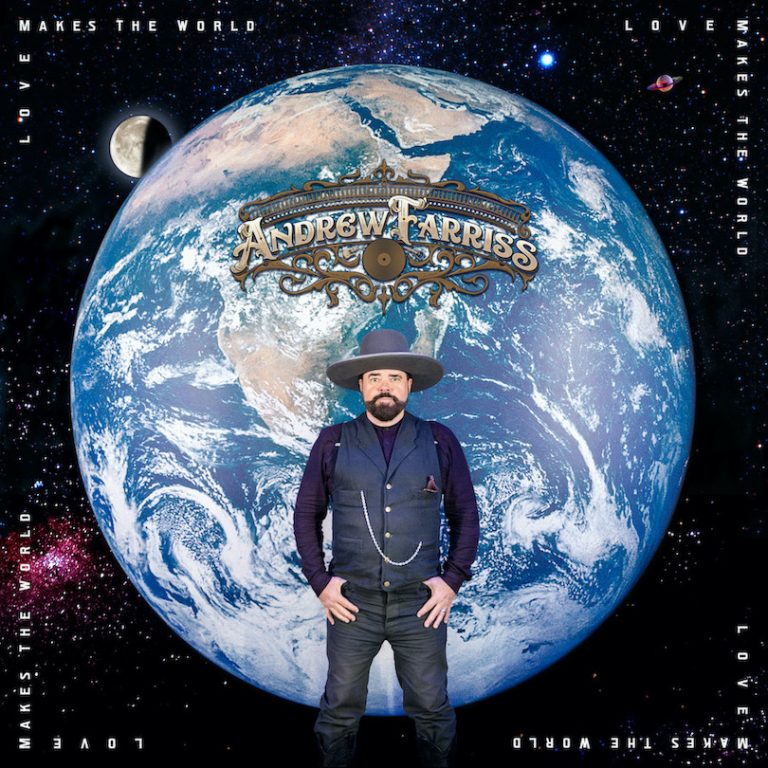
Gearing up for the release of his first solo EP, songwriter Andrew Farriss delivers refreshing optimism with an enchanting new single titled, “All The Stars Are Mine”. The single is the perfect representation of what Andrew’s forthcoming EP Love Makes The World mirrors.
The EP, slated for release on October 2, 2020, will give listeners a unique peek into his solo efforts; a project the esteemed songwriter has been working on for more than a decade. In fact, Andrew’s debut solo album was due for release in 2020, but COVID-19 threw a curveball into those plans. Rather than sit back and wait, Andrew put plans in motion to bring forward the release of his already completed 2021 EP so he could still share music with fans who had been waiting. Farriss’s EP, Love Makes The World will be released through BMG and is available now for preorder.
Andrew is well-known and acclaimed in the music and entertainment industry. Across his career with INXS, he has shared 50 million records, Grammy nominations, and an induction into the ARIA Hall Of Fame. Outside of INXS, he is an Australian Songwriters Hall Of Fame inductee and has written and produced songs for a plethora of Australian and international artists.
“The song has a lot of empathy,” Farriss says. “We have only got one planet; we are all going through life together. As my dad used to say; no one gets through life without help from other people. It is about how we relate to other people. What I like about the recording of ‘All The Stars Are Mine’ is that it is very open sounding, there is a fair amount of space musically. I like the ambiance of the sound of the track. You can listen to the lyrics. It is not trying too hard. I pay a lot of respect to Suze [DeMarchi], she helped me pen all of this together. It is a song I am really happy to share.”
Picking All The Stars Are Mine as the first single from his EP was an easy choice for Farriss. After recording the album and the EP, he felt like it was a natural fit for the five-track EP. Penned with Suze DeMarchi (Baby Animals) in Los Angeles, the track was recorded in Nashville at the Beaird Music Group Studios and features Andrew on slide guitar. All The Stars Are Mine is the perfect introduction to the EP Love Makes The World, which focuses on the human process and all things that are truly important in the world. It is also a release that gives a lot of insight into Andrew as a songwriter.
“I think the thing that is interesting about the EP is that the tracks don’t all sound exactly the same,” Farriss shares, “It takes you on a journey; it has its own character and style.”
Buffy Sainte-Marie tells Rick Rubin there’s a reason she isn’t a household name in the U.S. A pioneering artist in the Greenwich Village folk scene, she could’ve been Bob Dylan, Joni Mitchell or Paul Simon. But in the early days of Vietnam when Buffy was singing protest songs about the casualties of war, she was blacklisted by the U.S. government. Her music was barely played on radio. But she still managed to find an audience with her classic songs, like Universal Soldier, which have been covered by Elvis Presley, Barbara Streisand, Courtney Love, Morrissey. She was the first Native woman to win an Academy Award. And even had a controversial stint on Sesame Street, teaching Big Bird about breastfeeding.
Notably atmospheric, alt-ambient artists Silk have revisited their 2019 standout single, “Stars,” with a new video — available now.
Initially from their 2019 sophomore release Eclipse, the momentary retrospective is a cause for pause for the Canadian pairing, serving as foreshadowing to their forthcoming release later this year.
Since its earliest inception, the Québec City-based outfit has been comprised of Hubert Gonthier-Blouin and Julien Watine; the duo intertwined talents to create their 2017 release, Hiraeth, 2019 follow-up, Eclipse, and solidifying their performance chops and critical acclaim along the way.
“What struck me immediately when I first heard Silk was not merely the mastery of that particular tonal language of atmospheric dreamy ambiance, but, more impressively, how completely (they) managed to soar above so many of the problems typical of that genre,” says New York’s Metropolitan Opera Creative Content Producer William Berger of the band. “There is no blissed out of self-regard in Silk. On the contrary, their music tells stories – non-narrative, dreamlike stories, to be sure, yet distinct stories all the same. The songs never devolve into sheer vocal and instrumental beauty for their own smug sake, but they employ that considerable beauty for the sake of the listener. They have found the elusive key to being both transcendentally diaphanous and distinctly heavy at the same time.”
“I can hardly imagine taking a train or plane trip, or even a ferry trip around New York Harbor, without Silk on my playlist.”
“Eclipse — and ‘Stars’ — continues the journey that began with Hiraeth,” Gonthier-Blouin says of their debut album, and one that first introduces listeners to a contemplative passage through four varying landscapes. “One could see them as two sides of the same coins.”
“Similar ideas and emotions expressed from a different perspective,” Watine adds. “Like two views of a secret.”
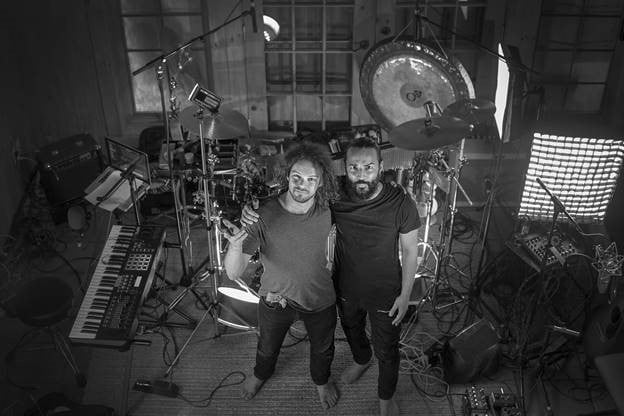
With a sound firmly rooted in sonic fragility and soulful honesty, Gonthier-Blouin and Watine looked to expand, growing the duo into a quintet for Dawn — said upcoming album set for release this year.
“The recording for Dawn took place in a mansion in the Eastern Townships,” Watine explains. “The addition of Marie-Pierre Bellefeuille on keyboards and vocals, Marie-Pier Gagné on cello, and Christian Paré on percussion has brought the music of Silk to new, sonic heights.”
That sentiment includes revisiting and reimagining existing tracks in Silk’s repertoire; Dawn is also set to breathe new life into songs from Eclipse, they reveal.
“It’s an expansion in more ways than one,” Gonthier-Blouin considers. “This EP captures the feel and emotion of five souls communicating through the vessel of music.”