

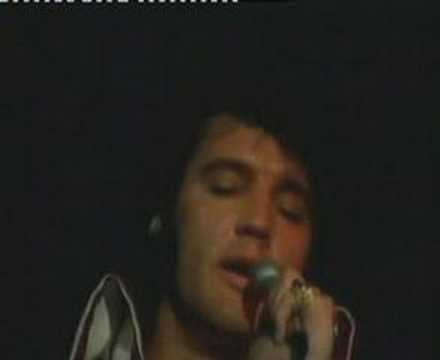
“In the Ghetto” (originally titled “The Vicious Circle”) is a song written by Mac Davis and made famous by Elvis Presley, who had a major comeback hit with it in 1969. It was released in 1969 as a 45 rpm single with “Any Day Now” as the flip side.
How record companies use the data Spotify/Apple send them
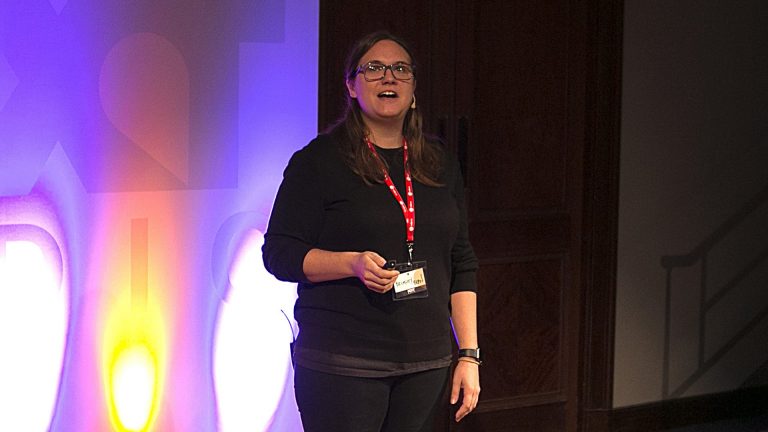
At Next Radio 2016, Brittney Bean outlines how DSPs (like Spotify and Apple Music) provide consumption data to record companies and how they use it to retail more music.
The One Song Gordon Lightfoot Regrets Writing
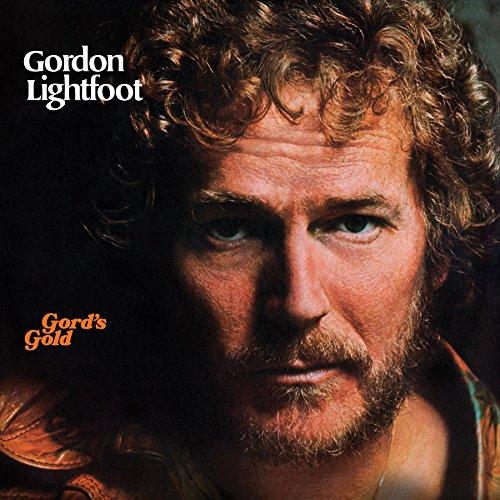
One of my favorite songs of yours is a song that you’ve since said is misogynistic, “For Loving Me.” [Sample lyric: “That’s what you get for lovin’ me. I ain’t the kind to hang around, with any new love that I found, ’cause movin’ is my stock in trade, I’m movin’ on. I won’t think of you when I’m gone.”]
Oh my goodness, yeah. That’s a bad one.
Johnny Cash sang it, Dylan sang it. To me, it was sort of like a country song about a gunslinger walking through town and [boasting], “Look at me!” Why do you discount that song now?
I was married at the time, and it was a damn poor song to write when you’re married to somebody.
I learned a lesson from that, because after I sang that song for a while, I asked myself, ‘What am I saying?!’ Even long after I was divorced and separated and she’d gone her way and I’d gone mine, I would sing this song and think, Geez. How did you she ever put up with this?! I stopped singing it.
— Excerpted from a conversation between Mike Sacks and Gordon Lightfoot, Vanity Fair, Sept. 27
Michael Jackson’s ‘Black or White’ Played on 64 Floppy Drives, 8 Hard Drives, And 2 Scanners

Michael Jackson’s Black or White cover by computer hardware orchestra. The original Black or White entered the Billboard Hot 100 at number 35. A week later it shot up to number three and in its third week, December 7, 1991, it ascended to number one, making it the fastest chart topper since The Beatles’ Get Back also won the Hot 100 in just three weeks in 1969.
CD Baby founder on Finding That One Song For You To Cover
James Althucher: Let me ask you this. Right now, we supposedly have this Long Tail, where everyone can sell 50 albums a month, no matter how bad you are or where you land in the Long Tail. But what’s happened in reality is that Amazon has actually — or Apple — has created our choices for us. Oh, if you like this, you might then like this. And if you’re not in their algorithm, you’re actually further down on the long tail. This kind of democracy of choice has actually created less choice in a way.
Derek Sivers: Yeah, because it’s like how are you going to find that artist number 1.5 million that’s buried in there that Apple isn’t recommending to you.
Right. And so how does an artist now overcome that?
“Boom! That’s a great song to go do a cover version of.”
Sivers: Good question. It’s — it changes the techniques. So for example, sorry this is just one little quirk, one little hack, but it worked really well. Some of my best sellers at CD Baby were the ones that did one cover song on their album of a song that had never been covered before. So you can go to iTunes and use their search engine and do a little research for all of your favorite songs, right, and then when you find one that only has one version of it —
Whatever it may be, I can’t really think of an example right now, because any example I would give would be one that already has lots of covers. But say, think back through the songs you love. You find one, and the only search result is the original recording.
Boom! That’s a great song to go do a cover version of. Because now, in the future — you do a cover version of it and you get it up on iTunes — and anyone searching on that song in the future will only have two versions. The original, and yours.
And they’ll say, ‘wow, who is this one?’ And, I found many time that this gets people in the whole artist.
So here’s a specific example. An artist named Melissa Rebronja from Toronto, did a cover version of ‘Wonderwall’ by Oasis. So she did a cover version of that, and it was — you know — track 9 of her full album of other songs that didn’t sound like that. But her whole album sold really well, because that’s how people found her in the mix. They were searching for ‘Wonderwall,’ found Oasis and — who’s this? Melissa Rebronja.
So there are things like that. The rules change. Because that would not have been the case twenty years ago. You wouldn’t walk into a physical record store and say, ‘show me every album that has a version of ‘Wonderwall’ on it.”
Bill Nunn as “Radio Raheem” in Do The Right Thing
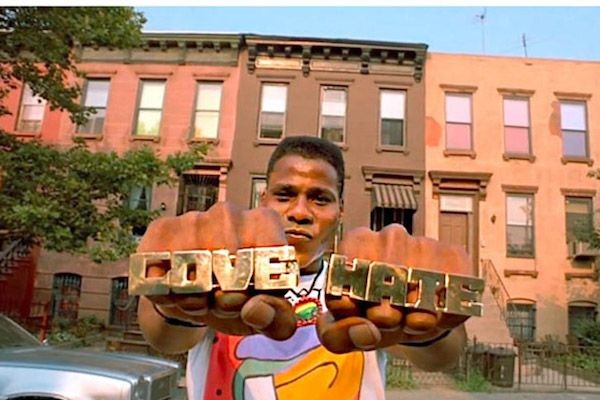
“Let me tell you the story of Right Hand, Left Hand. It’s a tale of good and evil. Hate: it was with this hand that Cain iced his brother. Love: these five fingers, they go straight to the soul of man. The right hand: the hand of love. The story of life is this: static. One hand is always fighting the other hand, and the left hand is kicking much ass. I mean, it looks like the right hand, Love, is finished. But hold on, stop the presses, the right hand is coming back. Yeah, he got the left hand on the ropes, now, that’s right. Ooh, it’s a devastating right and Hate is hurt, he’s down. Left-Hand Hate KOed by Love.” – Bill Nunn as “Radio Raheem”, in Do The Right Thing
The Vegetable Orchestra Literally Plays with Their Food

In Vienna, Austria, there is an orchestra that performs with instruments made from vegetables. For the past 18 years, these musicians have been purchasing produce from a local market, turning that produce into instruments and performing with them in front of a live audience. The vegetable scraps are made into soup, which the group then serves to the audience at the end of each performance.
Mick Jagger on The Economics Of The Music Business
“When the Rolling Stones started out they didn’t make any money out of records because record companies didn’t pay you. Nobody got paid. I always wonder if Frank Sinatra got paid. Your royalty was so low. If you sold a million records you got a million pennies. It was all very nice, but not what you imagined you were going to get.” “There was a small period from 1970 to 1997, where people did get paid, and they got paid very handsomely and everyone made money. But now that period has gone. So if you look at the history of recorded music from 1900 to now, there was a 25 year period where artists did very well, but the rest of the time they didn’t.” – Mick Jagger
David Lynch on Where Great Ideas Come From
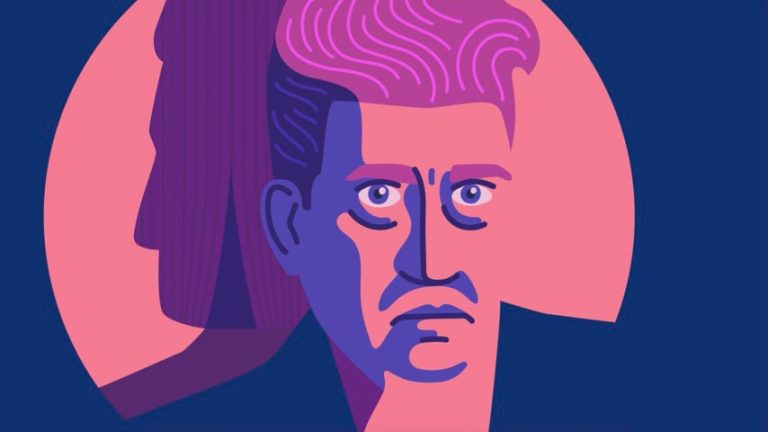
In 2008, The Atlantic sat down with the filmmaker David Lynch as he mused about inspiration and how to capture the flow of creativity. Now, we’ve animated his words of advice. “A lot of artists think that suffering is necessary,” he says. “But in reality, any kind of suffering cramps the flow of creativity.”
David Lynch on Where Great Ideas Come From from The Atlantic on Vimeo.
David Byrne and Neil deGrasse Tyson on The Importance Of An Arts Education
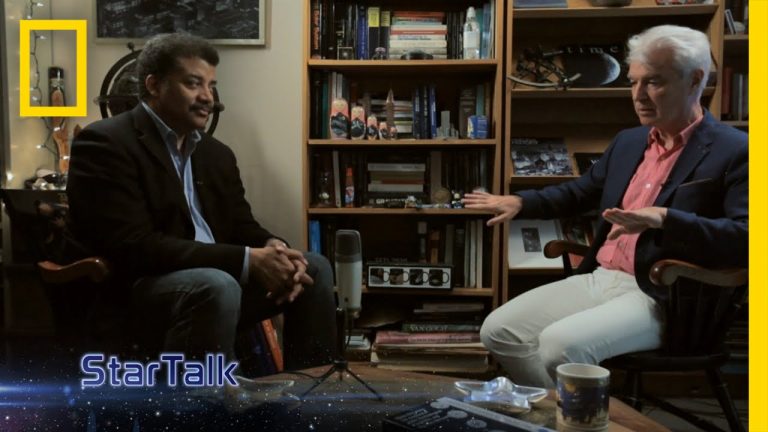
Musician David Byrne and Neil deGrasse Tyson discuss the vital importance of an arts education.