

1-minute tip for artists: Summer!👕 – Indigo Girls
How to Make Your Birthday Party All About the Music
For big fans of music, a birthday party is a chance to show off your playlists and your favourite kinds of music, while also enjoying an evening swaddled in the best tracks in your life. When you’re organizing your birthday event, as a music fan, you want the sounds to be front and centre of the entire evening — and to do this, you need to think carefully about how you’re going to curate your event around your favourite songs.
In this article, we provide a few tips to help you plan an unforgettable birthday party, serenaded by the music you love.
Speakers
The first and most important step in organizing a birthday party with music is to think about the speaker system and the audio connectivity. If you don’t own the kinds of speakers that can generate the sound you need for your party, you’re going to need to find a company from which you can hire some in your local area. Think, too, about the acoustics in your venue and whether you need to keep under a certain decibel level in recognition of neighbours and noise pollution.
Hire a DJ
The best way to play music at your event is with the help of a DJ. Without such help, you’re going to have small pauses in the music between each song, which will break up the rhythm of your evening. Hiring a DJ, and giving them a set list that you’re particularly interested in hearing, can make for a better flow of music throughout your evening. Or, if you know someone who’s got mixing skills, you can ask them to curate a mix to play at your special event; it won’t be live, but at least it’ll be smooth.
Live Music
On the other hand, if you’re more into the sound and sight of musicians — and if you and your friends love gigs — then you might prefer to hire music for your event, instead of playing it from speakers. You can find an exciting list of such professionals for hire here, all of whom have experience setting up and playing to parties in your local area. This is your chance to find the band and the sound that you really want at your birthday party, and a chance to blow your guests away with live music from talented individuals.
Dance Floor
Finally, where there is music, there is dancing. Birthday parties that are the most memorable are those that leave ample space for dancing, where people can enjoy the evening with the music that they adore. When you’re picking a venue or curating the room in which your party will take place, remain cognizant of the area where your guests will dance. Towards the end of the night, this’ll be the place at which you and your friends dance the night away with broad smiles.
For music fans, the prospect of a birthday party built around music is something that’s too wonderful to miss. As such, this article looks at what you’ll need to do to plan a musical birthday party this year.
50th Anniversary: Judy Collins & The Global Virtual Choir Re-Release Her Version of “Amazing Grace” in Aid of the WHO Solidarity Response Fund

Over the past few weeks, 1000 singers from across the globe — professional and amateur, alike — answered Judy Collins’ call to sing “Amazing Grace” with her as a sign of solidarity in this unprecedented time.
This new version of Judy’s historic recording is out now, and Alan Cumming, Judith Owen, Steve Earle, Madeleine Peyroux, Mandolin Orange, and Tift Merritt — plus internationally known choirs like The Sixteen, New York Choral Society, Voices International, and GOA University Choirare — are just some of the singers who participated in this Global Virtual Chorus event.
Watch moving messages via YouTube from Alan Cumming, Steve Earle and Tift Merritt about what Judy’s recording of “Amazing Grace” means to them, and a message from Ringo Starr too supporting the work of WHO. Messages from around the world have been flowing in from people who wanted to share their experience with the song and their appreciation of WHO.
All proceeds raised from this single will be going to the World Health Organization Solidarity Response Fund: https://covid19responsefund.org/
“Amazing Grace” has become a source of comfort during these unprecedented times, and Judy’s version has been played to Charing Cross Hospital, which received a swell of emotional outpouring on social media and over five million views (view via Facebook here); the now-famed priest of Notting Hill — Pat Allerton AKA @theportablepriest on Instagram — also played Judy’s version of the song for his sermons on the streets (view the Independent here)
“I recorded ‘Amazing Grace’ with a group of friends at Saint Paul’s Chapel on the Columbia University campus in New York City,” Collins recalls. “When my recording was released, it became enormously popular all over the world.
“It was written by John Newton in 1772 — a man who evolved from a slave ship captain to a writer of powerful hymns, changing his entire life, and becoming a model for spiritual transformation.
“That’s what we need today once again. Stay safe, help others, and pray for the planet.
“I am sending this song out to all the doctors, nurses and patients. We will survive this with love and music and amazing grace.”
Judy Collins embraced “Amazing Grace” in 1964 after witnessing marchers singing the hymn and being led by voting and women’s rights activist Fannie Lou Hamer; she saw its equal emotional impact on the marchers, witnesses, and law enforcement who opposed the civil rights demonstrators. Considering it as a talisman of sorts for peace, she started to perform the song in her sets from that point on, and it soon became one of her most requested songs when she played live.
Judy recorded “Amazing Grace” for her 1970 album Whales & Nightingales, and connected the recording to the Vietnam War, to which she objected; when asked why, she explained, “I didn’t know what else to do about the war in Vietnam. I had marched, I had voted, I had gone to jail on political actions and worked for the candidates I believed in. The war was still raging. There was nothing left to do, I thought, but sing ‘Amazing Grace.’”
A sentiment that will ring true with many today.
Judy’s version of the song became a global hit finding chart success repeatedly. It remained on the charts in the US for 70 straight weeks after it was released. In the UK, the song charted five different times between 1970 and 1972, and has also already made history and was registered with the Library of Congress.
Judy Collins’ 50th anniversary re-release of “Amazing Grace” is available now.
DOWNCHILD Live Streaming Concert with Dan Aykroyd, Colin James & More – Fundraiser For Unison
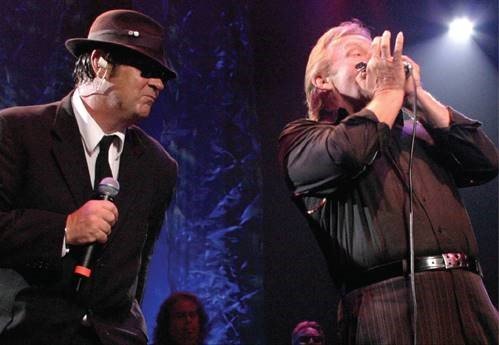
In celebration of Father’s Day and what would have been the final date of The Legendary Downchild Blues Band’s 50th Anniversary Tour, the band are streaming their “Live At Massey Hall” concert in its entirety as a FREE SHOW for fans on Sunday, June 21, 2020 at 7:00 Pm (EST), all in support of a very important cause, the Unison Benevolent Fund.
Downchild were joined on stage by some very special guests for their historic “Live At Massey Hall” performance, including Hollywood Star Dan Aykroyd, blues/rock icon Colin James, American blues legend, James Cotton, Grammy Award winner Colin Linden, Montreal chart topping rocker Jonas and the one and only Wayne Jackson of The Memphis Horns.
For a sneak preview of the concert watch “Soul Man” featuring Dan Aykroyd performing alongside Downchild at https://www.youtube.com/c/DownchildBluesBand
Downchild will premier their “Live At Massey Hall” concert for an exclusive one-night-only viewing on their official Youtube Channel on June 21st at 7:00 PM (EST) at https://www.youtube.com/c/DownchildBluesBand
Donations to Unison in conjunction with the Downchild concert can be made by texting UNISON to 45678 or visiting UnisonFund.ca/Donations/Spotify
All donations made to Unison will be matched by Spotify as part of the Spotify COVID-19 Music Relief project that has been created to amplify the efforts of organizations that focus on helping those most in need, like the Unison Benevolent Fund. Spotify will match donations made to Unison dollar for dollar up to a collective total of $10 million USD.
The Unison Benevolent Fund is a non-profit, registered charity that provides counselling and emergency relief services to the Canadian music community. They are there to help professional music-makers in times of hardship, illness or economic difficulties. For further, information on Unison and they great work they do, please see https://www.unisonfund.ca/about/mission
“We are honoured to be able to support a great cause like Unison, that truly takes care of our own, in supporting Canadian artists and Canadian music industry professionals in this difficult time. Like so many people across the country and around the world, the music community has been hit hard by the pandemic.” – Donnie “Mr. Downchild” Walsh
Downchild came to international prominence as the inspiration for Hollywood stars Dan Aykroyd and the late John Belushi’s hit film, The Blues Brothers. In fact, two Downchild songs, “Shotgun Blues” and “(I Got Everything I Need) Almost” were even covered on The Blues Brothers’ 1978 multi-platinum album Briefcase Full of Blues.
“There would be no Blues Brothers if it weren’t for Downchild” – Dan Aykroyd
2018 Juno Award winners, Downchild, include some of the most well respected musicians in the country, who have performed together for over 25 years. Including lead singer and harmonica player CHUCK JACKSON, PAT CAREY on tenor sax, MIKE FITZPATRICK on drums, GARY KENDALL on bass, and former American super-group rocker MICHAEL FONFARA (of Rhinoceros/Lou Reed fame) on keyboards.
Today’s 1-minute tip for artists stuck on social media: Opposites.

I take–2 steps forward
I take–2 steps back
We come together
Cuz opposites attract
A Beginner’s Guide to Choosing Your First Banjo
Learning how to play the banjo is a considerably great achievement that will enable you to enjoy its unique sound while playing your favorite sounds. One of the first decisions you have to make is deciding the best beginner banjo that you will purchase to learn with.
Knowing where to start is an issue that be wilds all banjo beginners and for a good reason. Many banjo brands in the market seemingly offer the best chance for beginners and they can overwhelm you when you are in the market for your first banjo.
In this article, we provide a guide for a first time banjo buyer.
The number of strings
The number of strings in a banjo depend on the type of music you are interested in playing. Some banjos have up to 12 strings but for beginners the lower the number of strings the easier it is to learn.
A 6-string banjo is one of the best to start with because it is tuned in the same way as a standard guitar. It can also be played in the same way as the guitar making it an easy one to start learning the banjo with. If you already know how to play and tune the guitar then this banjo will make your process very easy to learn.
There are banjos with 4 and 5 strings as well and they tend to be more popular with more traditional music and they come in different lengths of scale.
Open or resonator back
Banjos come with either an open or a resonator back which is the wooden bowl that creates the movement of air in the inside part of the banjo head to project sound waves on the outside. The main different between these 2 is the volume where the resonator ones are louder.
Therefore, the type of music they are associated with is the main difference. The open back banjos are mainly used in old-time folk style of music that has tunes that are simple and mostly played by the rural folk. On the other hand, the resonator banjos have louder and more steep tones that are favored for playing the bluegrass type of music which can be played alongside other complimentary instruments such as guitars and mandolins. In short, your choice of banjo will be determined by the type of music you want to play.
Tuners
These are the mechanisms by which the strings are tightened or loosened to ensure that they produce the best sound. The quality of tuners is what separates good banjos and poor ones. You should try the tuners before purchasing by testing whether they move smoothly. You should ensure that you are satisfied with the quality being offered to ensure that they do not break off once you begin using them.
Conclusion
The most important thing when looking for the best beginner banjo is seeking help and advice from banjo players of lovers who have been there and already have the knowledge. Listening to the advice they give is likely to be based on their own experiences and by listening to it you can avoid the pitfalls that many beginners make.
Moldavite: Spiritual Properties and Power
Moldavite is a charming gemstone possessing supreme mysticism and cosmic powers. From the creation of this gemstone to its benefits, it reflects a unique celestial existence within its core. It is believed to stimulate your energies for life transformation and spiritual awakening.
If you hold a moldavite stone in the palm of your left hand, it creates a tingling sensation with an upward rush of energy that warms you from inside out. Whatever are your life goals, this gemstone can align your path with destiny.
Such is the power exuded by moldavite that you will experience an emotional release even with a slight initial contact. It accelerates your spiritual and emotional evolution in these ways:
Expands the Aura and Consciousness
By activating the dream state of your mind, moldavite stone can acclimatize your consciousness to the reality of earth plane. This way, it creates a deeper understanding of your physical and spiritual existence. As a result, your aura expands with a deeper consciousness and awareness.
For those who feel detached from this universe, this stone can create a profound connection. You will experience more clarity in your thoughts and a better vision for life. Also, it guides you to the path of self-discovery and enlightenment.
Stimulates Inner Transformation
In your journey to spiritual awakening, a gemstone like moldavite can play a vital role. Using its celestial energies and intense frequencies, this gemstone can initiate and stimulate inner transformation. It creates a sensational heat inside your body and activates the chakras that cross the path of this heat. You can harness cosmic frequencies to bring more synchronicity in your life if you buy moldavite in its pure form.
When there is a deeper and straight connection between the higher realms and earth plane, you will experience a strong spiritual awakening. Moldavite stone makes this possible with its ability to connect with extraterrestrial powers. Also, it can influence your thoughts and guide you to the path of ascension.
Moldavite can also cleanse the energies around you and allow unrestricted flow of chakra energy as well. It prevents negative thoughts and energies from entering your space. You will feel protected and enlightened after wearing this gemstone.
Prevents Negativity
Moldavite stone has energized vibrations that prevent onset of negativity inside your aura. You will feel lighter and brighter when surrounded with its cosmic energies. Also, it cleanses your soul and works as your spiritual protector against all forms of evil.
If you feel overwhelmed by negative energies in your life, you can pair moldavite with other spiritually resilient gemstones such as pectolite. They will fight your fears and protect your sensitive soul in unwanted or unwarranted situations.
Even when dealing with cynicism and anxiety, you will benefit by carrying a moldavite. It not only gives you surety about your inner strength but also protects against physical threats and negative energies.
Connects with the Cosmos
Moldavite is one of the few gemstones having a direct connect with celestial beings. This gemstone is believed to be formed as a result of a meteorite crash on the earth. Since it carries extraterrestrial vibrations, it can work as a conduit between the cosmos and the earth plane.
If you look at the translucent and vibrant surface of moldavite, it will captivate you completely. But, the beauty of this gemstone comes with great powers as well. It helps to communicate with higher realms by expanding your cosmic awareness. Also, this gemstone can help in your past-life regression if you choose it wisely.
Awakens the Chakras
In the Vedic astrology, moldavite is known as the chakra stimulator and opener. This single gemstone can activate three chakras- crown, third-eye, and heart chakra for spiritual and physical well-being. It has intense energies that flow to the regions where you need more vibrations for stimulating physical and etheric bodies. You can either buy online moldavite as a single stone or with other gemstone to practice various healing and meditation techniques.
Moldavite contains several transformative properties due to which energy resonance happens seamlessly inside your body. It not only develops your psychic abilities but also balances the chakras. This gemstone stimulates third-eye chakra to enhance your consciousness and perception. At the same time, it can work with crown chakra to align your physical self with cosmic bodies.
Brings Love and Compassion
The chakra energies of moldavite stone expand to the heart chakra located near the breastbone in your body. Hence, it directly influences the feelings like unconditional love and compassion.
Since it is also known as the powerhouse of multiplicity, it has daunting effect on people who don’t understand its vibrations and cosmic energies. But, if you embrace this gemstone with your heart, it can change your life in a positive way and bring fresh energy to your relationships.
When you struggle with your internal blockages to understand deeper emotions and perceptions, buy moldavite to pull you out of this dilemma. It gives you a clear perspective of life and environment surrounding you. Most importantly, it fills your heart with a rightful purpose and helps you in selecting noble pursuits.
Evokes a Sense of Fulfillment
The meditational and spiritual properties of moldavite are life-altering. It brings the feeling of personal fulfillment to your heart. If you have past wounds that fester your emotions and creates spiritual gaps, wear this gemstone to pacify them.
Using its metaphysical abilities, it can awaken the dormant memories and brighten your outlook to every situation even if it is bleak. Also, moldavite helps you to recognize the best path in your life instead of tying you to cynical beliefs.
With moldavite, you will experience equilibrium of mind and heart for a satisfied life. It is an unconventional gemstone that can resolve many convoluted situations in your life.
Almost every aspect of your spiritual, physical, and emotional self will experience the intensifying vibrations of this gemstone. But, you need to find it right. That’s where the stores like Gempundit can come to your rescue. They have an eclectic variety of rare and beautiful online moldavite.
The stones at this store exhibit their raw beauty and elegance due to their unadulterated and natural state. The prices are genuine and you can claim a free lab certificate with your purchase to testify the authenticity of the stone.
Perfect For RIGHT NOW: Jim Henson Demonstrates How to Make Your Own Puppets

Jim Henson and Muppeteers show kids how to make puppets from simple things like socks. This video aired on Public Television in 1969, prior to Sesame Street, on Iowa Public Television’s “Volume See” kids’ show.
The Opening Credits Of James Bond’s ‘Spectre’ With The Rejected Radiohead Theme Song Instead

This video features Radiohead’s rejected “Spectre” set against the main title sequence from the James Bond film of the same name.
Post Malone and Quavo’s Isoated Vocals For “Congratulations”

“Congratulations” by Post Malone, featuring vocals from Quavo, from the hip-hop trio Migos was released as the first promotional single from his debut studio album, Stoney. The track peaked at number eight on the US Billboard Hot 100, becoming his highest peaking single on the chart, surpassing the number 14 peak of his debut hit, “White Iverson”, until it was again surpassed by his track “Rockstar” featuring 21 Savage, which peaked at number one. The song has so far received over 1.2 billion YouTube views worldwide.
https://youtu.be/oB6ACshYV_U