Home Blog Page 2573

Chicago and the Doobie Brothers Announce Co-Headlining Tour

0

Two of the most successful and critically-acclaimed rock bands Chicago and The Doobie Brothers – who have sold more than 150 million records combined – announced today their co-headline North American summer tour kicking off June 7, 2017 in Concord, CA. The 30+ date tour, promoted by Live Nation, will take the Grammy Award-winning and multi-platinum selling groups through amphitheatres in major cities including Los Angeles, Chicago, New York City, Toronto, Las Vegas, Atlanta and Washington, DC for a night of unforgettable live music. The tour will conclude July 30, 2017 in Virginia Beach, VA.

Tickets for the tour go on sale starting Monday, January 9 at 10 a.m. in select cities on www.livenation.com. A limited number of VIP Packages will be available including premium seating, meet & greet, exclusive merch and more. Please see below for full tour itinerary and details.

“The perfect summer line-up, playing dozens of the best-loved rockin’ pop classics. I’m happy to be hangin’ out with our ‘Doobie’ friends… a great band,” said Robert Lamm of Chicago. “We’re excited to be touring with the Doobies again. I know we’ll have lots of fun,” adds Lee Loughnane. “Come see us in a city near you.”

“We are so excited to once again be sharing the stage with our wonderful friends Chicago! They’re a great band, and musically we fit together very well,” said Tom Johnston of The Doobie Brothers. “We know from past experience what a great show this is going to be for the audience. I’m sure there will be some fun musical surprises along the way too. It’s going to be a great summer,” adds Patrick Simmons.

Chicago & The Doobie Brothers – 2017 North American Co-Headline Tour
All dates, venues and cities below subject to change.

6/7/2017 – Concord, CA @ Concord Pavilion
6/9/2017 – Las Vegas, NV @ Park Theater at the Monte Carlo
6/10/2017 – Los Angeles, CA @ The Forum
6/11/2017 – Phoenix, AZ @ AK-Chin Pavilion
6/13/2017 – Morrison, CO @ Red Rocks Amphitheatre
6/16/2017 – Dallas, TX @ Gexa Energy Pavilion
6/17/2017 – Austin, TX @ Austin360 Amphitheatre
6/18/2017 – Houston, TX @ Cynthia Woods Mitchell Pavilion
6/20/2017 – Kansas City, MO @ Starlight Theatre
6/21/2017 – St Louis, MO @ Hollywood Casino Amphitheatre
6/23/2017 – Alpharetta, GA @ Verizon Amphitheater
6/24/2017 – Charlotte, NC @ PNC Music Pavilion
6/25/2017 – Raleigh, NC @ Coastal Credit Union Music Park at Walnut Creek
6/27/2017 – Nashville, TN @ Ascend Amphitheater
6/29/2017 – Tampa, FL @ MidFlorida Credit Union Amphitheatre
6/30/2017 – West Palm Beach, FL @ Perfect Vodka Amphitheatre
7/12/2017 – Chicago, IL @ Huntington Bank Pavilion at Northerly Island
7/14/2017 – Noblesville, IN @ Klipsch Music Center
7/15/2017 – Cincinnati, OH @ Riverbend Music Center
7/16/2017 – Clarkston, MI @ DTE Energy Music Theatre
7/18/2017 – Darien Center, NY @ Darien Lake Performing Arts Center
7/19/2017 – Toronto, ON @ Molson Canadian Amphitheatre
7/21/2017 – Camden, NJ @ BB&T Pavilion
7/22/2017 – Bethel, NY @ Bethel Woods Center for the Arts
7/23/2017 – Holmdel, NJ @ PNC Bank Arts Center
7/25/2017 – Saratoga Springs, NY @ Saratoga Performing Arts Center
7/26/2017 – Boston, MA @ Blue Hills Bank Pavilion
7/28/2017 – Wantagh, NY @ Nikon At Jones Beach Theater
7/29/2017 – Bristow, VA @ Jiffy Lube Live
7/30/2017 – Virginia Beach, VA @ Veterans United Home Loans Amphitheater

Thomas Dolby on Working With Foreigner And Their Massive “Waiting For A Girl Like You” Hit

0

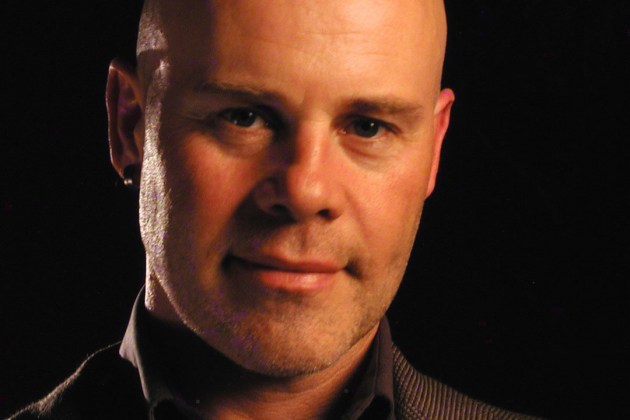
Thomas Morgan Robertson, known by the stage name Thomas Dolby, is an English producer, and one of the most influential musicians of our era. His hit singles include “She Blinded Me with Science” from 1982, and 1984 single “Hyperactive!”. He has also worked in production and as a session musician, as a technology entrepreneur in Silicon Valley, and as the Music Director for the TED Conference, and is now a Professor of the Arts at Johns Hopkins University.

Tell me about working with Mutt Lange and Foreigner on the 4 album. You spent a month with them, which had to be quite an interesting experience, spending that length of time in the trenches with one of the bands that was really at the top of the “corporate rock” heap at that point.
Thomas Dolby: Up until that point, I’d never spent more than about 10 hours at a stretch in a professional recording studio, and then I was watching the clock because I was paying for it. So to have the luxury of being up all night at Electric Lady most nights of the week with any keyboard that I chose to hire from S.I.R., that was certainly a real thrill. I think especially the band themselves didn’t really know what I was putting on their records. During the day, they were doing vocals with Lou Gramm, and they would leave me at night or put me in the other studio working on my own with a relief engineer. And then they would come in and they would say yay or nay to the stuff that I’d done. I remember specifically, when I created the intro to “Waiting for a Girl Like You,” I’d done it with a technique that I’d long been hoping to try out, which was basically just to sort of build yourself a Mellotron by recording a sustained note on each track of the multi-track and manipulating them in a wave to create combinations of harmonies. I’d been longing to do that for years, and I actually got to do that one night at Electric Lady and put it on the intro of “Waiting for a Girl Like You.” The band came in in the morning and I played it for them, and there was sort of a silence and then the bass player said, “It’s a bit like massage music, isn’t it?” [Laughs] But to their credit, Mutt Lange and Mick Jones got it and it was very un-Foreigner-like in a certain way. It was certainly unlike anything Foreigner were famous for up to that point. I got a big thrill when, six months later, I’d be driving and there’d be an AOR radio station and on would come my “massage music,” 15 seconds of it before the groove kicked in.

Via

How An SNL Set Is Dismantled During The Show

0

Saturday Night Live posted a video showing how a set is dismantled during the opening credits. They should do a whole show on how this is done throughout the program.

Glenn Campbell Shreds Boots Randolph’s “Yackety Sax”

0

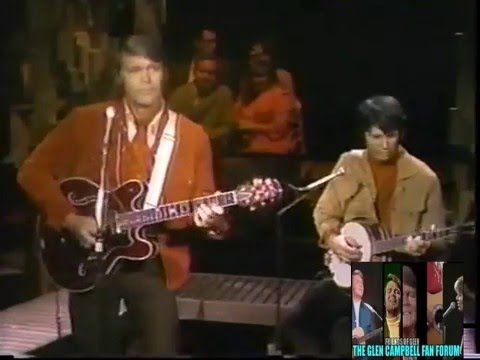
In a 1969 episode of Glen Campbell Goodtime Hour, the great country artist ended the concert section of his show with the Chet Atkins guitar adaptation of Boots Randolph‘s song “Yackety Sax“, affectionately entitled “Yackety Axe“. Campbell impressively shredded the song at lightning speed without missing a single note.

“We usually end the concert section with a banjo tune, but tonight we’re gonna play one of Chet Atkins’ and Boots Randolph’s favorites called “Yackety Sax”.”

BuzzAngle Music: Overall Music Consumption Up 4.2%; Subscription Streaming Up 124%

0

BuzzAngle Music just released their first-ever yearly report, on 2016 U.S. music consumption. 2016 was another successful year in music, with overall consumption rising 4.2% over 2015, marking the second year in a row with solid growth.The continued explosion of audio stream consumption, which increased 82.6% to 250B streams, fueled this increase.

Both album sales and song sales continued to decline but the transition to these new access methods has shown to provide overall growth and a sustainable business model for the future. Breaking down the tremendous streaming growth shows what is perhaps the most important stat of the year: the percentage of subscription streams rose from 62% of the total in 2015 to 76% of the total in 2016.

The number of 2016 subscription streams grew over 2.25x the 2015 subscription streams amount.In addition to providing the industry with a great business model, streaming services offer music lovers a much wider selection of music at their fingertips. In 2016, there were over 28M unique songs played via a streaming service compared to 7M songs that were purchased. An average day’s audio-streaming volume in 2016 (1.2B) was much larger than the entire year’s volume of song sales (734M).

Audio streams hit a record high of 250.7 billion, which is over 80% more than the previous year. For the first time, two songs reached over 700 million streams including “Panda” by Desiigner (736.8m) and Rihanna’s “Work” (716.6m).

buzzAngle

While streaming and overall consumption are up, music sales have continued to take a hit in almost every category. With a daily average of 1.2 billion, there were more streams per day than song downloads for the entire year (734 million). Album sales are also down 15.6% and song sales dropped 24.8%. The only category of album sales to increase was vinyl, which saw sales rise by 25.9%. Unfortunately for overall physical album sales, vinyl only accounts for 8%.

buzzAngle

BuzzAngle’s analysis by genre showed that Hip Hop/Rap continues to be the most popular genre in terms of total song consumption and accounts for 30% of all streams, while Rock continues to lead in sales. They also pointed out that in 2016 approximately 50% of all music consumed were ‘Deep Catalog” titles, meaning they were released over three years ago.

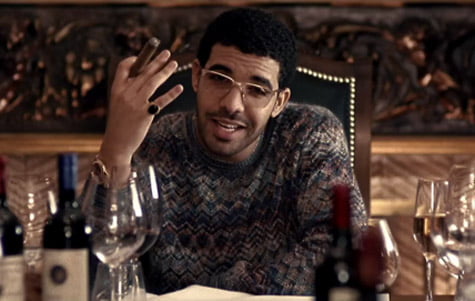
buzzangleStill, even with a drop of over 4%, Pop music held onto its lead in album consumption at 14.6% with Hip Hop/Rap coming in second with 14.4%. Hip Hip/Rap saw album consumption rise 24.8% and took the top spot for song consumption. Drake was named BuzzAngle’s Artist of the Year with his album “Views” and song “One Dance” leading in consumption units.

EDM saw a 35% increase in album consumption and 72.% in songs, clocking in as the largest genre growth of the year.

The Rock genre which includes rock, alternative, metal, indie rock, punk, and folk had the most album sales, accounting for 63% of all vinyl sales.

Adele sold the most albums in 2016 with her 2015 release “25” with 1,550,584 album sales, beating Drake’s “Views” by less than 40,000 units.

The BuzzAngle 2016 U.S. music report is filled with stats on consumption, top artists, albums and songs, as well as a number of interesting and fun highlights. Download the full report – BuzzAngle Music 2016 U.S. Report

Via

Drake Now Has The Most Billboard Hot 100 Hits By Solo Artist

0

This week, Drake ties a historic mark, as he logs his 132nd career Hot 100 entry, as Gucci Mane’s “Both,” on which Drake is featured, debuts at No. 41. With the bow, Drake ties Lil Wayne for the most Hot 100 appearances among soloists in the chart’s 58-year history.

Among all acts, only the Glee Cast boasts more Hot 100 entries than Drake and Lil Wayne: 207. (Billed as the Glee Cast on its releases, the act was a rotating collective with certain members present, although not singing on every song, throughout the show’s six-season run on Fox in 2009-15.)

Here is an updated count of the acts with the most charted Hot 100 entries dating to the ranking’s Aug. 4, 1958, inception (though the chart dated Jan. 7, 2017):

Most Hot 100 Entries All-Time
207, Glee Cast
132, Drake
132, Lil Wayne
108, Elvis Presley
91, James Brown
86, Jay Z
82, Chris Brown
80, Kanye West
75, Ray Charles
73, Aretha Franklin
71, The Beatles
70, Nicki Minaj
70, Taylor Swift

Notably, the Hot 100 originated two years after the 1956 career launch of Elvis Presley. Still, Presley has charted the most entries by a soloist as a lead act, claiming lead billing in all 108 of his visits. James Brown follows among soloists as the lead on all 91 of his.

Via

Mark Hamill Discusses Star Wars In This Vintage 1983 Clip

0

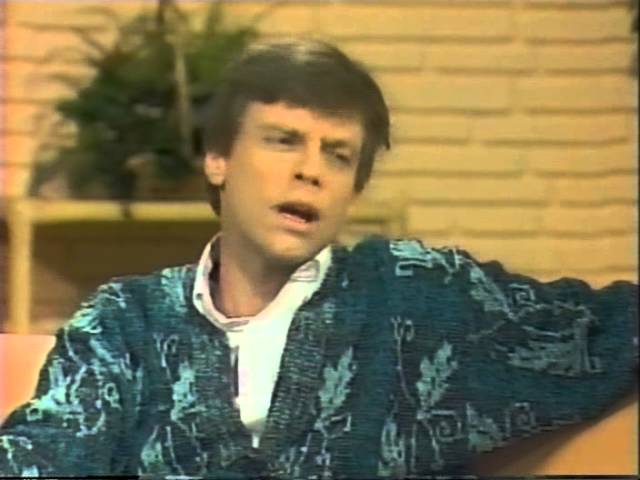
Here’s a vintage 1983 clip of Mark Hamill talking about the future of Luke Skywalker in the Star Wars saga.

Larry David goes full Larry David And It’s Pretty, Pretty Good

0

Larry David gives a very Larry David answer to an audience member’s question during a 2015 TimesTalks interview when the young man asks a question on behalf of his sister watching online.

https://youtu.be/rtbicVBMRFA

Hollywood’s Most Talented Everyman Billy Crudup Teaches You How To Juggle

0

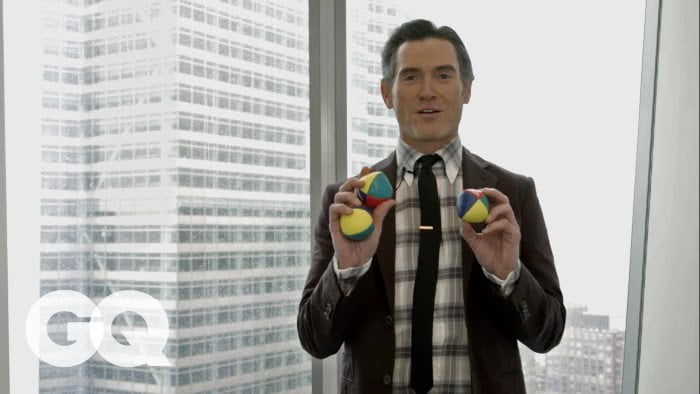
GQ has shared a video where Hollywood’s most talented everyman Billy Crudup (Eric MacLeish in Spotlight, Russell Hammond in Almost Famous, Will Bloom in Big Fish) gives us a quick tutorial on how to properly juggle. He explains that its good to start off with a little two-ball action and then work your way up to three balls.

Scientific and Technical Awards At The Oscars Will Make You Go “HUH?”

0

The truth remains that while I love to watch movies, I have no clue what 98% of the jobs listed in the end credits actually do. This is my chance to find out, and congratulations one and all

The Academy of Motion Picture Arts and Sciences announced today that 18 scientific and technical achievements represented by 34 individual award recipients, as well as five organizations, will be honored at its annual Scientific and Technical Awards Presentation on Saturday, February 11, 2017 at the Beverly Wilshire in Beverly Hills.

“This year we are particularly pleased to be able to honor not only a wide range of new technologies, but also the pioneering digital cinema cameras that helped facilitate the widespread conversion to electronic image capture for motion picture production,” said Ray Feeney, Academy Award recipient and chair of the Scientific and Technical Awards Committee. “With their outstanding, innovative work, these technologists, engineers and inventors have significantly expanded filmmakers’ creative choices for moving image storytelling.”

Unlike other Academy Awards to be presented this year, achievements receiving Scientific and Technical Awards need not have been developed and introduced during 2016. Rather, the achievements must demonstrate a proven record of contributing significant value to the process of making motion pictures.

The Academy Awards for scientific and technical achievements are:

TECHNICAL ACHIEVEMENT AWARDS (ACADEMY CERTIFICATES)

To Thomson Grass Valley for the design and engineering of the pioneering Viper FilmStream digital camera system.

The Viper camera enabled frame-based logarithmic encoding, which provided uncompressed camera output suitable for importing into existing digital intermediate workflows.

To Larry Gritz for the design, implementation and dissemination of Open Shading Language (OSL).

OSL is a highly optimized runtime architecture and language for programmable shading and texturing that has become a de facto industry standard. It enables artists at all levels of technical proficiency to create physically plausible materials for efficient production rendering.

To Carl Ludwig, Eugene Troubetzkoy and Maurice van Swaaij for the pioneering development of the CGI Studio renderer at Blue Sky Studios.

CGI Studio’s groundbreaking ray-tracing and adaptive sampling techniques, coupled with streamlined artist controls, demonstrated the feasibility of ray-traced rendering for feature film production.

To Brian Whited for the design and development of the Meander drawing system at Walt Disney Animation Studios.

Meander’s innovative curve-rendering method faithfully captures the artist’s intent, resulting in a significant improvement in creative communication throughout the production pipeline.

To Mark Rappaport for the concept, design and development, to Scott Oshita for the motion analysis and CAD design, to Jeff Cruts for the development of the faux-hair finish techniques, and to Todd Minobe for the character articulation and drive-train mechanisms, of the Creature Effects Animatronic Horse Puppet.

The Animatronic Horse Puppet provides increased actor safety, close integration with live action, and improved realism for filmmakers.

To Glenn Sanders and Howard Stark for the design and engineering of the Zaxcom Digital Wireless Microphone System.

The Zaxcom system has advanced the state of wireless microphone technology by creating a fully digital modulation system with a rich feature set, which includes local recording capability within the belt pack and a wireless control scheme providing real-time transmitter control and time-code distribution.

To David Thomas, Lawrence E. Fisher and David Bundy for the design, development and engineering of the Lectrosonics Digital Hybrid Wireless Microphone System.

The Lectrosonics system has advanced the state of wireless microphone technology by developing a method to digitally transmit full-range audio over a conventional analog FM radio link, reducing transmitter size, and increasing power efficiency.

To Parag Havaldar for the development of expression-based facial performance-capture technology at Sony Pictures Imageworks.

This pioneering system enabled large-scale use of animation rig-based facial performance-capture for motion pictures, combining solutions for tracking, stabilization, solving and animator-controllable curve editing.

To Nicholas Apostoloff and Geoff Wedig for the design and development of animation rig-based facial performance-capture systems at ImageMovers Digital and Digital Domain.

These systems evolved through independent, then combined, efforts at two different studios, resulting in an artist-controllable, editable, scalable solution for the high-fidelity transfer of facial performances to convincing digital characters.

To Kiran Bhat, Michael Koperwas, Brian Cantwell and Paige Warner for the design and development of the ILM facial performance-capture solving system.

This system enables high-fidelity facial performance transfer from actors to digital characters in large-scale productions while retaining full artistic control, and integrates stable rig-based solving and the resolution of secondary detail in a controllable pipeline.

SCIENTIFIC AND ENGINEERING AWARDS (ACADEMY PLAQUES)

To ARRI for the pioneering design and engineering of the Super 35 format Alexa digital camera system.

With an intuitive design and appealing image reproduction, achieved through close collaboration with filmmakers, ARRI’s Alexa cameras were among the first digital cameras widely adopted by cinematographers.

To RED Digital Cinema for the pioneering design and evolution of the RED Epic digital cinema cameras with upgradeable full-frame image sensors.

RED’s revolutionary design and innovative manufacturing process have helped facilitate the wide adoption of digital image capture in the motion picture industry.

To Sony for the development of the F65 CineAlta camera with its pioneering high-resolution imaging sensor, excellent dynamic range, and full 4K output.

Sony’s unique photosite orientation and true RAW recording deliver exceptional image quality.

To Panavision and Sony for the conception and development of the groundbreaking Genesis digital motion picture camera.

Using a familiar form factor and accessories, the design features of the Genesis allowed it to become one of the first digital cameras to be adopted by cinematographers.

To Marcos Fajardo for the creative vision and original implementation of the Arnold Renderer, and to Chris Kulla, Alan King, Thiago Ize and Clifford Stein for their highly optimized geometry engine and novel ray-tracing algorithms which unify the rendering of curves, surfaces, volumetrics and subsurface scattering as developed at Sony Pictures Imageworks and Solid Angle SL.

Arnold’s scalable and memory-efficient single-pass architecture for path tracing, its authors’ publication of the underlying techniques, and its broad industry acceptance were instrumental in leading a widespread adoption of fully ray-traced rendering for motion pictures.

To Vladimir Koylazov for the original concept, design and implementation of V-Ray from Chaos Group.

V-Ray’s efficient production-ready approach to ray-tracing and global illumination, its support for a wide variety of workflows, and its broad industry acceptance were instrumental in the widespread adoption of fully ray-traced rendering for motion pictures.

To Luca Fascione, J.P. Lewis and Iain Matthews for the design, engineering, and development of the FACETS facial performance capture and solving system at Weta Digital.

FACETS was one of the first reliable systems to demonstrate accurate facial tracking from an actor-mounted camera, combined with rig-based solving, in large-scale productions. This system enables animators to bring the nuance of the original live performances to a new level of fidelity for animated characters.

To Steven Rosenbluth, Joshua Barratt, Robert Nolty and Archie Te for the engineering and development of the Concept Overdrive motion control system.

This user-friendly hardware and software system creates and controls complex interactions of real and virtual motion in hard real-time, while safely adapting to the needs of on-set filmmakers.

Portions of the Scientific and Technical Awards Presentation will be included in the Oscar telecast.

The 89th Oscars will be held on Sunday, February 26, 2017, at the Dolby Theatre at Hollywood & Highland Center® in Hollywood, and will be televised live on the ABC Television Network at 7 p.m. ET/4 p.m. PT. The Oscars also will be televised live in more than 225 countries and territories worldwide.