

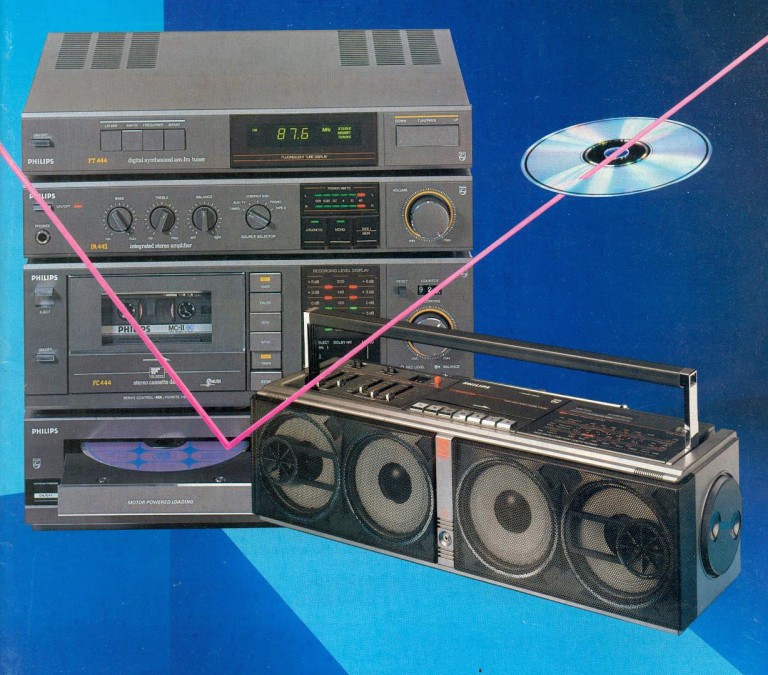
Got an old CD case lying around? You won’t believe what you can make with it!

I think I have a few CD cases lying around, and now I have something to do this weekend!
The Classic Hollywood Guide to how to react when you screw up a scene

Enjoy the master classes by Bogie, Bette Davis, Carole Lombard, Claudette Colbert, Errol Flynn, Claude Rains, Kay Francis, Edward G. Robinson, Jane Wyman, George Brent, Merle Oberon, Patricia Neal, Mickey Rooney and more.
Toronto Public Library launches city’s first musical instrument lending program at Parkdale branch
The Toronto Public Library is now offering a collection of musical instruments at its Parkdale branch that can be borrowed for free with a library card. Guitars, keyboards, string and percussion instruments are available with the exciting new initiative, which has been made possible with generous support from Sun Life Financial through their Making the Arts More Accessible program,
Toronto's first musical instrument lending library available to anyone with a library card! ??? #TOMusicCity pic.twitter.com/XDaHoa87c0
— 4479 (@4479Toronto) April 7, 2016
The Sun Life Financial Musical Instrument Lending Library is the first of its kind in the city, and also the first in public libraries across Canada. Canadian artists Raine Maida from Our Lady Peace andChantal Kreviazuk were on-hand at the Parkdale Library to kick-off the new initiative, which also featured performances from students from at the Regent Park School of Music. During the announcements, Sun Life announced the donation of $155,000 to the Toronto Public Library to help establish the new program.
1st instruments donated in @torontolibrary month long donation drive by @MrRaineMaida @chantalkreviaz! #TOMusicCity pic.twitter.com/spy2mrg8eV
— 4479 (@4479Toronto) April 7, 2016
The JUNO-award winning musicians were also the first to contribute to the month-long instrument donation drive with an acoustic guitar and keyboard. For Toronto residents with extra gently used instruments, donations are being accepted from Thursday, April 7 to Saturday, May 7th at the Parkdale library branch and Toronto/North York Long & McQuade locations.
First Ever Toronto Music Strategy Passed Unanimously
Last week, Toronto City Council unanimously adopted the Toronto Music Strategy. The first of its kind for the city, the Music Strategy will now guide the growth and development of Toronto’s music sector, serving as a blueprint for the City and City Councillors.
The Strategy is the result of the Toronto Music Advisory Council’s (TMAC, which I’m proud to be on the Council) hard work, as well as a significant amount of public input. During a three week consultation in December 2015, the Music Strategy’s survey benefited from 6,100 responses from both members of the music community and the city’s enthusiastic music fans.
Recognizing Toronto’s status as a Music City, and the economic and cultural benefits that come with that, the objectives of the Music Strategy include liveable wages for performers, professional development for creators, music education in schools, and promoting the city’s many live music events. Key issues like affordable housing for musicians, the availability of rehearsal space, and the city’s regulatory regime are also addressed.
The adoption of the Toronto Music Strategy represents a win for Toronto’s music community. Going forward, music fans and industry can expect to see TMAC and the City collaborate in identifying and implementing the most immediate priorities within the Strategy.
Universal Music Canada donates archive of music label EMI Music Canada to the University of Calgary
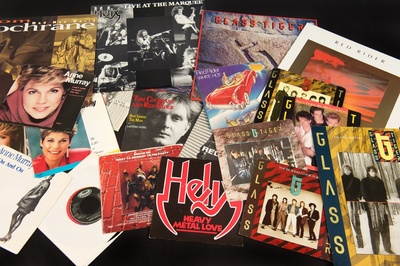
The University of Calgary announced Thursday that Universal Music Canada (UMC) has donated the archive of EMI Music Canada to the university’s Libraries and Cultural Resources. The University of Calgary has also partnered with the National Music Centre (NMC), which played a leading role in bringing this archive to the city by connecting UMC with the university.
Universal Music Canada acquired the archive when Universal Music Group purchased EMI Music in 2012. Now, thanks to this gift, the music label that has represented top Canadian artists for more than 50 years will soon have its files and recordings open to the public.
Established in 1949, EMI Music Canada included Capitol Records Canada and was the recording company or distributor for for a range of Canadian artists, including Anne Murray, Tom Cochrane, Nickelback, Glass Tiger, Kim Mitchell, Helix and the Rankin Family. The company was also the Canadian distributor for major international acts such as the Rolling Stones, David Bowie, Duran Duran, Frank Sinatra, the Beach Boys, Heart, Smashing Pumpkins, Garth Brooks, Pink Floyd, Queen and Iron Maiden.
“We are delighted to receive this rich business and cultural archive and be entrusted with the safekeeping and preservation of this outstanding testament to Canadian ingenuity,” said Elizabeth Cannon, president and vice-chancellor of the University of Calgary. “We aspire to be the best in order to inspire the best in others. This gift from Universal Music Canada and our partnership with the National Music Centre allow us to do just that.”
Capitol Records Canada, under EMI Music Canada, was the first label in North America to release The Beatles and Pink Floyd. The 1963 singles by The Beatles, Love Me Do, Please Please Me, and From Me to You, were released in Canada months before She Loves You, the band’s first release in the United States.
Students, researchers and music fans in Calgary and around the world will have access to documentation of more than half a century of contemporary music spanning a variety of genres including folk, jazz, classical, country, pop, rock and heavy metal.
EMI Music Canada distributed the music of international artists while focusing on the development of Canadian talent.
“Plans for an educational component around music and the ambitions for this archive are tremendously exciting,” said Jeffrey Remedios, president and CEO of Universal Music Canada. “EMI Music Canada became the source of the music many Canadians grew up listening to. It’s such a rich and treasured history and it’s terrific that generations to come will have the opportunity to explore that.”
In addition to the gift of the EMI Music Canada Archive, Universal Music Canada will provide substantial funding over several years to support the preservation and management of the collection.
The University of Calgary and NMC will collaborate on opportunities for the public to celebrate music in Canada through educational programming and exhibitions that highlight the archive and are available at Studio Bell, NMC’s new facility that opens this summer.
“We are eager to work with Universal Music Canada and the University of Calgary to explore programming and exhibition opportunities that bring the wealth of this collection to Canadians,” said Andrew Mosker, president and CEO for the National Music Centre. “From our burgeoning music scene, the opening of Studio Bell this summer and this incredible archive, it is safe to say that Calgary is becoming a serious music city.”
The collection consists of 5,500 boxes containing more than 18,000 video recordings, 21,000 audio recordings and more than two million documents and photographs. The archive includes master recordings, publicity photos, demo tapes, album cover art, creative outlines for music videos, marketing plans, awards, drafts of song lyrics and correspondence between artists, producers, engineers and EMI Music Canada executives.
“The EMI Music Canada Archive is one of the most culturally significant collections of the last century to be acquired by a research library,” said Tom Hickerson, vice-provost (Libraries and Cultural Resources). “The collection will be managed by the University of Calgary’s Archives and Special Collections and made accessible to students, faculty and the public.”
The EMI Music Canada Archive will be used for research and course work within the School of Creative and Performing Arts and in many other disciplines across the campus.
Libraries and Cultural Resources has established a virtual exhibit of items from the EMI Music Canada Archive. Please visit www.ucalgary.ca/emi.
Because of the immensity of the EMI Music Canada Archive, the collection will be transferred from Toronto in multiple shipments over the next few years.
Infographic Of The Batmobile Shows An Evolution Of Genius
ince its arrival in 1966, the iconic Batmobile has had many incarnations with each decade bringing its own take on this iconic supercar.
In the 1930s and early 40s Batman’s car barely featured in the comic strips. When it was eventually drawn, it was just a bulk standard red convertible with elongated wings and a bat emblem on the front. Pretty boring when you consider what came later!
In fact, it was not until the 1966 TV series that the first real Batmobile appeared. This initial version was actually a converted Ford Lincoln Futura, which was a concept car that never made onto the forecourt. That said, it only took three weeks for the car to be transformed into a vehicle that was fit for a superhero and the rest as they say, is history.
Check out BookMyGarage’s amazing infographic detailing the history of the Batmobile from its earliest incarnation to the very latest version.

The Evolution of the Batmobile by BookMyGarage at bookmygarage.com/
Video on Demand Viewers Don’t Mind Watching Ads for Free Content

The rise of video-on-demand (VOD) programming choices is not only a great benefit to viewers—it also opens more opportunities for advertisers and content creators to reach them. But advertising strategies should be navigated carefully, as viewers are looking to cut through the clutter.
Many consumers see value in ads, but the value proposition must be right. In fact, more than half of global respondents who say they watch VOD (51%) programming also say they somewhat or strongly agree that ads in VOD content give them good ideas for new products to try. And importantly, nearly six-in-10 (59%) say they don’t mind getting advertising if they can view free content. This sentiment is particularly strong in North America, where 68% are willing to trade their time and attention for free programming.
What’s clear, however, is the need for more relevant ads that speak directly to consumers. Two-thirds of global respondents say most ads in VOD content are for products they don’t want (66%).
Other findings from the global video-on-demand report include:
- Nearly two-thirds of global respondents (65%) say they watch some form of VOD programming, which includes long- and short-form content.
- VOD is becoming a part of daily viewing habits for many. Among those who watch any type of VOD programming, 43% say they watch at least once a day.
- More than three-quarters of global respondents (77%) who watch VOD programming agree that they do so because they can view at a time that is convenient for them.
- Among those who watch VOD programming, Millennials and Gen X respondents are the most likely to agree that they like to catch up on multiple episodes at once.
For more detail and insight, download Nielsen’s Global Video-on-Demand Report. If you would like more detailed country-level data from this survey, it is available for sale in the Nielsen Store.
Toronto event: How music can be used in medicine, technology, therapy, and clinical applications

For the very first time a live audience will witness how music helps heal certain medical conditions. On Tuesday, May 3, the Faculty of Music at the University of Toronto will host Sounds of Science: Music, Technology, Medicine from 4:45 pm to 7:00 pm at the University’s MacMillan Theatre.
The performance will showcase the science behind the music with the latest discoveries in music medicine, technology, therapy, and clinical applications.
Audiences will discover the musculoskeletal structure of a violinist as she performs, the vocal cords of an opera singer as she sings, and the healing power of music.
Professor Lee Bartel will show how musical vibrations can help return damaged brains to normal function.
“Our research shows that the rhythmic part of music stimulates the brain in ways that contribute to powerful healing results,” explains Bartel. “Through music we have seen improvements in Alzheimer’s and in Fibromyalgia where patients have decreased pain in as early as three weeks.”
Sounds of Science: Music, Technology, Medicine happens live Tuesday, May 3, 2016 at the University of Toronto’s MacMillan Theatre (80 Queens Park). Times are 4:45 pm – 5:30 pm (opening demonstrations in lobby); 5:30 pm – 7 pm (show). Tickets are free and the public can register online soon enough, keep your eye on this page.