

Bill Nye boils down the basic facts surrounding climate change, and why the rate at which our planet is changing is so important.
Molly Ringwald makes us all feel better about growing old.
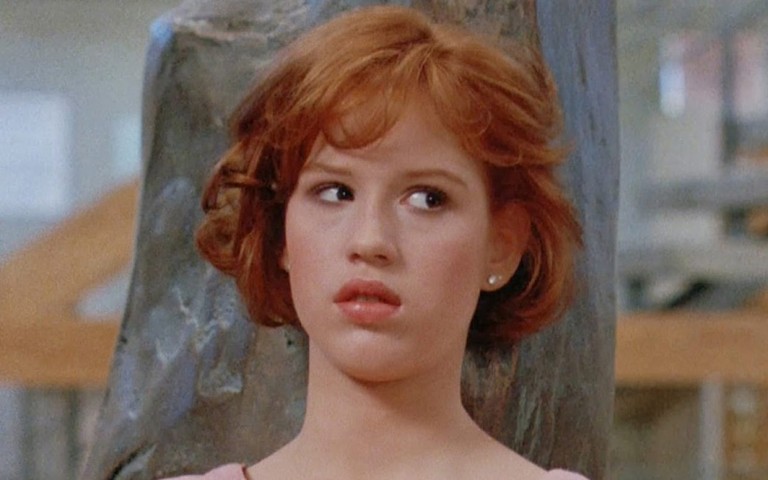
Are you comfortable with your age now?
Molly Ringwald: Well, when you’ve been in a movie called Sixteen Candles, there’s really no point in lying about your age. People have grown up with me. I’m comfortable with who I am. I mean, there are days when I think, Where did my 20s go? or Where did my 30s go? But there are other days where I feel like, wow, I like the person that I’ve become. I also feel like I have an intellectual confidence that I don’t think that I had when I was younger; that you can’t really have—or you shouldn’t necessarily have—when you’re younger, because you haven’t really experienced enough.
John Lydon talks about his heroes, who include Bettie Page and Mahatma Gandhi
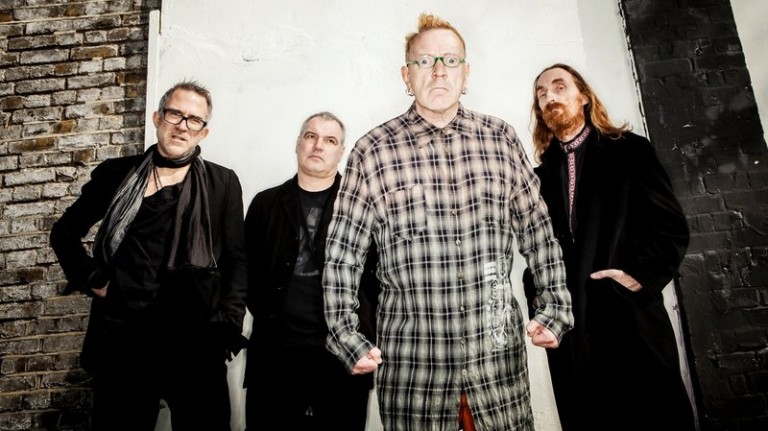
John Lydon (once known as Johnny Rotten) formed Public Image Ltd when The Sex Pistols disbanded in 1978. By that time, being in the Pistols had given Lydon, a self-described “shy person,” a platform for expression, and he’d become an important cultural figure.
Public Image Ltd went on hiatus in 1993, but the band re-formed in 2009. Today, Lydon joins World Cafe to share music from PiL’s new album, What The World Needs Now…, and talk about some of his heroes, who include Bettie Page and Mahatma Gandhi.
Via NPR
That time in 1974 when John Lennon narrated Ringo’s new album. Ringo then did voiceover for John’s new album.
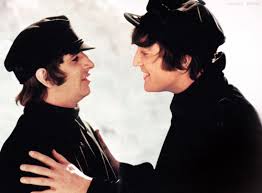
A television commercial for Ringo Starr’s 1974 album Goodnight Vienna, which featured a voiceover from John Lennon, depicted the cover’s flying saucer (with Starr) over Los Angeles-landing on the roof of the Capitol Records building in Hollywood,
Starr returned the favour and did the voiceover for the commercial for Lennon’s Walls and Bridges album.
Paul McCartney Statement On George Martin
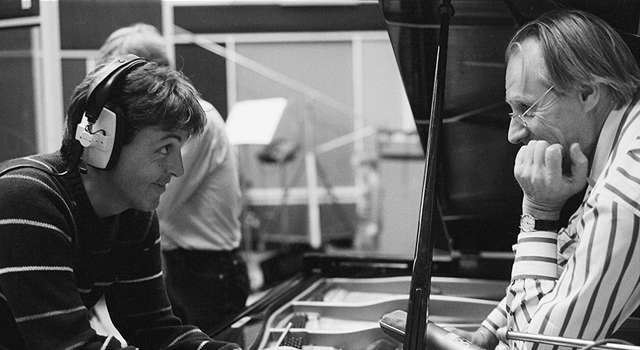
Sir George Martin, producer of the Beatles and the man Sir Paul McCartney described as a “second father”, has died aged 90. Sir Paul McCartney paid tribute to a “great man”, saying “He was a true gentleman and like a second father to me. He guided the career of The Beatles with such skill and good humour that he became a true friend to me and my family. If anyone earned the title of the fifth Beatle it was George.” Read his statement below.
I’m so sad to hear the news of the passing of dear George Martin. I have so many wonderful memories of this great man that will be with me forever. He was a true gentleman and like a second father to me. He guided the career of The Beatles with such skill and good humour that he became a true friend to me and my family. If anyone earned the title of the fifth Beatle it was George. From the day that he gave The Beatles our first recording contract, to the last time I saw him, he was the most generous, intelligent and musical person I’ve ever had the pleasure to know.
It’s hard to choose favourite memories of my time with George, there are so many but one that comes to mind was the time I brought the song ‘Yesterday’ to a recording session and the guys in the band suggested that I sang it solo and accompany myself on guitar. After I had done this George Martin said to me, “Paul I have an idea of putting a string quartet on the record”. I said, “Oh no George, we are a rock and roll band and I don’t think it’s a good idea”. With the gentle bedside manner of a great producer he said to me, “Let us try it and if it doesn’t work we won’t use it and we’ll go with your solo version”. I agreed to this and went round to his house the next day to work on the arrangement.
He took my chords that I showed him and spread the notes out across the piano, putting the cello in the low octave and the first violin in a high octave and gave me my first lesson in how strings were voiced for a quartet. When we recorded the string quartet at Abbey Road, it was so thrilling to know his idea was so correct that I went round telling people about it for weeks. His idea obviously worked because the song subsequently became one of the most recorded songs ever with versions by Frank Sinatra, Elvis Presley, Ray Charles, Marvin Gaye and thousands more.
This is just one of the many memories I have of George who went on to help me with arrangements on ‘Eleanor Rigby’, ‘Live and Let Die’ and many other songs of mine.
I am proud to have known such a fine gentleman with such a keen sense of humour, who had the ability to poke fun at himself. Even when he was Knighted by the Queen there was never the slightest trace of snobbery about him.
My family and I, to whom he was a dear friend, will miss him greatly and send our love to his wife Judy and their kids Giles and Lucy, and the grandkids.
The world has lost a truly great man who left an indelible mark on my soul and the history of British music.
God bless you George and all who sail in you!
Paul
20 Facts You Didn’t Know About George Martin
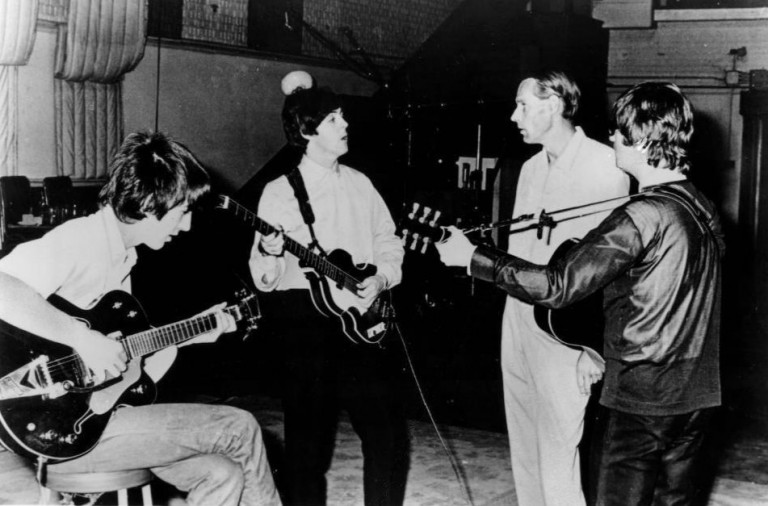
George Martin, the brilliant producer for much of the Beatles’ classic catalog, has died. The cause of death has not yet been released. He was 90. “George Martin made us what we were in the studio,” John Lennon said in 1971. “He helped us develop a language to talk to other musicians.” There’s no doubt The Beatles wouldn’t be The Beatles without Martin.
Here are fun facts about the man they call “The Fifth Beatle.”
1. In his early 20s, Martin’s oboe teacher was Margaret Eliot, the mother of Jane Asher, who would later become involved with Paul McCartney.
2. Following his graduation, he worked for the BBC’s classical music department, then joined EMI in 1950, as an assistant to Oscar Preuss, the head of EMI’s Parlophone Records from 1950 to 1955. Although having been regarded by EMI as a vital German imprint in the past, it was then not taken seriously and only used for EMI’s insignificant acts.
3. Beginning in the late 1950s, Martin began to supplement his producer income by publishing music and having his artists record it. He used the pseudonyms Lezlo Anales and John Chisholm before settling on Graham Fisher as his primary pseudonym.
4. Martin also produced numerous comedy and novelty records. His first hit for Parlophone in 1952 with the Peter Ustinov single “Mock Mozart” – a record reluctantly released by EMI only after another producer insisted they give Martin a chance. Later that decade Martin worked with Peter Sellers on two very popular comedy LPs.
5. Martin met the Beatles in early 1962. At the time, they had a cult following in parts of England, but little success in landing a recording deal. The group’s manager, Brian Epstein, approached the producer, who worked for EMI records, and got him to agree to give their demo tape a listen. “The recording, to put it kindly, was by no means a knockout,” Martin wrote in his 1979 memoir, All You Need Is Ears. “I could well understand that people had turned it down. But there was an unusual quality of sound, a certain roughness that I hadn’t encountered before. There was also the fact that more than one person was singing.”
6. In The Beatles’ first audition for Martin, he asked the individual Beatles if there was anything they personally did not like, to which George Harrison replied, “Well, there’s your tie, for a start.” That was the turning point as John Lennon and Paul McCartney joined in with jokes and comic wordplay that made Martin think that he should sign them to a contract for their wit alone.
7. He was great at predicting hits. The Beatles’ first recording session with Martin was on September 4th, 1962, when they recorded “How Do You Do It”, which Martin thought was a sure-fire hit even though Lennon and McCartney did not want to release it, not being one of their own compositions. Martin was correct: Gerry & the Pacemakers’ version, which Martin produced, spent three weeks at No. 1 in April 1963 before being displaced by “From Me to You”.
8. Even he doesn’t even know how The Beatles managed to write their hits. “There seemed to be a bottomless well of songs,” Martin once said. “And people asked me where that well was dug. Who knows?”
9. His classical music background came in handy. “My approach to the strings on ‘Eleanor Rigby’ was greatly influenced by Bernard Herrmann and his film score for Psycho,” Martin said in a 2012 interview. “He had a way of making violins sound fierce. That inspired me to have the strings play short notes forcefully, giving the song a nice punch. If you listen to the two, you’ll hear the connection.”
10. Craft doesn’t even begin to describe him. Martin also played on some Beatles songs, including the piano on “In My Life.” “I couldn’t play the piano at the speed it needed to be played, the way I’d written the part,” he said in another 2012 interview. “I wasn’t that good a pianist, but if you had had a really good pianist, he could do it. I couldn’t get all the notes in. One night I was by myself and played the notes at half speed but an octave lower on the piano, recording at 15 inches per second. When I ran the tape back at 30 inches per second, the notes were at the right speed and in the correct octave.”
11. Martin’s age and his lack of interest in drugs became an advantage as their music became increasingly psychedelic. “Drugs certainly affected the music. But it didn’t affect the record production because I was producing. I saw the music growing, but I rather saw it like Salvador Dalí’s paintings. I didn’t think the reason for it was drugs. I thought it was because they wanted to go into an impressionistic way.”
12. Martin loves Ringo Starr’s drumming, calling him “probably … the finest rock drummer in the world today”.
13. Martin was just as creative as The Beatles. For “Strawberry Fields Forever”, he and recording engineer Geoff Emerick turned two very different takes into a single master through careful use of vari-speed and editing. For “I Am the Walrus”, he provided a quirky and original arrangement for brass, violins, cellos, and the Mike Sammes Singers vocal ensemble. On “In My Life”, he played a speeded-up baroque piano solo. He worked with McCartney to implement the orchestral ‘climax’ in “A Day in the Life” and he and McCartney shared conducting duties the day it was recorded.
14. He was adamant The Beatles should never reform after their split in 1970. “It would be a terrible mistake for them ever to go into the studio together,” he said in 1976. “The Beatles existed years ago; they don’t exist today. And if the four men came back together, it wouldn’t be the Beatles.”
15. Oh, he never made much money from The Beatles until later on. Much later. Within the recording industry, Martin is known for having become independent at a time when many producers were still salaried staff—which he was until The Beatles’ success gave him the leverage to start, in 1965, Associated Independent Recording, and hire out his own services to artists who requested him. Until this arrangement, he never shared in the record royalties on his hits.
16. He would be one of the greats even if you didn’t mention The Beatles. He also produced Gerry and the Pacemakers, Kenny Rogers, Cheap Trick, Jeff Beck and Celine Dion. In 1997, he produced Elton John’s new version of “Candle in the Wind” to honor the late Princess Diana. It became one of the best-selling singles of all time.
17. He even worked with another hearing-impaired musician – Pete Townshend. In 1992,the duo helped create the musical stage production of The Who’s Tommy. The play opened on Broadway in 1993, with the original cast album being released that summer. Martin won the Grammy Award for Best Musical Show Album in 1993, as the producer of that album.
18. He’s no stranger to mixing family with business. In 2006, Martin and his son, Giles Martin, remixed 80 minutes of Beatles music for the Las Vegas stage performance Love, a joint venture between Cirque du Soleil and the Beatles’ Apple Corps Ltd.
19. He thinks The Beatles will be remembered in the next century, but he won’t be. “They’re just great musicians and great writers, like Gershwin or Rodgers and Hammerstein. They are there in history, and the Beatles are there in history, too. They’ll be there in 100 years, too. But I won’t be.”
20. He’s wrong.
No Rickrolling Here: Rick Astley’s Isolated Vocals For “Never Gonna Give You Up”
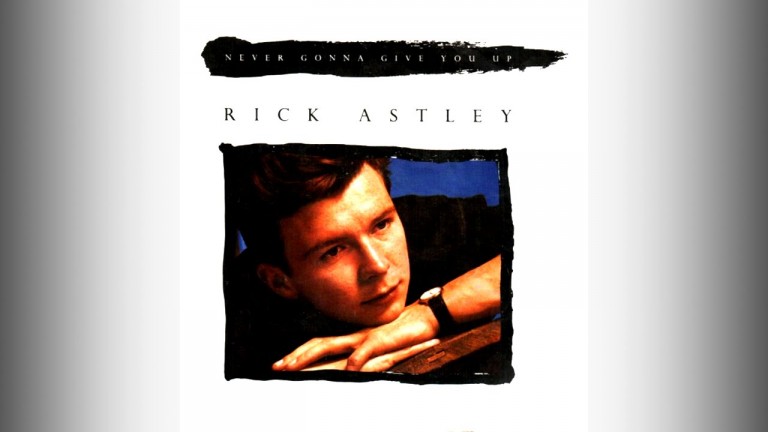
Rick Astley’s Never Gonna Give You Up, released in 1987 was written and produced by Stock Aitken Waterman. The song was released as the first single from his debut album, Whenever You Need Somebody. The song was a worldwide number-one hit, initially in the singer’s native United Kingdom in 1987, where it stayed atop the chart for five weeks and was the best-selling single of that year. It eventually topped the charts in 25 countries, including the United States and West Germany.
Despite the video garnering millions of hits on YouTube due to Rickrolling, Astley has earned almost no money from the meme, reportedly receiving only $12 in royalties from YouTube for his performance share, as of August 2010.
https://youtu.be/bPA-fkfVGQw