Home Blog Page 3

Philip Aaberg, Montana Pianist Who Turned a Landscape Into Music, Dies at 77

0

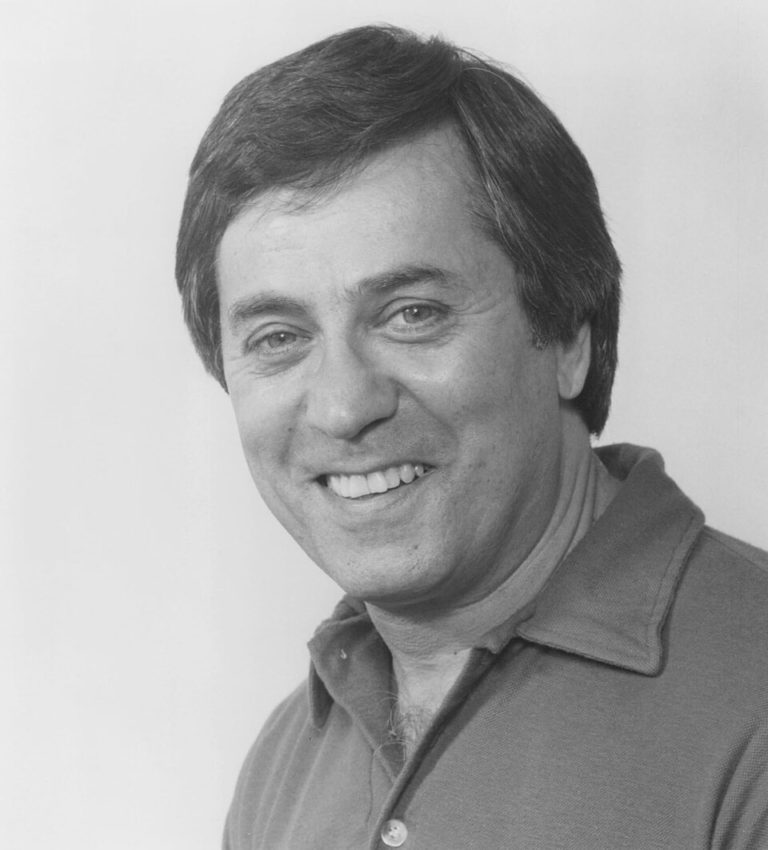
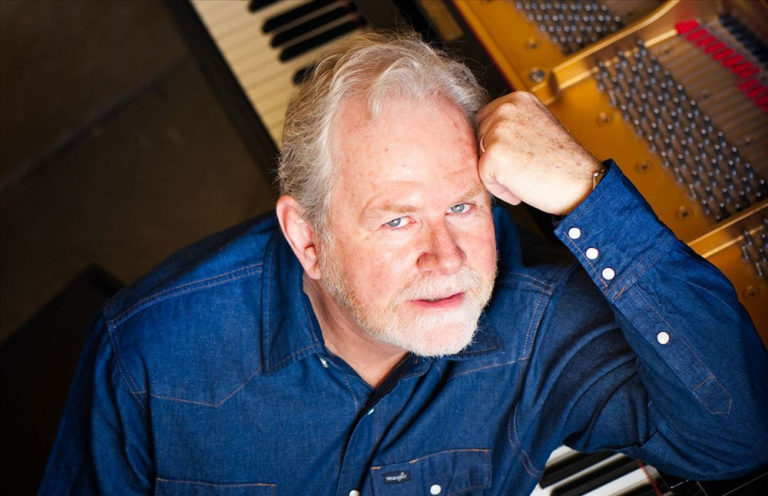
Philip Aaberg, the pianist and composer whose classically trained hands moved with equal ease through jazz, bluegrass, rock, and new music, and whose life’s work was devoted to translating the sweeping landscape of Montana into sound, died on May 23, 2026. He was 77. The cause was pneumonia.

Born April 8, 1949 in Havre, Montana and raised in Chester, he was performing with local bands at dances by the age of 14 — a detail that says something important about the kind of musician he would become. Not a conservatory creature, not someone who arrived at music through theory alone, but someone who learned it in rooms full of people who wanted to move. He won a Leonard Bernstein Scholarship to study music at Harvard, earned his Bachelor of Arts in music, and then moved to Oakland and played blues clubs for several years, because that was the logical next step for someone who understood music the way he did.

He toured and recorded with Elvin Bishop’s group at the height of its popularity, co-writing the title song of the band’s 1976 album ‘Struttin’ My Stuff’ and playing piano on the same record that contained Bishop’s biggest hit, “Fooled Around and Fell in Love.” It was a long way from Chester, Montana, and also, in the way that matters most, not very far at all.

In 1985 he signed with Windham Hill Records and released ‘High Plains’, the first of four solo albums for the label that established him as one of the most distinctive voices in what the industry was then calling new age music, a label that never quite captured what he was actually doing. His compositions were described as combining rigorous keyboard technique, diverse influences, and a colorful compositional style — which is accurate as far as it goes, but misses the essential quality that made his playing memorable: it sounded like a specific place. It sounded like Montana. He performed with the Boston Pops Orchestra, appeared at the Marlboro Chamber Music Festival, appeared on PBS’s All-American Jazz program earning an Emmy Award nomination, performed as a guest on over 200 albums, and shared stages with Peter Gabriel and Tom Johnston of the Doobie Brothers.

In 2000, he and his wife Patty founded Sweetgrass Music, their own record label, through which he pursued his deepest artistic ambition — producing music that connected a global audience to the landscape of the American West. ‘Live from Montana’, released that same year, received a Grammy nomination. He produced a public radio program called ‘Of the West: Creativity and Sense of Place’, received a Montana Governor’s Award for the Arts and a Montana Arts Council Innovator Award in 2011, and with Patty ran a bed and breakfast, a recording studio, and a suite of creative enterprises that turned their corner of Montana into a small but genuine cultural centre.

He was 77 years old, and he spent every one of those years making music that knew exactly where it came from. That is rarer than it sounds.
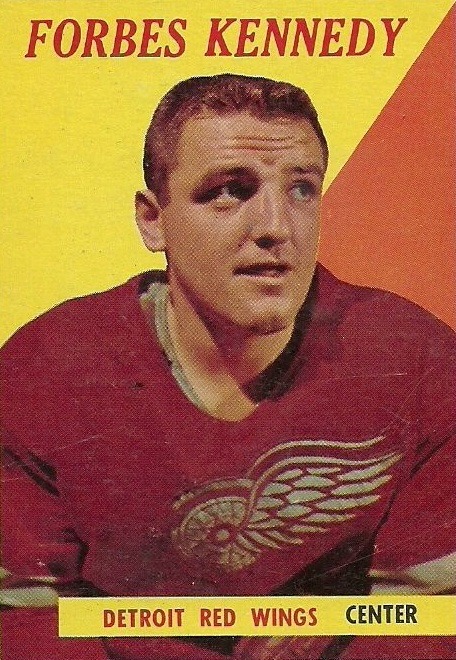
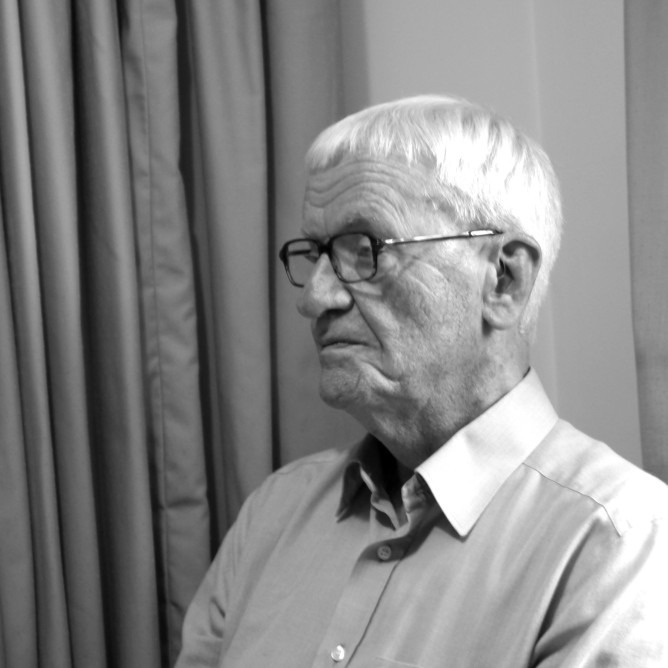
Forbes Kennedy, NHL Enforcer Who Led the League in Penalty Minutes, Dies at 90

0

Forbes Kennedy, the tenacious centre from Prince Edward Island who spent 13 seasons in professional hockey and became one of the most penalized players of his era, died on May 26, 2026 in Charlottetown, Prince Edward Island. He was 90.

Born August 18, 1935 in Dorchester, New Brunswick and raised in PEI, Kennedy was never the biggest player on the ice — he stood 5’8″ and weighed 150 pounds — but he played as though the size differential was someone else’s problem. Over 603 NHL games with the Chicago Black Hawks, Detroit Red Wings, Boston Bruins, Philadelphia Flyers, and Toronto Maple Leafs, he recorded 70 goals, 108 assists, and 888 penalty minutes. He led the entire NHL in penalty minutes during the 1968-69 season, an achievement that tells you everything you need to know about how he approached the game.

The moment that defined his reputation — and ended his time with the Maple Leafs — came during the 1969 Stanley Cup playoffs in Boston. When teammate Pat Quinn delivered a thunderous hit on Bruins star Bobby Orr, knocking him unconscious, Kennedy responded in the fashion that was entirely consistent with his career: he got into four fights before punching a linesman and getting ejected. The suspension that followed was lengthy. His tenure in Toronto was over. The hockey world shook its head. The hockey world was also not entirely surprised.

After retiring as a player, Kennedy returned to the game he loved as a coach, working his way through a string of junior and minor league assignments across the Maritimes and beyond. He coached the Cape Breton Metros in their very first year of existence in 1969-70, the Halifax Junior Canadians, the Summerside Crystals, and later the Summerside Western Capitals from 2004 to 2007, earning a Forbes Kennedy Night in his honour from that organisation in January 2012. He went home to PEI and stayed, coaching junior hockey for years, giving back to the game that had defined his life.

He was 90 years old. In a sport that has always needed players willing to protect their teammates regardless of the consequences, Forbes Kennedy was exactly that player, every single night.

Arnold Whittall, One of Britain’s Greatest Music Scholars, Dies at 90

0

Arnold Whittall, the British musicologist whose decades of writing, teaching, and analysis helped shape how the English-speaking world understands twentieth and twenty-first century classical music, died on May 26, 2026. He was 90. Allen Forte, one of the most distinguished music theorists of the modern era, called him simply “the dean of British music analysis.” That was not hyperbole. It was a description that stuck because it was accurate.

Born in Shrewsbury, Shropshire on November 11, 1935, Whittall was educated at Emmanuel College, Cambridge, where he read History and Music and graduated in 1959. He received his PhD in 1964 and began a teaching career that would take him through the Cambridgeshire College of Arts and Technology, the University of Nottingham, Cardiff University, and finally King’s College London, where he was appointed Professor of Musical Theory and Analysis in 1982 and where he remained, in various capacities, until 2012. In 1985 he was a Visiting Professor at Yale. He was, by any measure, one of the central figures in British music academia for half a century.

His scholarly output was remarkable in both its range and its consistency. He wrote extensively on Benjamin Britten and Michael Tippett, on Schoenberg, Stravinsky, Wagner, Webern, and on a vast array of younger composers pushing the boundaries of serialism, spectralism, and new complexity. His bibliography runs from ‘Music since the First World War’ in 1977 through ‘Musical Composition in the Twentieth Century’ in 1999, ‘The Cambridge Introduction to Serialism’ in 2008, ‘British Music After Britten’ in 2020, and a study of Schoenberg’s ‘Verklärte Nacht’ and ‘Erwartung’ published in 2023 — a book completed in his late eighties that demonstrated a mind still operating at full stretch. His final contribution to academic publishing appeared in 2025, a chapter in a Cambridge University Press volume on Wagner studies.

His work on Wagner in particular earned lasting recognition. Over many years he wrote substantial essays on each of Wagner’s music dramas from ‘Der fliegende Holländer’ to ‘Parsifal’, gathered eventually into ‘The Wagner Style’ in 2015. He positioned Wagner as an early modernist and identified in the music dramas a principle he called rhetorical dialectics — a tension between the continuity Wagner sought through his art of transition and the disruptive, disintegrating forces that run against it. It was exactly the kind of analytical framework that made difficult music more navigable without ever making it smaller.

He was also a committed founder of institutions. He established the journal Soundings at Cardiff in 1970 and co-founded the journal Music Analysis at King’s College London in 1982 alongside Jonathan Dunsby, providing the discipline with two of its most important venues for serious scholarly exchange. He made many broadcasts for BBC Radio 3, introduced the Corporation’s College Concerts series throughout the early 1980s, and wrote record reviews for Gramophone across a long span of years. He was awarded the Derek Allen Prize by the British Academy in 2013, the Pascall Medal by the Society for Music Analysis in 2021, and was made an honorary member of the Royal Musical Association in 2014.

He is survived by the students he taught, the journals he founded, the books he wrote, and the generations of musicians and scholars who came to understand modern music more clearly because of the precision and generosity of his thinking.

Howard Storm, Director of ‘Mork & Mindy’ and Jim Carrey’s First Film, Dies at 94

0

Howard Storm, the comedian-turned-director whose career touched some of the most beloved television series of the 1970s and 1980s and who gave Jim Carrey one of his earliest film roles, died on May 26, 2026 at his home in Beverly Hills, California. He was 94.

Born Howard Sobel on December 11, 1931 in New York City, he came to Hollywood the way many of his generation did — through stand-up comedy, the school of hard knocks that teaches timing, audience, and the fine art of reading a room. His father was a comedian in burlesque, so the instincts were inherited as much as learned. Storm toured as Andy Williams’ opening comedian, played Las Vegas, and appeared fourteen times on The Merv Griffin Show — a booking that, in the television landscape of that era, meant you had genuinely arrived.

He parlayed that background into writing, teaming with attorney Paul Lichtman to develop scripts for The Partridge Family and Bob Newhart’s program, and he also worked as Woody Allen’s assistant and collaborator on two of Allen’s early films, ‘Bananas’ and ‘Everything You Always Wanted to Know About Sex* (*But Were Afraid to Ask)’. That is not a bad apprenticeship by any measure.

His acting credits included The New Dick Van Dyke Show, Rhoda, and Sanford and Son, but it was directing that would define the bulk of his career. Beginning in 1975, he became one of television’s most reliable and prolific episode directors, working on ‘Laverne & Shirley’, ‘Mork & Mindy’, ‘Taxi’, ‘Joanie Loves Chachi’, ‘Full House’, ‘ALF’, and ‘Head of the Class’, among many others. These were not obscure assignments. These were the shows that American families were watching every week, and Storm was behind the camera for a significant portion of their best episodes.

In 1985, he stepped into feature films with ‘Once Bitten’, a vampire comedy starring Lauren Hutton and a young, largely unknown Jim Carrey. It was Carrey’s first leading role in a film, and whatever you thought of the movie itself, Storm clearly saw something in that rubber-faced comedian from Ontario that the rest of Hollywood had not yet fully caught on to. He would be proven right within a few years.

He was 94 years old, and he was still credited as active right up to the end. That is a career. That is a life in show business lived all the way to the final curtain.

Marc Johnson, One of Skateboarding’s All-Time Greats, Dies at 49

0

Marc Johnson, the professional skateboarder whose technical precision, effortless style, and deep philosophical relationship with his craft made him one of the most respected figures in the history of the sport, died on May 26, 2026 in San Jose, California. He was 49.

Born January 6, 1977 in Winston-Salem, North Carolina, Johnson came up through the skateboarding world in the mid-1990s and built a career that spanned three decades and left a permanent mark on the culture. He was not just a skateboarder. He was a thinker about skateboarding, someone who approached the sport with the kind of seriousness and curiosity that tends to produce work that outlasts the moment it was made in.

His video parts told the story of that career in the most direct way possible. From ‘Maple: Rites of Passage’ in 1994 through ‘Girl: Yeah Right!’ in 2003, ‘Lakai: Fully Flared’ in 2007, and ‘Girl/Chocolate: Pretty Sweet’ in 2012, Johnson appeared in some of the most celebrated skate videos of his generation, consistently delivering parts that were studied and rewatched by younger skaters trying to understand how he made it look so clean. He also selected all of the music for his career video parts himself — a detail that says everything about how seriously he took the relationship between what he was doing and how it was being presented.

Fellow professional Paul Rodriguez placed Johnson on his personal top ten list of favourite professional skateboarders in 2013, calling him “a boss” with “incredible style” and “incredible technical capabilities,” and concluding simply: “I think he is one of the all time greats for sure.” That assessment was widely shared across the skateboarding world, by professionals and fans alike.

Johnson was also a genuine original when it came to articulating what skateboarding meant. In a 2007 Thrasher interview, asked about inspiration, he offered something closer to philosophy than sport: “All inspiration comes from something similar to the way a radio works. If you imagine that everything ever known or will be known exists between the lowest and the highest frequencies, we simply either stumble upon a brilliant song accidentally, or we spend our lives searching for great songs and find them where we may.” He cited Tesla. Not many skateboarders cite Tesla.

In 2013, he launched the Back Forty project alongside Kenny Anderson and Chris Roberts, a collaboration he described not as a company but as a home for ideas — a commitment, in his own words, to “becoming the voice for what skateboarding has to say for itself.” That impulse to define skateboarding on its own terms, rather than letting commerce or convention do it, ran through everything he was involved in.

He was 49 years old. The skateboarding world has lost one of its most thoughtful and talented voices.

Bob Horner, Braves Slugger Who Hit Four Home Runs in One Game, Dies at 68

0

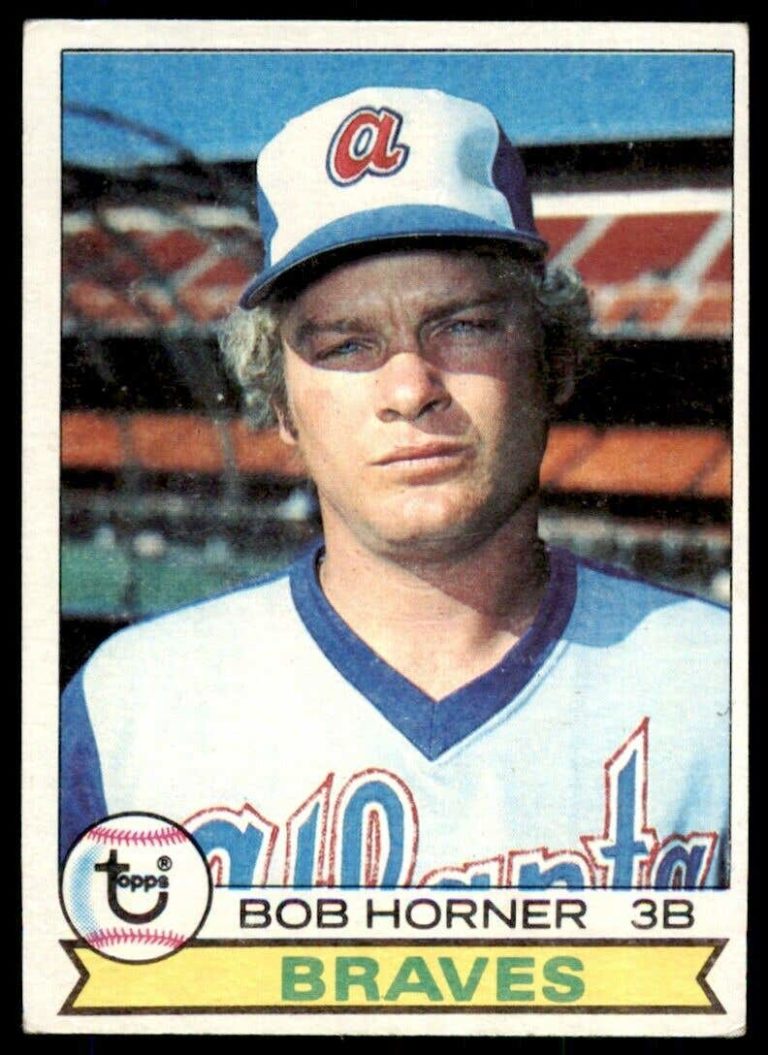
Bob Horner, the hard-hitting third baseman who went straight from college to the Major Leagues, won the National League Rookie of the Year in his debut season, and became one of the most feared power hitters of the early 1980s, died on May 26, 2026 in Irving, Texas. He was 68. His death was announced by the Atlanta Braves.

Born August 6, 1957 in Junction City, Kansas, Horner grew up in Glendale, Arizona and built one of the most decorated careers in college baseball history at Arizona State University. Over three seasons with the Sun Devils, he batted .383 with a then-NCAA record 56 home runs and 229 RBI, won the College World Series Most Outstanding Player award in 1977, and became the first-ever winner of the Golden Spikes Award — college baseball’s equivalent of the Heisman Trophy. He was the kind of college player who made scouts run out of superlatives.

The Atlanta Braves took him first overall in the 1978 draft, and Horner did something almost no player in the history of the sport had managed: he skipped the minor leagues entirely and walked straight into a starting lineup. In his very first Major League game, he hit a home run off future Hall of Famer Bert Blyleven. He never really stopped from there. In 89 games that debut season, he hit .266 with 23 home runs and 63 RBI, led all National League third basemen in home runs, and won the NL Rookie of the Year award over a certain rookie shortstop named Ozzie Smith.

The early 1980s Braves teams were built around Horner and Dale Murphy, a power-hitting tandem that gave opposing pitchers legitimate nightmares. Horner averaged 35 home runs and 109 RBI per 162-game average over his career, numbers that would have been even more imposing had injuries not repeatedly derailed his seasons. He broke his right wrist in 1983, broke his left wrist in 1984, and lost significant stretches of what should have been his prime years to a body that kept betraying him at the worst moments.

On July 6, 1986, he achieved something only ten players in Major League history had done before him: he hit four home runs in a single game, doing so against the Montreal Expos and becoming only the second player ever to accomplish the feat in a losing effort. That same season, after hitting a record 210 career home runs without a grand slam, he finally hit one with the bases loaded to beat the Pirates. The record for most home runs without a grand slam stood until Sammy Sosa broke it in 1998.

What followed was one of baseball’s more dispiriting stories. Horner became a free agent after 1986, still near his peak at 29 years old, and received no offers. The courts would later confirm what many had suspected: Major League Baseball owners had been illegally colluding to suppress player salaries, and Horner was among the most direct victims. With no MLB takers, he signed a one-year, $2 million deal with the Yakult Swallows of Japan’s Central League — the organisation gave him number 50 because that was the number of home runs they expected him to hit. He hit 31 with 73 RBI. Yakult offered him a reported $10 million for three more years. He came home anyway, returned to MLB with the St. Louis Cardinals in 1988, injured his shoulder after 60 games, and never played again. In 2004, he received over $7 million as part of the successful collusion lawsuit settlement — fair compensation, perhaps, but a poor substitute for the career years that were taken from him.

He was inducted into the College Baseball Hall of Fame as a member of its inaugural class in 2006, the Sun Devil Athletics Hall of Fame in 1979, and the Georgia Sports Hall of Fame in 2022. He is survived by his wife Chris and their two sons.

Bob Horner was the kind of player who made everything look inevitable, right up until the moment that it wasn’t. He deserved more seasons than he got. The ones he did have were worth watching.

Mark Bailey, MLB Catcher Who Called 64 Nolan Ryan Starts, Dies at 64

0

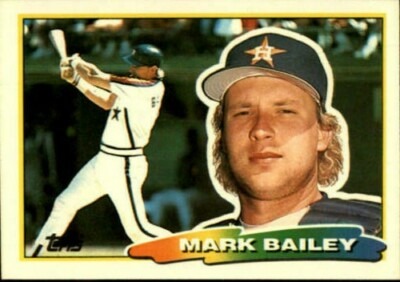
Mark Bailey, the switch-hitting catcher who spent seven seasons in Major League Baseball with the Houston Astros and San Francisco Giants and went on to dedicate more than two decades to coaching in the Astros organization, died on May 26, 2026 in Katy, Texas. He was 64. The cause was cancer.

Born November 4, 1961 in Springfield, Missouri, Bailey was a two-sport athlete at Southwest Missouri State University, playing both college basketball and baseball and earning All-American honours twice as a Division II infielder. He played collegiate summer baseball with the Wareham Gatemen of the Cape Cod Baseball League in 1981, helped lead SMS to the NCAA Division II baseball tournament in 1982, and was selected by the Houston Astros in the sixth round of the 1982 MLB Draft, choosing to forgo his senior year and sign professionally.

He made his Major League debut with Houston in 1984 and served as the team’s primary catcher in his first two seasons. His most productive year at the plate came in 1985, when he hit .265 in 114 games with 10 home runs. Over seven Major League seasons and 340 games, he posted a .220 batting average with 24 home runs and 101 RBI. The numbers tell a working catcher’s story — a player valued for what he did behind the plate as much as in front of it.

And what he did behind the plate was significant. During his time with the Astros, Bailey caught 64 of Hall of Famer Nolan Ryan’s starts, the third most of any catcher across Ryan’s remarkable 27-year career. To frame a Hall of Famer’s best years, to be the person a pitcher of that calibre trusted with his craft night after night, is a quiet form of excellence that statistics rarely capture fully.

After his playing career wound down, Bailey moved into coaching and never really left. He coached at the Single-A and Double-A levels in the Astros organization before joining Houston’s big league staff as bullpen coach from 2002 to 2009, then worked as a roving catching instructor for the Astros’ minor league teams through the 2020 season. Twenty-three years coaching with one organization is a statement of loyalty and purpose that speaks for itself.

He was inducted into the Missouri State Athletics Hall of Fame in 1995, the Springfield Area Sports Hall of Fame in 2016, and the Missouri Sports Hall of Fame in 2017 — a well-earned recognition of a career that mattered at every level it touched.

Kelly Curtis, Actress and Daughter of Hollywood Royalty, Dies at 69

0

Kelly Curtis, an actress who carved out her own path in Hollywood while navigating life as the daughter of Tony Curtis and Janet Leigh and the older sister of Jamie Lee Curtis, died on May 30, 2026. She was 69. Her death was announced by her sister Jamie Lee on social media.

Born Kelly Lee Curtis on June 17, 1956 in Santa Monica, California, she made her screen debut before she could have fully understood what was happening — appearing as a young girl, uncredited, in the 1958 United Artists adventure film ‘The Vikings’, which starred both her parents. It was an early glimpse of a life lived entirely inside one of Hollywood’s most storied families, a circumstance that brought its own particular pressures and its own particular grace.

She did not rush into the industry. She graduated from Skidmore College in 1978 with a degree in business and worked briefly as a stockbroker before the pull of the craft her parents had mastered brought her to the Lee Strasberg Theatre Institute, where she trained seriously. A 1982 Los Angeles Times review of the stage production ‘Say Goodnight, Gracie’ offered a glimpse of what she was capable of, describing her delivery of a key monologue as touching and noting that her writing and performance transcended the material, calling it a moment of inspired simplicity. That is not a throwaway compliment.

Her film and television career spanned from the early 1980s through the late 1990s, taking in a role in ‘Trading Places’ in 1983, a leading part in the horror film ‘The Devil’s Daughter’ in 1991, and a recurring role as Lieutenant Carolyn Plummer in the first season of the crime series ‘The Sentinel’ in 1996. Guest appearances on ‘Star Trek: Deep Space Nine’, ‘The Equalizer’, ‘Judging Amy’, and others filled out a working actor’s career — the kind of honest, disciplined professional life that rarely generates headlines but keeps the industry running.

She is survived by her husband, playwright and producer Scott Morfee, whom she married on September 14, 1989, and her sister Jamie Lee Curtis.

To grow up as the daughter of Tony Curtis and Janet Leigh, and the older sister of one of Hollywood’s most beloved actors, requires a particular kind of quiet confidence. Kelly Curtis had it. She trained, she worked, she built something of her own. That is its own achievement, and it deserves to be recognised as such.

Wolverhampton Singer-Songwriter Sam Lambeth Goes Full Alt-Country on New Single “As Long As You’re High”

0

Sam Lambeth has never been afraid to follow the music wherever it leads, and “As Long As You’re High” is the sound of a songwriter leaning all the way into a genre he’s loved for years. The new single is out now, and it’s a wistful, infectious alt-country track that earns every comparison it invites.

Lambeth describes it simply as “Uncle Tupelo meets Oasis,” and that framing is accurate. Produced by Ryan Pinson, who has previously worked with The Assist, God Damn, and Little Juke, the track opens with a bullish country riff before weaving in melancholic violin, delicate banjo, and nimble mandolin. The result is a rich, Americana-soaked sound with the kind of strident guitar anthemics that feel entirely at home alongside Wilco, Son Volt, MJ Lenderman, and Waxahatchee.

The song comes from a raw, honest place. Lambeth was direct about what drove it. “I was feeling quite inconsolable about my situation as an unsigned solo artist. It is so hard to get noticed and to get seen. I sometimes feel like I’m just a ghost at the feast and that no one ever listens to my stuff. There’s always that feeling of ‘what’s the point?’. This song provided some kind of catharsis.”

That despondency is right there in the chorus. “I had something to prove, but had to face the truth, that no one’s calling,” he sighs, as the track surrenders to a striking silence. It’s a moment that lands with real weight, the kind of lyrical honesty that separates memorable songwriting from the forgettable kind.

The Wolverhampton-born, Shropshire-based singer-songwriter has earned serious praise over the years. Louder than War called his work “surging rock and roll,” NME described it as “mesmeric, clattering grunge rock,” and Rolling Stone has featured him. He’s received airplay on BBC Radio One and Radio X, played sold-out shows across the UK, and supported The Lemonheads, The Bluetones, We Are Scientists, The Orielles, and Bully.

“As Long As You’re High” is a strong, emotionally grounded single from one of the unsigned world’s most resilient songwriters. The music industry’s loss is the listener’s gain.

Indian Composer Sanaya Ardeshir Traces Her Matrilineal Roots on New Album ‘Hand Of Thought’

0

Sanaya Ardeshir has built a formidable reputation as electronic producer Sandunes. ‘Hand Of Thought’, her debut full-length under her own name, steps into entirely different territory, and it’s one of the most personally ambitious records you’ll hear this year.

Out now via Karigar Records, the album blends contemporary and electronic forms with cinematic and classical traditions, built around delicate piano motifs that unfurl into meditative spaces before giving way to ambient drift, experimental electronica, and post-classical expression. It was crafted across India, Germany, and the US, with contributions from acclaimed percussionist and producer Sarathy Korwar and one of India’s leading saxophonists, Rhys Sebastian.

New single “Deccan Queen” arrives alongside a video, and its origins are deeply personal. The track takes its name from a daily Indian passenger train connecting Pune and Mumbai, 2 cities that run through Ardeshir’s family history across generations. Her great great grandmother was from Poona, her daughter raised a family in Bombay, and the line between those 2 cities became a thread connecting versions of home.

That sense of connection runs through the entire album. At its core, ‘Hand Of Thought’ is an exploration of matrilineality, tracing kinship through the female bloodline and examining how intuition, wisdom, and emotional inheritance pass across generations. Ardeshir draws directly on the experiences of Parsi women in her family, who grew up in mid-20th-century Bombay as part of a community of fewer than 100,000, descended from Persian refugees who migrated to the Indian subcontinent in the 7th century.

“This is the first time my work is drawing from the culture of my community and family in a very direct sense,” she explains. “In a way I’m using the piano as a lens to examine the specific experiences of the women in my family as Parsis living in Mumbai in a newly independent India.”

The album’s larger intention is equally clear. “Hand of Thought is my documentation of the threads that connect maternal lines, and how they intersect with the threads of the transgenerational currency that is music. It came from a need to revere and honour those inherited affinities passed down through blood and rebellion.”

Long celebrated as one of India’s leading electronic music artists by Resident Advisor, Ardeshir’s Sandunes work has drawn praise from Rolling Stone, The Guardian, The Quietus, and The Wire. She has performed at Lollapalooza, Roskilde, WOMAD, and Magnetic Fields, completed a Barbican commission for Warp Records and Boiler Room, and collaborated with 13-time Grammy-nominated Anoushka Shankar.

‘Hand Of Thought’ also marks the debut of Karigar Records, the label Ardeshir co-founded with Krishna Jhaveri. Named for the Hindi word for artisan, the label is built around craftsmanship, sonic exploration, and creating space for diverse voices. It’s a fitting home for a record this carefully made.

‘Hand Of Thought’ Tracklist:

Hand Of Thought

Between Dreams

Trains

Barefoot Steps

Deccan Queen

Spiral

Missing Links

Nora’s House