

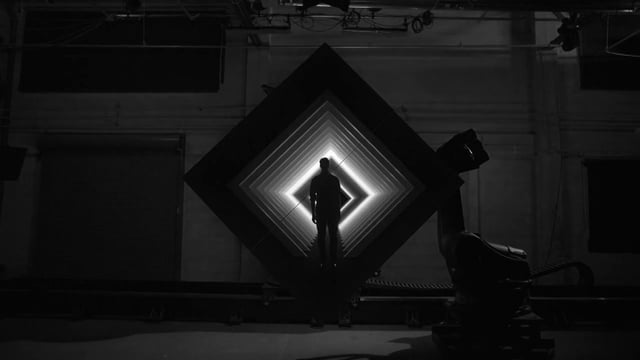
This video was made with the help of large-scale robotics, projection mapping, software engineering. Bot & Dolly’s technology is an integrated software/ hardware platform providing innovative control of 6-axis industrial robots, and other things I am completely at ease to say I don’t understand. All the more impactful like a magician’s trick at the end of the evening, and more questions than before I started watching.
Brothers Perform Pink Floyd’s “Wish You Were Here” In Jerusalem
Brothers Aryeh and Gil Gat turn in a superb cover version of Pink Floyd’s 1975 classic Wish You Were Here on the streets of Jerusalem. One of the band’s most-loved songs, done in a style you would have never thought of.
Danish Blues Band Performs “Minnie the Moocher” In The Streets Of NYC
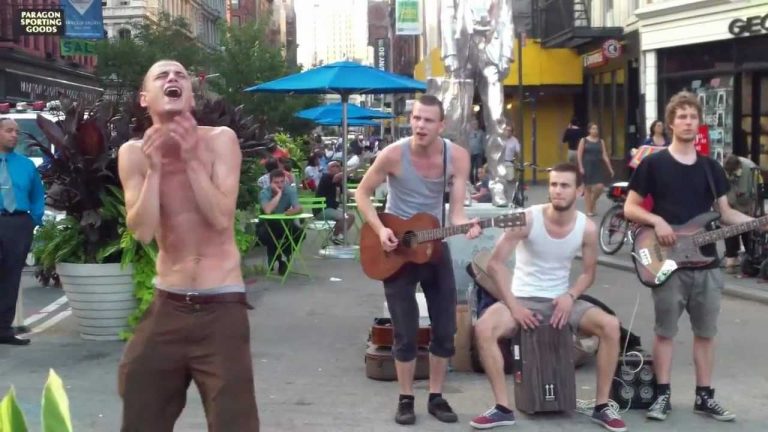
Danish blues rock band Brothers Moving perform an acoustic cover of Cab Calloway’s classic scat hit Minnie the Moocher at New York City’s Union Square.
Watch Rage Against The Machine’s Very First Show Back In 1991
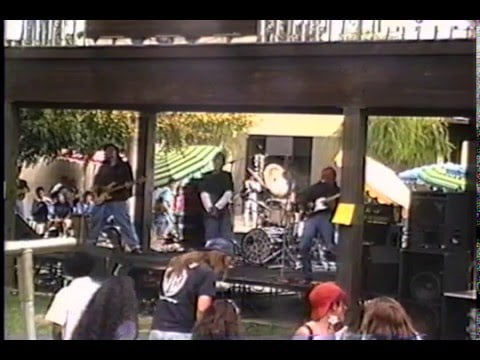
On October 23, 1991, four men in baggy pants introduced themselves to the world, calling their band Rage Against The Machine, with a nearly hour-long set at California State University, Northridge. Within a year, their self-titled debut album would go triple platinum a year after this show.
How Harry Connick, Jr. Got His Clapping Audience Back On The Correct Beat
Have you ever been to a concert where the audience is clapping during the song, but on the wrong beat? While performing “Come By Me” during a live performance, musician Harry Connick, Jr. used a clever trick to get his audience to clap along on the correct beat. The video explains how clapping on 1 & 3 makes the song feels like it drags, because it matches the intensity of the notes that are played. When you clap on 2 & 4, though, that intensity is more even throughout the song and so it feels like it flows better rather than a stop-and-go type of feel.
https://youtu.be/–qv9SI6vws
A different explanation of the same process.
James Brown Drummer Clyde Stubblefield Dies; Take Another Listen To THAT Drum Break That Built Hip Hop
The funkiest drummer who ever lived, Clyde Stubblefield, who drummed on many of James Brown‘s most important recordings, has died. He was 73. His recordings with James Brown are considered to be some of the standard-bearers for funk drumming, including the singles “Cold Sweat”, “There Was a Time”, “I Got The Feelin'”, “Say It Loud – I’m Black and I’m Proud”, “Ain’t It Funky Now”, “Mother Popcorn”, “Get Up, Get Into It, Get Involved” and the album Sex Machine.
His rhythm pattern on James Brown’s “Funky Drummer” is among the world’s most sampled musical segments. It has been used for decades by hip-hop groups and rappers such as Public Enemy, Run-D.M.C., N.W.A, Raekwon, LL Cool J, Beastie Boys and Prince, and has also been used in other genres. Stubblefield was featured in the PBS documentary, Copyright Criminals, which addressed the creative and legal aspects of sampling in the music industry.
Funkadelic bassist Bootsy Collins, who played with Stubblefield in Brown’s band, wrote on Facebook, “We lost another Pillar Stone that held up the Foundation of Funk. Mr.Clyde Stubblefield has left our frequency. I am lost for words & Rythme right now. Dang Clyde! U taught me so much as I stood their watchin’ over u & Jabo while keepin’ one eye on the Godfather. We all loved U so much. (SENDOUT YR LOVE TO HIS FAMILY & FRIENDS)! Then share yr stories about this Fire breathin’ Drummer, (THE FUNKY DRUMMER)! R.I.P. From all yr Funkateers…”
Here’s THAT drum break, the beat that built hip-hop:
Why It Took Garbage’s Shirley Manson A Long Time To Call Herself An Artist
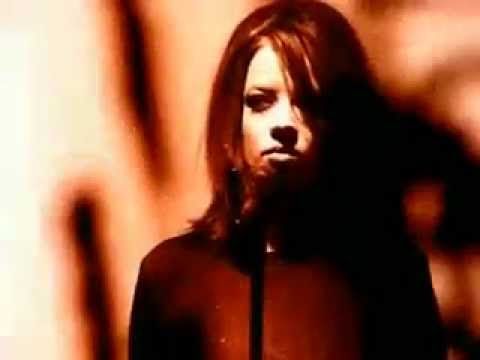
Strange Little Birds is Garbage’s latest album, released on Stunvolume, the label it collectively founded in 2012. It comes just ahead of Manson’s 50th birthday, and she says that her 20-plus years of performing have had a profound effect on both her instrument and her outlook.
“I mean, when I first started out, I didn’t even think of myself as an artist: I just thought of myself as a lucky girl who got a lucky break,” she says. “It took me a long time, arguably a decade or more, before I thought, ‘Actually, I am a musician, and I need to make music in order to be happy.’ And once I figured that out, I realized that I was a creative artist, and that changed the way I approached making music. It changed my intent, for want of a better word.”
The Function of Music, As Explained By Radiolab Host
Jad Abumrad, one of the hosts of Radiolab, explores the function of music. Produced by Mac Premo, it takes a pretty good stab at a question that would confound a lot of people.
The Function of Music with Jad Abumrad from mac premo on Vimeo.
Remember The Gong Show? It Had A Big Canadian Connection Involving Tommy Hunter
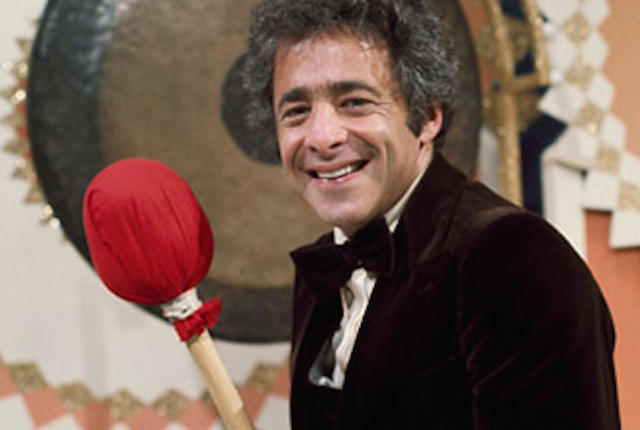
The Gong Show, which premiered on June 14, 1976, was an irreverent response to years of strait-laced variety talent shows from the likes of Ed Sullivan and Lawrence Welk. The singular Chuck Barris hosted most of the episodes of both the daytime and primetime versions of the show, where contestants had 45 seconds to impress celebrity judges before being in danger of getting “gonged” off the stage.
The idea for The Gong Show came after Tommy Hunter, “Canada’s Country Gentleman,” told producer Chris Bearde about a guy who had auditioned for his show. The idea clicked with Bearde, who then pitched the concept as a series to the CBC.
“Hunter was telling me about these guys that juggle and throw bowling pins up and they bang them on the head and they never catch them,” Bearde recalled. “Then they take four bowling pins and they throw them up in the air and they miss every one of them, and then the guy turns to them and says ‘Now I would like to do it blindfolded’ … Let’s get Hunter and dress him in a nice tuxedo, and after we get him in the tuxedo he’ll introduce all these people.” When the CBC said no, Bearde joined up with Chuck Barris to create it in the United States.
Kathleen Hanna on Her Feminist Path
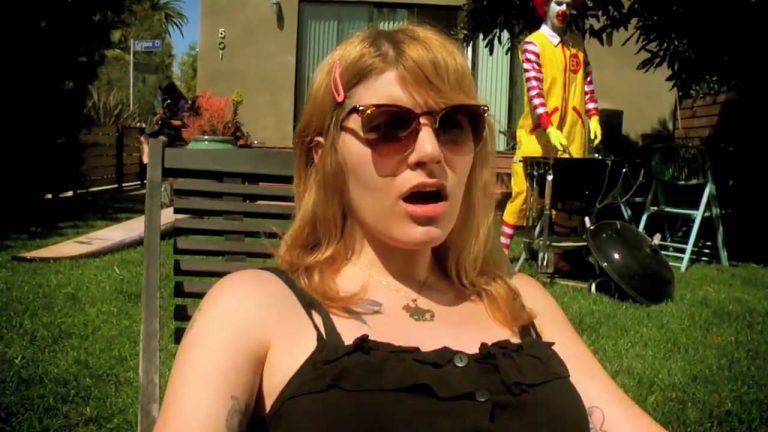
You’ve been an activist musician for more than 20 years. Is it ever dispiriting to still be railing against the same sexism on a song like “Mr. So and So” that you were calling out as a young person?
No, it feels euphoric, actually. Now I’m the one in control. I get to go out and sing that funny song. People might think, “She’s such a tough-as-nails, feisty little firecracker feminist” or whatever, but I’ve had to be nice to sound guys who were treating me horribly because I didn’t want them to turn my vocals down during the set. That’s just the nature of the work. But I’m able to deal with the emotions that have to do with keeping quiet and all of the more insidious forms of sexism.
I just think it’s totally hilarious that I get paid to sing about it. Back in the ’90s these were things we didn’t talk about. I would sing songs about mansplaining before that was a word. But I’m really happy that mansplaining is a word! All of a sudden it’s this thing that everyone gets, and that’s expanding our ability to talk about things.
There’s been a lot of talk recently about the commodification and marketing of feminism. How does this wave of trendy feminism differ from what you experienced with riot grrrl?
The second fanzine my band wrote was called “Girl Power,” and then, what do you know, three years later, the Spice Girls were like, “Girl power!” I’ve seen the commodification thing. But that’s why we’re artists — we just keep coming up with new ideas. People are going to steal them. That’s how rock ’n’ roll was invented — get real. This isn’t the first time or the last time that things are being appropriated. I don’t consider myself a victim in any way. I’m very lucky as a feminist artist to get the attention that I’ve gotten.
I understand people who are [upset] when things like the Stanford rape are still happening. You can’t wear a Sleater-Kinney T-shirt or be really into Beyoncé’s “Lemonade” and be like, “Everything’s O.K. now.” I totally get it. But the fact of the matter is that I got into bands because I wanted to make feminism cool. I mean, “Ally McBeal” was cool; feminism was not cool. So I said, I’m going to be the Pied Piper, the gateway drug, and try to get people into this because I was lucky enough to go to college and be given a feminist book.
If Beyoncé is going to have the word “feminist” written behind her in lights and she’s going to write “Formation” and talk about black power, I’m not going to say she’s fetishizing stuff. It’s not a good career move. It’s not like you go through the record books and see all the feminist musicians who just really cleaned up. Let’s not put down people who have enough power to spread stuff beyond our little punk-rock world or our feminist academic world. Everyone is invited to this party.