Universal Music Group and TikTok have announced a new multi-year strategic licensing agreement, building on their 2024 partnership and expanding what both companies can offer artists, songwriters, creators, and fans. TikTok will continue carrying UMG’s full recorded music and publishing catalogs, while the new deal adds enhanced marketing and advertising campaigns, e-commerce tools, and deeper artist development initiatives designed to help emerging artists build global audiences.
The AI protections built into the previous deal get a significant extension here. Both companies commit to removing unauthorized AI-generated music from the platform and to improving artist and songwriter attribution, a direct reinforcement of human artistry at a moment when the industry is navigating that terrain carefully. “This new agreement will help create even more opportunities for artists and songwriters to engage audiences, grow their communities and achieve career success on a global scale,” says Tracy Gardner, Global Head of Music Business Development at TikTok.
UMG’s Michael Nash called the deal a step toward “innovative new fan experiences” while improving social media monetization. The practical result for artists is a platform that combines music discovery, cultural conversation, and commercial tools in one place, with more resources behind the relationship than before.
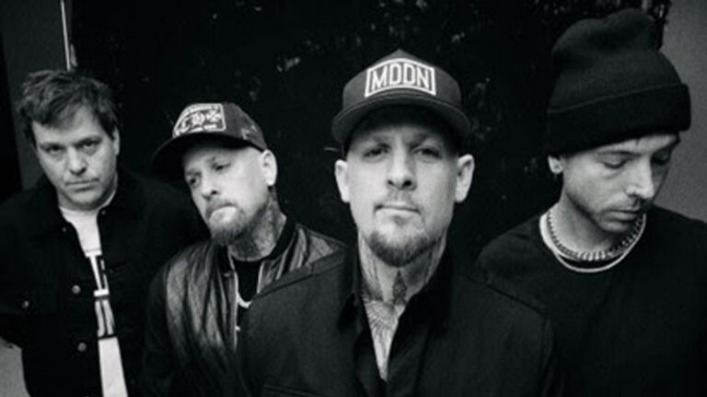
Good Charlotte have announced their Motel Du Cap European and UK Tour, kicking off November 8 in Stockholm and running through a closing stretch of London at The O2 and Manchester at Co-op Live, with Yellowcard joining as support across the run. The announcement follows a sold-out arena run across Australia and New Zealand and comes the same weekend the band headlines Slam Dunk Festival, their first UK shows since 2019 and a fitting return for a band that helped shape the pop-punk scene the festival was built around.
The 2026 edition of Slam Dunk marks the festival’s 20th anniversary, and Good Charlotte headlining the main stage carries real weight given their role in defining the genre’s early 2000s peak. The European tour that follows hits Stockholm, Munich, Brussels, Düsseldorf, Amsterdam, and Paris before the UK dates close it out.
Alongside the tour announcement, Good Charlotte unveiled a limited capsule collaboration with cult British jewellery house The Great Frog and Painted Flowers, the Los Angeles and Tokyo-based creative collective founded by the Madden Brothers in collaboration with Tadaaki Wakamatsu. The capsule includes a handcrafted silver ring and a long-sleeve T-shirt, bringing together music, design, and subcultural craft in a way that reflects the band’s broader creative world.
Presales open May 27, with general on-sale following May 29 at 10am local time.
Good Charlotte 2026 European/UK Motel Du Cap Tour Dates:
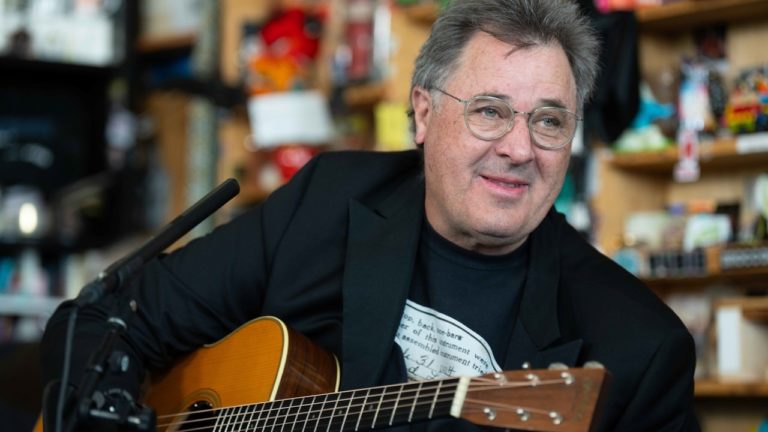
Vince Gill brought 50 years of songwriting to the Tiny Desk, and the five-song set moves through his catalog with the quiet authority of an artist who has nothing left to prove and everything left to feel. The set opens with the rollicking “One More Last Chance” before settling into “Whenever You Come Around,” written about the first time Gill saw Amy Grant’s smile, then moves through the unreleased “Heroes,” destined for his ambitious 50 Years from Home monthly EP project, and “When a Soldier Dies,” inspired by a visit to Arlington Cemetery, before closing with “Go Rest High on That Mountain,” written after losing his brother 33 years ago and just added to the Library of Congress National Recording Registry. Backed by John Meador, John Jarvis, Jimmie Lee Sloas, and Billy Thomas, Gill’s voice remains extraordinary, and the blend of harmonies throughout the set is something that doesn’t happen without decades of trust between musicians. One of the best Tiny Desks in recent memory.
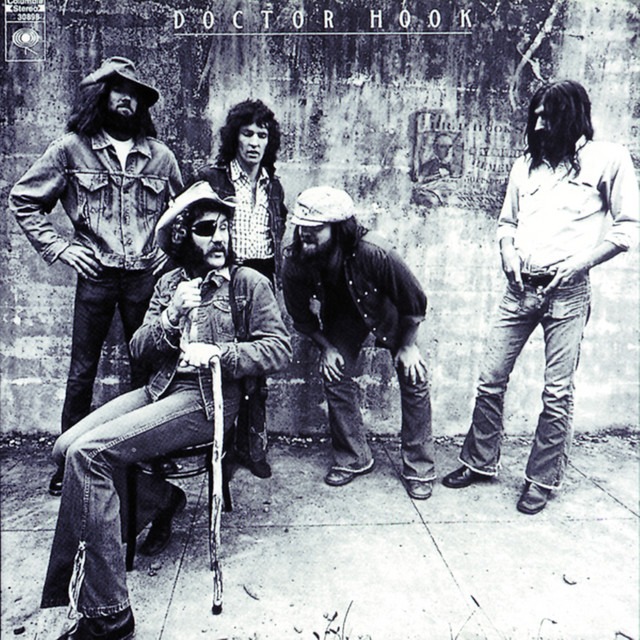
Dennis Locorriere died on May 16, 2026, at his home in West Sussex, England, after a long battle with kidney disease. He was 76. The lead singer, guitarist, bassist, and harmonica player who had been the voice of Dr. Hook since its formation in 1969 was the last surviving founding member of the band, and the statement from his management closed with a Looney Tunes-esque “That’s all folks,” which felt exactly right for a musician who never took himself too seriously and always took his music seriously enough.
Born on June 13, 1949, in Union City, New Jersey, Locorriere came up playing bars late into the night with musicians a decade older than him, drawn by the music and the company rather than any particular career plan. When George Cummings, Ray Sawyer, and Billy Francis started a new band in New Jersey in 1968 and brought him in on bass, Dr. Hook and the Medicine Show was born. Locorriere quickly became the group’s primary voice, and the pairing of his boyish, soulful tenor with Sawyer’s grittier country tones gave the band a vocal identity that was genuinely singular.
Their early years were shaped in large part by their association with Shel Silverstein, who wrote every song on their 1972 self-titled debut and their entire second album ‘Sloppy Seconds’. The results were some of the most distinctive singles of the era, “Sylvia’s Mother” hit the top five in 1972, “The Cover of Rolling Stone” followed in 1973, and the band appeared on that magazine’s cover in caricature form, which was exactly the kind of absurdist outcome the song seemed to invite. The band filed for bankruptcy in 1974, kept touring, and came back stronger.
The second half of the 1970s belonged to Locorriere in full. “When You’re in Love with a Beautiful Woman” topped the UK charts in 1979 after a 17-week run and hit the US Top 10. “Sharing the Night Together,” “Sexy Eyes,” “A Little Bit More,” and “Better Love Next Time” built one of the decade’s most durable pop catalogs, played across Top 40, easy listening, and country radio alike. After Ray Sawyer left in 1983 and the band wound down in 1985, Locorriere retained the Dr. Hook name, continuing to tour and record under various configurations for four more decades.
As a songwriter, his reach extended far beyond the band. Bob Dylan, Willie Nelson, Olivia Newton-John, and Helen Reddy all recorded his material. He also collaborated with Silverstein for years after the band years ended, including performing in Silverstein’s play The Devil and Billy Markham and narrating ‘Runny Babbit’ in 2005. He released three solo albums between 2000 and 2010, and in November 2025 announced his retirement from touring, saying he was healthy but weary and ready to rest.
With his passing, every founding member of Dr. Hook is gone.
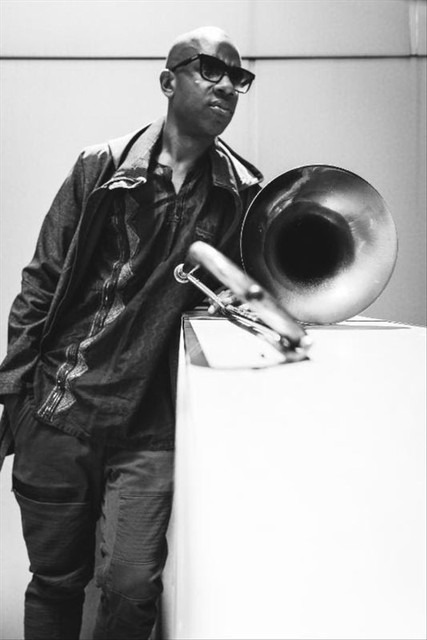
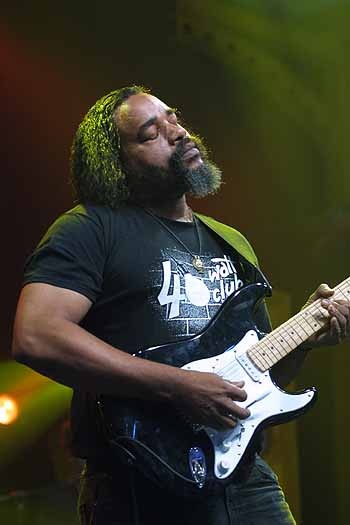
Ryan Porter died on May 16, 2026, at the age of 46, from complications following a severe car accident on April 28. The Los Angeles-born jazz trombonist and founding member of the West Coast Get Down collective was surrounded by loved ones when he passed. His bandmate and lifelong friend Tony Austin confirmed the news, writing that Porter’s condition had continued to deteriorate despite the best medical care after the accident left him with life-altering injuries.
Porter was born in Los Angeles on July 31, 1979, and came to the trombone after seeing the cover of J.J. Johnson’s album ‘Proof Positive’. His path into the West Coast Get Down began in high school, playing in the Multi-School Jazz Band in Watts under director Reggie Andrews alongside Kamasi Washington, Terrace Martin, Thundercat, and Ronald Bruner Jr. He later attended the Manhattan School of Music from 1997 to 2001, studying under Steve Turre and David Taylor, before returning to Los Angeles and helping build what would become one of the most celebrated jazz collectives in the country.
The West Coast Get Down’s recording sessions in the late 2000s, held in Kamasi Washington’s parents’ garage in conditions described as cramped and overheated, produced material that would eventually surface as Porter’s album ‘The Optimist’ in 2018. A decade-defining set of recordings from 2011 at Kingsize Soundlabs, in which the collective spent 30 straight days cutting music for seven different albums, yielded Washington’s landmark ‘The Epic’ and Porter’s debut ‘Spangle-Lang Lane’, a collection of reimagined children’s songs rendered in soulful jazz and hip-hop. Porter and his West Coast Get Down bandmates also contributed compositions to Kendrick Lamar’s 2015 ‘To Pimp a Butterfly’, one of the defining albums of that decade.
Kamasi Washington’s tribute captured the depth of a friendship that stretched back to age 11. “You have been my friend for most of my life,” Washington wrote. “You would always tell me that you wanted more than anything else to be a Force for Good and you did it, you are the complete embodiment of that. Your life made this world better.” Porter’s 2019 album was titled ‘Force for Good’. He released his final album, ‘Resilience’, in 2022, and a documentary of the same name in 2024 highlighting free music programs for young artists across Los Angeles.
Ike Willis died on May 16, 2026, in North Las Vegas, surrounded by family. He was 70. The singer and guitarist who spent a decade at Frank Zappa’s side, from 1978 through the final tour in 1988, had been battling prostate cancer since the early 2020s. His family confirmed the news in a statement that captured both the musician and the man: “At home, he was simply Dad: full of fun, warmth, and endless laughter over old Looney Tunes cartoons.”
Willis was born in St. Louis on November 12, 1955, and started playing guitar at age 8. By high school he was deep into progressive rock and jazz, and a 1974 Zappa concert on the Roxy and Elsewhere tour changed everything. Three years later, working as part of the in-house concert crew at Washington University in St. Louis, he found himself backstage with Zappa after a show. Zappa handed him a guitar and asked if he knew any of his songs. Willis did. By 1978, after a formal audition in California, he had joined the band and, as he put it, “never left.”
His first and most celebrated contribution to the Zappa catalog was voicing Joe on the sprawling 1979 triple album ‘Joe’s Garage’, a rock opera about free speech, censorship, authoritarian rule, and the peculiar relationship Americans have with sex. Zappa trusted Willis with the entire narrative arc of the record, and the performance remains one of the most distinctive vocal turns in rock’s more experimental corners. He followed that with appearances on ‘Tinseltown Rebellion’, ‘You Are What You Is’, ‘The Man From Utopia’, ‘Thing-Fish’, the ‘Shut Up ‘n Play Yer Guitar’ trilogy, and multiple volumes of the ‘You Can’t Do That on Stage Anymore’ live series.
Drummer Chad Wackerman, who shared the stage with Willis through some of Zappa’s most ambitious years, described his voice as something that gave him chills on the best nights. “His ability to be creative and humorous gave Frank so much joy on stage,” Wackerman wrote. “He was one of the most incredible singers I have had the honor to work with.”
Willis claimed to be the last of Zappa’s former band members to have seen him alive, the week before his death in 1993. Zappa’s final instructions to him were precise and characteristically direct: “Don’t change anything. Don’t ad-lib, don’t try to get cute, don’t try to spruce it up, don’t change the key that it was written in. Play the songs like I taught you.” Willis honored that for the rest of his life, touring with Zappa tribute acts including Project/Object, The Muffin Men, Bogus Pomp, The Stinkfoot Orchestra, and Ugly Radio Rebellion, and appearing at the annual Zappanale Festival in Bad Doberan, Germany. He also taught at School of Rock and released two albums under the Ike Willis Band name.
“It was a privilege for me to be able to perform and to be a part of this person’s orbit,” Willis said in 2022. “I have always thought that Frank was the most intelligent human being I have ever met.” That loyalty, sustained across three decades after Zappa’s death, defined Willis as much as any single performance.
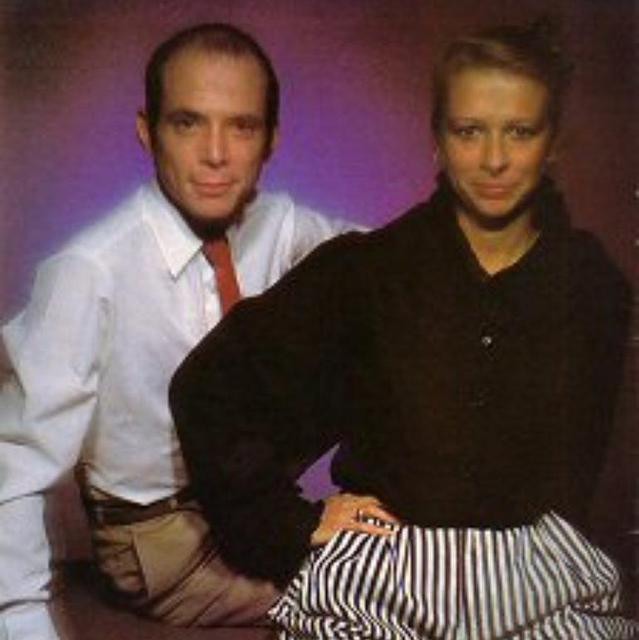
Denyse LePage, one half of the beloved Canadian disco duo Lime, passed away on May 20, 2026, following a stroke. She was a founding member of the group alongside her husband, Denis LePage, forming one of Montreal, Quebec’s most celebrated dance music acts.
Together, Denis and Denyse brought Lime to international prominence, scoring a number one U.S. Dance hit with “Your Love” in 1981 — a gold record that topped the Billboard Disco chart. The duo went on to release a string of albums and singles throughout the 1980s and beyond, including the beloved hit “Babe, We’re Gonna Love Tonight” and “Unexpected Lovers,” cementing their legacy in the Hi-NRG and post-disco genres. Their catalog spans more than a decade of studio albums, from their 1981 debut through releases well into the 2000s.
Denyse’s passing comes less than three years after the death of her husband Denis, who died from cancer on August 21, 2023, at the age of 74. The two had continued to perform together for decades, with Lime remaining active as recently as 2018. With her death, an era of Canadian dance music history comes to a close.
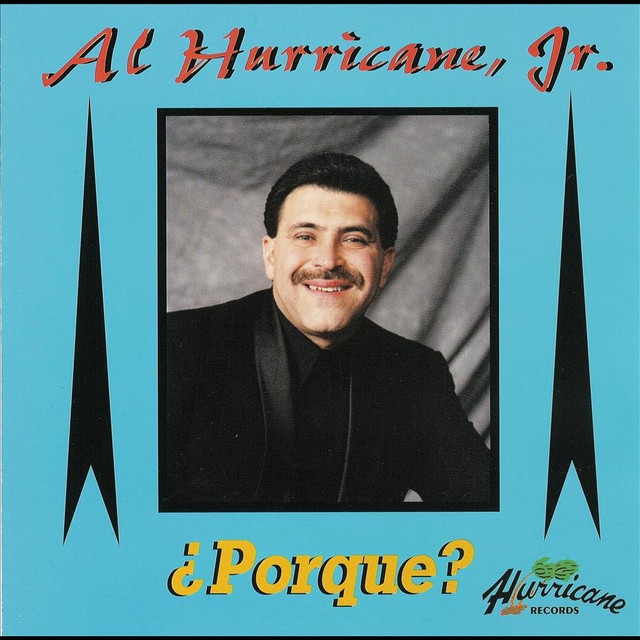
Al Hurricane Jr., born Alberto Nelson Sanchez Jr. on October 30, 1959, in Albuquerque, died on May 19, 2026, at the age of 66. The cause of death had not been confirmed at time of writing. His family announced the news on social media with a statement that said everything: “¡Qué viva El Godson!”
He began performing at age 5, singing “Love Potion No. 9” in front of thousands at the Albuquerque Civic Auditorium. He never really stopped. Over six decades, he performed alongside his father Al Hurricane Sr., the Godfather of New Mexico music, and his uncles Tiny Morrie and Baby Gaby, building a family musical dynasty that became inseparable from the cultural identity of the state. When his father died in 2017, the torch passed completely to Junior, and he carried it without hesitation.
Known as “El Godson,” he helped shape what is now recognized as Música Nuevo Mexicana, a sound rooted in corridos, rancheras, cumbia, and rock and roll, all filtered through the specific spirit of New Mexico. Guitarist Eric Lee, who played with both father and son for nearly 20 years, put it plainly: “When Al Hurricane and Al Hurricane Jr. took the stage, that’s it. People knew what they’re in for. It’s huge.” His bassist of 20 years, Danielle Andrade, described the band as family in every sense. “Me, my father, Al Hurricane Sr. and Al Junior would go to Denver Broncos games with each other. We’d go shooting at the range. It was more than just a band; it was family.”
The tributes from across New Mexico arrived immediately and from every direction. Mayor Tim Keller wrote that Hurricane was “the sound of New Mexico.” KANW Radio called him “a keeper of our heritage.” The Albuquerque International Balloon Fiesta said his spirit was woven into the fabric of what it means to be a New Mexican. The City of Belen, which had been preparing to welcome him as their headlining performer for the All American Celebration, offered condolences to a community that lost him before that moment could happen.
Lawrence Trujillo, who performed with Hurricane since 2014, summed up his significance to the people who grew up with his music in one line that needed no elaboration. “It’s as important to the culture as green and red chile.”
His brother Jerry Dean, himself a musician, spoke with the grief of someone who had just lost a mentor, an idol, and a big brother at the same time. They had played together just two weeks before at a funeral in Belen. Dean described it as one of the most intimate and meaningful performances they’d ever shared. “I was beaming from that whole thing. And then, it’s like, ‘Wow, I didn’t realize that we’re going to have to do your funeral now.'”
Al Hurricane Jr. is survived by daughters Samantha, Alexis, and Alyssa, and grandchildren Layla and Noah.
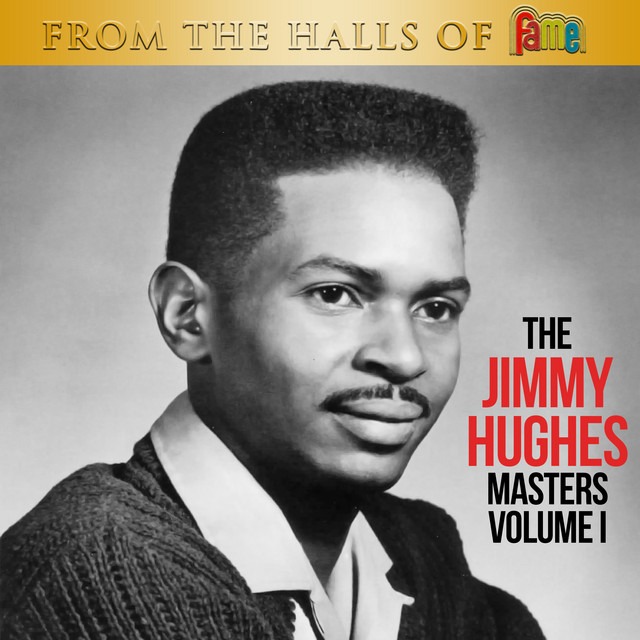
Jimmy Hughes died on May 20, 2026, at his home in Leighton, Alabama, at the age of 88. The R&B singer whose 1964 recording of “Steal Away” helped put Muscle Shoals on the musical map leaves behind a legacy that runs deeper than his chart positions suggest. FAME Studios, where he made his most enduring music, said it plainly: “His soulful recordings helped put Muscle Shoals on the map and inspired generations of artists to follow.”
Hughes was born in Leighton on February 3, 1938, a cousin of Percy Sledge and a product of the same small Alabama town that would produce some of American music’s most essential voices. He began singing in a gospel quartet called the Singing Clouds while still in high school, and that gospel foundation never fully left his voice, even when he turned to secular R&B.
His first audition for producer Rick Hall at FAME Studios came in 1962, leading to the recording of “I’m Qualified,” co-written by Hall and Quin Ivy. The record didn’t chart, and Hughes returned to his day job at a rubber factory, singing in local clubs on the side. Two years later, he came back with something different.
“Steal Away,” an original composition drawing from the gospel song “Steal Away to Jesus,” was recorded in a single take. Hughes, backed by guitarist Terry Thompson, keyboardist David Briggs, bassist Norbert Putnam, and drummer Jerry Carrigan, cut one of the defining recordings in Southern soul history in one pass. The song rose to number 17 on the Billboard Hot 100 and has since been cited as a prototype for soul singers including Johnnie Taylor and Al Green, and a defining document of the Muscle Shoals sound. Rick Hall later said of Hughes: “Just like his idol Sam Cooke, Jimmy Hughes was an extremely handsome young Black man, with a unique and sensational high tenor voice. Nobody could ever hit those high notes Jimmy Hughes could as a singer.”
The album that followed, also titled ‘Steal Away’, featured the first songwriting collaborations between Dan Penn and Spooner Oldham, two figures who would go on to shape the sound of an era. Hughes continued recording through the late 1960s, scoring R&B chart entries with “Neighbor, Neighbor,” “Why Not Tonight,” and “I Worship the Ground You Walk On,” before moving to Stax Records in 1968. Frustrated by what he saw as a lack of promotion and tired of being away from his family, he walked away from recording and performing in 1970.
He retrained, took a government job making parts for nuclear power plants in the Tennessee River Valley, and kept his singing confined to his church congregation in Leighton. He lived there quietly for the rest of his life, a true Leighton legend, as his hometown’s official accounts described him after his passing.
“Steal Away” was covered by Etta James, Clarence Carter, Bobbie Gentry, Billy Joe Royal, and Frank Zappa. The song outlived every trend that surrounded it and remains one of the great recordings to come out of the American South.
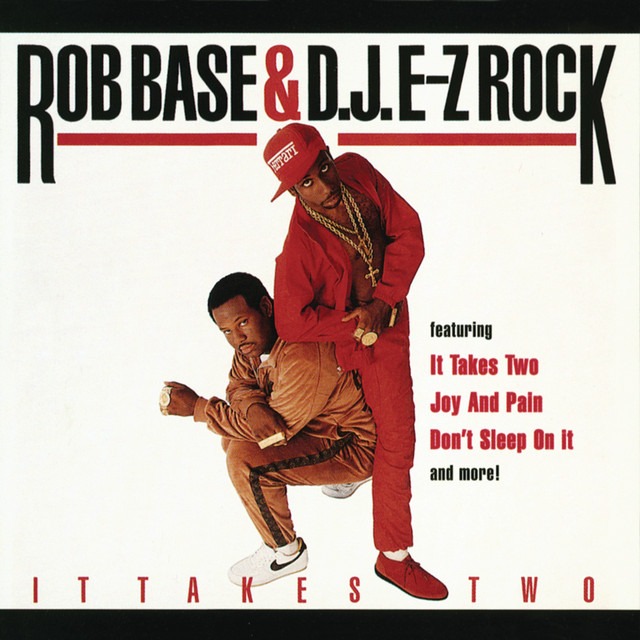
Rob Base, born Robert Ginyard on May 18, 1967, died on May 22, 2026, surrounded by family after a private battle with cancer, four days after celebrating his 59th birthday. The Harlem-raised rapper was one half of Rob Base and DJ E-Z Rock, the duo whose 1988 single “It Takes Two” became one of hip-hop’s most enduring and widely sampled records, a platinum-certified cultural touchstone that crossed over from the dance charts into the mainstream and never really left.
He and DJ E-Z Rock, born Rodney Bryce, met as kids in Harlem and built their partnership from the ground up, inspired by watching a local group called the Crash Crew. “We said to ourselves, this is something that we want to do,” Base recalled years later. The demo for “It Takes Two” came together in about two nights at a friend’s house after they stumbled across the Lyn Collins sample. They didn’t expect it to travel beyond the tri-state area. It went platinum and changed hip-hop history.
Built around a vocal sample from Lyn Collins’ “Think (About It),” the track blended hip-hop and house music in a way that felt genuinely new, reaching number 3 on the Billboard Hot Dance/Club Songs chart. The follow-up “Get on the Dance Floor” topped the same chart. Their debut album ‘It Takes Two’ went platinum seven times over and landed at number 4 on the Billboard Top R&B/Hip-Hop Albums chart.
The song’s cultural reach extended far beyond music. “It Takes Two” was sampled by Snoop Dogg, Gang Starr, and 2NE1, appeared in Grand Theft Auto: San Andreas, The Proposal, and Iron Man 2, and landed at number 24 on Rolling Stone’s Greatest Hip-Hop Songs of All Time. Rolling Stone described it as “a pop-rap landmark and an ode to understanding and respect that brought people together under a groove.”
Base released his solo debut ‘The Incredible Base’ in 1989, then reunited with E-Z Rock for 1994’s ‘Break of Dawn’. He remained active as a live performer through the I Love the 90’s Tour and was working as executive producer on films through his production company Funky Base, Inc. DJ E-Z Rock died on April 27, 2014, from complications of diabetes at age 46.
His son, Rob Ginyard Jr., shared news of the death on Instagram with a simple, direct message: “Sleep in peace dad. I love you.” The official statement from his team described him as a loving father, family man, and creative force. “Thank you for the music, the memories, and the moments that became the soundtrack to our lives.”