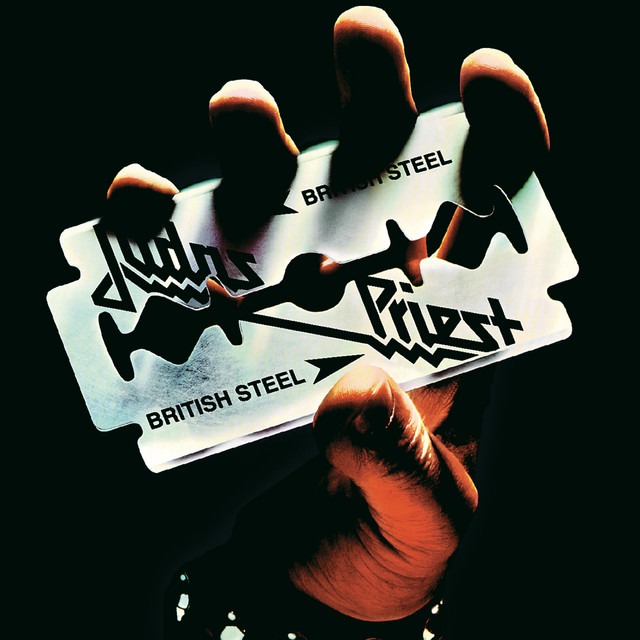
When Judas Priest unleashed ‘British Steel’ on 11 April 1980, they didn’t just release their sixth studio album, they helped light the fuse on the New Wave of British Heavy Metal. Leaner, catchier, and built around anthems like “Breaking the Law” and “Living After Midnight,” the record became an enduring landmark and eventually went platinum in the US. The stories behind its creation, though, are full of household objects, sleepless nights, and a few genuine surprises. Here are five facts worth knowing.
It Was Recorded At Ringo Starr’s House
‘British Steel’ was made at Tittenhurst Park in Ascot, the home of former Beatle Ringo Starr. The band actually started at Startling Studios on the same grounds, but abandoned it because they preferred recording in Starr’s house itself. It’s a strange bit of crossover history, a heavy metal classic taking shape inside a Beatle’s home.
The “Breaking the Law” Glass Smash Came From A Milkman’s Bottles
Digital sampling wasn’t widely available yet, so the band got creative with their sound effects. For the breaking glass in “Breaking the Law,” they smashed actual milk bottles delivered to the house that morning. The police siren in the same song was no recording either, it was K. K. Downing working the tremolo arm on his Stratocaster.
“Metal Gods” Was Built From Ringo’s Cutlery
That iconic marching, metallic sound on “Metal Gods” came from the band shaking trays of cutlery in front of microphones. They raided the house for anything they could bang or rattle, and since Starr owned the place, those were apparently his knives and forks. Halford reckoned he lifted and dropped that cutlery tray around 100 times to get it right.
“Living After Midnight” Got Its Title From A 4 AM Wake-Up
The song was born when Glenn Tipton woke Rob Halford at 4 AM with his loud guitar playing during the Tittenhurst sessions. Halford grumbled that Tipton was “really living after midnight,” and Tipton instantly recognised it as a perfect title for the track he was working on. A bleary middle-of-the-night complaint became one of metal’s great party anthems.
The Album Was Marketed With A Cheeky Pun On “Steal”
When it came out, ‘British Steel’ was sold in the UK at a bargain price of £3.99. The advertisements in the music press leaned into the moment with a wink, running the deliberate misspelling “British Steal.” It was a small joke, but a fitting one for a band who knew exactly how to grab attention.
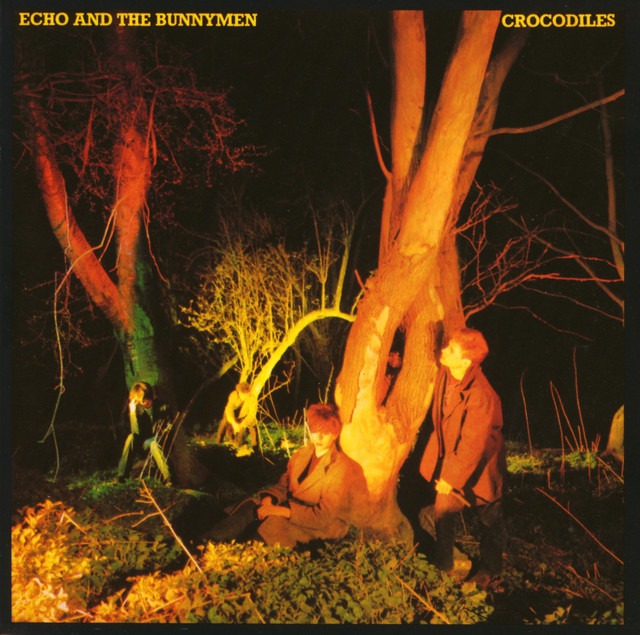
When Echo & the Bunnymen released ‘Crocodiles’ on 18 July 1980, they announced themselves as one of the most striking new bands of the post-punk era. Dark, moody, and shot through with Ian McCulloch’s apocalyptic brooding and Will Sergeant’s icy guitar, the debut climbed to No. 17 on the UK Albums Chart and landed on countless best-of-the-decade lists in the years since. Beneath its eerie woodland cover, though, sits a handful of odd decisions and behind-the-scenes stories. Here are five facts worth knowing.
The Band Started Out With A Drum Machine Instead Of A Drummer
When Echo & the Bunnymen formed in 1978, the lineup was just McCulloch, Sergeant, and bassist Les Pattinson, with a drum machine handling the beats. After signing with Korova, they were persuaded to bring in a real drummer, and Pete de Freitas joined the fold. Their first single “The Pictures on My Wall” was even recorded before he arrived, then re-cut for the album with him on drums.
The Whole Album Was Recorded In Just Three Weeks
Despite its rich, atmospheric sound, the recording of ‘Crocodiles’ took only three weeks. The process apparently bored bassist Les Pattinson, who admitted he didn’t enjoy all the drop-ins and edits involved. There was, by his account, a lot of standing around waiting between takes.
A Famous Pop Star Was Nearly Hired To Produce It
Before the band’s manager Bill Drummond and his partner David Balfe took the reins, there was serious talk of bringing in American singer Del Shannon, the man behind “Runaway,” to produce the record. In the end the production stayed in-house with Drummond and Balfe. Ian Broudie had already handled the single “Rescue” separately.
The Cover Almost Featured Burning Stakes
The eerie nighttime photos were shot by Brian Griffin in the woods near Rickmansworth, and the band originally wanted burning stakes in the frame. They scrapped the idea once they realised it carried unfortunate KKK connotations and settled for moody lighting instead. McCulloch loved the result anyway, declaring the cover better to look at than the Mona Lisa.
Two Songs Were Cut Over Imaginary Swear Words
“Do It Clean” and “Read It in Books” were left off the original UK LP because Warner Bros. managing director Rob Dickins mistakenly believed they contained obscenities. Once he realised his error, the tracks were restored for the US version released that December. UK fans got them as a limited-edition single instead.
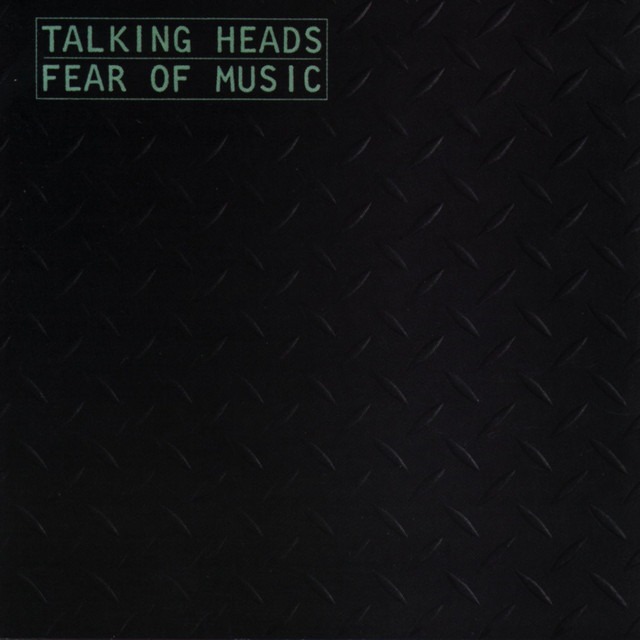
Released on 3 August 1979, ‘Fear of Music’ caught Talking Heads at a fascinating crossroads, the moment the band stopped worrying about hit singles and started chasing something stranger and bolder. Produced alongside Brian Eno, the album turned David Byrne’s anxious, dystopian lyrics into one of the most acclaimed records of its era, landing on best-of-1979 lists everywhere. Behind its famous black cover, though, sits a string of unusual choices and offbeat stories. Here are five facts worth knowing.
Most Of It Was Recorded In A Loft With Cables Run Through A Window
Rather than book a conventional studio, the band returned to drummer Chris Frantz and bassist Tina Weymouth’s loft in Long Island City. An audio crew parked a Record Plant van outside the building and ran cables up through the loft window. On just two days, 22 April and 6 May 1979, Talking Heads laid down the album’s basic tracks with Eno.
The Cover Was Designed To Feel Like A Manhole Cover
The completely black sleeve was designed by Jerry Harrison and embossed with a pattern resembling tread plate metal flooring. The texture deliberately echoed the album’s gritty, urban subject matter. The striking package earned a nomination for the 1980 Grammy Award for Best Recording Package.
“I Zimbra” Borrows Its Lyrics From A Dadaist Poem
The Afrobeat-tinged opener features guitar from King Crimson’s Robert Fripp, but its words came from somewhere unexpected. The nonsensical lyrics are based on “Gadji beri bimba,” a sound poem by German Dadaist Hugo Ball. Jerry Harrison later said the track pointed directly toward the direction the band would take on ‘Remain in Light.’
The Bird Sounds On “Drugs” Came From An Australian Koala Sanctuary
The closing track “Drugs” features bird sounds that weren’t pulled from a generic sound library. They were recorded at the Lone Pine Koala Sanctuary in Brisbane, Australia, during the band’s Pacific tour. It’s a small detail that captures just how far Talking Heads were willing to go for texture.
The Title Was Suggested As A Joke
Jerry Harrison pitched the “ludicrous” title ‘Fear of Music’ to the rest of the band almost in jest. According to Tina Weymouth, they accepted it because it simply fit, matching both the record’s uneasy themes and the stress the quartet felt while making it. Sometimes the offhand idea turns out to be the perfect one.
Released on 23 November 1979, ‘Metal Box’ is one of the strangest and most influential records of the post-punk era. Public Image Ltd took John Lydon’s cryptic vocals, Jah Wobble’s dub-soaked basslines, and Keith Levene’s icy metallic guitar and packaged it all in a way no band had tried before. It’s now widely regarded as a landmark of post-punk, but the stories behind its making are even wilder than its reputation suggests. Here are five facts worth knowing.
It Came Packaged In An Actual Metal Film Canister
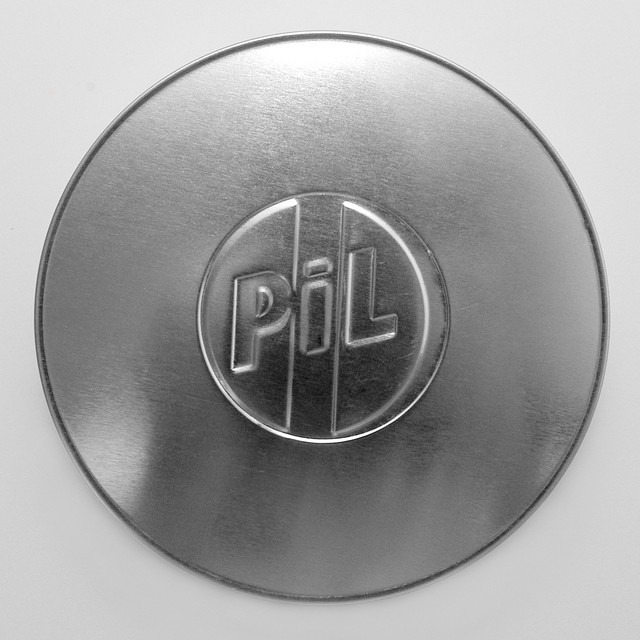
The album takes its name from its original packaging, a metal case styled after a 16mm film canister and embossed with the band’s logo. Inside sat three 12-inch records spinning at 45 rpm, separated by paper sheets. The design was innovative and surprisingly cheap, though Virgin still asked for a third of the band’s advance back to cover the cost.
The Band Spent So Much On The Box They Had To Sneak Into Studios
According to John Lydon, much of the album was pure improvisation born out of necessity. The band had blown most of their money on the metal container, so they would sneak into studios after other bands had left for the night. What you hear are essentially rough monitor mixes with no real production behind them.
The Tin Was So Awkward It Was Almost Impossible To Use
The discs were packed so tightly inside the canister that they were difficult to pull out, and easily nicked and scratched in the process. Each side held only about ten minutes of music, forcing listeners to constantly flip records to hear the whole thing. After an initial run of 60,000 units, it was reissued in a normal gatefold as ‘Second Edition.’
“Death Disco” Was Written About Lydon’s Dying Mother
The track later retitled “Swan Lake” began as the single “Death Disco,” which Lydon wrote as his mother was dying of cancer. He watched her decline slowly over a year and channelled that grief into the music. He played the song for her shortly before she died, and said she was very happy to hear it.
They Almost Released It In Sandpaper Instead Of Metal
Before settling on the metal tin, the band considered packaging the album in sandpaper. The idea was that the abrasive sleeve would scratch and ruin the artwork of any record shelved next to it. PiL passed on it, but the Durutti Column later picked up the concept for their 1980 Factory Records debut.
When Gary Numan released ‘The Pleasure Principle’ on 7 September 1979, he gave the world more than just a debut solo album. It rocketed to No. 1 on the UK Albums Chart and delivered “Cars,” one of the most recognizable synth anthems ever recorded. Dig past that famous single, though, and you’ll find a record full of surreal inspirations, bold experiments, and choices that even devoted fans rarely talk about. Here are five facts worth knowing.
He Threw Out The Guitar Entirely
For ‘The Pleasure Principle,’ Numan completely abandoned electric guitar, a striking decision for a rock-leaning artist in 1979. Combined with heavy use of synthetic percussion, the album became the most purely electronic and robotic sound of his career. He leaned hard on the Polymoog keyboard, especially its eerie “Vox Humana” preset, to build that cold, mechanical atmosphere.
The Title Came From A Surrealist Painting
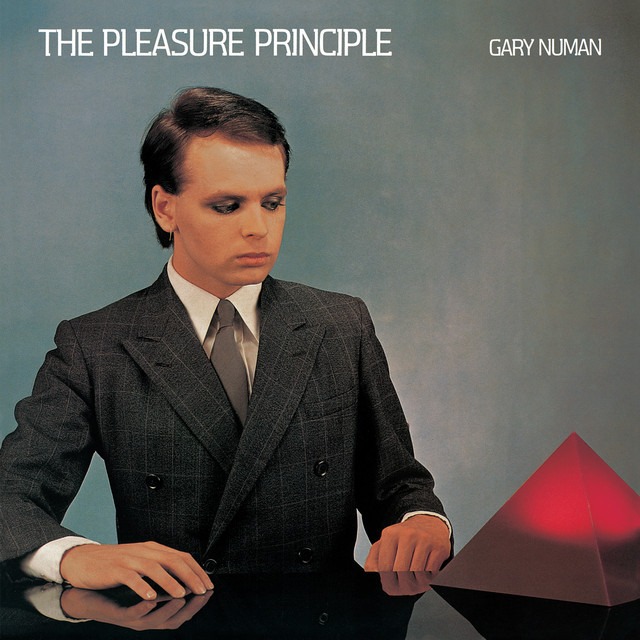
The name was lifted straight from a René Magritte painting of the same title, subtitled as a portrait of Edward James. The original artwork shows a seated figure whose head has been obliterated by a blinding ball of light, with a small stone resting on a wooden table. Numan recreated the exact pose for his album cover, dressed in a similar suit.
That Glowing Pyramid Was A Deliberate Statement
Where Magritte placed a rock on a desk, Numan placed a glowing purple Perspex pyramid. He described the swap as a clear nod toward technology, turning natural materials into shiny, futuristic shapes. The detail ties the cover image directly to the album’s preoccupation with where machines were taking us.
He Regretted Releasing “Complex” As A Single
“Complex” became a UK No. 6 hit during a nine-week chart run, with violin from Ultravox’s Billy Currie woven into the arrangement. Even with that chart success, Numan later said he wished “Metal” had been chosen instead, a track sung from the perspective of an android longing to be human. The right call isn’t always obvious in the moment.
It Quietly Powered A Future Smash Hit
Years later, the track “M.E.” found a second life when Basement Jaxx used it as the backing for “Where’s Your Head At.” Casual listeners who have never explored the deep cuts have almost certainly heard a piece of this album reworked into a club favorite. Numan’s robotic experiments kept rippling forward into pop.
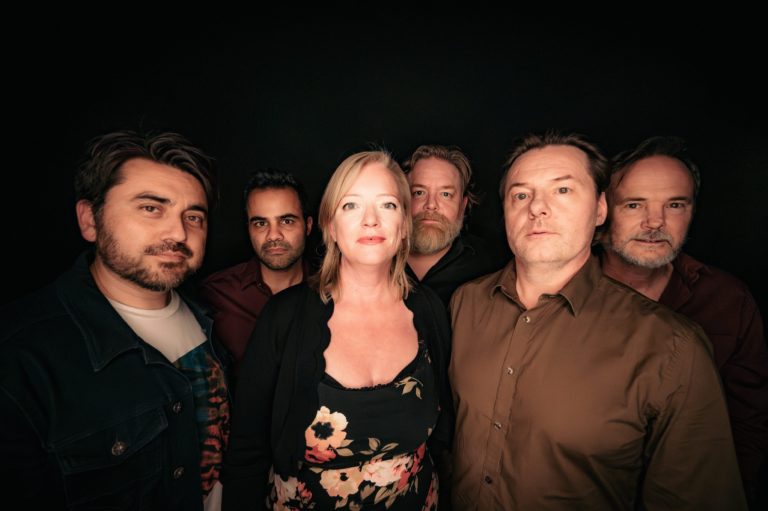
The McDades release “Dance Around The Spinning Wheel” today, the first single from their forthcoming album ‘Thread The Light,’ out now, on Free Radio Records. A traditional song arranged and produced by the band, the track arrives as the opening statement from one of the most decorated and deeply loved ensembles in the history of Canadian roots music: JUNO Award winners, two-time Canadian Folk Music Award winners, Canadian Folk Music Award winners for Best Vocal Group, and for over two decades the band that critics, audiences, and fellow musicians reach for when they need to explain what it sounds like when virtuosity and joy occupy the same room at the same time.
At the heart of The McDades are siblings Shannon Johnson (fiddle and vocals), Solon McDade (bass and vocals), and Jeremiah McDade (whistles, saxophone, and vocals), joined on Thread The Light by Andy Hillhouse (guitar and vocals) and Eric Breton (percussion and vocals), with guest contributions from Farhad Khosravi on santur, Dan Stadnicki on drums, and Jean-Sebastian Williams on baritone guitar. The three siblings grew up performing together, and whose stages included the Canadian National Exhibition, the Commonwealth Games, and a performance for the British Royal Family. Music is not something the McDades came to. It is what they were made of from the beginning.
“Dance Around The Spinning Wheel” is a vibrant new single that invites you straight into the circle where rhythm, melody, and movement blur into one joyful pulse. Built for singing at the top of your lungs and dancing without hesitation, the track carries an irresistible, communal energy. At its core the song is driven by the mesmerizing shimmer of the santur, played by guest Farhad Khosravi, weaving a hypnotic thread that pulls listeners deeper with every turn. This trance-like texture grounds the music while the arrangement lifts and expands, blending traditional roots with global influences and a touch of modern pop sensibility. The result is a sound that feels both ancient and immediate, familiar yet fresh, where voices rise together, feet move instinctively, and the spinning never quite stops.
Punching through the walls of tradition, The McDades’ Celtic-rooted music fuses the spontaneity of jazz improvisation and infectious global rhythms. Their ground-breaking compositions and innovative arrangements are characterized by stunning virtuosity and a near-telepathic interaction on stage. With vocal harmonies that can only come from a family, and an obvious love for each other and their music, The McDades’ sound is immersed in the spirit of improvisation. Combining original tunes and unique interpretations of traditional songs, their performances feature both energetic instrumentals and moving vocals performed in English and French. This compelling and dynamic group, as the London Free Press put it, finds their groove somewhere between a down-home kitchen party, a jazzy after-hours club, and a folk festival.
‘Thread The Light’ follows The Empress (2021), the album that earned them the 2023 Canadian Folk Music Award for Best Vocal Group and reinforced what has always been true about this band: that their music is, as Living Traditions wrote, a compulsively vital canvas of rustic and cosmopolitan soundbites that caress the ear as much as illuminate the senses. The new album arrives with the depth and confidence of a band who have been playing together, in various configurations, since childhood, and who understand instinctively that tradition is not a ceiling but a foundation.
What has always set The McDades apart is not any single element of their sound but the combination: Shannon’s luminous fiddling, Jeremiah’s astonishing multi-instrumental fluency across whistles, saxophone, and beyond, Solon’s anchoring bass, and the vocal harmonies that can only come from people who have been singing together since they could speak. “It has been energizing and often magical,” Jeremiah has said of the band’s journey. (Celtic Life International, 2022) That magic is audible from the first note of “Dance Around The Spinning Wheel.”
For a band who have been described as crafting a new Canadian sound, this album is the next chapter of a story that has been building for a very long time and shows absolutely no sign of slowing down.
Swedish singer-songwriter Jonas Carping releases his powerful new song “This Whole World’s On Fire” today, a stirring piece of Americana that arrives as the lead song from his fifth studio album ‘Always & Evermore – Side A,’ out now. The song finds Carping at his most searching and elemental, delivering a meditation on collective uncertainty and the persistent human need for connection through imagery that is as cinematic as it is intimate. From its opening lines, “This whole world’s on fire / Chasing ghosts, on hell-bent desire,” the track pulls listeners into a landscape of restless longing and quiet resolve.
Carping, who is based in Lund in the south of Sweden, has spent more than two decades honing a voice and a craft entirely his own. Having first emerged from the Stockholm music scene with his band The Glade before launching his solo career in 2012 with the debut album ‘All The Time In The World,’ he has steadily built a body of work rooted in the great traditions of American folk and roots music. He describes his approach as an MTV Unplugged session where there is no plugged version, and nowhere is that commitment to pure acoustic storytelling more evident than on “This Whole World’s On Fire.”
The song’s origins carry their own compelling arc. Written during the global pandemic, when the world felt suspended in a state of collective unease, it sat quietly in Carping’s catalogue until the passage of time gave it an even greater resonance. As conflicts multiplied across the globe and the sense of crisis proved not to be a singular moment but a recurring condition of modern life, the song found its moment. Carping has spoken to the realisation that, somewhere in this world, the world is always on fire, and that understanding gives the song an urgency that reaches well beyond any single news cycle.
Produced by Amir Aly at YLA Studios in the south of Sweden and mastered by Björn Engelmann at the legendary Cutting Room in Stockholm, “This Whole World’s On Fire” is a testament to what happens when a song is allowed to breathe in its most natural state. The recording, like all of ‘Always & Evermore,’ was captured live in studio with just Carping and his guitar, chasing what he calls the unperfect perfect version of every song. The result is a recording that feels honest and lived-in, where every note carries weight. The line “We all got bills to pay / We all got roads to travel / Down the mistakes that we have made” lands with the plainspoken moral clarity of the finest classic Americana writing.
“This Whole World’s On Fire” also speaks to one of the most compelling cultural conversations in music right now, the return to the album as a full and intentional listening experience. ‘Always & Evermore’ is structured as two long-form tracks, Side A and Side B, presenting its eleven songs as a continuous journey rather than a collection of isolated singles. Carping arrived at this format through a deeply personal experience, inheriting a vast record collection and rediscovering the joy of listening to albums in full, from first note to last. The project stands as a genuine counterpoint to the shuffle-and-stream culture, inviting listeners to sit with music the way an earlier generation was invited to sit with ‘Desire’ or ‘Rust Never Sleeps.’
Side A is available now across all streaming platforms, including Spotify and SoundCloud, and on Bandcamp at jonascarping.bandcamp.com. Side B is set for release in September, alongside the full album on vinyl in collaboration with Heptown Records. The vinyl release represents yet another layer of intention in a project that has been shaped, at every turn, by a belief that music deserves more than a passing moment of algorithmic attention.
With cover artwork and photography by Hicke Jakobsen, ‘Always & Evermore – Side A’ stands as Jonas Carping’s most unguarded and fully realised work to date, a record that trusts the song, trusts the listener, and trusts that a single voice and a single guitar can hold a whole world’s worth of feeling. “This Whole World’s On Fire” is that record’s opening statement, and it is one worth hearing from beginning to end.
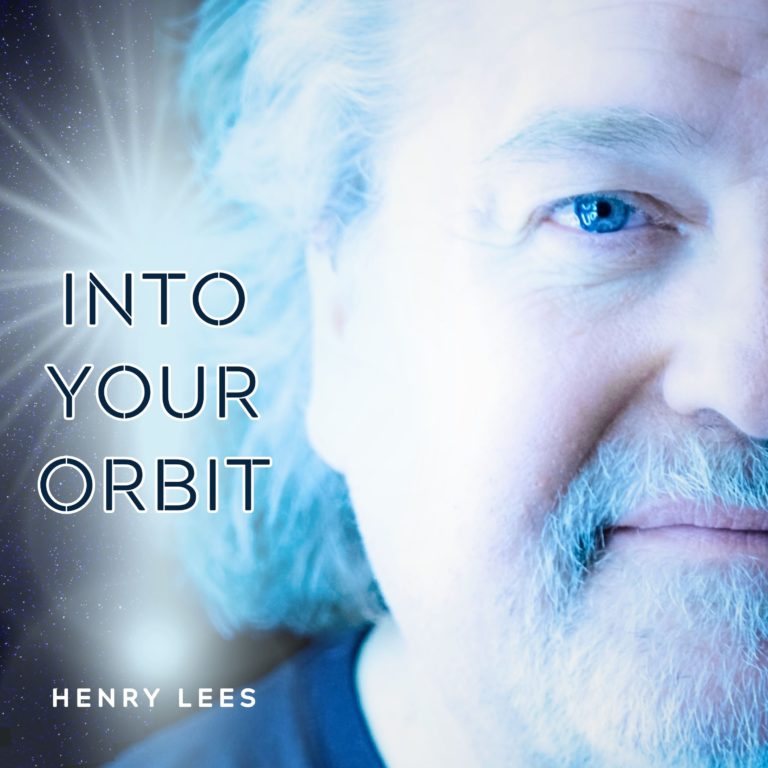
The recent Artemis II lunar fly-by captured global fascination and reignited the spirit of exploration in many of us. Watching the intrepid crew – including Col. Jeremy Hansen, the first Canadian to travel to the vicinity of the moon – carry out their mission and land safely back home was an awe-inspiring adventure with the most satisfying ending. Fueled by that spirit of exploration, award-winning Canadian singer-songwriter Henry Lees has since been counting down to launch day for his cinematic, hook-powered new single, “Into Your Orbit”.
“Into Your Orbit” is an uplifting, driving pop anthem that celebrates the undeniable attraction of first love and how good it felt, and still feels, to be near that special person.
“Love has its own gravitational pull,” notes Lees, “especially that world-changing first time you fall in love with someone. For a lot of us, that first love carries on for a lifetime because it feels that strong and right – like being the first person to discover something, or someone, uniquely precious and beautiful.”
But now I float above your surface
And I still feel that sweet, familiar pull
Into your orbit
“Into Your Orbit” has already received pre-release industry accolades as a semi-finalist in the AAA category in 2025 for the prestigious annual International Songwriting Competition, Lees’ fifth ISC honour since 2021. The song is also a selected addition to the exclusive library of L.A.-based Imaginary Friends Music Partners, an agency that has placed music in popular programs such as The Young and The Restless, Shameless and America’s Funniest Home Videos.
“Into Your Orbit” is the magical result of a first time collaboration between Lees and notable Icelandic producer/composer, Frosti Jónsson. With waves of synths, piano and electric guitar gliding over a driving beat with percussion accents like starbursts supporting Lees’ alternatively reflective and soaring vocals, the track is an exciting journey into new sonic realms for the Toronto-based singer-songwriter.
“Co-writing with Henry was a really smooth and fun creative process,” recalls Jónsson. “I also love challenging my collaborators and pushing them out of their comfort zone; Henry can verify this. But I’m really happy with the outcome.”
“I hadn’t ventured very far in the direction of electronic music before,” offers Lees, “but from the initial co-writing session to the final mix, I marveled at Frosti’s amazing creativity and storytelling ability using elements from both the electronic and organic music worlds.”
Jónsson, now based in Tampa, Florida, has placed his solo music and other collaborations in many productions including Netflix’s Temptation Island, a variety of HGTV home renovation series, and true crime series featured on Peacock, Amazon Prime, Tubi and elsewhere. Jónsson also releases his own electronic instrumental music as Bistro Boyand performs live internationally.
“Frosti’s music is deliciously atmospheric and evocative. He can expertly set a scene and mood before anyone would sing a word,” says Lees. “I am very intrigued and excited about what we’ve created and continue to create together.”
“When I write and produce I let emotions lead the way, trusting the process and approaching it with an open mind,” explains Jónsson. “When Henry shared his initial ideas and the lyrical theme with me everything started to come together rather quickly. The outcome is this uplifting, almost anthemic song that hopefully captures the exhilarating feeling of Henry’s lyrics about first love and the nostalgic memories of it.”
“Into Your Orbit” is Lees’ fifth single and follows “Smoke”, a collaboration with Canadian artist and producer-on-the-rise, Sean Thomas(Joey McIntyre, Debbie Gibson, New Edition). “Smoke” was a semi-finalist in the 2025 Unsigned Only music competition and has enjoyed airplay on college and community radio across Canada and internationally in Europe and the UK, Mexico and South America. Prior to “Smoke”, “Free This Love”, another collaboration with Thomas, gathered five song competition honours including a Top 10 Finalist award from the 27th USA Songwriting Competition.
In 2022, Lees celebrated his first number ones as a songwriter when triple Maple Blues Award nominee Chris Antonik’s album “Morningstar” hit #1 for two weeks on Roots Music Report’s Top 50 Canada Albums Chart, with “Back to the Good” — one of six songs Lees co-wrote with Antonik — also hitting #1 on the RMR. He also released “Walking With Fear”, a personal song supporting those dealing with anxiety disorders, co-written with multi-award-winning singer-songwriter David Leask and produced by Leask with JUNO winner Steve Dawson and The Henhouse Express. The single was released in partnership with Anxiety Canada in support of Action Anxiety Day.
More music is always on the way from Lees, with three more singles and a full EP in the works for 2026 – 27.
In the meantime, “Into Your Orbit” is rocketing into the digi-verse with the hope its reach will be out of this world.
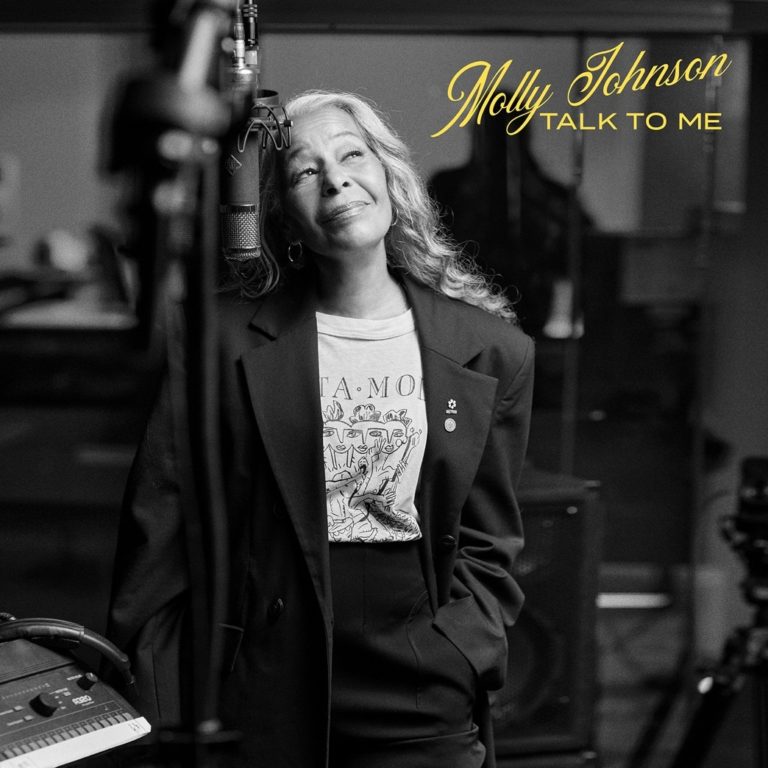
Recognized as one of Canada’s greatest voices, Molly Johnson announces her new album Talk To Me, arriving June 26 via Universal Music Canada. The 10-track project combines music from Johnson’s recent All I See and Long Time Running EPs with four new recordings, including lead single “Holiday,” out now, further showcasing her unmistakable voice and continued artistic evolution.
Across the album, Johnson collaborates with artists from across generations of Canadian music, including JUNO Award-winning rapper Haviah Mighty, rising producer and artist CUBE, and Jim Cuddy of Blue Rodeo. The result is a deeply collaborative body of work that blends soul, jazz, R&B, and rock through Johnson’s singular artistic lens.
At the heart of the album is “Talk To Me,” a call-and-response collaboration with Haviah Mighty centred around listening, dialogue, and connection across generations. Pairing Molly’s signature vocal style with Haviah’s sharp lyricism, the track reflects a meaningful exchange between two distinct voices and perspectives.
“What does a 67-year-old woman and a 21-year-old kid have in common? A real love of great music,” says Johnson about working with producer and artist CUBE. “I really believe we need to listen to younger voices, and I feel so excited that I get to be part of this new generation of music. The future looks bright to me.”
The album also features Johnson’s stirring interpretation of The Tragically Hip’s “Long Time Running,” recorded with Jim Cuddy of Blue Rodeo. First released in 1991, the song remains a defining piece of the Canadian musical canon, here reimagined with a sense of intimacy and reverence that honours its enduring legacy.
“This has been a long time coming,” says Johnson. “I’ve always wanted to record a duet with Jim. We’ve been friends for years, so to finally collaborate on a song by our beloved The Tragically Hip feels like real magic.”
Across the album, Johnson is joined by her long-time collaborators, including Davide Di Renzo, Mike Downes and Robi Botos, whose enduring musical partnership remains central to her sound. New recordings including “Holiday,” “Happy,” “Sunday Morning,” and “Just As Bad As You” further expand the album’s rich and deeply collaborative musical world.
Ron Pastore, the New York-based composer, multi-instrumentalist, and sonic architect behind one of independent music’s most quietly thrilling catalogues, releases his new single “Robot Hands” today, the lead track from his latest album ‘Turtle Rock,’ out now on all major streaming platforms. Built from analog synths, live drums, layered improvisation, and the kind of head-nodding, forward-leaning groove that has defined Pastore’s sound across five albums in five years, “Robot Hands” is an immediate and fully realised entry point into a musical world that rewards the curious listener enormously.
‘Turtle Rock,’ the album, arrived with a story behind it as vivid and specific as anything in its grooves. Pastore, a software engineer by day and a compulsive music-maker by instinct, was hiking with his family in Virginia in the period following the release of ‘Bokeh,’ his previous record and what he considered at the time to be his finest work. He was feeling the familiar low that follows a long studio-infused high, five years into making albums without putting much effort into promotion beyond emails to friends and family. The hike, the weather, and the blood flow gave him a moment of clarity that landed as both permission and direction: he loved what he was doing, it was alright to want real fans, alright to promote, and alright for some people not to connect with it. By the time he reached the summit, he had spotted a metallic emblem in the ridge of a stone shelter that read Turtle Rock, and a new album had its name, its concept, and its energy. The following year brought thousands of new listeners, messages, and what Pastore describes as proof that people were hearing the same thing he did while making it.
The album’s central conceit is a fictional riverside bar, a random weeknight in the glow of the eighties, lousy weather, strangers, and a strange band taking the stage. Turtle Rock is both the bar and the setlist, a spontaneous dance party that happened because someone showed up when they were not sure they should. Pastore has described loving the idea of all of those elements colliding in one room, and the music reflects that collision with real warmth and kinetic energy. The recording process is characteristically meticulous despite its improvisational heart: live drums from collaborator Guy of Gisborne, mixing and mastering by Mic Angelo at Mix Palace on Long Island, and Pastore himself handling composition, production, sax, piano, guitar, and synthesizers across the seven-track album.
What began as a productive escape in his home office, with a world of endless responsibility waiting on the other side of the studio door, turned into something far more sustained and necessary.
Pastore has been building this body of work with remarkable consistency since the pandemic years first gave him the space and the permission to make something purely for himself. What began as a productive escape in his home office, family life and deadlines and bills all waiting on the other side of the studio door, turned into something far more sustained and more necessary. His daughter even plays cello on “The Nautilus,” a detail that says everything about how this music has become woven into the fabric of his life rather than separate from it. His process is both structured and instinctive: the first half of any given year devoted to raw idea generation, beats, piano sketches, melodies sung into his phone; then 80 to 100 ideas competing on index cards down to fifteen, to ten, to seven, until only the ones that demand to exist survive. His previous album ‘Bokeh,’ a seven-track record released in September 2024 and available on limited edition 180-gram vinyl via Bandcamp, drew comparisons to the layered minimalism of the finest contemporary experimental work and demonstrated a composer with both a distinctive sonic vocabulary and the patience to let it fully breathe.
For a composer who describes the mix as the final testing ground, half finishing the work and half celebrating what the ideas became, ‘Turtle Rock’ is a record that sounds like exactly that: a celebration, arriving fully formed from someone who has been quietly getting better at something he loves, one album at a time.