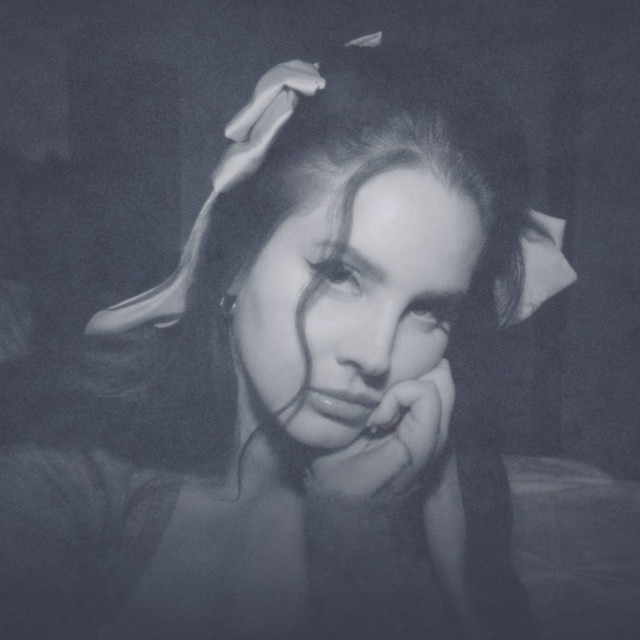
When Lana Del Rey arrived, fully formed and faintly suspicious, with the 2011 viral single “Video Games,” nobody could quite agree on what they were looking at. Here was a singer with a stage name, a vintage aesthetic, and a sound that felt both brand new and a hundred years old. Critics were skeptical, some openly hostile – if you were around, you’ll remember how mean the blogs were and her appearance on Saturday Night Live brought out the knives. More than a decade later, those same gatekeepers compare her to Joni Mitchell and Joan Didion. The story of how that reversal happened is really the story of an artist who ignored the noise and kept building, one record at a time, until the world she’d invented became impossible to deny.
From the start, Del Rey dealt in iconography. Following her breakthrough, her aesthetic combined the obvious touchstones of Old Hollywood glamour and postwar Americana with the artificially grainy sunset quality of early Instagram, layering pouty vocals over hip-hop beats and movie-melodrama strings, the lyrics all stars, stripes, and James Dean. To many critics, it felt contrived, and shoddily so. The name itself was part of the construction; her legal name is Elizabeth Grant, and the gap between Lizzie Grant and “Lana Del Rey” struck early observers as proof of inauthenticity rather than artistry.
But that reading missed what she was doing. Beginning with her 2012 debut Born to Die, Del Rey engulfed herself in visions of vintage Americana, donning those aesthetics to the point of borderline absurdity, until it became almost undeniable that she was satirizing the vapid materialism of American culture and national identity. That debut delivered a complex satire of American neediness far ahead of its time, combining babylike vocals with crushing instrumentals and lyrics rife with literary references from Walt Whitman to Vladimir Nabokov. The persona was the point. She was building a character through which to examine the country that produced her.
What separated Del Rey from a one-note nostalgia act was that she refused to stand still. Her third album, Ultraviolence (2014), leaned into guitar-driven instrumentation and debuted atop the Billboard 200, while Honeymoon (2015) and Lust for Life (2017) moved through different shades of her aesthetic. Each record deepened the world rather than repeating it, and the early accusations of hollowness grew harder to sustain against a body of work this consistent and this literary.
The full reversal came in 2019. Norman Fucking Rockwell!, was a magnificent career swerve, the only project in her catalog to fully transcend her brand of pulsing alt-pop melancholia and embrace sounds more acoustically driven yet no less alluring. Critics declared that she had defied them and graduated from the pop pantheon into the hall of legends, deserving comparison to American mythmakers like Joni Mitchell, Joan Didion, Hemingway, and Dylan. The album’s title told you everything about her method: name your record after the painter most associated with idealized mid-century American life, add an expletive, and you’ve captured the whole project in three words. The reference was almost sarcastically patriotic, poking fun at the fact that she’d been adopted as the Americana pop star, even as her biggest mainstream break came from a song placed in an adaptation of The Great Gatsby, the great American novel of the American Dream.
Her later work turned inward. After releasing two albums and a book of poetry across a 15-month stretch in 2020 and 2021 with Chemtrails Over the Country Club and Blue Banisters, she delivered her sprawling ninth album, Did You Know That There’s a Tunnel Under Ocean Blvd, in 2023. Across eight records and 11 years by that point, Del Rey had built a world and iconography of her own: cherry cola cans, white sundresses, sycamore trees, seedy dive bars, and American flags that fly both defiantly and depressingly. Where earlier work could be reactive, the ninth album was ruminative, with questions of family and legacy, memory and death swirling together, its opening track “The Grants” steeped in sepia-toned memory.
The clearest proof that Del Rey won the argument is the sound of pop music after her. Her 2010s-defining ennui steered Lorde, Billie Eilish, and even Taylor Swift, and you can trace her fingerprints across a generation of artists who learned from her that melancholy, cinematic scope, and a carefully built aesthetic universe could be the substance of pop rather than a costume worn over it. The woman once dismissed as a manufactured product turned out to be one of the most influential architects of her era’s music.
Del Rey’s real achievement was never a single song or even a single album. It was the world itself: a coherent, instantly recognizable America of her own invention, equal parts seduction and critique, that she built in public while half the room insisted it wasn’t real. It was always real. It just took everyone else a while to find the door.