Home Blog Page 10

Why the Oh Yeah Music Centre Is the Beating Heart of Belfast Music

0

There’s a converted whiskey warehouse in Belfast’s Cathedral Quarter that’s done more for the city’s musicians than just about any glossy concert hall ever could. The Oh Yeah Music Centre opened its doors in 2007, and it grew out of a 2005 conversation between Belfast music industry folks and Snow Patrol, with frontman Gary Lightbody throwing his weight behind the idea. The name comes from the Ash song, which is about as Belfast as it gets, and the whole point was beautifully simple. Lightbody once described what the city needed as a nexus to focus musical energy and unite the scene, and that’s exactly what got built.

A whiskey warehouse with a mission

The building runs to 14,500 square feet across three floors, and every inch of it earns its keep. There’s affordable rehearsal space, a venue that welcomes under-18s, a recording studio, a songwriting room, a café, and office units for music start-ups finding their feet. Oh Yeah became a registered charity in 2008, and it operates as a social enterprise with a mission statement worth framing: “Open Doors To Music Potential.”

What makes it special isn’t the square footage though. It’s who’s walked through those doors. Over the years the centre has hosted live events with Elbow, The Undertones, Gary Lightbody, Tim Wheeler of Ash, Duke Special, Lisa Hannigan, Foy Vance and even Jello Biafra. It launched compilation albums of homegrown talent like ‘The Oh Yeah Sessions’, giving bands a leg up when they needed it most.

The unofficial museum of Northern Irish music

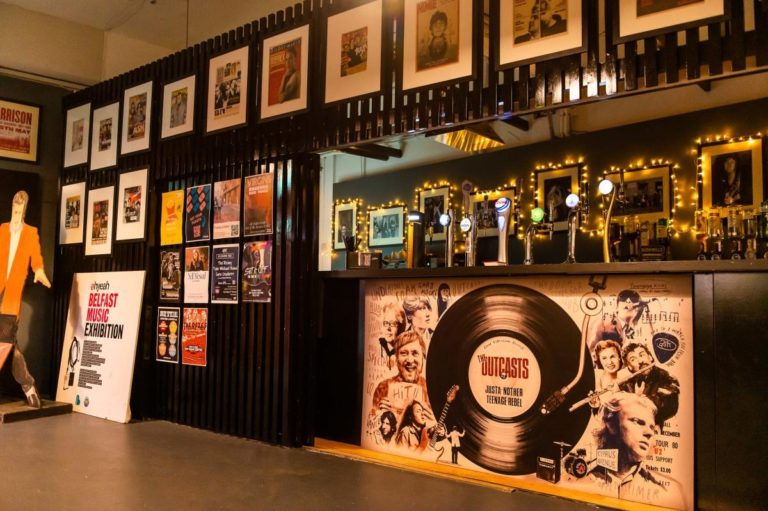
Pop in and you’ll find a permanent music exhibition that’s free to visit and packed with the kind of artefacts that make a music nerd’s heart race. Electric guitars, historic gig posters, ticket stubs, stage clothing donated by famous bands, and pride of place given to Terri Hooley, the Good Vibrations legend who put Belfast punk on the map. The exhibition traces Northern Ireland’s musical story from folk through Van Morrison and The Undertones right up to Snow Patrol and beyond.

Oh Yeah also curates the annual Sound of Belfast festival and the Northern Ireland Music Prize, runs youth and older people’s programmes, and arranges music tours around the city’s most storied spots. It’s a venue, a hub, a safe space and a launchpad all at once, which is why it sits so neatly at the centre of Belfast’s identity as the island of Ireland’s only UNESCO City of Music.

And then there’s 2026

Here’s where things get properly exciting. Belfast will be the host city for Fleadh Cheoil na hÉireann 2026, which will take place from Sunday 2 August to Sunday 9 August 2026. Fleadh Cheoil na hÉireann (the Fleadh) is the world’s biggest celebration of Irish music and culture.

A little history for the uninitiated. Established in 1951, the event takes place in Ireland every August with qualifying performers from all over the world showcasing the very best of traditional music talent in all-Ireland competitions. The organising body is Comhaltas, the international movement dedicated to promoting Irish music, song and dance. And the Belfast hosting is genuinely historic, because this is only the second time the Fleadh has been held in Northern Ireland, having taken place in Derry~Londonderry in 2013 as part of the UK City of Culture celebrations.

The scale is staggering. The Fleadh is a major, high profile cultural event, expected to attract around 800,000 visitors, with peak daily attendance of up to 120,000 people. Across the eight days you’ll get concerts, street performances, céilí bands, marching bands, pageants, drama, exhibitions and the prestigious All-Ireland competitions, all spilling out across a city that already lives and breathes music. From lively pub sessions to headline concerts, pop-up street performances to prestigious All-Ireland competitions, the Belfast Fleadh is where tradition meets imagination.

Why it all connects

A city doesn’t earn the right to host the world’s biggest Irish music festival by accident. It earns it through decades of nurturing players, protecting venues, and treating music as something that belongs to everyone. The Oh Yeah Music Centre is a huge part of that story, the place where the next generation of Belfast musicians learns their craft and where the city’s musical past is kept alive and celebrated. So when the Fleadh rolls into town in August 2026, it’ll be landing in a city that’s been getting ready for this its whole life.

A practical note for anyone planning to come over: book your accommodation early, because 800,000 visitors will fill the place fast. And do leave room in your schedule to wander into the Cathedral Quarter and step inside Oh Yeah while you’re here. It’s free, it’s friendly, and it’ll tell you everything you need to know about why Belfast deserves this moment.

Fleadh Cheoil na hÉireann takes place in Belfast, August 2–9, 2026. For more information visit fleadhcheoil.ie, visitbelfast.com, and discovernorthernireland.com.

5 Surprising Facts About Brian Eno And David Byrne’s ‘My Life In The Bush Of Ghosts’

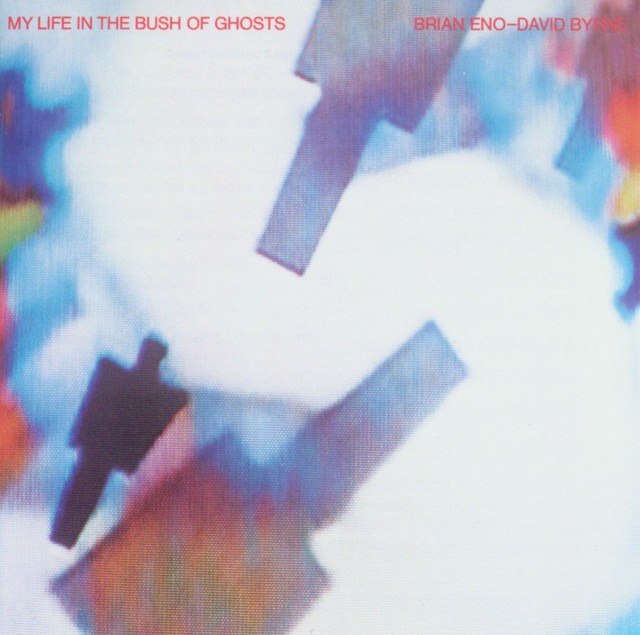
Few albums have rippled out as far as this one. Released February 25, 1981, ‘My Life in the Bush of Ghosts’ was the first collaboration between Brian Eno and David Byrne, and Byrne’s first record away from Talking Heads. Built from sampled vocals, found sounds, and African and Middle Eastern rhythms, it became a foundational text for sample-based music. Here are five things you might not know about it.

Neither Eno Nor Byrne Had Read The Book That Gave It Its Name

The album title comes from Nigerian writer Amos Tutuola’s 1954 novel ‘My Life in the Bush of Ghosts’. By Byrne’s own admission in the 2006 liner notes, neither he nor Eno had actually read the book. They simply felt the title seemed to encapsulate what the record was about.

It Was Recorded Before ‘Remain In Light’ But Held Up By Sample Clearances

The album was made mostly during a break between Talking Heads’ ‘Fear of Music’ and ‘Remain in Light’, both produced by Eno. Despite being recorded first, its release was delayed by several months while legal rights were sought for the large number of samples used across the record.

One Track Was Pulled After A Religious Objection

Soon after release, the Islamic Council of Great Britain objected to the use of Qur’anic recital samples on the track “Qu’ran,” considering it blasphemy. Byrne and Eno removed the track from later pressings, replacing it with “Very, Very Hungry.” Byrne later said they were “feeling very cautious about this whole thing.”

A Lebanese Singer Didn’t Know She Was On It Until 2017

Two tracks, “Regiment” and “The Carrier,” sample the voice of Lebanese singer Dunya Younes. Although the duo had cleared and paid for the samples, Younes was unaware her voice was on the album until 2017. The songs were briefly pulled before the matter was settled amicably, and Younes ultimately expressed flattery at the inclusion.

Its Influence Reached Hip-Hop’s Most Important Producers

The album’s sample-driven approach left a deep mark. Hank Shocklee of the Bomb Squad cited it as an influence on his production work for Public Enemy, while Kate Bush said it left “a very big mark on popular music” and Pink Floyd’s Richard Wright recalled it knocking him sideways.

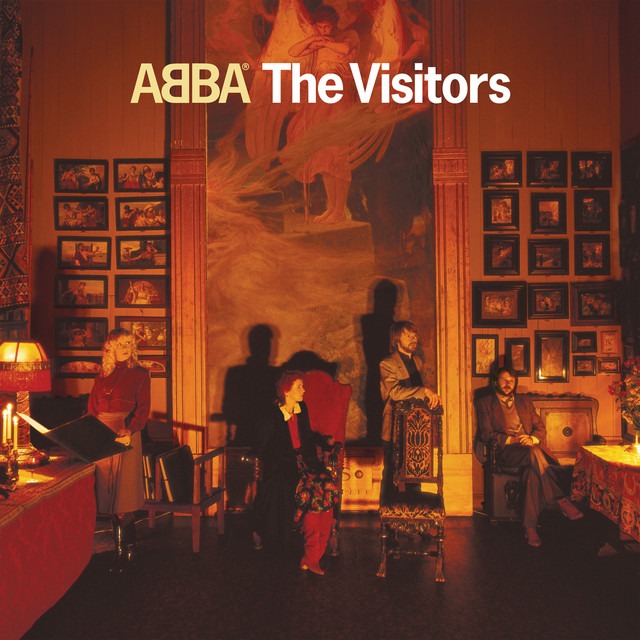
5 Surprising Facts About ABBA’s ‘The Visitors’

ABBA’s eighth album was the sound of a group coming apart. Released November 30, 1981 on Polar, ‘The Visitors’ traded the gloss of their earlier hits for something more complex and mature, full of Cold War unease, isolation, and the pain of two collapsing marriages. It topped charts around the world and stood as ABBA’s final studio album for four decades, until ‘Voyage’ arrived in 2021. Here are five things you might not know about it.

It Was One Of The First Albums Ever Recorded And Mixed Digitally

‘The Visitors’ was among the earliest albums made using digital recording and mixing. It was also one of the first ever manufactured commercially on compact disc, released after Billy Joel’s ’52nd Street’, which was the first available in the format. The record sat right at the dawn of the CD era.

The New Digital Gear Caused The Band Real Headaches

Sound engineer Michael Tretow had to adjust to a brand-new 32-track digital recorder bought for Polar Studios. He found that digital cut out the hiss but also made the sound “too clean,” so he had to compensate. Since the first three tracks were recorded on analogue tape, he had to keep transferring later tracks between digital and analogue to match the quality.

Two Songs Captured The Band’s Real-Life Divorces

By the time recording began, both ABBA couples had split, with Benny and Frida announcing their divorce in February 1981. “When All Is Said and Done” detailed that breakup, and Björn sought approval from Benny and Frida before working on it. As Frida later recalled, “All my sadness was captured in that song.”

The Cover Showed The Members Apart For The First Time

Designer Rune Söderqvist built an “angel” concept around the closing track, locating painter Julius Kronberg’s old studio at Skansen park in Stockholm, full of angel paintings, for the shoot. On the finished cover, the members stand apart in the shadows, depicted as separate individuals rather than a close-knit group, capturing the band’s general fatigue.

One Track Was Cut Down To The Wire Before Release

“One of Us,” the album’s biggest hit, was one of the last songs recorded, with the working titles “Number 1” and “Mio Amore.” The decision to release it as the lead single came so late that it wasn’t available in Swedish shops until after the album itself had already come out. It became ABBA’s final No. 1 single.

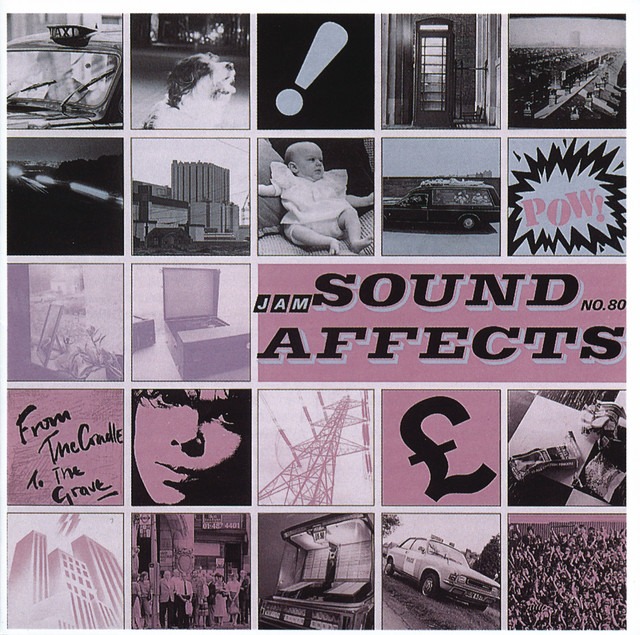
5 Surprising Facts For The Jam’s ‘Sound Affects’

The Jam’s fifth album found Paul Weller at his most adventurous. Released November 28, 1980 on Polydor, ‘Sound Affects’ blended post-punk edge with pop psychedelia, spun off two of the band’s most beloved songs, and climbed to No. 2 on the UK Albums Chart. Weller himself has called it the Jam’s best album. Here are five things you might not know about it.

Weller Described It As A Cross Between Michael Jackson And The Beatles

The album drew on post-punk groups like Wire, Gang of Four, and Joy Division, but two other records loomed large. Weller has admitted the Beatles’ ‘Revolver’ was a major influence, and Michael Jackson’s ‘Off the Wall’ shaped Rick Buckler’s drumming. At the time, Weller said he considered the album a cross between those two.

“Start!” Lifts Its Bassline Straight From The Beatles’ “Taxman”

The lead single is built around an almost exact copy of the bassline from “Taxman,” the opening track on ‘Revolver’, and nods to its guitar solo too. Bruce Foxton admitted it wasn’t intentional, saying “Taxman” subconsciously went in. He joked that it wasn’t exactly the same, “otherwise I’m sure Paul McCartney would have thought about suing us!”

The Back Cover Quotes A Famous Protest Poem

The album’s artwork is a pastiche of the BBC’s 1970s Sound Effects records, complete with a taxi, a phone box, and Dungeness B power station. Less noticed is the back cover, which features an excerpt from Percy Bysshe Shelley’s poem ‘The Masque of Anarchy’. It’s a fitting touch for a record steeped in working-class imagery.

Weller Overruled His Label On The First Single

Polydor pushed for “Pretty Green” as the lead single, but Weller insisted on “Start!” To settle it, A&R man Dennis Munday polled a small group of the band’s friends who’d been around the sessions, and they chose “Start!” The decision was vindicated when it entered at No. 3 and hit No. 1 in its third week, knocking David Bowie off the top.

Weller Wrote “That’s Entertainment” In Ten Minutes

The album’s enduring classic came together almost instantly. “I wrote it in 10 mins flat, whilst under the influence,” Weller said, explaining that the song’s slice-of-life images were all around him in London. It never got a domestic UK single release during the band’s lifetime, yet charted as an import at No. 21 and became one of the country’s biggest-selling import singles ever.

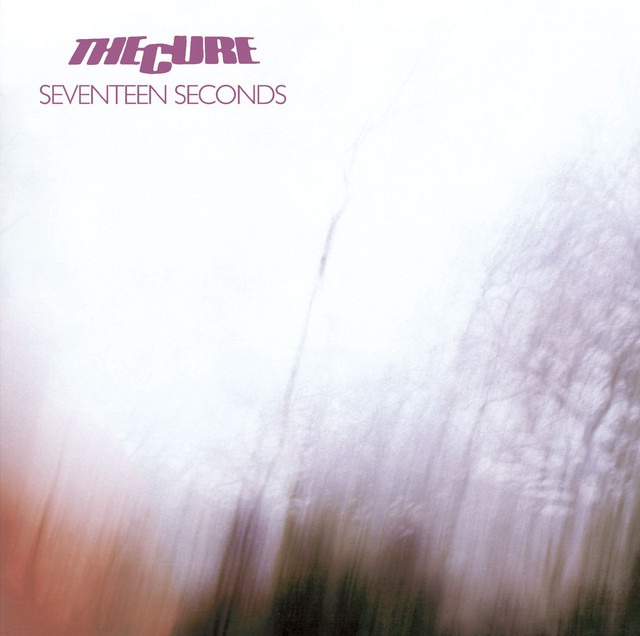
5 Surprising Facts For The Cure’s ‘Seventeen Seconds’

The Cure’s second album turned them from a scrappy post-punk trio into architects of a whole new mood. Released April 18, 1980 on Fiction Records, ‘Seventeen Seconds’ traded the jittery energy of their debut for spare, echoing atmosphere, and it gave them their first UK top 40 single in “A Forest.” Decades on, it’s considered an early blueprint for gothic rock. Here are five things you might not know about it.

The Whole Album Was Recorded In Seven Days

Money was short, so the band recorded and mixed ‘Seventeen Seconds’ between January 13 and 20, 1980, on a budget of between £2,000 and £3,000. That tight window meant working 16 or 17-hour days. The pressure shaped the record’s stripped, economical feel.

One Track Was Cut Short Because The Tape Ran Out

“The Final Sound” was planned to be much longer, but the tape ran out while the band was recording it. With no money to do it again, they were stuck with what they had. The result is a fragment that runs just 53 seconds.

Playing With Siouxsie And The Banshees Changed Robert Smith’s Direction

Smith spent two months playing guitar with the Banshees, learning their songs, and it opened up a new horizon for him. He came away wanting a band built around a bassline and a drum part with the vocals floating on top, the way Steven Severin and Budgie backed Siouxsie. He said he wanted the Cure to be “the Banshees part 2.”

A Clash Over Basslines Reshaped The Lineup

Original bassist Michael Dempsey hated the demos and wanted the band to be “XTC part 2,” so he left. Simon Gallup replaced him, which relieved Smith, who felt Dempsey’s basslines were too ornate. Keyboardist Matthieu Hartley joined too, though he’d later clash with Smith, since Hartley liked complex chords while Smith wanted single notes.

The Deluxe Reissue Featured Robert Smith’s Postman

The 2005 Deluxe Edition bonus disc included material by Cult Hero, a 1970s-style progressive rock project along the lines of Easy Cure. Its lead singer was Frank Bell, who happened to be Robert Smith’s postman. It’s an unexpected footnote to one of the band’s most influential records.

Open-Ear Earbuds Baseus Bowie MC2 Deliver Cloud Comfort And Grammy-Approved Sound For Under $60

0

Clip them on and forget they’re there. The Baseus Bowie MC2 are open-ear wireless earbuds built to sit just outside your ear canal, and at around $59.99 USD (roughly $80 CAD) they punch well above their price. They weigh a feathery 5.1 grams each, with a memory titanium C-bridge and soft silicone air cushions that deliver what Baseus calls “cloud” comfort. The whole design philosophy here runs counter to the seal-everything-off approach that dominates the earbud market, and that’s exactly what makes them worth a closer look.

The fit is the headline act. CloudComfort 2.0 technology pairs wrap-around air cushions with ultra-soft silicone and detachable, multi-size cushions in M, L and XL, so the buds rest against your ears without squeezing or straining them across a full day. The flattened, extended C-ring takes its cue from a dolphin’s fin, hugging the ear ergonomically, while memory titanium alloy keeps it flexible enough to bend and bounce back. A four-point support system locks them in place whether you’re walking, running or stretching through a workout, and the gently curved behind-the-ear contour follows the natural shape of your ear for balanced support that holds up hour after hour.

The sound holds up its end, and then some. Custom 11mm dynamic drivers carry Hi-Res certification and LDAC codec support, boosted by SuperBass 3.0 and BIAS Spatial Audio for a wider stage and deeper low frequencies, all without sealing your ears off from the world. Open-ear buds usually trade away bass to keep your ears uncovered, so the low-end weight here is a real achievement. Enlarged anti-blocking vents relieve reflection waves to cut down on sound leakage and keep the audio focused on you rather than the people next to you, a detail that matters in an open office or a quiet train car.

That open-ear approach pays off everywhere you go. At home, the weightless feel stays with you from your morning routine straight through the day. On the street, you stay aware of traffic and tuned in to your surroundings while your music plays alongside it. The awareness factor turns these into a genuine safety feature for cyclists and runners who can’t afford to lose track of the world around them.

Toughness comes standard. The MC2 carry a heavy-duty IP67 waterproof and dustproof rating, ready for rain, sweat and dust, so they shrug off the kind of punishment that retires lesser buds early. Made for active, everyday use, they handle splashes and downpours without flinching, which means you won’t think twice about wearing them through a thunderstorm or a brutal gym session.

Battery life impresses too. You get roughly 11.5 hours on a single charge and up to 55 hours total with the charging case, numbers that put plenty of pricier competitors to shame. A quick 10-minute top-up returns about 3 hours of playback, so even a forgotten charge won’t leave you stranded before a commute. Connectivity runs on Bluetooth 6.0 with multipoint pairing, letting you link a phone and laptop at the same time and bounce between them without fumbling through menus.

Calls get the modern treatment as well. A 4-mic AI array uses enhanced beamforming to focus on your voice and cut background and wind noise, so your outdoor calls come through clear even on a blustery street corner. Baseus also leans into the smart-assistant era here, folding in AI translation across more than 135 languages along with AI chat and note-taking features for work and travel, the kind of extras you rarely see at this price.

For under $60, the Baseus Bowie MC2 land as one of the most comfortable, well-rounded open-ear options going. They’re a featherweight set that sounds rich, survives the elements, runs for days on a single case charge, and stays put through anything you throw at them. Open-ear listening has spent years feeling like a compromise, and this is the pair that finally makes it feel like an upgrade.

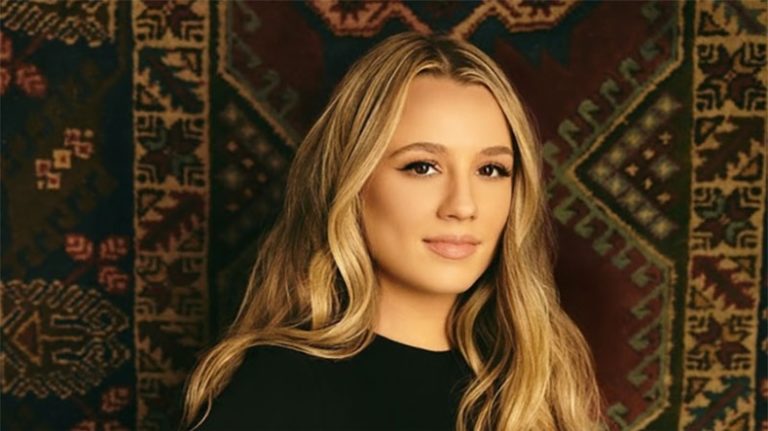
Country Powerhouse Gabby Barrett Finds Strength in Closure on “The Easy Part” Video

0

A breakup anthem becomes a rain-soaked story of resilience. Multi-platinum powerhouse Gabby Barrett has turned her striking single “The Easy Part” into a compelling visual, releasing the official music video via Warner Music Nashville. It’s out now. Directed by Quentin Cook and filmed in Nashville, the clip mirrors the song’s emotional tension, blending flashbacks of a once-joyful couple with the present-day journey of a woman finding strength in closure, a literal rainstorm drenching Barrett as she delivers her performance.

The song digs into the aftermath of heartbreak rather than the dramatic moment itself. “‘The Easy Part’ plays with the idea that sometimes the dramatic moment in a relationship feels like the hardest part, but often it’s what comes after that really stays with you,” Barrett shares. “The song reflects on those memories, the good and the complicated, and realizing what they meant over time. In the video, you see those moments play out as she looks back on the relationship and ultimately chooses peace and keeps moving forward.”

The track has been steadily building momentum. Co-written by Barrett alongside Michael Hardy, Zach Abend, and Jon Nite, and produced by Zach Kale, Zach Abend, and Ross Copperman, it continues gaining traction since its release, with SiriusXM showing strong support across its country channels.

The video reminds fans of the grace and powerhouse vocals that have defined Barrett’s rise, echoing the emotional intensity that first captivated audiences with breakout hits like the eight-times platinum smash “I Hope.” With more music on the horizon following her acclaimed ‘Chapter & Verse’ album, Barrett keeps carving out her own lane as a formidable voice in country music.

UK Indie Veteran Andrew Deevey Takes Aim at Austerity on “Money Can’t Buy Me Love”

0

Belt-tightening Britain gets a hook-drenched anthem all its own. UK indie veteran Andrew Deevey has released “Money Can’t Buy Me Love,” a lean, urgent track that cuts straight to the nerve of the credit-crunch era. It marries melodic immediacy to sharp-eyed social commentary, laying bare a world where paychecks vanish in a blink, all wrapped in a chorus that refuses to let go. It’s out now.

The message is rooted in everyday reality. “‘Money Can’t Buy Me Love’ reflects on austerity-era realities, the squeeze of the credit crunch, rising costs, having no money and the sense that even when you do earn money, it quickly disappears,” says Deevey. “It feels like someone is always making money out of you, taxes, parking, fines, bills, it never stops. But the things that really matter can’t be bought.”

Released via Waterline Records, the track is built around driving vocals, ringing guitar, harmonica, and drum machine, delivering melodic indie-pop with soulful undertones. It was recorded at One Cat Studios, Antenna Studios in South London, and mixed, produced, and mastered by Jon Clayton, known for his work with The Monochrome Set, Band of Holy Joy, Vic Godard and The Subway Sect, and Carter USM frontman’s project Jim Bob.

Deevey brings a storied history to his solo era. Originally from Liverpool, he cut his teeth in the city’s rich music scene, earning London shows, music-press coverage, and an NME Single of the Week before relocating to London, where he narrowly missed joining The La’s, arriving just minutes too late to secure the role.

He soon joined The Caretaker Race, touring the UK and Europe extensively, including dates with The Darling Buds and The House of Love. During the ‘Hangover Square’ sessions, producer Stephen Street famously called Deevey “the next Johnny Marr,” while Melody Maker praised his playing as “a guitar incendiary of startling hugeness.” He later played guitar for The Bitter Springs, toured as the backup band for Vic Godard and The Subway Sect, and recorded a session for The Marc Riley Show.

Deevey recorded his debut album ‘Northern Soul’ within a year of going solo, with lead track “I Got The Feeling” earning international airplay and Album of the Week accolades across numerous UK stations. Shaped by the melodic guitar traditions of The Beatles and the direct acoustic energy of Jake Bugg and Gerry Cinnamon, he now performs in a stripped-down format. “I now play live with guitar, harmonica and drum machine, no waiting around,” he shares. “At one festival, someone told me, ‘You just blow them away.’ That’s the reaction I’m after.”

Manchester Post-Punk Icons Inca Babies Slink Through Noir Shadows on “Daniella”

0

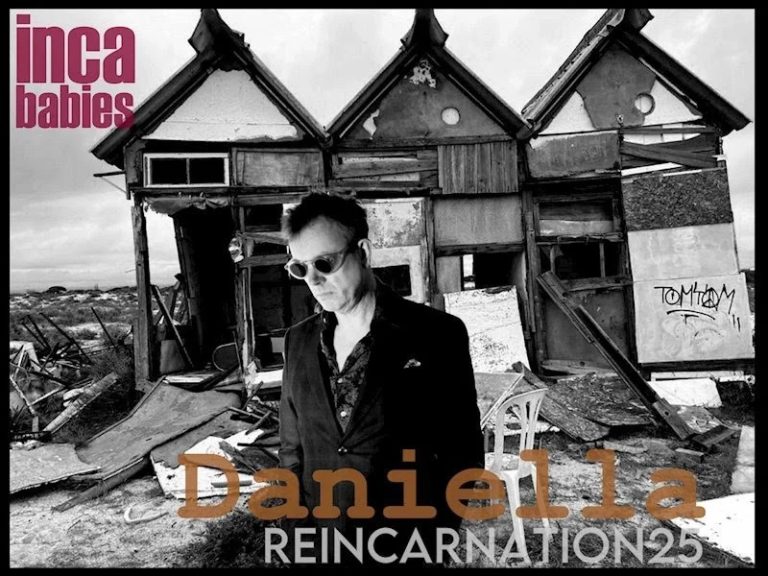
Smoky swamp-jazz grooves and shadowed city streets set the scene for the latest from Inca Babies. The Manchester post-punk icons have shared their new single “Daniella,” a sultry noir cut drifting through a haunting tapestry of desire and danger. It’s out now, pulling listeners into a tense, cinematic world where love and chaos collide.

The track comes from their ‘Reincarnation’ album, out now via Black Lagoon Records. “Daniella” is the third song on the record, re-recorded at 6Db Studios in Salford with renowned producer Simon ‘Ding’ Archer (The Fall, PJ Harvey), who worked to infuse it with a distinctive dub style. “The original version was first recorded in 1986 at Cargo Studios for the album ‘This Train,'” says guitarist-vocalist Harry Stafford.

‘Reincarnation’ is built on exactly that idea of reinvention. “Looking through our back catalogue, it occurred to me that there were tracks that should again be made available in some manner and others that would benefit from reinvention,” Stafford explains. “This whole project was to be an innovative re-imagining of old tunes, re-invented for contemporary consideration. All of them re-awakened and ‘Re-inca-rnated.'”

As foundational pioneers of the early post-punk and deathrock movements, Inca Babies remain a cornerstone of the Manchester and UK scenes. Led by Stafford alongside long-time collaborator Rob Haynes (The Membranes, Goldblade), the band helped define a dark, jagged sonic landscape that’s still influential decades on. During their initial five-year ascent, they amassed a devoted following through relentless touring, six singles, and four albums, every one of which breached the UK Indie Charts, plus a prestigious run of four BBC John Peel sessions between 1984 and 1988.

The album gathers reworked gems alongside other recent offerings. Earlier the band shared “Superior Spectre,” a live favourite from their 1984 John Peel Session, plus “Candy Mountain” with its hypnotic bass line and contemporary groove, and “Two Rails To Nowhere,” whose original 1988 version featured Inspiral Carpets’ Clint Boon and whose new expanded, Gun Club-esque version features guitarist Vincent O’Brien.

Their formation in 1983 in Manchester’s now-legendary deck-access flats of Hulme was chronicled in the 2024 documentary ‘The Making of Ghost Mechanic Nine.’ Since reforming in 2007, they’ve released four albums and toured three continents, continuing to explore goth, punk, death-rock, and jazz-blues, far from a legacy act and still commanding respect as elder statesmen of the British underground. ‘Reincarnation’ is available now on CD and everywhere digitally.

‘Reincarnation’ Track List:

01 Candy Mountain (from ‘This Train’ album, 1986)

02 Buster’s on Fire (7″ Single on Constrictor Records, 1987)

03 Daniella (from ‘This Train’ album, 1986)

04 Two Rails to Nowhere (from ‘Evil Hour’ album, 1988)

05 Jericho (from ‘Big Jugular’ 12″ EP, 1984)

06 Devil in my Room (from ‘Opium Den’ album, 1986)

07 Phantom Track (from ‘Death Message Blues’ album, 2010)

08 The Diseased Stranger’s Waltz (from ‘Rumble’ album, 1985)

09 Damnation (from ‘The Stereo Plan’ album, 2014)

10 Thirst (from ‘Opium Den’ album, 1986)

11 Superior Spectre (Extra B side of ‘Scatter’ 12″ 2014 For Record Store Day)

12 Cowboy Song (B side from ‘The Judge’ 12″ single, 1984)