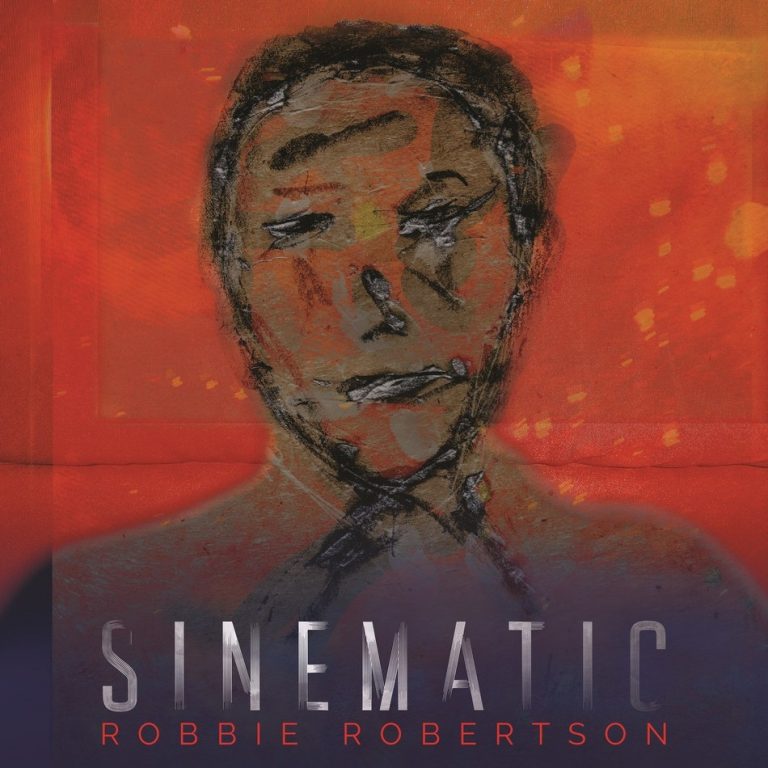
Inspired by his decades of creating and composing music for film and filled with an enthralling set of songs exploring the darker corridors of human nature, Robbie Robertson‘s aptly titled, evocative new solo album Sinematic is set for release on September 20 via UMe. The album is available now for preorder on CD, digital and 180-gram 2LP, with a Deluxe Edition, limited to 1000 copies, to follow on October 25. The Deluxe Edition presents the album on CD and 180-gram 2LP vinyl with a 36-page hardcover book featuring custom artwork Robertson has created for each track. The 13-song self-produced collection is Robertson’s first new studio album since 2011’s introspective How To Become Clairvoyant.
For his new album, Robertson drew inspiration from his recent film score writing and recording for director Martin Scorsese’s eagerly anticipated organized crime epic “The Irishman,” as well as the forthcoming feature documentary film, “Once Were Brothers: Robbie Robertson and The Band,” based on his 2016 New York Times bestselling memoir “Testimony.” The documentary will celebrate its world premiere on Thursday, September 5 as the Opening Night Gala Presentation for the 44th Toronto International Film Festival.
Today, Robertson provides the first glimpse of Sinematic with the release of the album’s opening track, “I Hear You Paint Houses,” available now for streaming and as an instant grat download with digital album preorder. Drawn from Scorsese’s film and the book it’s based on, Charles Brandt’s “I Heard You Paint Houses” about confessed hit man Frank “The Irishman” Sheeran, the song is a riveting duet with Van Morrison that features bright guitar and a blithe tone that belies its chilling lyrics. Mob code for hiring a hit man, painting houses refers to spattering walls with blood. Opening with Robertson’s devilish invitation, “Shall we take a little spin/To the dark side of town?,” the opening track sets the album’s stage for more gripping tales of villainy and vice and powerful stories about destruction and despair.
“I was working on music for ‘The Irishman’ and working on the documentary, and these things were bleeding into each other,” says Robertson of the impetus for Sinematic. “I could see a path. Ideas for songs about haunting and violent and beautiful things were swirling together like a movie. You follow that sound and it all starts to take shape right in front of your ears. At some point, I started referring to it as ‘Peckinpah Rock’,” a nod, Robertson says, to Sam Peckinpah, the late director of such violent Westerns as “The Wild Bunch.”
Narrated in Robertson’s cool parched croon, the yarns unspool over his vibrant guitar stylings and a bedrock of moody, midtempo rock, anchored on most tracks by bassist Pino Palladino (John Mayer Trio, The Who), drummer Chris Dave(D’Angelo, Adele), and keyboardist Martin Pradler, who also mixed the record. The band is rounded out with Afie Jurvanen, who provides guitar and backing vocals, along with vocalist Felicity Williams, a regular collaborator with Jurvanen in his band Bahamas. Robertson is joined on the album by special guest vocalists Van Morrison, Glen Hansard,Citizen Cope, J.S. Ondara, and Laura Satterfield; musicians Jim Keltner, Derek Trucks, Frédéric Yonnet, and Doyle Bramhall II; and producer Howie B who provides throbbing electronic textures to several tracks.
On “Dead End Kid,” one of Sinematic’s many standouts, Robertson turns the lens inward as he recalls some of the obstacles and low expectations he faced as a youth as a member of a First Nation and Jewish gangster family. Wielding his guitar like a dangerous weapon, he demonstrates the breathtaking playing skills that caused a frenzy on Bob Dylan’s notorious 1966 electric tour and that helped to birth the Americana genre. Robertson’s defiant lyrics recall his teenage dream to play his music around the globe: “I want to show the world/Something they ain’t never seen/I want to take you somewhere/You ain’t never been.” Robertson’s raspy vocal is perfectly complemented by Glen Hansard’s soulful, soaring voice. The acclaimed Irish vocalist of The Frames, The Swell Season, and star of the film “Once,” Hansard resurfaces on Sinematic‘s spirited rocker “Let Love Reign,” inspired by John Lennon’s call for peace.
Throughout the album, Robertson takes listeners through a colorful tour of society’s seedy underbelly. “Shanghai Blues” is a vivid saga examining China’s notorious Green Gang mobster Du Yuesheng, who dominated opium, gambling and prostitution operations in the early 20th century. More crime and mystery unfold in the moody “Street Serenade,” which Robertson calls a “sinphony.” The edgy, electronic “The Shadow” is a nostalgic homage to Orson Welles’entrancing radio crime drama.
Robertson’s guitar playing takes center stage on two instrumental tracks, “Wandering Souls” and the album’s string-laden closer, “Remembrance,” written for his late friend, Microsoft co-founder and music lover Paul Allen. Robertson enlisted Allen’s guitar heroes Derek Trucks and Doyle Bramhall II, plus drummer Jim Keltner, for the grand and melancholy elegy.
While many of the songs on Sinematic focus on sinful themes far removed from Robertson, he draws from his own extraordinary life story for the track “Once Were Brothers,” a bittersweet reflection on The Band, written for the new documentary of the same name. Robertson is joined on the track by Nairobi native J.S. Ondara and American singer/songwriter Citizen Cope. Mournful strains of a harmonica and organ play as Robertson relates The Band’s farewell, singing “Once were brothers/Brothers no more.” Of the song, Robertson says, “There is war and conflict involved. Writing it hurt inside sometimes, but those experiences can be rewarding in the emotional outcome. It hurt but I loved it.”
Inspired by Robertson’s acclaimed 2016 autobiography, “Testimony,” director Daniel Roher‘s “Once Were Brothers” documentary explores Robertson’s young life and the creation of The Band, one of the most influential groups in the history of popular music. The compelling film blends rare archival footage, photography, iconic songs, and interviews with many of Robertson’s friends and collaborators, including Martin Scorsese, Bruce Springsteen, Eric Clapton, Van Morrison, Peter Gabriel, Taj Mahal, Dominique Robertson, and Ronnie Hawkins. Made in conjunction with Imagine Documentaries, White Pine Pictures, Bell Media Studios, and Universal Music Canada’s Shed Creative, the project is executive produced by Martin Scorsese; Imagine Entertainment chairmen Brian Grazer and Ron Howard; Justin Wilkesand Sara Bernstein for Imagine Documentaries; White Pines Pictures’ president Peter Raymont, and COO Steve Ord; Bell Media president, Randy Lennox; Jared Levine; Michael Levine; Universal Music Canada president and CEO Jeffrey Remedios; and Shed Creative’s managing director Dave Harris. The film is produced by Andrew Munger, Stephen Paniccia, Sam Sutherland, and Lana Belle Mauro.
Enhancing Sinematic‘s film noir thrust is a suite of multimedia images that Robertson created, including artwork for the cover and each individual song. Listeners are brought even further into his Sinematic world with a series of striking portraits and abstract images, ranging from expressionist paintings to experimental photography. In one depiction, a photo of Robertson’s Walther 9mm pistol, “the same gun James Bond used,” is drenched in crimson and gold, juxtaposed next to a menacing figure. In another, paint seeps into a textured canvas as if it’s been burned in. The art is included in the Standard Edition’s CD and LP booklet and presented even more elegantly in the Deluxe Edition’s lavish 12″x12″ casebound hardcover book.
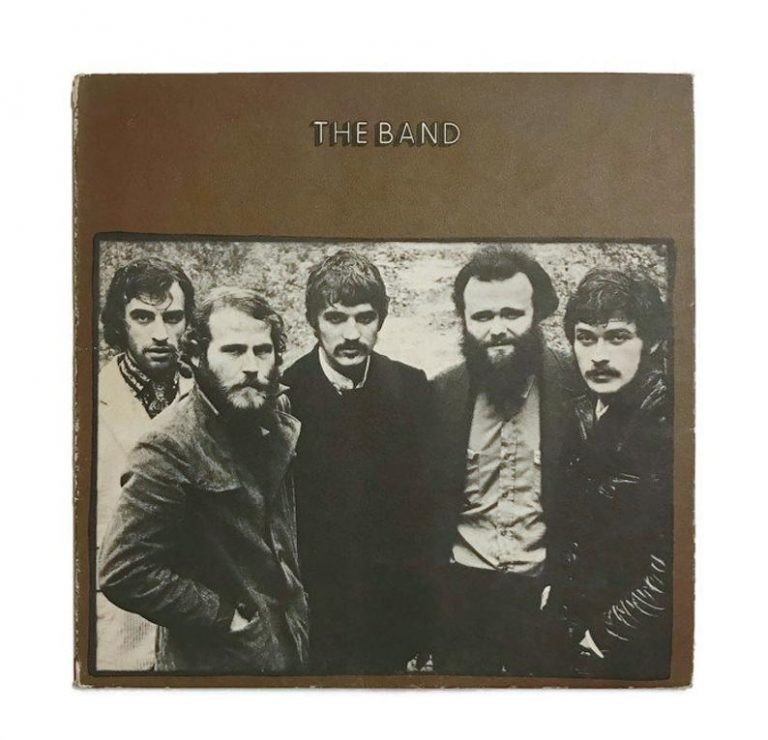
As Robertson prepares to release his sixth solo album, The Band’s iconic self-titled sophomore LP will turn 50 just a few days later (plans to celebrate the anniversary will be announced soon). For six decades, the legendary songwriter, musician and guitarist has created timeless, influential music that has transported and transfixed generations, just as he dreamed about as a kid growing up in Toronto. With Sinematic, Robbie Robertson has once again created a captivating album that builds on his celebrated solo works while pushing forward in new sonic directions.
SINEMATIC CD/DIGITAL TRACK LIST
- I Hear You Paint Houses
- Once Were Brothers
- Dead End Kid
- Hardwired
- Walk In Beauty Way
- Let Love Reign
- Shanghai Blues
- Wandering Souls
- Street Serenade
- The Shadow
- Beautiful Madness
- Praying For Rain
- Remembrance
SINEMATIC 2LP VINYL TRACK LIST
SIDE A
- I Hear You Paint Houses
- Once We Were Brothers
- Dead End Kid
SIDE B
- Hardwired
- Walk In Beauty Way
- Let Love Reign
SIDE C
- Shanghai Blues
- Wandering Souls
- Street Serenade
- The Shadow
SIDE D
- Beautiful Madness
- Praying For Rain
- Remembrance
 Born Riley B. King in Atta Bean, Mississippi, on September 16th, 1925, King began playing gospel music on street corners as a teen. In 1947, he hitchhiked to Memphis, TN, to pursue his music career and studied the blues with his cousin Bukka White, one of the most celebrated blues performers of his time. He landed his first big break on Sonny Boy Williamson’s local radio show which led to other prolific gigs in Memphis, where he was inspired by other blues greats including Louis Jordan and T-Bone Walker. While developing a following in the Beale Street blues scene in the late 1940s/early 1950s, King began crafting his signature electric blues sound. After changing his name to Beale Street Blues Boy and later abbreviating it to B.B. King, the blues legend with his electric guitar was born. In 1949, the famous legend of his “Lucille” guitar was born when, during one of King’s shows, a fire broke out during a brawl and King went back into the burning building to save the guitar, narrowly escaping his own death. When he discovered that the brawl was over a woman named Lucille, he named his guitar —and each one of his trademark Gibson guitars in the decades to come —after her to remind himself to never fight over a woman or run into a burning building.
 In the 1950s, King was considered one of the most important R&B artists with his first Number One Billboard R&B hit, 1952’s “3 O’Clock Blues,” and the string of hits that followed including, “You Know I Love You,” “Woke Up This Morning,” “Please Love Me,” “You Don’t Know Me,” “When My Heart Beats like a Hammer,” “Whole Lotta Love,” “You Upset Me Baby,” “Every Day I Have the Blues,” “Sneakin’ Around,” “Ten Long Years,” “Bad Luck,” “Sweet Little Angel,” “On My Word of Honor,” and “Please Accept My Love” —all of which made him one of the top touring artists —as he clocked in a record-breaking 342 concerts in 1956. In the 1960s, his distinct guitar style of complex, vocal-like string bends and unmistakable vibrato developed a massive following and deep appreciation by the decade’s greatest English rock legends including Eric Clapton, George Harrison and the Rolling Stones. He gained greater visibility of his artistry and sound among rock audiences at grand concert halls and festivals including, the 1968 Newport Folk Festival and Bill Graham’s Fillmore West, where he headlined with the greatest contemporary rock artists of the time, who idolized King. The 60s also brought him greater fame with the release of Live at the Regal in 1964, the hits “Sweet Sixteen, Part I,” “Don’t Answer The Door, Part I,” “Lucille” and his heralded opening act stint on the Rolling Stones’ 1969 American Tour. In 1970, he won a Grammy Award for his most popular crossover hit “The Thrill Is Gone,” which went to No. 15 on the Pop charts.
 King’s many honors included inductions into the Blues Foundation Hall of Fame in 1984 and into the Rock and Roll Hall of Fame in 1987; the NARAS’ Lifetime Achievement Grammy Award in 1987; honorary doctorates from Tougaloo (MS) College in 1973, Yale University in 1977, Berklee College of Music in 1982, Rhodes College of Memphis in 1990, Mississippi Valley State University in 2002 and Brown University in 2007. In 1990, he received the National Medal of Arts and the National Award of Distinction from the University of Mississippi in 1992. In 2008, the B.B. King Museum and Delta Interpretive Center opened in Indianola, Mississippi. He died on May 14, 2015 at the age of 89 and is buried at the museum that bears his name.
 The most coveted item of the auction will be King’s stage played black Gibson ES-345 prototype 1 for 80 limited edition Lucille guitar that was gifted by Gibson to B.B. King on his 80th birthday. This “Lucille” was heavily used by King and served as his primary guitar on tour in his later years. The head stock has “B.B. King 80” and a crown inlaid with mother-of-pearl, “Gibson” on a gold plate, and the pickguard reads “[crown] B.B. King” in gold. The pickups read “B.B.” in gold and the back of the headstock reads “Prototype 1.”The guitar is accompanied by a hard leather case with “B.B. King” embroidered in gold and is estimated at $80,000-$100,000. (photo above right: King’s inscribed guitar red leather case)