

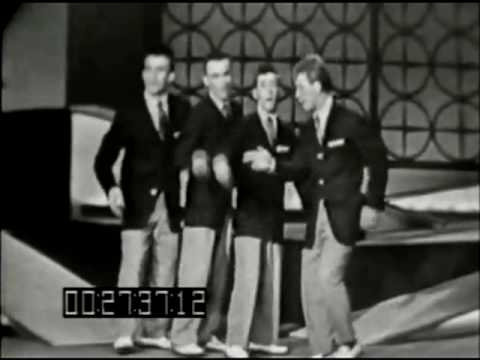
“I Wonder Why” is a doo-wop song, written by Melvin Anderson and Ricardo Weeks (lyrics), and first recorded by Dion and the Belmonts (released as Laurie Records’ first single, number 3013), becoming the group’s first national pop chart hit, in 1958.
Morrissey makes a surprise appearance to read Marcel Proust for Howard Devoto of Magazine and Television
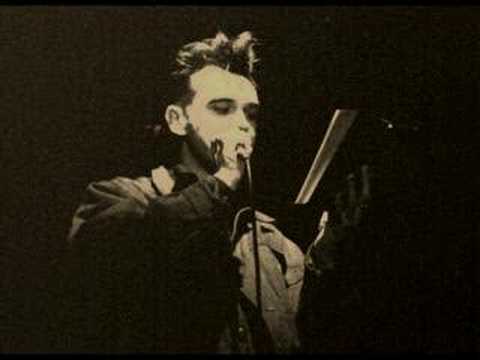
On March 13 1988, Morrissey made a guest appearance with Howard Devoto’s new band, Luxuria, at the Town & Country Club in Kentish Town, reading Marcel Proust.
“Those few steps from the landing to Albertine’s door,
those few steps which no one now could prevent my taking,
I took with delight, with prudence, as though plunged into a new and strange element,
as if in going forward I had been gently displacing the liquid stream of happiness,
and at the same time with a strange feeling of absolute power (power!),
and of entering at length into an inheritance which had belonged to me from all time.”
Lars Ulrich welcomes special guest Dave Grohl for an epic two-part series on Beats Radio full of tall tales and tons of laughs

I could listen to these two talk for hours.
That Time Arsenio Hall Interviewed Jim Henson, Kermit, And Rowlf
Let’s go back a bit and check out when The Arsenio Hall Show invited the late, great Jim Henson, Kermit the Frog, and Rowlf the Dog and it was irresistible.
Bowling Tricks Vs Pool Shots
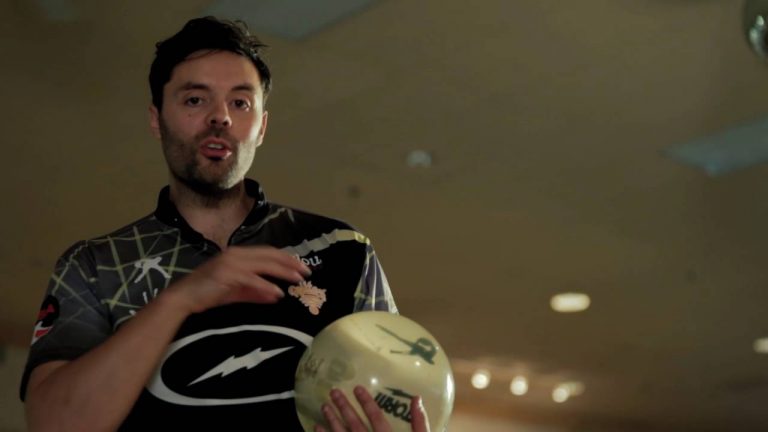
Poolbowl is some kind of combination of billiards and bowling, because, well, what did YOU invent today?
Interpol’s Paul Banks on Social Media: “It’s fascinating the world we live in”
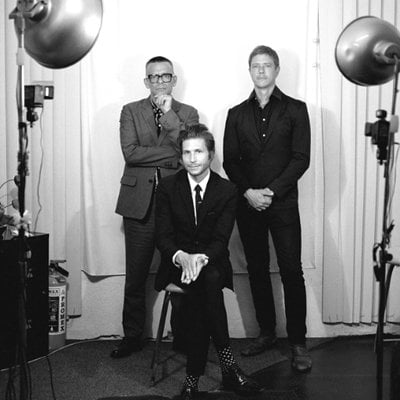
Do the lyrics on Marauder have any relation to social media and how everyone’s trying to present this perfect self? Is it a retaliation against it?
Not consciously. I do think we live in an age that, yes, there’s the perfect picture that people try to post. Maybe an even more interesting part about our kind of world is the way that people’s careers can end overnight – from things that they said five years ago, or bad behaviour that surfaces. It’s an interesting age, because I feel like comedy is now getting subjected to it, which is a bit dangerous as there are forms of art that are about pushing the envelope, and if we were to hold everybody accountable for making little missteps in the pursuit of art and how that no longer fits into the current model of PC.
On the one hand, there are tremendous cultural shifts happening that are absolutely for the better, but even in the #MeToo movement – that’s absolutely a positive cultural change, it’s amazing that it’s really taken effect – even along the way of that wave there’s some collateral damage, or some people getting their careers ended or put on pause over allegations that aren’t even yet all the way looked into. It’s an interesting time, where everything seems at stake – it’s fascinating the world we live in.
Recently, the Director James Gunn was dropped from Guardians Of The Galaxy over social media posts he made a decade ago. It seems you now need to be impeccable at all times.
I just wonder if it’s a little bit Brave New World or 1984, in the sense that now everyone’s policing everyone. It’s good in so many ways, and then there’s this other side where culture makes a massive correction; sometimes there are going to be things that get corrected that means people are going to get into trouble, that shouldn’t have got into trouble. That’s the price of social change, I guess. I would never say it’s good or bad, I’d just say it’s interesting.
With your music and interviews, are you finding yourself being more careful about what you say? I was surprised to find that you have a personal Twitter account.
I always was mindful of Twitter, I don’t think I ever said anything that could get me into hot water…I think my approach is a little bit to be goofy, that’s how I use social media because it’s not really natural for me to do any of that stuff.
I don’t drink, but God forgive if you’ve just had a couple of glasses of wine..I’ve had it happen to people that are close to me, text something that I think is hilarious – or, you realise that did not translate over text and you turn somebody off. God forbid you do that on fucking social media and jeopardise your whole career. I’ve always been pretty mindful.
But, that’s what I mean, especially comedians. They might be trying out material and if you take it out of context…I’ve definitely had pull quotes in interviews where it’s like, “Oh shit, in context I think that wasn’t so bad but out of context it’s terrible.”
Aerosmith Announces Las Vegas Residency “AEROSMITH: DEUCES ARE WILD” At Park Theater At Park MGM
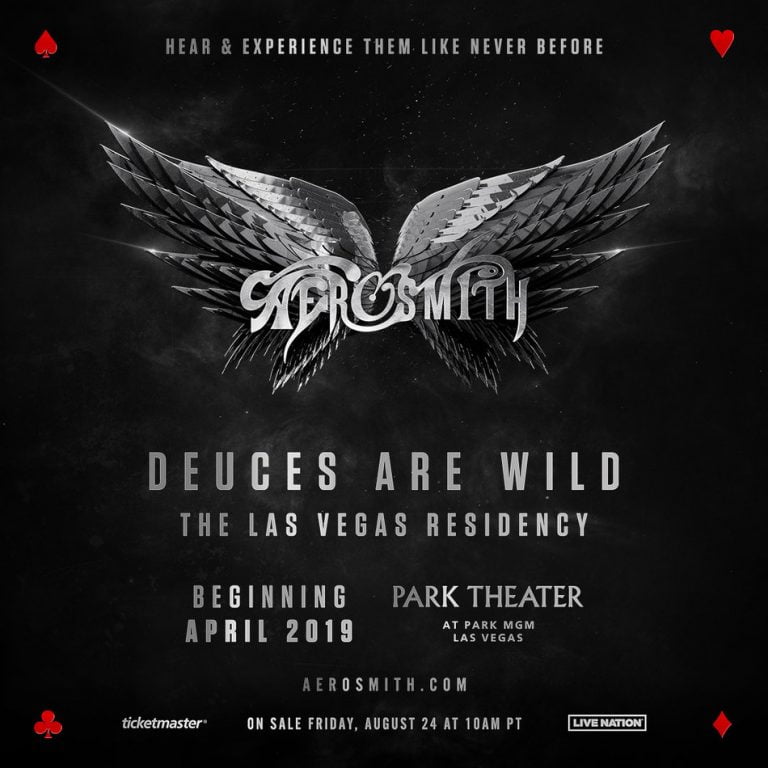
America’s all-time top-selling rock ‘n’ roll band, Aerosmith, is bringing the heat to the Las Vegas Strip with their headlining residency, AEROSMITH: DEUCES ARE WILD. Shows begin Saturday, April 6, 2019 at Park Theater at the new Park MGM resort.
Aerosmith’s Las Vegas residency, promoted by Live Nation and MGM Resorts International, will bring you face to face with America’s Greatest Rock ‘N’ Roll band in one of the most immersive, state-of-the art audio and video technology experiences in Las Vegas. The show features never-seen-before visuals and audio from Aerosmith recording sessions. GRAMMY Award winning producer Giles Martin, known for creating the soundscape for The Beatles LOVE by Cirque du Soleil show in Las Vegas, will create a spectacular show experience.
Aerosmith has teamed up with THX and L-Acoustics for their upcoming breakthrough residency at Park Theater to deliver the world’s first THX Certified live performance presented in L-ISA Immersive Hyperreal Sound.
The 18 performances going on sale are:
April 2019: 6, 8, 11, 13, 16, 18, 21, 23, 26
June 2019: 19, 22, 24, 27, 29
July 2019: 2, 4, 7, 9
Robert Paquette’s “Bleu et blanc” to be Inducted into Canadian Songwriters Hall of Fame
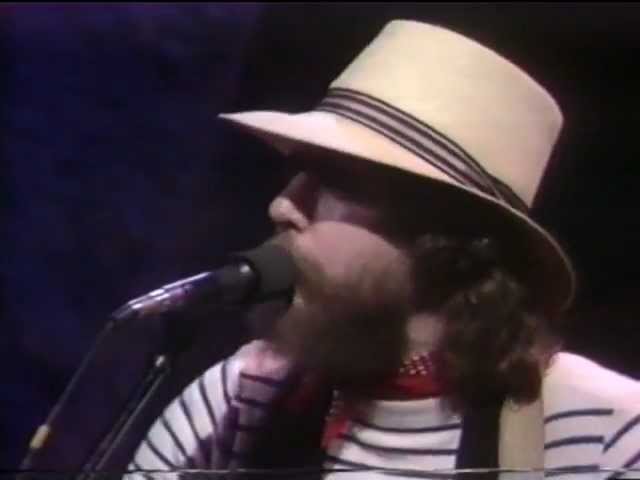
The Canadian Songwriters Hall of Fame (CSHF) and the Festival international de la chanson de Granby (FICG) are proud to announce that the song “Bleu et blanc” – written by Franco-Ontarian songwriter Robert Paquette – will be inducted into the Canadian Songwriters Hall of Fame. The induction will happen on August 26, live from the Scène Desjardins, during the closing concert of the 50th edition of FICG. “I’ve always maintained good relations with the Festival,” says Paquette, who was a finalist during the 1971 edition, before winning the People’s Choice Award in 1972. “I’m super-happy that the induction will take place there!”
“Bleu et blanc” was deemed a SOCAN Classic in 2001, for having aired more than 100,000 times on the radio. It was also included in a list of 150 popular songs compiled by Le Journal de Montréal for Canada’s 150th anniversary.
Paquette was the first Franco-Ontarian to record a professional studio album. The singer-songwriter was driving home to play a concert in Sudbury in 1976 – from his base in Montréal, where he was pursuing a solo career – when the song came to him in its entirety. Paquette was so struck by it that he stopped at a pay phone to call home, saying, “I’ve just come up with a really good song.”
That December, back in Montréal, Paquette laid down “Bleu et blanc” at Studio Six, along with other songs for the album Prends celui qui passe, which was released in Canada and Europe by Kébec-Disc. The uptempo “Bleu et blanc” was released as a 45-rpm single with “Baba nam” (from the same album) on the flip side, and sheet music was also published. To Paquette’s surprise, two Montréal radio stations, CKOI and CHOM, both included it in their rotation. “Because the song was unusually long, at more than six minutes, I didn’t think it would get commercial radio airplay, but the public reaction was really good. Listeners began asking CKOI and CHOM to air it, and it took off.” “Bleu et blanc” was on its way to becoming a classic of the French-Canadian music scene.
As with the very best poetry and song lyrics, “Bleu et blanc” deals with passion and emotional symbols. The song begins with the singer re-telling his chance encounter with an old, down-and-out hobo, in which he asks if the old man has given up hope. His wise reply proves to be a valuable life lesson that both surprises and influences the singer. “Back in Ontario, I used to meet down-and-out fellows who would ask for a dime to get a sandwich or a coffee. Then in Montréal I met one who asked for a whole dollar, but he was honest about it; he wanted money for wine,” said Paquette. “The song is about contrasts, truth and passions, and taking into your own hands the things that matter to you.”
Paquette intended the colourful kites in the chorus (“Bleu et blanc, vert et rouge/Sont les couleurs des cerfs-volants,” or in English, “blue and white, green and red, are the colours of kites”) to represent flags: red for the Canadian flag, blue and white for Québec’s fleur-de-lis, and green and white for a new flag that had recently been proposed for Franco-Ontarians; white represents purity and red represents passion. The song’s kite imagery also suggests freedom – freedom to go with the wind and freedom from practical necessities. A more direct reference is one to Québec politics in the line “Tout le monde parle de révolution” (everyone’s talking revolution), referring to November 1976, just before the song was recorded, when the Parti Québécois was elected to power in Québec, while many French-Canadians in Paquette’s Northern Ontario hometown were keeping a close eye on the process.
Paquette made the enigmatic, philosophical “Bleu et blanc” a staple of his concert tours for the next decade in Canada, the U.S. and Europe. Notably, his performance at Switzerland’s famous Montreux Jazz Festival in July 1979 (with an outstanding jazz sax addition) was captured on the live album Robert Paquette: Europe. “Bleu et blanc” is also featured on Paquette’s 1995 compilation album Moi j’viens du nord (DisQuébec, CD). Other recordings on which “Bleu et blanc” can be heard include 30e Anniversaire— Festival international de la chanson de Granby, New Brunswick group Garoche’s Jour après jour, and Winnipeg Folklorama’s Celebrate! in a cover by Rendez-Vous. The sheet music appears in the song collection Chante la vie as well as in Paquette’s own songbook, published in 1980.
Singer-songwriter-producer Robert Paquette was born in 1949 in Sudbury, Ontario. Influenced by English pop music and by the songs of Félix Leclerc, Gilles Vigneault, and Claude Leveillée, Paquette sang and played guitar with the bands Les Chat-Uteurs and Marketville Riot in Northern Ontario before moving to Montréal and embarking on a solo career. From the mid-1980s he wrote music for theatre and did television work. His song “Jamaica” is another SOCAN Classic, and Radio-Canada ranked him No. 1 on its list of the most important Franco-Ontarian musicians.
Bohemian Rhapsody on Boomwhackers
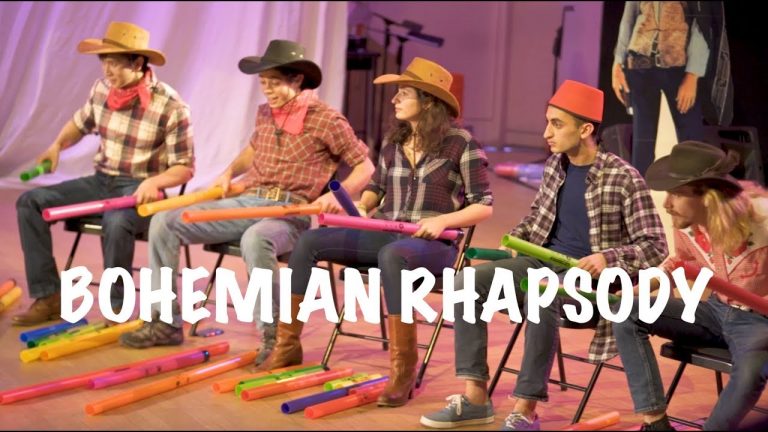
Is this the real life? Is this just fantasy? Nope, it’s just the sillest and coolest cover version of Queen’s classic Bohemian Rhapsody you’ll ever see.