Home Blog Page 23

Everything You Need to Know About the 2026 Tony Awards

0

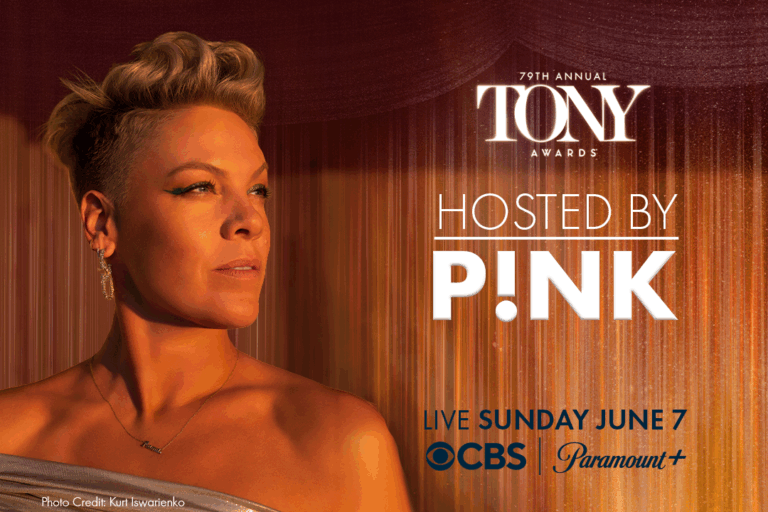
Broadway’s biggest night is here. The 79th Annual Tony Awards take place tonight, June 7, 2026, at Radio City Music Hall, with Grammy-winning superstar Pink making her debut as host of the main ceremony. Whether you’re a lifelong theatre obsessive or someone who just wants to know what everyone is talking about on social media tomorrow morning, here’s everything you need to know.

What Are the Tony Awards?

The Tony Awards, formally known as the Antoinette Perry Award for Excellence in Broadway Theatre, are Broadway’s equivalent of the Oscars. Named after Antoinette “Tony” Perry, a director, producer, and co-founder of the American Theatre Wing who died in 1946, the awards have been presented annually since 1947 to recognise excellence in live Broadway theatre. They cover everything from Best Musical and Best Play to Best Choreography, Best Costume Design, Best Lighting Design, and more than two dozen other categories. Winning a Tony is the highest professional honour in American theatre.

When and Where Is It?

The ceremony begins at 8 PM ET on CBS, with a pre-show called The Tony Awards: Act One streaming for free on Pluto TV from 6:35 PM ET, hosted by Tony winner Laura Benanti and Broadway favourite Tituss Burgess. The main ceremony is also available to stream on Paramount+ with a Premium subscription.

Who’s Hosting?

Pink is hosting the main ceremony tonight, bringing her particular brand of fearless, high-energy performance to Broadway’s biggest night. It’s her first time hosting the Tonys, and given her known love of musical theatre and her experience commanding enormous stages, expectations are high.

What’s Nominated?

The Lost Boys and Schmigadoon! lead the field with 12 nominations each, including Best Musical. Titaníque and Two Strangers (Carry a Cake Across New York) round out the Best Musical category. For Best Play, the nominees are The Balusters by David Lindsay-Abaire, Giant by Mark Rosenblatt, Liberation by Bess Wohl, and Little Bear Ridge Road by Samuel D. Hunter. Lincoln Center Theater’s Ragtime is right behind with 11 nominations, and Arthur Miller’s Death of a Salesman is the most nominated play of the season with nine total nods.

What Are Tonight’s Special Performances?

All of this year’s Best Musical and Best Revival of a Musical nominees will perform, and the evening will also feature major anniversary tributes. The Book of Mormon’s entire original Broadway cast reunites for its celebration, including Tony winner Nikki M. James and Tony nominees Andrew Rannells and Josh Gad. The 30th anniversary of the long-running revival of Chicago will be marked with a performance featuring Queen Latifah, Pink, Jesse Tyler Ferguson, Alex Newell, and Adrienne Warren. A Chorus Line’s 50th anniversary and Rent’s 30th anniversary will also be honoured.

Who Won Last Year?

‘Maybe Happy Ending’ took home the most wins at the 2025 Tony Awards with six, including Best Musical and Best Actor in a Musical for Darren Criss. Best Play went to Branden Jacobs-Jenkins’ ‘Purpose’. Nicole Scherzinger won Best Actress in a Musical for Sunset Boulevard, Cole Escola won Best Actor in a Play for ‘Oh, Mary!’, and Sarah Snook won Best Actress in a Play for ‘The Picture of Dorian Gray’.

Why Do the Tony Awards Matter?

Winning a Tony Award transforms a show’s commercial fortunes. A Best Musical win drives ticket sales, extends runs, and sets up touring productions. For performers, a Tony win or even a nomination can redefine a career, opening doors to film, television, and the kind of lasting recognition that the theatre world values above almost anything else. The 2025 telecast drew 5.1 million viewers for CBS, up from 3.53 million in 2024, an increase of approximately 44 percent, and the largest audience for the Tonys since 2019. Broadway is having a moment, and tonight is the centrepiece of it.

Pull up CBS, make some noise for Pink, and enjoy the show.
Alan Hale, Astronomer Who Co-Discovered Comet Hale-Bopp, Dies at 67

0

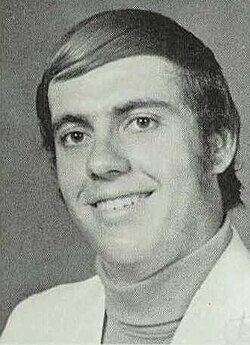
Alan Hale, the American astronomer who co-discovered one of the most spectacular and widely observed comets in human history and spent the rest of his career using science as a tool for breaking down barriers between people and nations, died on June 6, 2026. He was 67.

Born in 1958 in Tachikawa, Japan, where his father was serving in the United States Air Force, Hale grew up in Alamogordo, New Mexico, where clear desert skies and a stack of library books on astronomy his father gave him in the first grade set the course of his life. He served in the United States Navy from 1976 to 1983, graduating from the Naval Academy with a degree in physics, then worked at the Jet Propulsion Laboratory before earning his Master’s degree and PhD in astronomy from New Mexico State University in 1989 and 1992. His path to the night of July 22-23, 1995 was a long one, built from decades of patient, disciplined observation.

That night, from his home in Cloudcroft, New Mexico, after finishing his observations of periodic Comet Clark and while waiting for another comet to rise above the horizon, Hale pointed his telescope toward globular cluster M70 in Sagittarius and noticed a fuzzy object that hadn’t been there two weeks earlier. He checked his sources, verified the object had moved against the background stars, and sent two emails to the Central Bureau for Astronomical Telegrams. Unknown to him, an amateur astronomer named Thomas Bopp was observing the same region of sky that same night from near Stanfield, Arizona, and making the same discovery independently. On July 23, 1995, the IAU announced the joint discovery of Comet Hale-Bopp, designated C/1995 O1. It would become one of the most viewed comets in recorded history, appearing a thousand times brighter than Halley’s Comet at the same distance from the sun, and visible to the naked eye for an extraordinary eighteen months. The International Astronomical Union had already named asteroid 4151 Alanhale in his honour in 1991, years before the discovery, in recognition of his extensive comet observations.

The comet’s visibility in 1997 also brought one of the darkest chapters in the story of human credulity, when Heaven’s Gate cult members poisoned themselves in the belief that an alien spacecraft was following the comet and that their deaths would allow them to board it. Hale had anticipated something like it. He had told a colleague beforehand that suicides were likely, and when it happened he was at a press conference the following day, calling the deaths “another victory for ignorance and superstition” and using the platform the comet had given him to advocate as forcefully as he could for scientific literacy and rational thinking. He did so for the rest of his life.

In 1993 he founded the Earthrise Institute, whose mission was to use astronomy as a tool for breaking down international and intercultural barriers. He led a trip of American scientists and educators to Iran in 1999 during a solar eclipse, giving talks across the country on the premise that science is a universal language that doesn’t know political boundaries. He produced educational series, wrote newspaper columns, hosted radio programmes, sat on juries, and advocated for scientific skepticism with the same consistency and commitment he brought to the telescope. He was still leading the Earthrise Institute at the time of his death.

He once said, regarding the Heaven’s Gate tragedy: “Comets are lovely objects, but they don’t have apocalyptic significance. We must use our minds, our reason.” He spent his life making that case. He did it well.

Yishay Levi, Beloved Star of Israeli Mizrahi Music, Dies at 63

0

Yishay Levi, the Israeli singer whose powerful voice and turbulent life made him one of the most compelling and complicated figures in the history of Mizrahi music, died on June 7, 2026 in Jerusalem. He was 63. The cause of death was not published.

Born on January 20, 1963 in Rosh HaAyin into a family of Yemenite Jews, Levi began singing in clubs in Israel in 1983, entering the scene at precisely the moment that Mizrahi music was at its commercial and cultural peak, with artists like Zohar Argov and Haim Moshe dominating the genre. He was discovered by guitarist Moshe Ben-Moshe and released his debut album, ‘Hafla With Ben Moshe’, in 1986, quickly becoming a superstar in clubs across the country.

His breakthrough arrived in 1987 with the album ‘Hiney Ba Ha-yom’, which contained the song “Raiya” and brought him widespread fame. The period also produced a personal rivalry with Zohar Argov, one of the defining names in the genre, a pairing that generated the kind of competitive energy that rarely hurts either artist’s career. Levi was on his way to becoming one of the biggest names in Israeli popular music.

The years that followed told a more complicated story. Levi’s career faded between 1988 and 1991 due to struggles with drug addiction, a battle he fought publicly and repeatedly throughout his life. His 1992 comeback album ‘Lehat’chil Mibereshit’ (To Start From the Beginning) contained “Rikdi,” one of the biggest hits in the history of Mizrahi music, and restored him to the front rank of the genre. He followed it with further albums through the 1990s, scoring additional hits and enduring additional setbacks in roughly equal measure. His 1997 album ‘Ha-emuna’ (The Belief) saved his career again with the hit “Taltalim shorim.” He had a gift for coming back.

The personal struggles continued. He served time in prison in the early 2000s and again around 2006, periods that interrupted his recording career without ending it. In 2008 he released ‘Rikud romanti’ (Romantic Dance), which produced several hits including “Ah ya albi,” and represented the clearest evidence that his audience had never fully left him even during the hardest years. He continued performing and recording until the end.

His record is part of his story and cannot be set aside. So is the music, which mattered genuinely and lastingly to a great many people. Both things are true.

He is survived by his brother, fellow Mizrahi musician and singer Nati Levi.

Jürgen Kesting, Germany’s Pre-eminent Voice Among Music Critics, Dies at 85

0

Jürgen Kesting, the German journalist, music critic, and author whose monumental study of the world’s greatest singers became one of the most authoritative reference works in classical vocal music, died in 2026. He was 85. His death was announced on June 7, 2026.

Born in Duisburg on July 26, 1940, Kesting studied German and English culture as well as philosophy in Cologne and Vienna from 1960 to 1967, an academic foundation that gave his criticism the kind of depth and precision that separated it from the promotional writing that dominated so much music journalism at the time. He worked in the music industry itself before turning to criticism, spending four years as press officer for Electrola and then the Munich Eurodisc in the early 1970s, a grounding in the commercial realities of the record business that sharpened his understanding of what he was listening to and why it mattered.

He joined Stern in 1973 and spent two decades there as editor, department head, managing editor, and writer before moving to the newly founded newspaper Die Woche in 1993. In 1997 he developed the music magazine Amadeo for Gruner + Jahr, and from that same year until his death he wrote for the Frankfurter Allgemeine Zeitung as a freelance contributor, one of the most prestigious platforms in German cultural journalism.

The work that defined his reputation was ‘Die großen Sänger’, a comprehensive study of the great singers of the operatic tradition published in three volumes in 1986 and widely considered a standard work of vocal criticism. It was not a coffee table survey. It was a serious, rigorously argued, deeply informed examination of voice as art, and it established Kesting as the foremost German-language authority on the subject. In 2008 he revised and expanded it into four volumes running to 2,547 pages — an undertaking that most critics at the age of 68 would have found impractical and that Kesting apparently found necessary.

His monograph on Maria Callas, published in 1990, was translated into English, Russian, and Japanese. His essay on Luciano Pavarotti followed in 1991, translated into English. He produced a weekly radio series about great singers for the NDR for thirteen years. He created 26-part radio series on both Maria Callas and Vladimir Horowitz for four ARD stations. He produced a 13-part television documentary series on the great tenors of the shellac era, broadcast internationally in Italy, France, the United States, and England. For ten years he sat on the programme committee of the International Stuttgart Stimmtage. From 2005 until his death he served on the jury of the singing competition Neue Stimmen.

Jürgen Kesting gave much of his working life to the proposition that the singing voice is a serious subject deserving serious attention. The four volumes and 2,547 pages of his life’s central work make the case more persuasively than any obituary could.

How Major Labels Plan a Music Release

0

There’s a reason certain albums feel like events and others feel like they just appeared one Friday morning without warning. The difference, almost always, is strategy. Major labels have spent decades refining the art of the music release into a precise, multi-phase operation that begins months before a single note reaches the public, and understanding how it works gives every artist — independent or otherwise — a clearer picture of what actually moves the needle.

It Starts Way Earlier Than You Think

The industry moves in seasons. A lot of projects that started months ago are ready now, and artists want music out early to support summer touring, festivals, and award consideration. Major labels are thinking about a release six to twelve months before it happens, sometimes longer. Recording wraps, then mixing and mastering, then manufacturing (if physical product is involved), then the entire commercial apparatus has to be built around the music before anyone hears it. Submitting a release four to six weeks in advance ensures it’s properly ingested on DSPs and reduces the chance of delivery errors, and improves the chances of landing on playlists or editorial features. For a major label, that four-to-six-week minimum is just the final sprint. The real work started much earlier.

The Single Strategy: Building to the Album

Many artists release up to three singles over a six-month period to preview their upcoming album. This keeps them top of mind and is a valuable tool to drive interest in live shows. The singles strategy at a major label is not random. Each track is chosen for a specific purpose: the first single establishes the sonic identity of the new era, the second goes after radio or streaming playlists, and the third often targets a different demographic or mood to broaden the audience before the album lands. Traditionally, artists would go a long time between album projects, disappear, and then come back as a big event. In this day and age, labels try to keep things flowing so artists almost never go away, because fans want to be engaged constantly. The era of the mysterious disappearing act is largely over. Sustained presence is the new model.

The Release Date Is a Strategic Decision

Major labels tend to release on Fridays, which aligns with the global release day standard and maximises the first-week chart tracking window. But the choice of which Friday matters enormously. Labels map the competitive landscape months in advance, looking for windows where their artist won’t be going head-to-head with another major release that targets the same audience. Albums released between August and the end of the year line up with Grammy eligibility windows, which makes that stretch of the calendar particularly competitive. A label releasing a prestige album knows that Grammy consideration is part of the conversation from the very beginning, and the release date is chosen to maximise that window. Season matters too. How does the music align with the themes and energy of a particular time of year? Summer music goes out in late spring. Introspective albums lean toward autumn. None of this is accidental.

Pitching to DSPs and Press

Several weeks before release, the label’s team begins pitching the music simultaneously to digital service providers and to press. Spotify, Apple Music, and Amazon Music editorial teams all receive advance pitches for playlist consideration, and the timing of these pitches is carefully coordinated. A private streaming link for songs being pitched to journalists, especially for exclusive premieres, is standard practice. Exclusive premieres at major publications are themselves strategic decisions — a premiere at a tastemaker publication signals credibility and generates a first wave of coverage that the rest of the press cycle builds on. Radio promo, where relevant, runs on its own parallel timeline, with servicing to programme directors beginning weeks in advance of the public release.

Pre-Saves, Pre-Orders, and Building Anticipation

Driving pre-saves and pre-adds engages streaming platform algorithms and boosts a music’s visibility to fans, as well as the likelihood of being placed on a playlist. At a major label, the pre-save campaign is a coordinated effort across social media, email, SMS, and sometimes advertising, designed to generate a surge of activity the moment the track goes live. Timing matters, and spacing out content and promotions builds hype, engages the fanbase, and gives the campaign room to breathe. A pre-save announcement, a snippet, a behind-the-scenes clip, a lyric video, a music video, a performance clip — each piece of content is a planned beat in a carefully sequenced rollout, not a spontaneous moment.

The Launch Week and Beyond

Release day is not the end of the campaign. It’s the beginning of a new phase. Major labels push heavily in the first week because chart positions — particularly on the Billboard Hot 100 and album charts — are calculated on a weekly basis and the first-week number sets the narrative. Releasing music should feel exciting, not overwhelming, but without a clear plan you risk stunting your success. Strategy is about laying out all the necessary materials, tactics, and goals to maximise engagement. After launch week, the focus shifts to sustaining momentum: more press, late night television performances, radio sessions, additional music videos, and the live tour that was announced alongside the record and that keeps the album in conversation for months.

What Independent Artists Can Learn From It

For labels juggling multiple artists, strategies need to be finely tuned to the needs of individual artists. Each artist will need their own strategy, and the best advice is to try a strategy, see if it works or not, adjust, and quickly try again. The major label model isn’t something independent artists can replicate dollar for dollar, but the underlying logic is entirely transferable. Plan further ahead than feels necessary. Release singles before the album. Pitch to playlists and press simultaneously. Drive pre-saves. Treat release day as the beginning of the campaign, not the culmination. You need to show up like a small media company, not like someone tossing a track into the ocean and hoping it washes up on the right shore. The labels figured that out a long time ago. Now you know too.

How Belfast Keeps Irish Traditional Music Alive

0

Fleadh Cheoil na hÉireann, the world’s biggest celebration of Irish culture and music, is coming to Belfast for the very first time this August, and the city couldn’t be a more fitting host. Belfast hasn’t simply preserved traditional Irish music. It has lived it, seven nights a week, across centuries, through everything the city has been asked to endure. The Fleadh isn’t arriving into a vacuum. It’s arriving into a place that has been quietly and stubbornly keeping the flame burning all along.

The Pubs That Never Stopped

The Dirty Onion is Belfast’s oldest building, with real Irish music and craic seven nights a week. Kelly’s Cellars has been hosting traditional sessions for centuries, a pub so embedded in Belfast’s musical history that it functions less like a venue and more like a living archive. The Duke of York, nestled along a narrow cobbled alleyway in the historic Half Bap area, offers a traditional atmosphere that on any given night might produce a fiddle player, a tin whistle, a bodhrán, and a session that runs until the early hours because nobody wants to be the first to leave. These are not tourist attractions dressed up as tradition. They’re the real thing, and they’ve been the real thing longer than most of us have been alive.

Comhaltas and the Grassroots Network

Ards CCÉ, formed in 1976, promotes traditional music, song and dance throughout Belfast and the North Down and Ards area, and it’s the kind of organisation that does its best work without fanfare. Local branches of Comhaltas are integral to the ecosystem that keeps the tradition alive, running regular sessions, competitions, and classes that feed musicians up through the system from complete beginners to All-Ireland competitors. The Fleadh doesn’t happen without the grassroots structure that produces the musicians who compete in it, and Belfast has been building and maintaining that structure for decades. It will be a proud moment for Ards CCÉ to host Fleadh Cheoil na hÉireann in 2026 as they mark their own 50th anniversary year.

Belfast TradFest: Growing the Audience

Belfast TradFest is set to celebrate its 8th edition across Belfast UNESCO City of Music in 2026, featuring a week-long programme of workshops and a full programme of concerts, talks, lectures, sessions, céilís, and festival clubs. It’s a festival that has played a direct role in making Belfast’s case as a world-class traditional music destination, bringing people together in a shared celebration of traditional music and acknowledging the cultural diversity of the different traditions in Northern Ireland. Crucially, it has grown a new audience alongside the existing one, introducing people to traditional music who might not have found their way to a session on their own.

Scoil Éigse and the Next Generation

Scoil Éigse 2026 will be hosted at Ulster University, with masterclasses running from Monday August 3 to Friday August 7, open to all ages and instruments, and a massive outdoor session held on the iconic steps of St. Anne’s Cathedral on Thursday afternoon. Teaching the tradition to the next generation has always been the most important work in any folk music culture, and Belfast takes it seriously. The musicians competing at the Fleadh this August didn’t arrive there by accident. They came up through sessions, through Comhaltas branches, through summer schools, through teachers who gave their Saturday mornings to make sure the music kept moving forward.

The Bigger Picture

Over 400 events including 230 championships were delivered at the 2024 Fleadh, attracting more than 650,000 people and delivering an economic value of around €70 million to the host region. Comhaltas Ceoltóirí Éireann has already confirmed Belfast will host Fleadh Cheoil na hÉireann again in 2027, marking the second consecutive year that the city will welcome the world’s largest celebration of Irish music and culture. You don’t get a back-to-back hosting of the world’s largest Irish music festival by accident. You get it because the city has spent years proving it deserves it, through the pubs, the sessions, the grassroots organisations, the festivals, and the musicians who kept showing up long before the world was watching.

Fleadh Cheoil na hÉireann takes place in Belfast, August 2–9, 2026. For more information visit fleadhcheoil.ie, visitbelfast.com, and discovernorthernireland.com.

5 Surprising Facts About Motörhead’s ‘Ace of Spades’

Few albums hit quite as hard as Motörhead’s ‘Ace of Spades,’ a record that sounds like a bar fight set to music. Released in October 1980, it became the band’s commercial peak, climbing to No. 4 on the UK Albums Chart and earning gold status by the following March, all powered by a title track that would outlive everything around it. Lemmy and company never wanted to be filed under heavy metal, insisting they were a rock ‘n’ roll band to the end, yet this record helped lay the groundwork for thrash and cemented their legend. Dig into its making and the stories are pure Motörhead chaos. Here are five facts worth knowing.

The Cowboy Photos Were Shot In A Barnet Sandpit

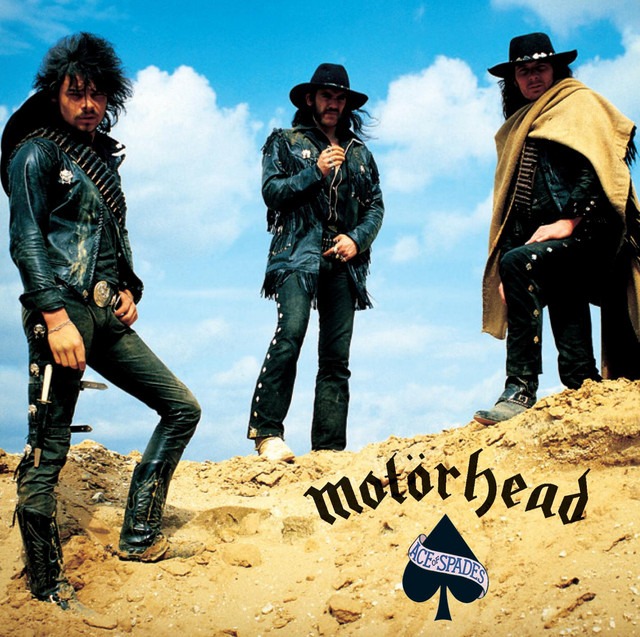
The album’s wild west imagery looks like the Arizona desert, but the band were nowhere near America. The ‘Arizona desert-style’ photos for the sleeve and tour programme were actually taken in a sandpit in Barnet, North London. To complete the illusion, the sky wasn’t even real, it was airbrushed in because the day was so heavily overcast.

Each Cowboy Costume Was Based On A Movie Character

The band didn’t just throw on random western gear for the shoot. Eddie Clarke’s look was modelled on Clint Eastwood’s Man with No Name, while Phil Taylor’s costume drew from Marlon Brando’s Rio in ‘One-Eyed Jacks.’ Lemmy’s outfit, according to Taylor, was inspired by Bret Maverick from the TV show ‘Maverick.’

Lemmy Sang The Wrong Lyric For Two Years

The title track is built on gambling imagery, and Lemmy later made a sheepish confession about it. He admitted he’d been singing “the eight of spades” rather than “ace” for a full two years before anyone caught the mistake. He was just relieved the band got famous for that song rather than some forgettable dud.

“(We Are) The Road Crew” Was Written In Ten Minutes And Made A Roadie Cry

The fan-favourite track was a tribute to the band’s hard-working roadies, and Lemmy claimed he knocked it out in just ten minutes. Having once been a roadie himself for Jimi Hendrix and the Nice, he knew the life intimately. When crew member Ian “Eagle” Dobbie first heard the song, he reportedly had a tear in his eye.

A Broken Neck Derailed The Band Right After The Tour

The Ace Up Your Sleeve tour wrapped in Belfast on 2 December 1980, and that’s where things went sideways. Post-show hijinks left drummer Phil Taylor with a broken neck, forcing him into a brace and halting band activity. The downtime led Lemmy and Clarke to team up with Girlschool for the St. Valentine’s Day Massacre EP instead.

5 Surprising Facts About Killing Joke’s Self-Titled Debut Album

Few debut albums have aged as strangely, or as triumphantly, as Killing Joke’s self-titled first record from October 1980. At the time it crept to a modest No. 39 on the UK Albums Chart and earned a critical mauling, the kind of reception that buries lesser bands. Yet the cold, pounding fusion of post-punk and proto-industrial that Jaz Coleman, Geordie Walker, Youth, and Paul Ferguson laid down would quietly seep into the DNA of metal and alternative music for decades, drawing devotees from Metallica to the Foo Fighters. The backstory is every bit as compelling as the noise. Here are five facts worth knowing.

The Band Formed Through A Cryptic Melody Maker Ad

After Jaz Coleman met drummer Paul Ferguson in late 1978, the pair placed a strange recruitment notice in Melody Maker in February 1979. It asked for bass and lead players “to tell the killing joke,” promising total exploitation, no information, and anonymity. That oddball ad pulled in guitarist Geordie Walker and bassist Youth, completing the lineup.

It Was Recorded Live In About Two Weeks With Almost No Overdubs

The band self-produced the album on purpose, wanting only an engineer who would capture them exactly as they were. They cut it live in the studio as basically as possible, with virtually no overdubs, putting all the difference into the mixing. Engineer Phil Harding reckoned the whole recording took only around two weeks.

The Cover Came From A Famous War Photograph Of The Troubles

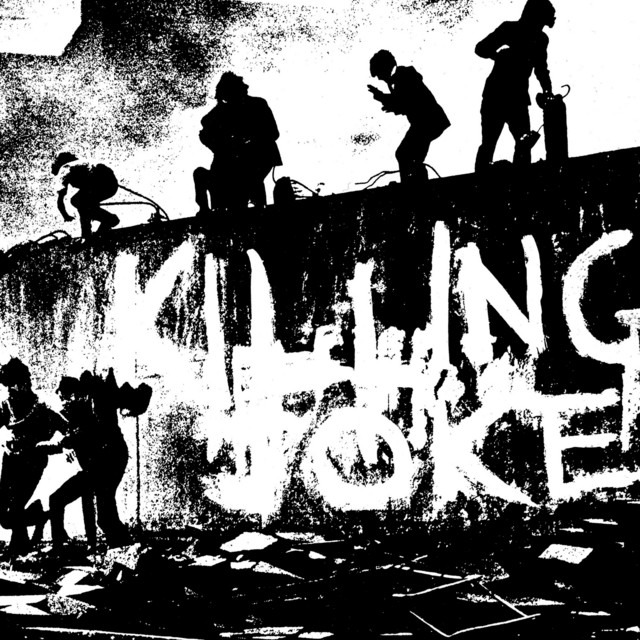
The striking artwork was based on a photograph by Don McCullin showing young rioters fleeing clouds of CS gas in Derry, Northern Ireland. The image was captured on 8 July 1971 during the Troubles, as the British Army deployed the gas. It was taken only months before the events of Bloody Sunday unfolded in the same town.

Critics Trashed It Before Calling It Groundbreaking

According to Jaz Coleman, the album was slagged off by just about everyone when it first came out. Then, roughly eight years later, the same record was suddenly being hailed as ground-breaking. As Coleman put it, people are fickle, and you simply have to stand by your own creations.

A Track Was Named After A Berlin Punk Club, Or Maybe A Postcode

The song “S.O.36” shares its name with the legendary Kreuzberg club SO36, a Berlin punk and new wave institution often compared to New York’s CBGB. The name itself comes from the area’s historic postcode, where SO stands for Südost, meaning South East. To this day it’s unclear whether the band named the track after the club or the postal code.

5 Surprising Facts About Judas Priest’s ‘British Steel’

0

When Judas Priest unleashed ‘British Steel’ on 11 April 1980, they didn’t just release their sixth studio album, they helped light the fuse on the New Wave of British Heavy Metal. Leaner, catchier, and built around anthems like “Breaking the Law” and “Living After Midnight,” the record became an enduring landmark and eventually went platinum in the US. The stories behind its creation, though, are full of household objects, sleepless nights, and a few genuine surprises. Here are five facts worth knowing.

It Was Recorded At Ringo Starr’s House

‘British Steel’ was made at Tittenhurst Park in Ascot, the home of former Beatle Ringo Starr. The band actually started at Startling Studios on the same grounds, but abandoned it because they preferred recording in Starr’s house itself. It’s a strange bit of crossover history, a heavy metal classic taking shape inside a Beatle’s home.

The “Breaking the Law” Glass Smash Came From A Milkman’s Bottles

Digital sampling wasn’t widely available yet, so the band got creative with their sound effects. For the breaking glass in “Breaking the Law,” they smashed actual milk bottles delivered to the house that morning. The police siren in the same song was no recording either, it was K. K. Downing working the tremolo arm on his Stratocaster.

“Metal Gods” Was Built From Ringo’s Cutlery

That iconic marching, metallic sound on “Metal Gods” came from the band shaking trays of cutlery in front of microphones. They raided the house for anything they could bang or rattle, and since Starr owned the place, those were apparently his knives and forks. Halford reckoned he lifted and dropped that cutlery tray around 100 times to get it right.

“Living After Midnight” Got Its Title From A 4 AM Wake-Up

The song was born when Glenn Tipton woke Rob Halford at 4 AM with his loud guitar playing during the Tittenhurst sessions. Halford grumbled that Tipton was “really living after midnight,” and Tipton instantly recognised it as a perfect title for the track he was working on. A bleary middle-of-the-night complaint became one of metal’s great party anthems.

The Album Was Marketed With A Cheeky Pun On “Steal”

When it came out, ‘British Steel’ was sold in the UK at a bargain price of £3.99. The advertisements in the music press leaned into the moment with a wink, running the deliberate misspelling “British Steal.” It was a small joke, but a fitting one for a band who knew exactly how to grab attention.

5 Surprising Facts About Echo & the Bunnymen’s ‘Crocodiles’

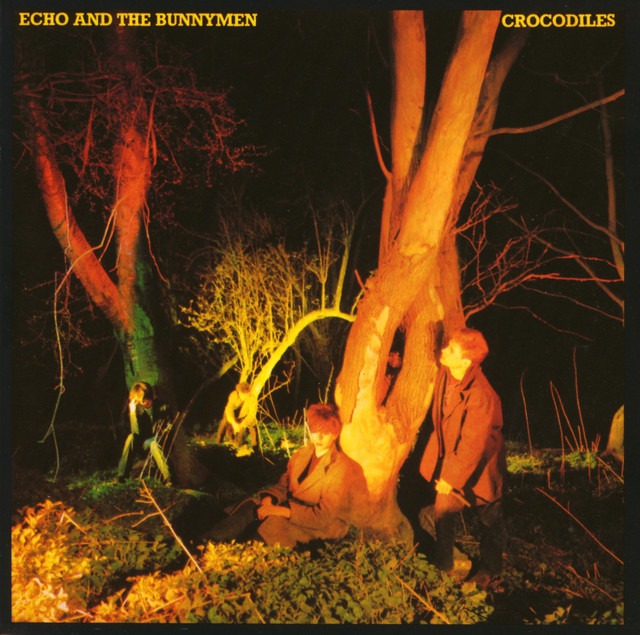
When Echo & the Bunnymen released ‘Crocodiles’ on 18 July 1980, they announced themselves as one of the most striking new bands of the post-punk era. Dark, moody, and shot through with Ian McCulloch’s apocalyptic brooding and Will Sergeant’s icy guitar, the debut climbed to No. 17 on the UK Albums Chart and landed on countless best-of-the-decade lists in the years since. Beneath its eerie woodland cover, though, sits a handful of odd decisions and behind-the-scenes stories. Here are five facts worth knowing.

The Band Started Out With A Drum Machine Instead Of A Drummer

When Echo & the Bunnymen formed in 1978, the lineup was just McCulloch, Sergeant, and bassist Les Pattinson, with a drum machine handling the beats. After signing with Korova, they were persuaded to bring in a real drummer, and Pete de Freitas joined the fold. Their first single “The Pictures on My Wall” was even recorded before he arrived, then re-cut for the album with him on drums.

The Whole Album Was Recorded In Just Three Weeks

Despite its rich, atmospheric sound, the recording of ‘Crocodiles’ took only three weeks. The process apparently bored bassist Les Pattinson, who admitted he didn’t enjoy all the drop-ins and edits involved. There was, by his account, a lot of standing around waiting between takes.

A Famous Pop Star Was Nearly Hired To Produce It

Before the band’s manager Bill Drummond and his partner David Balfe took the reins, there was serious talk of bringing in American singer Del Shannon, the man behind “Runaway,” to produce the record. In the end the production stayed in-house with Drummond and Balfe. Ian Broudie had already handled the single “Rescue” separately.

The Cover Almost Featured Burning Stakes

The eerie nighttime photos were shot by Brian Griffin in the woods near Rickmansworth, and the band originally wanted burning stakes in the frame. They scrapped the idea once they realised it carried unfortunate KKK connotations and settled for moody lighting instead. McCulloch loved the result anyway, declaring the cover better to look at than the Mona Lisa.

Two Songs Were Cut Over Imaginary Swear Words

“Do It Clean” and “Read It in Books” were left off the original UK LP because Warner Bros. managing director Rob Dickins mistakenly believed they contained obscenities. Once he realised his error, the tracks were restored for the US version released that December. UK fans got them as a limited-edition single instead.