Home Blog Page 2498

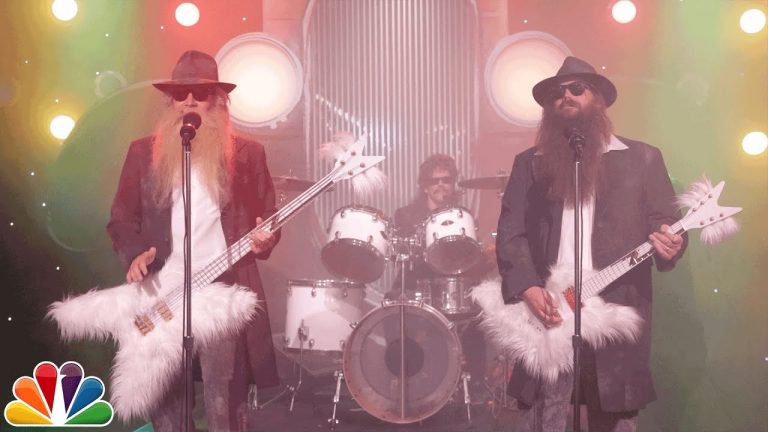
Jimmy Fallon, Kevin Bacon and Chris Stapleton Perform as ZZ Top in First Draft of ‘Legs’

0

First Drafts of Rock takes a look at the original version of ZZ Top’s “Legs.”

She’s got legs
She knows how to use them
She never begs
She knows how to choose them
She’s got arms
They’re like legs but on her upper half
She’s got elbows
She scrubs ’em when she takes a bath

She’s got hands
She knows how to wave them
She’s got eyebrows
She knows how to raise them
She’s got nostrils
She knows how to flare them
She’s got a butt cheek
She’s actually got a pair of them

She’s my baby
She’s my baby
Yeah, it’s alright!

She’s got teeth
Sometimes calls them chompers
She’s got feet
Sometimes calls them stompers
She’s got a belly button
An innie not an outie
She’s got kneecaps
Also calls them chompers

She’s got a head
In Spanish it’s “cabeza”
And on the front of her head
She’s also got a face-a
She’s got a rib cage
I learned that from an x-ray
She’s got thumbs
She uses them to text me

What is texting?
What is texting?
It’s 1983!

(Kick-butt guitar solo)

She’s got a pencil
Hey Frank, that’s not a body part
What about a napkin?
Nope, still not a body part
How about a necktie?
That’s closer to a body part
What about just neck then?
Bingo, that’s a body part

She’s got a neck, she’s got a neck,
This song is called “Neck”
Neck!
Neck!
Neck!
Neck!
Neck!
Neck!
Neck!
Neck!

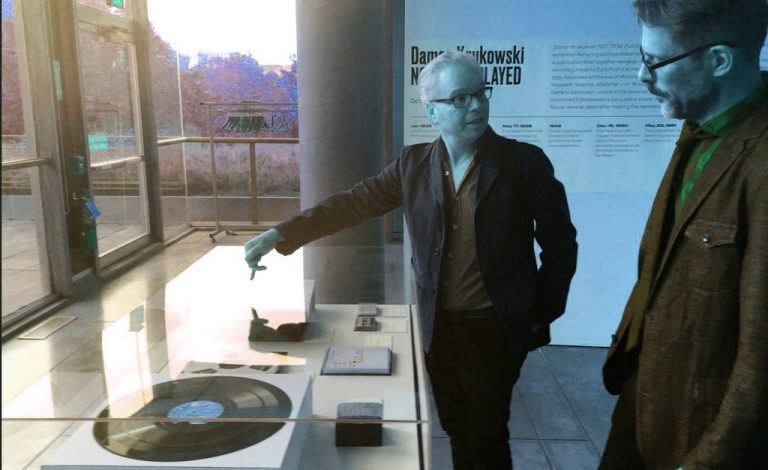
Damon Krukowski talks The New Analog with Astra Taylor in Toronto on May 16

0

Type Books hosts the release of Damon Krukowski latest book The New Analog: Listening and Reconnecting in a Digital World published by The New Press. Krukowski will be in conversation with writer and documentary filmmaker Astra Taylor on May 16. Details here!

Having made his name in the late 1980s as a member of the indie band Galaxie 500, Damon Krukowski has watched cultural life lurch from analog to digital. And as an artist who has weathered the transition, he has challenging, urgent questions for both creators and consumers about what we have thrown away in the process: Are our devices leaving us lost in our own headspace even as they pinpoint our location? Does the long reach of digital communication come at the sacrifice of our ability to gauge social distance? Do streaming media discourage us from listening closely? Are we hearing each other fully in this new environment?

Rather than simply rejecting the digital disruption of cultural life, Krukowski uses the sound engineer’s distinction of signal and noise to reexamine what we have lost as a technological culture, looking carefully at what was valuable in the analog realm so we can hold onto it. Taking a set of experiences from the production and consumption of music that have changed since the analog era – the disorientation of headphones, flattening of the voice, silence of media, loudness of mastering, and manipulation of time – as a basis for a broader exploration of contemporary culture, Krukowski gives us a brilliant meditation and guide to keeping our heads amid the digital flux. Think of it as plugging in without tuning out.

Type Type Talk
Damon Krukowski talks to Astra Taylor about The New Analog
Type Books, 883 Queen Street West
Tuesday, May 16, 7-9pm
FREE

Spotify Gets QR Codes to Make Sharing Music Easier

0

Spotify has added a new feature to its app: Spotify Codes. In short, the feature creates a unique barcode and album cover image for every song, artist and playlist. According to Mashable, it’s similar to Snapchat’s Snapcodes, where users can create and share their own QR codes that will open a page exclusively within the app.

Via

Techno pioneer Richie Hawtin to visit Studio Bell as part of RBC Master in Residence Mentorship Program

0

The National Music Centre (NMC) is pleased to announce legendary Canadian DJ and producer Richie Hawtin as the latest RBC Master in Residence.

In addition to private mentorship sessions, a public event will follow on Wednesday, June 28 from 6:00 pm to 7:00 pm at Studio Bell. The event will feature a conversation with noted music journalist Larry LeBlanc and Hawtin about the artist’s groundbreaking career.

As part of the RBC Master in Residence Mentorship Program, a handful of emerging Canadian acts will be selected to be mentored by Hawtin. Submissions are now open for Canadian artists who would like to participate in this once-in-a-lifetime opportunity to receive professional development advice and creative direction from one of the innovators of electronic music and techno. Interested artists can apply at nmc.ca/artists. Submission deadline is Thursday, June 1, 2017.

“Canada continues to deliver some of the most innovative and popular musicians in the field of electronic music,” said Richie Hawtin. “In celebration of our country’s continuing contribution, and to help in its future development, I’m excited to visit Studio Bell, home of the National Music Centre, and to work with DJs and producers from across the nation to share some of my insight and experience.”

The RBC Master in Residence program invites emerging artists to work under the leadership of a Master in Residence chosen to inspire creativity, encourage innovation, share expertise, and provide mentorship. Our Lady Peace founder Raine Maida participated in the program in late 2016, and internationally-acclaimed artist and producer Daniel Lanois led NMC’s first ever Master in Residence event with an interactive master session as part of Sled Island in 2015.

“Richie Hawtin is one of Canada’s most influential musical exports,” said Adam Fox, NMC’s Director of Programs. “His impact on international electronic music is indelible, and I’m excited that he’ll be able to share some of the knowledge he’s gained over his career with emerging Canadian electronic producers.”

Tickets for the public event on June 28 are $18, $14 students (18+) and seniors and will become available today, May 8, at 10:00 am MST at studiobell.ca/whats-on.

Richie Hawtin will also perform a DJ set at Calgary’s Hifi Club that same night on June 28 as part of Hifi Club’s 12-Year Anniversary. Doors at 9:00 pm. General admission tickets will become available soon at hificlub.ca.

Richie Hawtin (a.k.a. Plastikman) is a genuine original. The UK-born, Windsor, ON-raised electronic musician par excellence has maintained an underground agenda of avant-garde electronica across many highly-influential albums and compilations. A global touring DJ for the past 25 years, he returned spectacularly to the live circuit in 2010 with his Plastikman 1.5 incarnation, which held its own among the new EDM generation of Skrillex, Deadmau5, etc., stars to whom Hawtin is both old guard ambassador and hero. His new show, titled CLOSE, blurs the lines between DJ and live with its sub-title of Spontaneity & Synchronicity. Over his career, Hawtin has headlined some of the most prestigious festivals and events in club culture to date, and continues to define rather than follow musical trends. He recently launched his own instrument—the MODEL 1 mixer by his PLAYdifferently technology company. His career takes him all over the world with tour dates in over 40 nations on average each year. For more information, please visit richiehawtin.com.

Studio Bell, home of the National Music Centre, is a new state-of-the art facility designed by Brad Cloepfil of Allied Works Architecture (Portland/New York). An international hub for music and technology, Studio Bell is the first national cultural institution of its kind dedicated to celebrating music in Canada in all of its forms. More than a museum, Studio Bell rises in nine interlocking towers, clad in glazed terra cotta in the heart of Calgary’s East Village. The 160,000 square-foot building includes five floors of exhibition space, a 2000+ piece collection of artifacts, instruments and music technology, and other features including recording facilities, workshops, classrooms, an event space, and a 300-seat performance hall. For more information, please visit studiobell.ca.

The National Music Centre (NMC) is a national catalyst for discovery, innovation and renewal through music. NMC will preserve and celebrate Canada’s music story and inspire a new generation of music lovers through programming that includes on-site and outreach education programs, performances, artist incubation, and exhibitions. For more information, please visit nmc.ca.

The RBC Master in Residence Mentorship Program is offered by the National Music Centre and made possible with funding from the RBC Foundation. RBC’s support for this program is a part of the RBC Emerging Artists Project, which helps artists bridge the gap from emerging to established, and supports organizations that provide the best opportunity to advance their career trajectory.


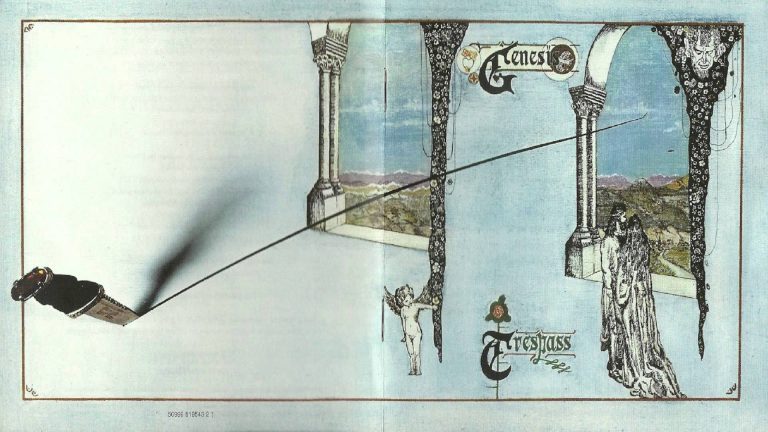
Peter Gabriel’s Isolated Vocals and Anthony Phillips’ Isolated Guitar For Genesis’ “The Knife”

0

Trespass is the second studio album from Genesis, released in October 1970 on Charisma Records and is their last album with guitarist Anthony Phillips prior to his departure, and their only one recorded with drummer John Mayhew in the band’s line-up. After several months of touring small venues, Genesis secured a recording contract with Charisma Records and entered Trident Studios in London in July, 1970 to record Trespass. Its music marked a departure from more pop-oriented songs as displayed on their first album From Genesis to Revelation, towards folk-flavoured progressive rock.

Trespass was not a success upon release; it failed to chart in the UK and the US and it received some mixed reviews from critics. Following the band’s growth in popularity in the 1980s, it reached its peak of number 98 for one week in 1984. Elsewhere, it went to number one in Belgium, which led to the band’s first overseas concerts there in March 1971. “The Knife” was released as a single in May 1971.

Talking Heads’ Isolated Synth Loop For “Once In A Lifetime”

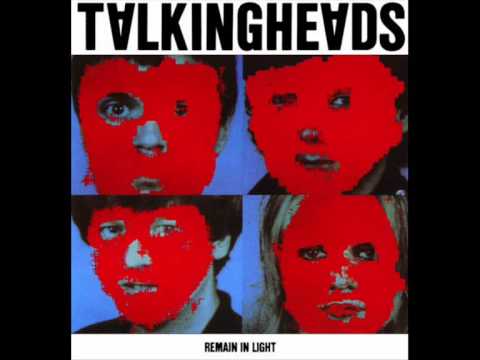
Talking Heads’ Once In A Lifetime was named one of the 100 most important American musical works of the 20th century by National Public Radio and is also included in The Rock and Roll Hall of Fame’s 500 Songs that Shaped Rock and Roll.

And you may find yourself
Behind the wheel of a large automobile
And you may find yourself in a beautiful house
With a beautiful wife
And you may ask yourself, well
How did I get here?

Elvis Presley’s Isolated Vocals For “In The Ghetto”

0

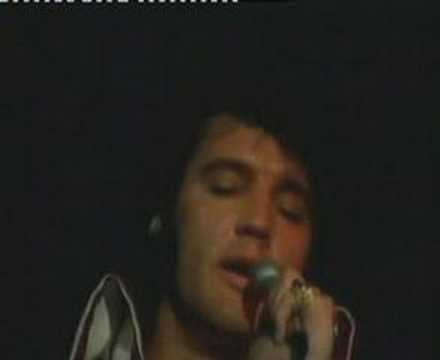
“In the Ghetto” (originally titled “The Vicious Circle”) is a song written by Mac Davis and made famous by Elvis Presley, who had a major comeback hit with it in 1969. It was released in 1969 as a 45 rpm single with “Any Day Now” as the flip side.

How record companies use the data Spotify/Apple send them

0

At Next Radio 2016, Brittney Bean outlines how DSPs (like Spotify and Apple Music) provide consumption data to record companies and how they use it to retail more music.

The One Song Gordon Lightfoot Regrets Writing

0

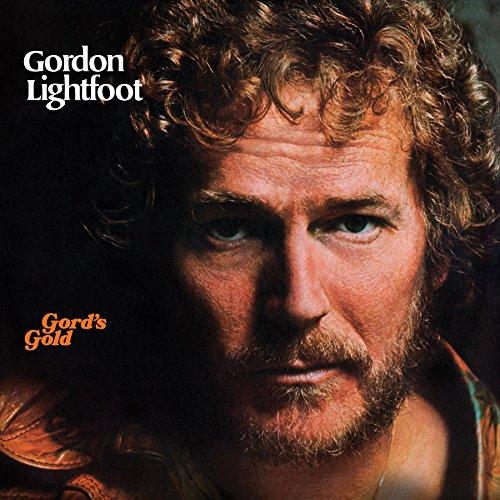
One of my favorite songs of yours is a song that you’ve since said is misogynistic, “For Loving Me.” [Sample lyric: “That’s what you get for lovin’ me. I ain’t the kind to hang around, with any new love that I found, ’cause movin’ is my stock in trade, I’m movin’ on. I won’t think of you when I’m gone.”]

Oh my goodness, yeah. That’s a bad one.

Johnny Cash sang it, Dylan sang it. To me, it was sort of like a country song about a gunslinger walking through town and [boasting], “Look at me!” Why do you discount that song now?

I was married at the time, and it was a damn poor song to write when you’re married to somebody.

I learned a lesson from that, because after I sang that song for a while, I asked myself, ‘What am I saying?!’ Even long after I was divorced and separated and she’d gone her way and I’d gone mine, I would sing this song and think, Geez. How did you she ever put up with this?! I stopped singing it.

Excerpted from a conversation between Mike Sacks and Gordon Lightfoot, Vanity Fair, Sept. 27

Via

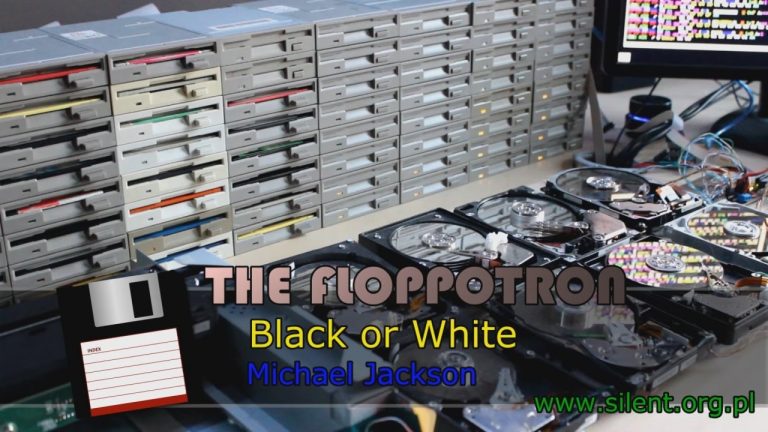
Michael Jackson’s ‘Black or White’ Played on 64 Floppy Drives, 8 Hard Drives, And 2 Scanners

0

Michael Jackson’s Black or White cover by computer hardware orchestra. The original Black or White entered the Billboard Hot 100 at number 35. A week later it shot up to number three and in its third week, December 7, 1991, it ascended to number one, making it the fastest chart topper since The Beatles’ Get Back also won the Hot 100 in just three weeks in 1969.