Home Blog Page 2703

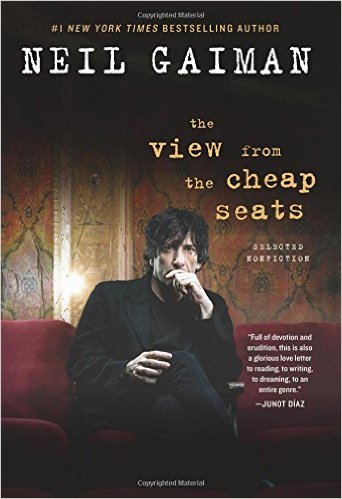
Neil Gaiman On What Stories Are Really About

0

Listen.

If someone tells you what a story is about, they are probably right.

If they tell you that that is all the story is about, they are very definitely wrong.

Any story is about a host of things. It is about the author; it is about the world the author sees and deals with and lives in; it is about the words chosen and the way those words are deployed; it is about the story itself and what happens in the story; it is about the people in the story; it is polemic; it is opinion.

An author’s opinions of what a story is about are always valid and are always true: the author was there, after all, when the book was written. She came up with each word and knows why she used that word instead of another. But an author is a creature of her time, and even she cannot see everything that her book is about.

Why do we need the things in books? The poems, the essays, the stories? Authors disagree. Authors are human and fallible and foolish. Stories are lies after all, tales of people who never existed and the things that never actually happened to them. Why should we read them? Why should we care?

The teller and the tale are very different. We must not forget that.

Ideas, written ideas, are special. They are the way we transmit our stories and our ideas from one generation to the next. If we lose them, we lose our shared history. We lose much of what makes us human. And fiction gives us empathy: it puts us inside the minds of other people, gives us the gift of seeing the world through their eyes. Fiction is a lie that tells us true things, over and over.

Neil Gaiman, Ray Bradbury, Fahrenheit 451, and What Science Fiction Is and Does

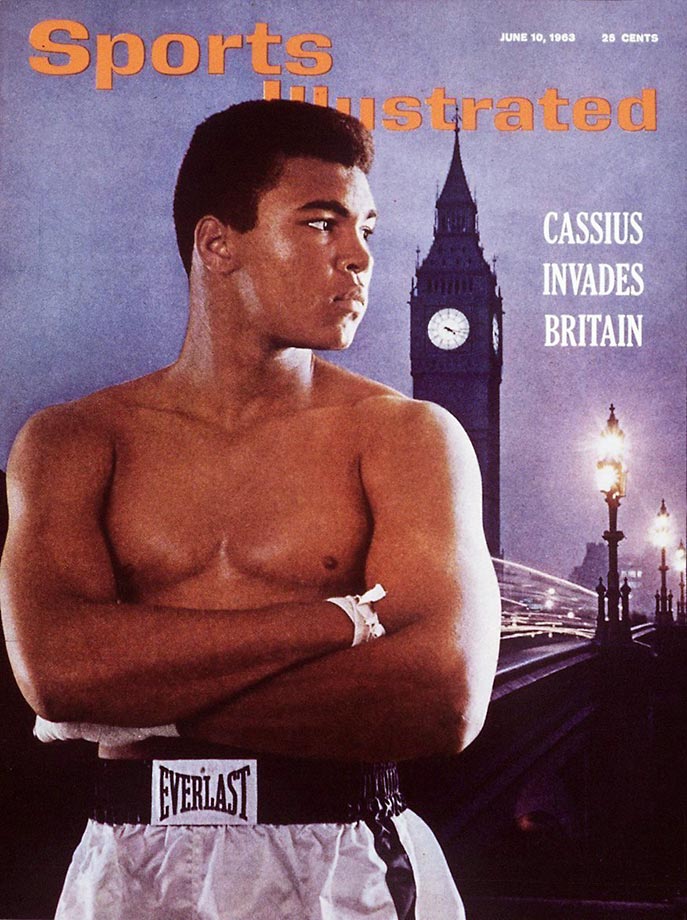
Muhammad Ali (1942-2016)

0

Boxing legend Muhammad Ali – one of the world’s greatest sporting figures – has died at the age of 74. The former world heavyweight champion died late on Friday at a hospital in the US city of Phoenix, Arizona, having been admitted on Thursday. He had been suffering from a respiratory illness, a condition that was complicated by Parkinson’s disease.

He was, and will always be, The Greatest. Rest in peace, Champ.

https://youtu.be/EYoh62jUFpk

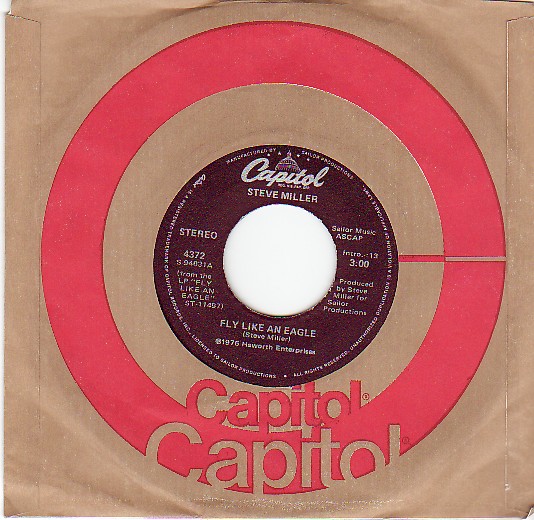
Steve Miller’s Isolated Vocals For “Fly Like An Eagle”

0

Steve Miller’s Fly Like an Eagle went to number 2 on the Billboard Hot 100 chart during the week of March 12, 1977, kept from the top spot by “Evergreen (Love Theme from A Star Is Born)” by Barbra Streisand. The single edit can be found on Greatest Hits (1974–1978). Live and on the radio, it’s usually played in tandem with Space Intro, but the song also segues into Wild Mountain Honey.

https://youtu.be/q67kd0c5Irg

What your phone looks like when you’re famous

0

Demy de Zeeuw is a Dutch soccer player that runs a soccer-based Instagram account. Look at what happens when he posts a photo.

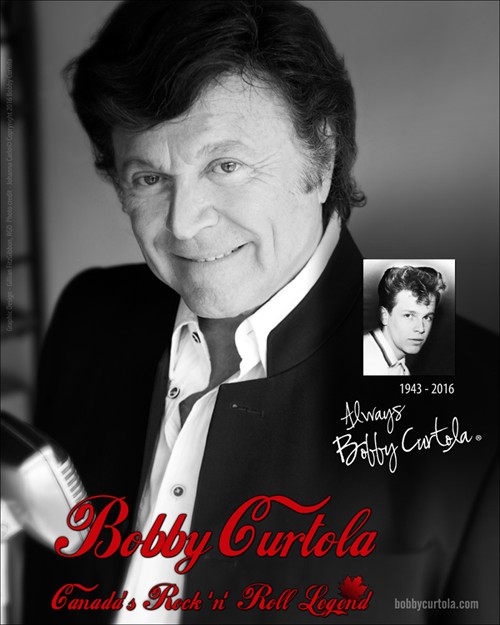
Canada’s Original Canadian Idol Bobby Curtola Has Passed Away

0

Bobby Curtola, the original teenage heartthrob and music trailblazer has passed away at home in Edmonton, Alberta on Saturday evening June 4, 2016.

The family has released a statement at this time:

It is with heavy hearts that we confirm the passing of our father, Bobby Curtola. He was an amazing man who did so much for the people in this world, but even more as a father, uncle, godfather and Nono. His entire family requests privacy at this time while they grieve their loss.

To his fans…he loved each and every one of you more than you will know, and never took for granted the life you gave him. He would want you to do something kind for one another today and each day. He would also want you to know he loves you, and that you have another angel watching over you

– Chris and Michael Curtola

The 1906 Recording Of The Edison Phonograph Advertising Itself

0

I Am The Edison Phonograph (Advertising Record), recorded by Len Spencer in 1906, would have been heard at most Edison phonograph dealers in the early part of the 20th century.

How frustration can make us more creative

0

Challenges and problems can derail your creative process … or they can make you more creative than ever. In the surprising story behind the best-selling solo piano album of all time, Tim Harford may just convince you of the advantages of having to work with a little mess.

These dancing holograms are the coolest way to learn to play the piano

0

I took exactly one lesson in piano, and hated it. Couldn’t do it. Still can’t play an instrument, even the kazoo. But MIT has developed a gran ambitious project that just might influence the next generation of piano superstars.

Andante visualizes as animated characters walking along the piano keyboard that appear to play the physical keys with each step. Based on a view of music pedagogy that emphasizes expressive, full-body communication early in the learning process, Andante promotes an understanding of the music rooted in the body, taking advantage of walking as one of the most fundamental human rhythms.

Andante from Tangible Media Group on Vimeo.

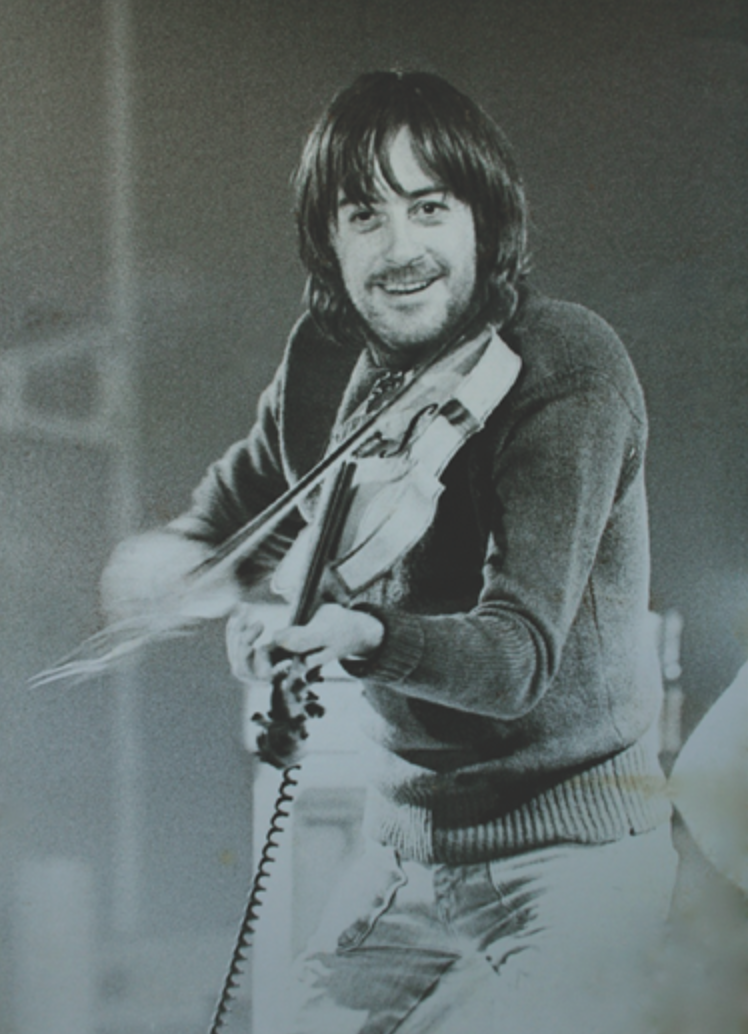
Musician Dave Swarbrick Of Fairport Convention Dies at 75

0

Musician Dave Swarbrick, best known for his work with influential folk group Fairport Convention, has died at the age of 75.

The band shared the news on their website, and they posted the following message:

We have just had the sad news from Alex Swarbrick that his father, Dave Swarbrick, has passed away. Swarb, as you know, had been seriously ill for some time and, although he had showed recent signs of improvement, died in hospital this morning. Our thoughts right now are with his wife Jill and the Swarbrick family.

Described by Ashley Hutchings as ‘the most influential [British] fiddle player bar none’ Swarbrick’s style has been copied or developed by almost every British, and many world folk violin players who have followed him. He was one of the most highly regarded musicians produced by the second British folk revival, contributing to some of the most important groups and projects of the 1960s, and he became a much sought-after session musician, which has led him throughout his career to work with many of the major figures in folk and folk rock music.

His work for the group Fairport Convention from 1969 has been credited with leading them to produce their seminal album Liege and Lief (1969) which initiated the electric folk movement. This, and his subsequent career, helped create greater interest in British traditional music and was highly influential within mainstream rock. After 1970 he emerged as Fairport Convention’s leading figure and guided the band through a series of important albums until its disbandment in 1979.

He also played in a series of smaller, acoustic units and engaged in solo projects which have maintained a massive output of recordings, a significant profile and have made a major contribution to the interpretation of traditional British music.

Eight Essential Diana Krall Albums Will Be Reissued In 180-Gram Double-LP Vinyl Editions

0

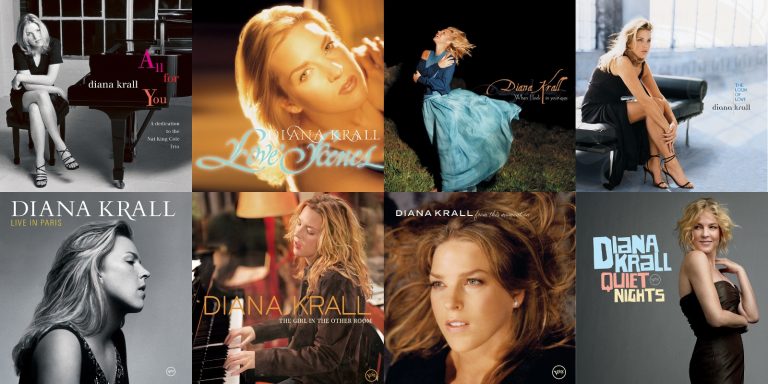
As part of Verve Records’ ongoing 60th anniversary celebration, Verve/UMe is proud to announce the July 15 release of eight essential Diana Krall albums in 180-gram, 2-LP vinyl reissues. The renowned pianist and vocalist has called Verve home for the vast majority of her illustrious career, and these new versions of her recordings originally released between 1996 and 2009 showcase many of her finest moments in lustrous vinyl format.

These reissues, which each feature the original album in its entirety on two LPs, range from intimate trio sessions to celebratory big band outings, songbook standards to modern pop favorites and memorable original songs. All feature Krall’s expressive voice and deft piano playing, along with production by three-time GRAMMY Award-winner Tommy LiPuma.

The series begins with All For You, Krall’s reverent tribute to the Nat King Cole Trio, originally released by impulse! in 1996. The album features Krall leading a trio with guitarist Russell Malone and bassist Paul Keller through some of the legendary pianist/singer’s most beloved tunes, with guest appearances by pianist Benny Green and percussionist Steve Kroon. Its follow-up, 1997’s Love Scenes, includes 13 of Krall’s favorite love songs, performed by her trio with Malone and Christian McBride on bass.

A distinctly orchestral sound comes to the forefront on Krall’s official Verve debut, When I Look in Your Eyes, released in 1999. Eight of the album’s 13 tracks feature strings conducted by veteran composer/arranger Johnny Mandel along with an all-star jazz ensemble. The symphonic approach was expanded even further for The Look of Love (2001), which spotlights Krall’s vocals backed by the London Symphony Orchestra.

Recorded live during Krall’s sold-out run at the legendary Olympia Music Hall in Paris in late 2001, Live in Paris captures the energy and spark of Krall’s concert performances. The album’s dozen songs feature several of Krall’s regular collaborators, including guitarist Anthony Wilson, bassist Christian McBride, and drummer Jeff Hamilton, as well as Orchestre Symphonique Européen, conducted by pianist/arranger Alan Broadbent.

The Girl in the Other Room (2004) was Krall’s first release to prominently feature her own original songs, many of them written in collaboration with her husband, Elvis Costello. She returned to the Great American Songbook for 2006’s From This Moment On, which garnered a Best Jazz Vocal Album nomination at the 2007 GRAMMY® Awards. The series concludes with Krall’s 2009 album, Quiet Nights—her tenth release—highlighted by GRAMMY® Award-nominated arrangements from frequent collaborator Claus Ogerman.

Diana Krall is a star in a long line of revered and influential artists who have been featured on Verve throughout the label’s 60 years. Verve was founded in 1956 by Norman Granz, the forward-thinking impresario responsible for the hugely popular Jazz at the Philharmonic concerts, which brought the music to new audiences and garnered jazz an unprecedented level of respect in popular culture. Granz also managed Ella Fitzgerald and launched the label in large part to create new opportunities worthy of the singer’s immense talent, including her landmark series of “Songbook” recordings.

Under the visionary leadership of Granz and, after MGM purchased the imprint in 1961, Creed Taylor, Verve continued to set new trends. The label sparked the Bossa Nova craze with the 1964 release of the GRAMMY® Award-winning Getz/Gilberto and brought a lush, elegant new sound to jazz with the arrangements of Claus Ogerman and Oliver Nelson. Its focus eventually widened to encompass groundbreaking comedy, folk and rock recordings, including now-iconic releases by The Velvet Underground, Frank Zappa & The Mothers of Invention, Janis Ian and Laura Nyro.

It was its jazz legacy that cemented Verve’s place in the popular imagination, however, and after a fallow period in the ’70s and ’80s Verve was revived in the mid-1990s, again signing many of the biggest names in music: Herbie Hancock, Wayne Shorter, John Scofield, Betty Carter, Abbey Lincoln and Shirley Horn, all of whom recorded for Verve during this period.

Over the course of its six-decade history, Verve has become synonymous with the very best in jazz, venerating the music while charting its course and helping to break down racial and stylistic barriers. There’s no better way to celebrate that legacy than with the music itself, and 2016’s 60th anniversary releases invite listeners to revisit the breathtaking sounds of Verve in new and exhilarating ways.