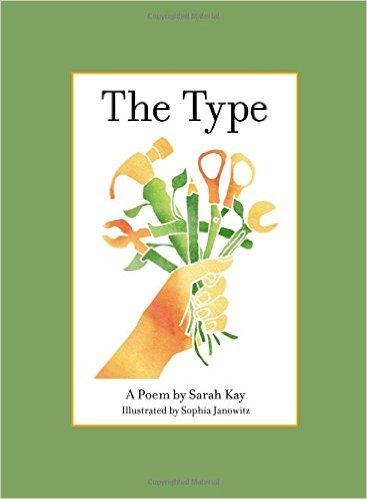
Sarah Kay’s powerful spoken word poetry performances have gone viral, with more than 10 million online views and thousands more in global live audiences. In her second single-poem volume, The Type, Kay takes readers along a lyrical road toward empowerment, exploring the promise and complicated reality of being a woman. The wonderful Brain Pickings blog sat down with her and talked about how we measure success.
Brain Pickings: And this brings us back to the legitimacy question — if making a living isn’t the metric of success in creative work, if academic credentials aren’t it, then what is? What is your internal barometer for your own legitimacy?
Sarah Kay: Oof, that’s a big question.
I think my work, from a broad perspective — by this I mean my work as a writer, teacher, organizer, human — is about trying to invite people in and create spaces where people feel welcome and comfortable with poetry, but are still creatively challenged. When that’s happening, that feels like success to me.
In terms of assessing the work itself — individual poems — that’s a lot harder. There’s a fable I like to tell, which I think is originally with a boy but I tell it with a girl. A girl walks up to a construction site and asks the first man she sees, “Excuse me, what are you doing?” And he says, “Oh, can’t you see I’m laying bricks?” She then walks up to the second man she sees, who is doing the exact same thing the first one was doing, and says, “Excuse me, what are you doing?” And he says, “Oh, can’t you see I’m building a wall?” And then she reaches the third man, who is doing the same thing as the previous two, and she says, “Excuse me, what are you doing?” And he says, “Oh, can’t you see I’m building a temple?”
I think of that fable a lot, because it’s not so much about what kind of a man you are — it’s about how you look at the work you’re doing. And I don’t think it’s a judgment on any particular way of looking at the world — in fact, I think we all probably contain all three of those, and we shift in and out depending on where we are in our lives, or even in our day.
For me, when I’m creating a poem, it feels like I’m laying bricks — it’s very logistical, a physical movement of words, putting them together, focused on the minutia of the poem. And when I’m in schools, working with young people, I’m focusing on building connections with them and for them — that feels like building a wall, creating something that’s part of something else. The temple part is a much rarer moment of being able to tap into something bigger than yourself. But what’s so wonderful about all of this is that if you focus on one of the three for too long, you lose sight of the other two — so it requires a lot of shifting and balancing in order to get anything done at all.
And in terms of success, although I spend a lot more time on the brick-laying and wall-building — I spend more time writing poems and teaching workshops — and I far less frequently get a chance to witness the visions of temple, when those visions do appear, they’re easier to identify as points of success than in those other two realms.
One vision-of-temple moment for me has come from my work with a community of poets in Katmandu and Nepal, whose work is so important to me and probably the thing I’m proudest of. When I first met them, they were a handful of young kids who were curious about spoken word but hadn’t really done it. I worked with them — I did a lot of workshops and brought them to schools — and when I left, they continued that work. They have since grown this immense spoken-word poetry community and received this huge grant from the government to do a two-year program supporting spoken-word programming in six different areas of rural Nepal, specifically working with marginalized groups like the LGBTQ community, recovering drug addicts, the physically disabled, and young women, who are deeply marginalized in that society right now.
The fact that they are using this art form to make community and allow people who are not listened to and not heard in the larger society have the opportunity to speak for themselves and be witnessed in their stories — that is the temple to me.
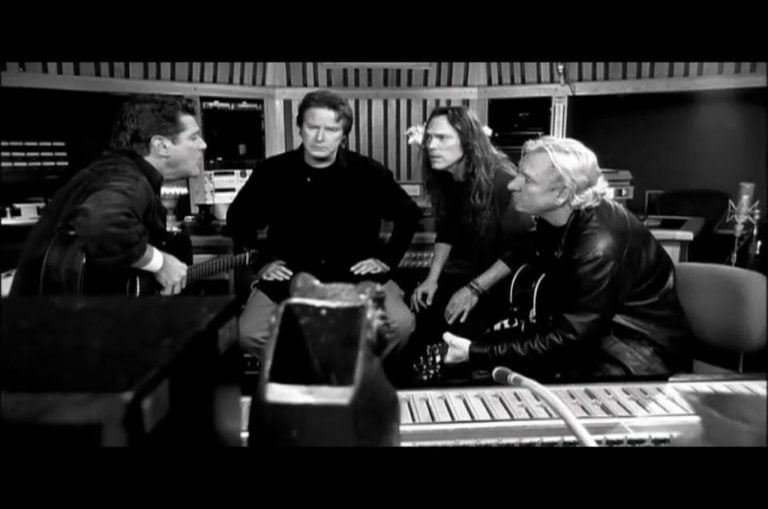
After selling 150 million records — 100 million in the U.S. alone — including 42 million copies of Their Greatest Hits (1971–1975) and 32 million copies of Hotel California, and the recent death of co-leader Glenn Frey, Don Henley has described The Eagles’ tribute to Frey as the band’s “final farewell”.
The remaining members of the group, accompanied by Jackson Browne, played a poignant version of Take It Easy at last month’s Grammys ceremony, just a month after Frey died at the age of 67.
Speaking to BBC Radio 2’s Simon Mayo, Henley described the performance as “very difficult and very emotional,” revealing “we almost didn’t do it. I think it was an appropriate farewell. I don’t think you’ll see us performing again.”
The Canadian Country Music Association (CCMA) has announced that Country Music Week 2015, hosted in Halifax, brought $11.8 million in economic activity to Nova Scotia, exceeding economic estimates and generating a total of $5.5 million in new money.
An economic impact assessment, administered by the Canadian Sport Tourism Alliance, found that more than 14,500 attendees took in one or more of the events between September 10 and 13, 2015. The event attracted more than 3,800 people from outside the province, 38% of which were first-time visitors.
“As we celebrate the CCMA’s 40th anniversary this year, we’re thrilled to be able to continue the tradition of bringing Country Music Week and the CCMA Awards Show to cities across Canada,” said Don Green, President of the CCMA. “To have the ability to deliver our mandate of educating, elevating and celebrating country music and to also bring significant economic value to our host city and province shows the cultural value of our CCMA initiatives – initiatives we hope Canadians from coast to coast will join us in embracing and celebrating.”
The economic impact assessment of Country Music Week 2015, administered by the Canadian Sport Tourism Alliance, can be found in full here.
In the past week, tornados have caused damage and havoc throughout the state of Texas — but one dog stayed chill, throughout it all. Andrea Martinez, reporting for local news station KYTX, was assessing damage in Malakoff, Texas when she came across a very strange sight.
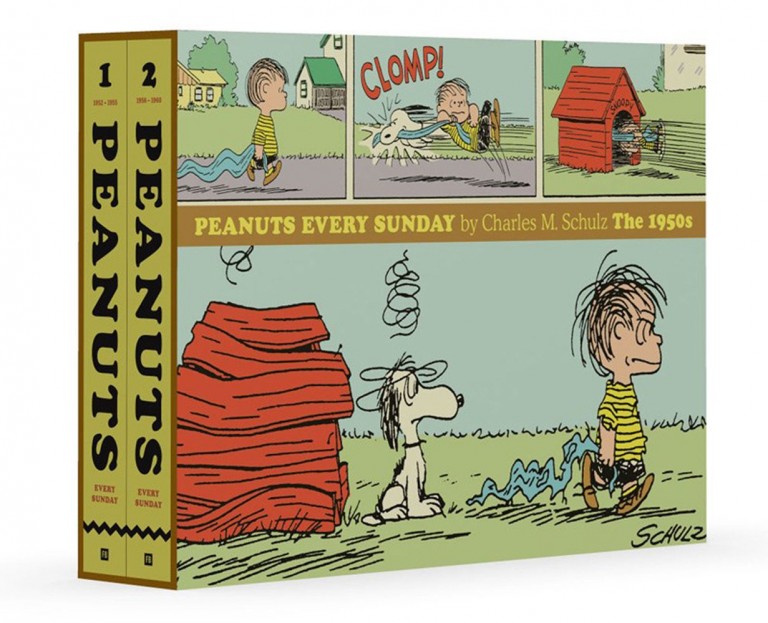
I’m in the middle of an early spring cleaning, so I’ve made room for…more stuff. Good thing this caught my eye when it did. An all-time masterpiece, right up there with immovable feasts like Calvin And Hobbes, there’s a new collection of Peanuts waiting to delight.
Since their original publication, Peanuts Sundays have almost always been collected and reprinted in black and white. But many who read Peanuts in their original Sunday papers remain fond of the striking coloring, which makes for a surprisingly different reading experience. This gift box set houses the first golden age of Peanuts Sundays in one gorgeous, full-color coffee table book. Linus, Charlie Brown, Pig-Pen, Shermy, Violet, Sally, Patty, and Schroeder are all present, but the rising star is undoubtedly Snoopy. Peanuts Every Sunday: The 1950s Gift Box Set has been scrupulously re-colored to match the original syndicate coloring ― allowing readers to plunge into Charles Schulz’s marvelous world.
Better Call Saul’s Michael McKean explains how he went from a folksy garage band with Christopher Guest to Spinal Tap fame.
“Well in some cases it was about them, it just hadn’t happened yet. Part of the plot is that the manager quits and one of the girlfriends takes over as the manager of the band and starts to re-route the tour using astrology. Well that exact same thing happened several years later and they just hadn’t see the movie I guess. Or they had and they were inspired. …I saw film of Tom Petty and his band getting lost in this huge entertainment complex in Germany and suddenly they wound up on a tennis court with no audience.”
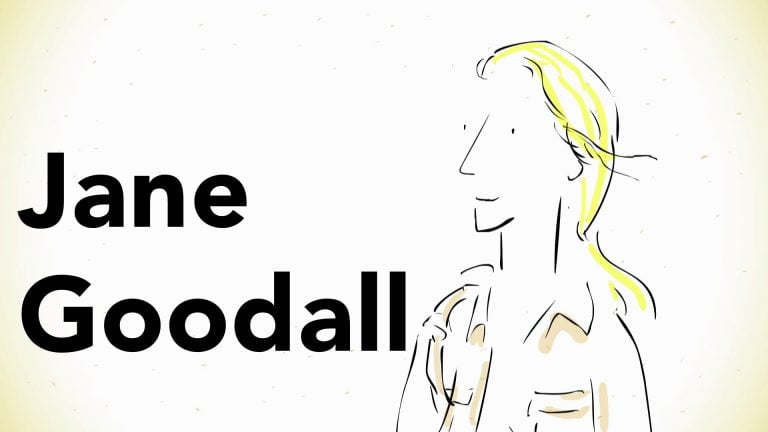
Animals were my passion from even before I could speak apparently. When I was about 10, 11 I fell in love with Tarzan”
– Jane Goodall, as told to Ira Flatow in 2002
Jane Goodall is so nice, so good, it’s intimidating. She seems like almost a kind of mythic figure. She made groundbreaking discoveries about the behavior of chimpanzees when she was only in her 20s, and without any formal training or degree. Even now, she’s always on the go, speaking up for the rights of animals, campaigning for conservation, and working slavishly on her environmental education program. She’s a role model for young girls to get into science. With all that, it’s sometimes been hard for us to imagine her as one of us ordinary humans.
Which is why this interview Blank On Blank came across by veteran public radio science journalist Ira Flatow was just so great. Ira talked with Jane Goodall for his long-running Science Friday program back in 2002, and in that conversation, you can hear a Jane who’s full of formidable conviction, yes – but she’s also humble, vulnerable and best of all even actually fun.
Columbia/Legacy will commemorate the 90th birthday of globally renowned music innovator Miles Davis with the release of two very special new Miles Davis album projects:
MILES AHEAD – Original Motion Picture Soundtrack will be available Friday, April 1. A cinematic exploration of the life and music of Miles Davis, the movie feature “MILES AHEAD” marks the directorial debut of Don Cheadle, who co-wrote the screenplay (with Steven Baigelman) and stars as the legendary musician in the film. MILES AHEAD – Original Motion Picture Soundtrack is available now for digital pre-orders via iTunes.
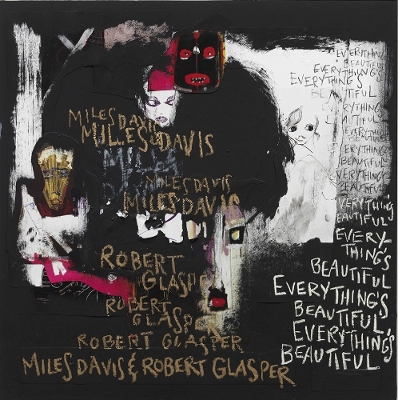
EVERYTHING’S BEAUTIFUL, reimagined interpretations of Miles Davis’ music produced by Grammy Award winner Robert Glasper(who also served as coproducer of the MILES AHEAD soundtrack) with musical guest artists including Bilal, Illa J, Erykah Badu, Phonte, Hiatus Kaiyote, Laura Mvula, KING, Georgia Ann Muldrow, John Scofield and Ledisi, and Stevie Wonder. A visionary exploration of the music of Miles Davis, EVERYTHING’S BEAUTIFUL incorporates Davis’ original recordings into new collaborative soundscapes and will be available Friday, May 27 (the day after Miles’ 90th birthday). The Miles Davis track featuring Bilal “Ghetto Walkin”, from the upcoming release EVERYTHING’S BEAUTIFUL, premieres today for the first time during Zane Lowe’s Beats 1 show on Apple Music. EVERYTHING’S BEAUTIFUL is also available now for digital pre-orders via iTunes.
MILES AHEAD – Original Motion Picture Soundtrack explores the breadth and depth of Miles Davis’ musical innovations, combining 11 highlights from the legendary trumpeter/composer/bandleader’s Prestige and Columbia Records catalogs with original new compositions written and performed by Grammy Award-winning jazz/hip-hop artist Robert Glasper. Select new tracks on the soundtrack album include guest appearances by Herbie Hancock, Wayne Shorter, rapper Pharoahe Monch and more. Both the CD and LP packages for MILES AHEAD – Original Motion Picture Soundtrack feature revelatory new liner notes penned by Don Cheadle.
“We culled the library for every style Miles touched…looking for cues to bridge key moments, bring others into focus. The stuff a good score is supposed to do. Miles made it easier. His music is multi-faceted and score friendly,” wrote Cheadle in his notes.
For new and future fans, MILES AHEAD – Original Motion Soundtrack provides an ideal introduction to the music of Miles Davis. For seasoned aficionados of the influential 20th century musical pioneer, the album and film provide fresh perspectives and new insights into Miles’ transformative musical and cultural genius.
MILES AHEAD – Original Motion Soundtrack features 11 essential tracks spanning 1956 to 1981, select dialogue from the film featuring Cheadle in character, and five original compositions written, co-written, produced or performed exclusively for MILES AHEAD by Robert Glasper. These include “What’s Wrong with That?” (a jam that closes the movie imagining Cheadle as Miles playing in the present day with guest performers Glasper, Herbie Hancock, Wayne Shorter, Gary Clark, Jr. and Esperanza Spalding and Antonio Sanchez) and “Gone 2015,” an end-credits song featuring guest verses from rapper Pharoahe Monch.
The 2016 SXSW Festival in Austin, TX will premiere the long-awaited, critically acclaimed feature film “MILES AHEAD” on Wednesday, March 16th at 8:00pm at The Paramount Theatre.
A special “MILES AHEAD” panel led by Don Cheadle, with NPR’s Felix Contreras onboard as Moderator, will discuss the making of the film, along with the music, with intimate behind-the-scenes anecdotes provided by Erin Davis (son of Miles) and Vince Wilburn, Jr.(nephew of Miles). Additional panelists include Robert Glasper, who scored the film’s soundtrack; Oscar-winning supervising sound editor, re-recording mixer and sound designer Skip Lievsay; and Keyon Harrold, a sought out trumpeter/producer/arranger/songwriter who performs with GRAMMY-winning group D’Angelo and The Vanguard, and is featured as the trumpet sound of Don Cheadle playing Miles Davis. The panel will take place on Thursday, March 17 at 12:30pm in ACC Room 18ABC, and will be open to Music, Film, Platinum and Gold badges, as well as Showcasing Artist wristbands.
EVERYTHING’S BEAUTIFULis beautifully crafted collection produced by Robert Glasper, blending a diverse group of master takes and outtakes from across the incomparable Miles Davis Columbia catalog with an impressive lineup of contemporary artists and musicians to create original interpretations.
“I didn’t want to do just a remix record,” Glasper noted when discussing the 11-song set. “My idea was to show how Miles inspired people to make new art.” Realizing that “Miles didn’t have one audience,” Glasper recruited a legion of diverse guest artists to add to the magic of the project including familiar collaborators like R&B musicians Erykah Badu, Ledisi, Bilal and KING. They are joined by British soul singer-songwriter Laura Mvula; hip-hop producer Rashad Smith; Grammy-nominated Australian neo-soul quartet Hiatus Kaiyote, rapper/singer Phonte, rapper/producer Illa J; jazz guitarist John Scofield, who was in Miles Davis’ band; and the legendaryStevie Wonder.
“I am living in the spirit of Miles when I am doing what I’m doing because I am documenting my time period. I’m documenting what’s around me. I’m documenting who I am now, where music is now,” notes Glasper. “That’s what this project is about. I wanted to do something where we can take some of Miles’ ideas, shake them up, and try to show the influence of Miles and make new things. And that’s the beauty of this whole album. The whole project is based on Miles, but it is based on Miles’ vision, it’s based on Miles’ trumpet, it’s based on Miles’ voice, it’s based on Miles’ composition, it’s based on Miles’ influence, it’s based on Miles’ swag.”
Miles Davis is a rarity: a pioneering superstar who was constantly voyaging into new directions and genres with an ever changing cast of collaborators. Throughout his discography, sweeping change and innovation could happen based on who was in the studio and what they brought to his stunning musical vision. Few American artists have impacted popular music and culture in as broad and long-lasting a way as he did.
By similar design, pianist/producer Robert Glasper has built a career out of a vibrant fusion of R&B, jazz and hip-hop. As the leader of the acoustic Robert Glasper Trio and the electronic Robert Glasper Experiment, he’s pushed the boundaries of each genre he works in to their breaking point. This is the artist whose album, In My Element (2007), featured mashups of Herbie Hancock and Radiohead and tributes to rapper/producer J Dilla. 2013’s acclaimed Black Radio featured collaborations with Erykah Badu, Ledisi, Lupe Fiasco, Yasiin Bey and other artists. Black Radio was also capped by a sprawling cover of Nirvana’s “Smells Like Teen Spirit” and won a Grammy Award for Best R&B Album. Most recently, Glasper scored for MILES AHEAD, the Miles Davis film directed by and starringDon Cheadle.
EVERYTHING’S BEAUTIFUL is unlike any other in Davis’ discography. From the familiar (riffs and passages within the catalog) to the obscure (samples of Miles’ in-studio instructions spoken after false starts), Glasper has built something unique but still unquestionably Miles. The cover art was created by Francine Turk and integrates elements of Miles Davis’ artwork. With the cover, Turk creates a visual that is similar to the idea of Robert Glasper taking fragments of Miles music and reinterpreting in a unique and modern way.
MILES AHEAD – ORIGINAL MOTION PICTURE SOUNDTRACK
Miles Ahead
Dialogue: “It takes a long time…” (*)
So What
Taylor Made – Taylor Eigisti
Dialogue: “Listen, you talk too goddam much…” (*)
Solea (excerpt)
Seven Steps To Heaven (edit)
Dialogue: “If you gonna tell a story…”(*)
Nefertiti (edit)
Frelon Brun
Dialogue: “Sometimes you have these thoughts…”(*)
Duran (take 6) (edit)
Dialogue: “You own my music…”(*)
Go Ahead John (part two C)
Black Satin (edit)
Dialogue: “Be musical about this shit…”(*)
Prelude #II
Dialogue: “Y’all listening to them…?(*)
Junior’s Jam – Robert Glasper, Keyon Harrold, Marcus Strickland
Francessence – Robert Glasper, Keyon Harrold, Elena Pinderhughes
Back Seat Betty (excerpt)
Dialogue: “I don’t like the word jazz…” (*)
What’s Wrong With That? – Don Cheadle, Robert Glasper, Gary Clark, Jr., Herbie Hancock, Keyon Harrold, Antonio Sanchez, Esperanza Spaulding, Wayne Shorter
Gone 2015 – Robert Glasper, Keyon Harrold, Pharoahe Monch
(*) from the soundtrack of the film, Don Cheadle as Miles Davis
All other tracks performed by Miles Davis, except where noted
Soundtrack album produced by Don Cheadle, Steve Berkowitz, Ed Gerrard & Robert Glasper
The National Association for Music Education is once again celebrating “Music In Our Schools Month” in March. To help focus attention on creating the next generation of musicians, Vincent James, founder of Keep Music Alive, has announced the second annual “Teach Music America Week” to be celebrated March 21 to 27. Keep Music Alive was formed to support music and music education.
During the week, musicians and music teachers are asked to offer at least one new student a free, 30-minute lesson. Keep Music Alive is also asking aspiring music students (young and old) to find a musician or music teacher participating in “Teach Music America Week.”
Why is this important? Sometimes the biggest hurdle to anything is just getting started. Keep Music Alive believes that by encouraging musicians, music teachers and potential students to reach out to each other during March, many will continue to teach, learn and share music with each other long after the month is over. The organization’s goal is to get as many new students as possible to begin learning how to play a musical instrument.
“The purpose of ‘Teach Music America Week’ and Keep Music Alive is to help remind us how important and valuable music is and all the reasons why,” says James. “By sparking musical interest in these new students, we will collectively help ensure that quality new music is created for future generations. As an added bonus, we will also be helping to develop their minds for many successful careers outside the arts.”
James cites cuts in music and arts education, the switch from CD/MP3 sales to streaming and fewer live music venues as factors leading music down a troubling path. He says the Keep Music Alive mission is an attempt to push back so that future generations will continue to enjoy quality new music.
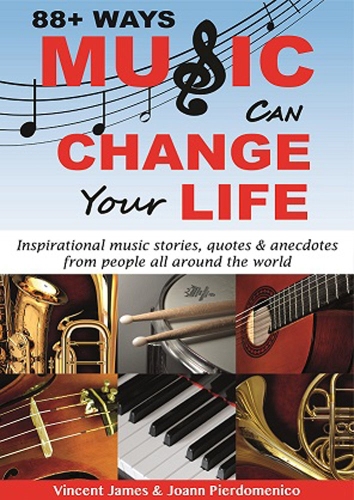
Last year Keep Music Alive published the book “88+ Ways Music Can Change Your Life,” featuring over 150 inspirational music stories and quotes from musicians, music educators and music lovers from all over the world, including a number of celebrities.
A Magellanic penguin that migrates from Patagonia and a retired bricklayer in a Brazilian fishing village have struck up an unusual friendship.
71-year-old retired bricklayer and part time fisherman Joao Pereira de Souza found Dindim, a South American Magellanic penguin, covered in oil and close to death. When De Souza nursed him back to health, however, he found that Dindim didn’t want to leave; when he finally did, De Souza was surprised to see him return the next year, and the years following.
“I love the penguin like it’s my own child and I believe the penguin loves me,” Joao told Globo TV. “No one else is allowed to touch him. He pecks them if they do. He lays on my lap, lets me give him showers, allows me to feed him sardines and to pick him up.”