Home Blog Page 2786

Scott Weiland, Former Stone Temple Pilots and Velvet Revolver Singer, Dead at 48

1

Scott Weiland, best known as the lead singer for Stone Temple Pilots and Velvet Revolver, passed away in his sleep while on a tour stop in Bloomington, Minnesota, with his band The Wildabouts.

According to Billboard, the Bloomington, Minn. Police Department issued a statement at 11:15 p.m. PT detailing the events as such: On Dec. 3rd at 8:22 p.m., officers responded to a report of an unresponsive adult male in a recreational motor vehicle located in the 2200 block of Killebrew Drive. “Officers arrived and determined the adult male was deceased,” read the release, which did not identify the deceased. The address seems to correspond to a local Country Inn & Suites hotel.

Here’s the interview I did earlier this summer:

Two days before being found dead at 48, Scott Weiland gave one of his last interviews backstage at Toronto’s Adelaide Hall.

Neil Portnow, President and CEO of The Recording Academy wrote in a release, “Two-time GRAMMY Award winner Scott Weiland was a grunge icon and a true modern day, rock and roll front man. From the massive success he achieved as the original lead vocalist of Stone Temple Pilots to his work with rock supergroup Velvet Revolver and his most recent venture with the Wildabouts, Scott’s extraordinary talent and captivating performances will forever live on and inspire legions of rock fans worldwide. We have lost an innovative member of our creative community and our sincerest condolences go out to Scott’s family, friends, collaborators and all who have been impacted by his incredible work.”

STP went on to sell 13.5 million albums in the U.S., according to Nielsen Music, while Velvet Revolver sold 2.4 million units.

Craig Kallman, Atlantic Records’ CEO helped the band get signed to his label, and he sent out a letter yesterday to pay tribute to Weiland.

Dear Colleagues,

You may have heard the deeply sad news that Scott Weiland, the former lead singer of Stone Temple Pilots, passed away last night at the age of 48. Scott was a force of nature, on record and on stage. One of the most extraordinary vocalists, performers, and songwriters in rock history, he was a charismatic, galvanizing presence with an unmistakable voice and style.

In 1991, the year that I joined Atlantic Records, we signed a band from Southern California called Mighty Joe Young. By the following year, they had changed their name to Stone Temple Pilots, and I watched firsthand as they began a decade of phenomenal creativity and success. We released their debut album, Core, in September of 1992, and STP immediately became America’s biggest new rock band, going on to rank among the most accomplished and influential artists of their generation.

By the time they disbanded in 2002, STP had sold some 35 million albums worldwide, half of those in the U.S. alone. Their songs became rock anthems: “’Sex Type Thing, “ “Plush,” “Creep”, “Interstate Love Song,” and many more. Scott and STP made music that has only become more timeless over the years, sounding as fresh and vital today as the day it was recorded. In 1998, we released Scott’s acclaimed solo album, 12 Bar Blues. STP got back together in 2008, and we released their reunion album in 2010, but unfortunately, it turned out to be Scott’s last work with the band.

Scott was an incredibly creative, warm, intelligent, and inspired human being. His demons have been well publicized, but it is his incredible musical legacy that will be remembered for many years to come. Scott’s passing is a tragic loss for all of those who knew him and for his millions of fans around the world. He will be greatly missed.

Craig Kallman

The surviving members of Stone Temple Pilots took to Facebook on Friday to post their own tribute to Weiland:

The post reads:

Dear Scott,
Let us start by saying thank you for sharing your life with us.
Together we crafted a legacy of music that has given so many people happiness and great memories.
The memories are many, and they run deep for us.
We know amidst the good and the bad you struggled, time and time again.
It’s what made you who you were.
You were gifted beyond words, Scott.
Part of that gift was part of your curse.
With deep sorrow for you and your family, we are saddened to see you go.
All of our love and respect.
We will miss you brother,
Robert, Eric, Dean

Here’s one of my all-time faves, Slither. May he finally, finally get some rest and peace.
Jesse Cook Guitar Value At $18,000 To Be Auctioned By CharityBuzz On Behalf Of MusiCounts

0

Speaking about his guitars, legendary musician and Entertainment One Music recording artist Jesse Cook said, “Over the years, I’ve taken my music and tried to cross-pollinate it with music from different parts of the world,” explains the 50-year-old global-guitar virtuoso. “For the (2003) album Nomad, I went to Cairo and recorded with musicians there. On my (2009) record The Rumba Foundation, I went to Colombia, and worked with musicians from Cuba as well. On (1998’s) Vertigo, I went down to Lafayette, La., and recorded with Buckwheat Zydeco. For me, the question has always been: Where did you go? Where did you take your guitar?” The answer is found in his new album, the #1 Jazz and World Music album One World, and now, fans of Cook will have an opportunity to own one of these treasured instruments valued at $18,000 in CharityBuzz’s upcoming auction for a one-of-a-kind Deluxe Calton, to be held online starting December 1 and ends December 20.

This is a brand new Flamenco instrument, specifically made for Cook. Cook has played a Laskin Flamenco Negra in performance for many years. This on-going collaboration with Cook inspiring Laskin to build him another guitar. After years of dreaming about getting a Flamenco Blanca Laskin, the guitar-maker finally managed to find the time to build one. As always, his guitar was spectacular. Jesse was caught by surprise when presented with a new $18,000 Laskin guitar, and he’s now passed along the opportunity for another music-lover to enjoy it, with proceeds going to MusiCounts, Canada’s music education charity associated with The Canadian Academy of Recording Arts and Sciences (CARAS), helping to keep music alive in schools and communities across Canada.

A video of Jesse’s performance with this unique instrument can be seen on below.

Here’s a video of Jesse sharing his love for his William Laskin guitar in conversation with its builder.

“By giving another music-lover the chance to enjoy this incredibly unique instrument, we will be providing the opportunity for thousands of children to experience the sheer joy of making music, along with the many other benefits that are proven to go hand-in-hand with music education,” Said Vanessa Thomas, Executive Director, MusiCounts.  “We are extremely grateful for Jesse’s generosity as this will help us support multiple music programs with instruments that will last for many years to come.”

The guitar is set up within the normal range of CONCERT Flamenco action. It is currently at 7/64 measured at the 12 fret position. “Commonly we have flamenco players who go as low as 6/64 and rarely even lower,” says Laskin.  “There is a full 6/64 of excess height at the bridge saddle so plenty of scope to lower the action if required.”

“This is an excellent opportunity to acquire a classic instrument, complete with a unique history and future, and to support an exceptionally worthy cause at the same time. It’s no overstatement that this is one of the most beautifully-made and sonically-perfect instruments in the world,” said Cook. “This is a significant instrument, and will no doubt be the prize in some guitarist’s collection.”

MusiCounts, Canada’s music education charity associated with The Canadian Academy of Recording Arts and Sciences (CARAS) and the Canadian Country Music Association (CCMA), is putting musical instruments into the hands of children who need it most. MusiCounts’ mission is to ensure that children in Canada, regardless of socio-economic circumstances or cultural background, have access to music programs through their schools and communities. Since MusiCounts’ establishment in 1997, nearly $8,000,000 has been awarded in support of music education in Canada. These funds have benefitted over 700 schools and communities from coast to coast, supported over 300 post-secondary music program graduates and honoured 10 extraordinary music teachers through the MusiCounts Teacher of the Year Award. For more information visit musicounts.ca.


Dave Grohl Performs ‘Learn to Fly’ with The Muppets

0

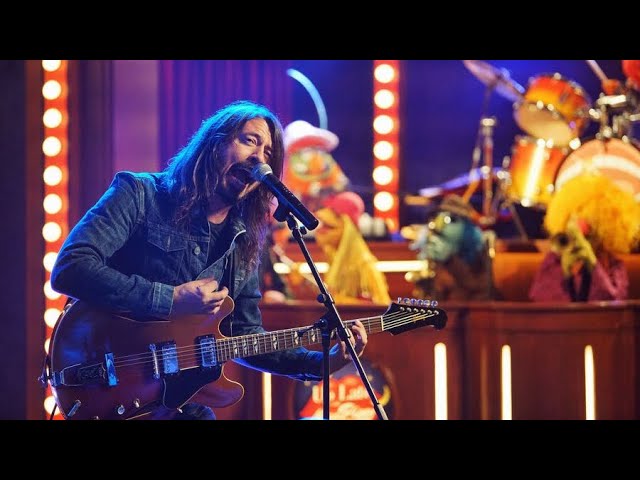
Dave Grohl has reunited with his past legendary band, who changed music for an entire generation. No, not Nirvana, but The Muppets. Grohl has gone back to The Muppets rock house band The Electric Mayhem for a cover of the 1999 Foo Fighters’ hit “Learn to Fly”.

Watch Adele’s ‘Live in New York City’ Trailer

0

Adele’s 25 has now sold more than 4.2 million in the U.S., according to Nielsen Music. If it sells a million, it would then become the first album in Nielsen history to sell a million copies in two different weeks. Don’t miss Adele’s special one-night-only concert from Radio City Music Hall, airing Monday, December 14 at 10/9c on NBC.

https://youtu.be/s9lcqTAWmTU

Dine Alone Records announces a special LP of Lullabies out December 4

0
Dine Alone Records is proud to announce a very special album of children’s lullabies, featuring 16 tracks from some of the label’s best-loved artists. Casey Cole, of Sparrow Sleeps, has transformed familiar songs from City and Colour, Alexisonfire, Arkells, Jimmy Eat World, and many more into soothing and beautifully haunting soundscapes that children and parents alike will enjoy for years to come.  The album will be available via iTunes here as of December 4, as well as on CD through Dine Alone Records webstore and in various record stores across Canada including HMV. All net proceeds will be donated to SickKids Foundation to support the highest priority needs at the hospital so staff can continue to provide exceptional care.

Says Joel Carriere, Dine Alone founder, “When my first son, Cole was born it was the most amazing day of my family’s life. A few short hours later, his health took a turn and we found ourselves thrown into a four month, life-changing adventure at Mount Sinai Hospital and SickKids. We spent countless days and nights feeling helpless by Cole’s bedside and lullabies seemed to be the only thing that kept us sane and got us through a difficult and exhausting time with our new son.  I wanted to create a Dine Alone lullaby record in the hope that it may help others like it did for my family. SickKids was also such a huge support during this time so we wanted to give back to them in some meaningful way.”
 
Sparrow Sleeps are two Midwestern guys with pop-punk fueled hearts who craft lullaby renditions of your favourite songs. The team has worked on lullabies for various well-known artists including Thrice, Say Anything, and Jimmy Eat World.
 
DINE ALONE LULLABIES by Sparrow Sleeps Tracklist
01. The Girl (City and Colour)
02. Operator (Vanessa Carlton)
03. Bye Bye Love (Jimmy Eat World)
04. Accidents (Alexisonfire)
05. Oh, The Boss Is Coming! (Arkells)
06. Bambi (Tokyo Police Club)
07. Young Leaves (Attack In Black)
08. I Don’t Know (The Sheepdogs)
09. Stairway (Yukon Blonde)
10. Turn It Around (Lucius)
11. Class Historian (BRONCHO)
12. Robotic (Hannah Georgas)
13. Back To You (Twin Forks)
14. Sweet Mountain River (Monster Truck)
15. Don’t Ever Tell Locke What He Can’t Do (Moneen)
16. Dine Alone (Quicksand)

Mark Zuckerberg and Priscilla Chan will give away 99% of Facebook stock, worth $45 billion for charity

0

Mark Zuckerberg and his wife Priscilla Chan celebrated the birth of their daughter Max with an open letter to her and a pledge to give away, donate, or invest 99% of their Facebook shares. His letter has 1.3 million likes so far, and shows just how uncompromising Mark and Priscilla are in truly making a difference in this world. An incredible achievement.

A letter to our daughter
MARK ZUCKERBERG·TUESDAY, DECEMBER 1, 2015
Dear Max,
Your mother and I don’t yet have the words to describe the hope you give us for the future. Your new life is full of promise, and we hope you will be happy and healthy so you can explore it fully. You’ve already given us a reason to reflect on the world we hope you live in.
Like all parents, we want you to grow up in a world better than ours today.
While headlines often focus on what’s wrong, in many ways the world is getting better. Health is improving. Poverty is shrinking. Knowledge is growing. People are connecting. Technological progress in every field means your life should be dramatically better than ours today.
We will do our part to make this happen, not only because we love you, but also because we have a moral responsibility to all children in the next generation.
We believe all lives have equal value, and that includes the many more people who will live in future generations than live today. Our society has an obligation to invest now to improve the lives of all those coming into this world, not just those already here.
But right now, we don’t always collectively direct our resources at the biggest opportunities and problems your generation will face.
Consider disease. Today we spend about 50 times more as a society treating people who are sick than we invest in research so you won’t get sick in the first place.
Medicine has only been a real science for less than 100 years, and we’ve already seen complete cures for some diseases and good progress for others. As technology accelerates, we have a real shot at preventing, curing or managing all or most of the rest in the next 100 years.
Today, most people die from five things — heart disease, cancer, stroke, neurodegenerative and infectious diseases — and we can make faster progress on these and other problems.
Once we recognize that your generation and your children’s generation may not have to suffer from disease, we collectively have a responsibility to tilt our investments a bit more towards the future to make this reality. Your mother and I want to do our part.
Curing disease will take time. Over short periods of five or ten years, it may not seem like we’re making much of a difference. But over the long term, seeds planted now will grow, and one day, you or your children will see what we can only imagine: a world without suffering from disease.
There are so many opportunities just like this. If society focuses more of its energy on these great challenges, we will leave your generation a much better world.
• • •
Our hopes for your generation focus on two ideas: advancing human potential and promoting equality.
Advancing human potential is about pushing the boundaries on how great a human life can be.
Can you learn and experience 100 times more than we do today?
Can our generation cure disease so you live much longer and healthier lives?
Can we connect the world so you have access to every idea, person and opportunity?
Can we harness more clean energy so you can invent things we can’t conceive of today while protecting the environment?
Can we cultivate entrepreneurship so you can build any business and solve any challenge to grow peace and prosperity?
Promoting equality is about making sure everyone has access to these opportunities — regardless of the nation, families or circumstances they are born into.
Our society must do this not only for justice or charity, but for the greatness of human progress.
Today we are robbed of the potential so many have to offer. The only way to achieve our full potential is to channel the talents, ideas and contributions of every person in the world.
Can our generation eliminate poverty and hunger?
Can we provide everyone with basic healthcare?
Can we build inclusive and welcoming communities?
Can we nurture peaceful and understanding relationships between people of all nations?
Can we truly empower everyone — women, children, underrepresented minorities, immigrants and the unconnected?
If our generation makes the right investments, the answer to each of these questions can be yes — and hopefully within your lifetime.
• • •
This mission — advancing human potential and promoting equality — will require a new approach for all working towards these goals.
We must make long term investments over 25, 50 or even 100 years. The greatest challenges require very long time horizons and cannot be solved by short term thinking.
We must engage directly with the people we serve. We can’t empower people if we don’t understand the needs and desires of their communities.
We must build technology to make change. Many institutions invest money in these challenges, but most progress comes from productivity gains through innovation.
We must participate in policy and advocacy to shape debates. Many institutions are unwilling to do this, but progress must be supported by movements to be sustainable.
We must back the strongest and most independent leaders in each field. Partnering with experts is more effective for the mission than trying to lead efforts ourselves.
We must take risks today to learn lessons for tomorrow. We’re early in our learning and many things we try won’t work, but we’ll listen and learn and keep improving.
• • •
Our experience with personalized learning, internet access, and community education and health has shaped our philosophy.
Our generation grew up in classrooms where we all learned the same things at the same pace regardless of our interests or needs.
Your generation will set goals for what you want to become — like an engineer, health worker, writer or community leader. You’ll have technology that understands how you learn best and where you need to focus. You’ll advance quickly in subjects that interest you most, and get as much help as you need in your most challenging areas. You’ll explore topics that aren’t even offered in schools today. Your teachers will also have better tools and data to help you achieve your goals.
Even better, students around the world will be able to use personalized learning tools over the internet, even if they don’t live near good schools. Of course it will take more than technology to give everyone a fair start in life, but personalized learning can be one scalable way to give all children a better education and more equal opportunity.
We’re starting to build this technology now, and the results are already promising. Not only do students perform better on tests, but they gain the skills and confidence to learn anything they want. And this journey is just beginning. The technology and teaching will rapidly improve every year you’re in school.
Your mother and I have both taught students and we’ve seen what it takes to make this work. It will take working with the strongest leaders in education to help schools around the world adopt personalized learning. It will take engaging with communities, which is why we’re starting in our San Francisco Bay Area community. It will take building new technology and trying new ideas. And it will take making mistakes and learning many lessons before achieving these goals.
But once we understand the world we can create for your generation, we have a responsibility as a society to focus our investments on the future to make this reality.
Together, we can do this. And when we do, personalized learning will not only help students in good schools, it will help provide more equal opportunity to anyone with an internet connection.
• • •
Many of the greatest opportunities for your generation will come from giving everyone access to the internet.
People often think of the internet as just for entertainment or communication. But for the majority of people in the world, the internet can be a lifeline.
It provides education if you don’t live near a good school. It provides health information on how to avoid diseases or raise healthy children if you don’t live near a doctor. It provides financial services if you don’t live near a bank. It provides access to jobs and opportunities if you don’t live in a good economy.
The internet is so important that for every 10 people who gain internet access, about one person is lifted out of poverty and about one new job is created.
Yet still more than half of the world’s population — more than 4 billion people — don’t have access to the internet.
If our generation connects them, we can lift hundreds of millions of people out of poverty. We can also help hundreds of millions of children get an education and save millions of lives by helping people avoid disease.
This is another long term effort that can be advanced by technology and partnership. It will take inventing new technology to make the internet more affordable and bring access to unconnected areas. It will take partnering with governments, non-profits and companies. It will take engaging with communities to understand what they need. Good people will have different views on the best path forward, and we will try many efforts before we succeed.
But together we can succeed and create a more equal world.
• • •
Technology can’t solve problems by itself. Building a better world starts with building strong and healthy communities.
Children have the best opportunities when they can learn. And they learn best when they’re healthy.
Health starts early — with loving family, good nutrition and a safe, stable environment.
Children who face traumatic experiences early in life often develop less healthy minds and bodies. Studies show physical changes in brain development leading to lower cognitive ability.
Your mother is a doctor and educator, and she has seen this firsthand.
If you have an unhealthy childhood, it’s difficult to reach your full potential.
If you have to wonder whether you’ll have food or rent, or worry about abuse or crime, then it’s difficult to reach your full potential.
If you fear you’ll go to prison rather than college because of the color of your skin, or that your family will be deported because of your legal status, or that you may be a victim of violence because of your religion, sexual orientation or gender identity, then it’s difficult to reach your full potential.
We need institutions that understand these issues are all connected. That’s the philosophy of the new type of school your mother is building.
By partnering with schools, health centers, parent groups and local governments, and by ensuring all children are well fed and cared for starting young, we can start to treat these inequities as connected. Only then can we collectively start to give everyone an equal opportunity.
It will take many years to fully develop this model. But it’s another example of how advancing human potential and promoting equality are tightly linked. If we want either, we must first build inclusive and healthy communities.
• • •
For your generation to live in a better world, there is so much more our generation can do.
Today your mother and I are committing to spend our lives doing our small part to help solve these challenges. I will continue to serve as Facebook’s CEO for many, many years to come, but these issues are too important to wait until you or we are older to begin this work. By starting at a young age, we hope to see compounding benefits throughout our lives.
As you begin the next generation of the Chan Zuckerberg family, we also begin the Chan Zuckerberg Initiative to join people across the world to advance human potential and promote equality for all children in the next generation. Our initial areas of focus will be personalized learning, curing disease, connecting people and building strong communities.
We will give 99% of our Facebook shares — currently about $45 billion — during our lives to advance this mission. We know this is a small contribution compared to all the resources and talents of those already working on these issues. But we want to do what we can, working alongside many others.
We’ll share more details in the coming months once we settle into our new family rhythm and return from our maternity and paternity leaves. We understand you’ll have many questions about why and how we’re doing this.
As we become parents and enter this next chapter of our lives, we want to share our deep appreciation for everyone who makes this possible.
We can do this work only because we have a strong global community behind us. Building Facebook has created resources to improve the world for the next generation. Every member of the Facebook community is playing a part in this work.
We can make progress towards these opportunities only by standing on the shoulders of experts — our mentors, partners and many incredible people whose contributions built these fields.
And we can only focus on serving this community and this mission because we are surrounded by loving family, supportive friends and amazing colleagues. We hope you will have such deep and inspiring relationships in your life too.
Max, we love you and feel a great responsibility to leave the world a better place for you and all children. We wish you a life filled with the same love, hope and joy you give us. We can’t wait to see what you bring to this world.
Love,
Mom and Dad

Watch THR’s Full, Uncensored Comedy Actor Roundtable With Ricky Gervais, Don Cheadle And Jordan Peele

0

Have an hour and ready to laugh every minute? Check out The Hollywood Reporters’s Comedy Actor Roundtable, which features Portlandia’s Fred Armisen, House of Lies’ Don Cheadle, The Last Man on Earth’s Forte, Derek’s Ricky Gervais, 53, Silicon Valley’s Thomas Middleditch, and Key & Peele’s Jordan Peele.

Beethoven’s 5th Symphony in the football penalty box

0

Beethoven’s 5th Symphony in the football penalty box? Watch and listen to this very funny symphonic play-by-play by “Orchestra X” performing Beethoven Symphony No. 5 with Peter Jacoby conducting,

Kathleen Hanna on the legacy of Bikini Kill and riot grrrl

0

“I’m seeing so many younger girls who are just getting into Bikini Kill for the first time, and it’s really resonating with them … You’d think it’s so old the ideas wouldn’t be relevant to them anymore, but, sadly, sexism is just as relevant as it ever was … I think when they come to the music a lot of times they’re like, “Wait a minute! Someone else feels this way? I thought I was the only person!”

I look at the influence Bikini Kill, and all the other feminist musicians have had on culture and I see Beyonce putting out songs like “If I Was A Boy” and [“Run The World (Girls)”], and I’m like, “This is great!” I’m not like, “This is only for us!” That’s the part of punk I don’t like. You know, it can become another set of rules. When you try to be the opposite of something, you’re only reinforcing it.”
Kathleen Hanna on the legacy of Bikini Kill and riot grrrl

Is Myspace Making A Resurgence For Musicians In Social Media?

0

Back in 2006 when Myspace was at its height, there was more musical activity on that site alone than any other site on the web according to Jupiter Research. But then Facebook’s rise quickly overshadowed Myspace and then a disastrous buyout destroyed it further. A new company bought the site in 2011 and their work is starting to show results.

In the year 2013, visits to the site increased by 469% according to Comstock and they are continuing to grow. The reason for this is Myspace’s decision to focus solely on music and video content. Unlike more personal listening sites like Spotify or Pandora, Myspace focuses on musical connections between your friends and with musicians and other artists.

Many independent artists are even using Myspace as their main website because it the users of the site are so music-focused. Unlike most other social media sites, an account is not necessary to view a Myspace page. This gives a big advantage if you need to suddenly change your tour around.

Via MusicThinkTank