Home Blog Page 2957

Stephen Colbert Introduces His New Bandleader, Louisiana Jazz Musician Jon Batiste

0

Stephen Colbert has named Louisiana jazz musician Jon Batiste as his Late Show bandleader with a video announcement filled with New Orleans desert beignets. “People keep asking who my bandleader’s gonna be,” Colbert says, “Well, I like this guy.”

Most recently, Batiste was appointed as the Associate Artistic Director of the National Jazz Museum in Harlem, and regularly tours with his band Stay Human. Either on tour or during time off, Batiste and his band can be seen spontaneously playing in non-traditional venues and starting impromptu demonstrations through the streets which Jon and the band have termed as “Love Riots”. Expect to see a few of those during the television season.

https://youtu.be/Ct8uiGFqhnE

Spotify has reached 20 million subscribers; gets $526 million in new funding

0

Spotify has reached 20 million subscribers and 75 million monthly listeners globally, the company announced Wednesday. This latest threshold comes five months after the company announced it surpassed 15 million subscribers and 13 months after the 10 million- subscriber mark. The company claims 80 percent of new subscribers come from the free service. Spotify has now paid out $3 billion to rights holders, with $300 million paid in the first quarter alone.

Spotify has also added to its financial war chest, closing a funding round of $526 million on Tuesday that values the company at $8.53 billion. Details of the deal were reported by The Wall Street Journal and posted to CrunchBase, and confirmed to Billboard by a Spotify representative. The numerous investors include TeliaSonora AB, a Nordic telecommunications company and longtime partner that pitched in $115 million for a 1.4-percent stake. Other investors include Abu Dhabi’s sovereign-wealth fund, and asset managers, hedge funds and venture capital firms in the United States, United Kingdom and Canada, according to the report.

Via Billboard

NXNE presents Shad, Cold Cave and more

0
North by Northeast (NXNE) is happy to announce award-winning hip-hop artist Shad is now headlining at Yonge-Dundas Square on Sunday, June 21, 2015. Presented by Vans, the rapper completes the weekend line-up alongside previously announced artists NÜE, Casey Veggies, and Ty Dolla $ign.
NXNE has also confirmed LA synthpop artist Cold Cave, on Saturday June 20 at Red Bull Sound Select @ Adelaide Hall with Programm, Greys and Deafheaven.
NXNE will also present must-see music and comedy performances at the NXNE Hub running throughout the Festival, June 17 – 21, 2015.
CBCMusic.ca will present a big night of music at the NXNE Hub at 170 Spadina Avenue on Friday, June 19 with performances by rock n roll duo CATL, bearded folk hero Ben Caplan, indie rock quintet Jane’s Party, the 2015 Searchlight winner Orange O’Clock and a choice appearance by Danish punks Iceage.
The NXNE Hub turns comedy club when Video On Trial’s Julia Hladkowicz, Mr D‘s Mark Little, and Last Comic Standing’s Ben Kronberg join the already announced Nick Thune on Thursday, June 18 for a night of laughs.
On Saturday, June 20, Sirius XM Radio’s Next Top Comic, Matt O’Brien; NXNE comedy vet and Just For Laughs favourite, James Hartnett; and one of the “18 Funny Women You Should Be Following On Twitter,” Ashley Barnhillwill join Eric Andre at the NXNE Hub.
For the complete list of NXNE 2015 events, visit www.nxne.com or download the official NXNE 2015 app on iPhone or Android. Get ready for the festival by hitting play on the NXNE Spotify playlist here.

Guy Catches Foul Ball At Baseball Game. With a Go Pro Mounted On His Head.

0

Ever wonder why some guys walk around with a Go Pro mounted on their head during sports games? This is that reason. Let’s go to Biloxi Shuckers’s first home game on June 6, 2015 at the MGM park in Biloxi, Mississippi. A line drive hit into the right field side stands by Biloxi Shuckers pitcher Tyler Wagner was caught by Micah Graves barehanded. This amazing footage was captured on his GoPro Hero 4 with the head mount.

240 audio cassettes, 5,600 feet of video tape, 108 floppy discs, 1 retro walkman = Brilliant Music Video

0

Jonathan Chong of Dropbear Digital has created a brilliantly animated time-lapse music video for the song “Quack Fat” by Melbourne-based DJ Opiuo. He uses 240 audio cassettes, 5,600 feet of video tape, 108 floppy discs, and 1 retro walkman to create something you’ll want to watch twice.

Opiuo – Quack Fat from Dropbear on Vimeo.

Measuring the Economic Importance of Culture in Canada

0

Developing a portrait of the economic value of culture to the Canadian economy, both at the national and provincial/territorial level, is an important component of making a case for governments to provide support, funding or otherwise, for the arts.

This week, we have some new tools, provided by Statistics Canada with support from the Department of Canadian Heritage and its partners: the Provincial and Territorial Culture Satellite Account (PTCSA). An offshoot of the Canadian Culture Satellite Account (September 2014), the PTSCA measures the economic importance of both the culture and sport industries to the provincial and territorial economies from two perspectives:

  • Product perspective: output, GDP, jobs that result from the production of culture or sports products whether or not they’re made by businesses in the culture or non-cultural industries (sports/non-sports as well).
  • Industry perspective: output, GDP, jobs that result from the production by establishments classified as belonging to cultural industries and sports industries.

What doesn’t the report cover? It only measures direct impact – increase in GDP, jobs, output tied to production, not indirect impact (an example – changes in the impact of the spending made by people employed in the cultural or sports industries).

What are some of the main findings?

  • Culture GDP equalled $47.7 billion, and contributed 3% to Canada’s GDP. These figures are from 2010 (the benchmark year of the report).
  • In total, culture jobs accounted for 642,486 jobs in 2010, contributing a total of 3.7% to total employment at the national level.
  • The GDP of the cultural industries was $53.4 billion, and contributed 3.4% to Canada’s total GDP.
  • There were 707,012 jobs in the culture industries, which is a 4.1% share of all jobs in the economy.

Broken down by province:

Newfoundland & Labrador: Culture contributed $379 million towards the GDP in 2010, which is 1.4%. Culture jobs accounted for 2.4% of the total jobs in the province (5,155). Looking at the industry perspective, the cultural industries accounted for 1.6% of total GDP ($424 million), while the overall output of cultural industries topped $711 million.

Prince Edward Island: Culture contributed $121 million towards the provincial GDP, which was 2.5%, accompanied by 1,947 jobs (2.8%). On the industry perspective, the cultural industries accounted for $190 million (3.9%) of the total GDP, while adding 2,355 jobs.

Nova Scotia: The province’s culture GDP was $868 million, and contributed 2.6% of the total provincial GDP. Culture production created 14,305 jobs, which was 3.1% of total jobs in the province. Moving to the industry perspective side, the GDP of the cultural industries was $1.1 billion, with 17,195 jobs through the province – accounting for 3.7% of total jobs in the province.

New Brunswick: The culture GDP was $641 million (2.3%), and contributed 9,381 jobs (2.6%) to the province’s total jobs. On the industry perspective side, the GDP of cultural industries in NB accounted for $628 million (2.3%) while contributing 9,546 jobs to the provincial economy.

Quebec: Quebec’s culture GDP was $10.9 billion, which was 3.5% of Quebec’s economy in 2010. It was also the second largest share of Canada’s culture GDP, and cultural jobs totalled 153,155 for 3.9% of total jobs in the province. On the industry perspective, the GDP of Quebec’s cultural industries was valued at $12.8 billion, or 4.1% of Quebec’s economy with 174,790 jobs in 2010.

Ontario: The value of culture GDP in Ontario was $21.9 billion in 2010, representing 3.7% of Ontario’s economy. This was the largest share of Canada’s culture GDP, accounting for 45.9% of Canada’s culture GDP. The number of culture jobs was counted at 278,801, or 4.1% of the total jobs in the province. Notably, Ontario was responsible for more than half of Canada’s culture GDP in the sound recording industries, counted at 52.4%. On the industry perspective side, the GDP of cultural industries was valued at $23.8 billion with 301,090 jobs.

Manitoba: Culture GDP was $1.4 billion in 2010, which represented 2.9% of Manitoba’s economy, and was counted at 21,863 culture jobs. The industry perspective showed that the GDP of cultural industries were $1.4 billion in 2010, and 21,970 jobs.

Saskatchewan: Culture GDP in Saskatchewan was $854 million in 2010 (1.4% of Saskatchewan’s economy) and there were 12,048 culture jobs in the province (2.2%). On the industry perspective side, the GDP of cultural industries was $1.2 billion, and there were 15,102 jobs in the culture industries.

Alberta: Culture GDP in Alberta was $4.7 billion in 2010 (1.8% of Alberta’s economy), and accounted for 55,923 jobs (2.7%). On the industry perspective side, the cultural industries GDP was $5.5 billion, and the number of jobs in culture totalled 62,309.

British Columbia: The culture GDP for British Columbia was valued at $5.7 billion in 2010, which is 3% of its economy and 12% of the Canadian cultural GDP. 3.8% of the jobs in BC were culture jobs, for a total of 87,996. On the industry perspective side of things, the GDP of the cultural industries was 6.1$ billion, with 94,839 jobs.

Yukon: The culture GDP of the Yukon was $46 million in 2010 (2.0% of the territorial economy), and the number of culture jobs in the territory was 743 (3.5%). The industry perspective showed that the GDP of culture industries was $48 million, with 764 jobs.

Northwest Territories: Culture GDP in NWT was $64 million in 2010 (1.4%), with 691 culture jobs (2.7%). The GDP of culture industries, for their part, was valued at $66 million and was counted at 744 jobs.

Nunavut: Culture GDP in Nunavut was $53 million in 2010, which was 2.7% of the territorial economy. At the jobs level, the report counted 473 jobs, which is 3.8% of jobs in the territory. The industry perspective pegged the value of the cultural industries GDP at $56 million, with 526 jobs.

For more information, you can check out the PTCSA here: http://www.statcan.gc.ca/daily-quotidien/150609/dq150609b-eng.htm?HPA

Via CIMA

Music Promoter Harvey Goldsmith: ‘Live Aid Killed Creativity in the Music Business’

0

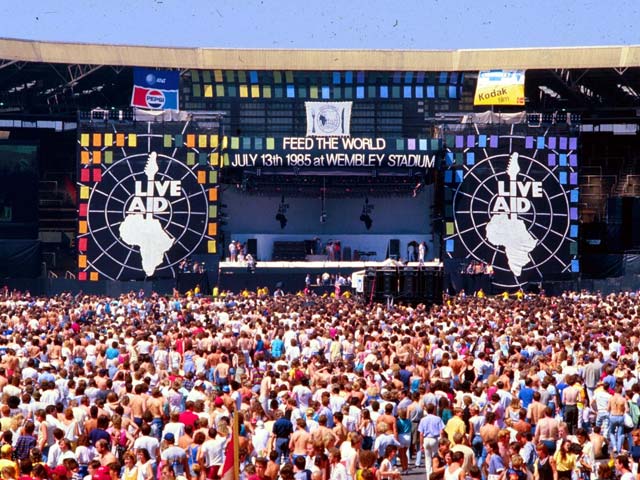
While there’s no doubt Live Aid, the huge fundraising concert, first organized by Harvey Goldsmith and Bob Geldof in 1985, proved that musicians were prepared to use their global reach for good reasons, it also birthed the era of the “celebrity musician,” said Goldsmith.

“Live Aid was the start of the rot that killed the creative juices of great bands and great talent and turned them into pop stars and celebrity-based stars,” he explained.

“Before Live Aid, national newspapers only ever talked about rock music and musicians if they’d been busted or there was a divorce. Suddenly, newspapers realized they could sell newspapers off the back of our business and the whole era of the celebrity artist started to become important.”

Via Billboard

Iconic Downtown Building Repurposed to Accelerate London, Ontario’s Music Sector

0

The Manuel family, owners of London Music Hall, Rum Runners, and Saddle Up Country Bar and Eatery have purchased 182 Dundas Street with a vision to create a dynamic environment dedicated to help accelerate Londons commercial music sector.

The working name of the project, The London Music Division is proposed to create a collective centralized resource for the commercial music sector.  Included in the vision is to develop a Music Incubator, London Music Hall of Fame with media, industry reception and showcase space.  The London Music Division also eventually could house a future Music Office.

The music incubator is a new model for creative business development. It would bring together under one roof all the tools commercial artists and entrepreneurs require to pursue a career in music. Other well-established music incubators, such as Coalition Music in Toronto, offer programs that run 10 weeks and focus on artistry, technical development, and entrepreneurship. Incubators also offer workshops, host networking functions and other educational initiatives.

“This is good news for London and another example of how our collective vision for our downtown is coming to life,” said Mayor Matt Brown.  “The music industry is important to our local economy and it’s great to see so many partners coming together to support our local talent.  Initiatives like this one will help transform London into a music city.”

This announcement comes just as Music Canada released a new study, The Mastering of a Music City, which outlines how communities of all sizes can realize the full potential of their music economy. The report highlights the importance of music-friendly policies, music offices, music advisory boards, engaging the broader music community, increasing access to spaces and places, audience development, and music tourism.

“A strong commercial music sector generates a wide array of benefits, from economic growth, job creation, music tourism and cultural development,” said Chris Campbell, Director of Culture and Entertainment at Tourism London. “Our vision is to organically develop and promote London as a music city in collaboration with partners and to engage the music community in the process,” he added. 

“A vibrant music economy drives value in cities through job creation, city brand building and artistic development” said Andrea Halwa, Executive Director, London Arts Council. “Access to a full range of venues and a network of people is essential to furthering growth in London’s music industry”.

“I believe that music and entertainment play an integral roll in our downtown. You see it all the time when there’s an event at Budweiser Gardens, London Music Hall, The Grand Theatre or any great venue downtown. You see that music and entertainment have a positive effect on our community and that ultimately ripples into our downtown businesses,” said Mike Manuel.

The iconic building at 182 Dundas Street has been home to Nash Jewellers for almost a century. Nash Jewellers will continue to operate in the present location until mid-2016,at which time the downtown and north-end stores will merge at a new location at the corner of Oxford Street West and Wonderland Road.

“We would like to thank the Nash family for all of their contributions to the downtown,” said Janette MacDonald, CEO and General Manager of Downtown London. “Along with a few other longstanding family businesses, Nash Jewellers helped sustain downtown through tough years. Their presence will be missed, but we are also looking forward to this very exciting new addition to Dundas Street. A music division like this will retain talent, promote London, and compliment local arts and culture.”

Under the leadership of four generations of the Nash family, Nash Jewellers has grown to be one of London’s most well respected and recognizable establishments.

“This is an opportunity to help convert the downtown location into a vibrant, exciting, tourist destination,” said Colin Nash of Nash Jewellers. “We wouldn’t leave unless we had a great purchaser of the building.”

For the Nash family, the move is another story they look forward to sharing on the business’ 100th Anniversary in 2018. “There is a lot of emotion behind this decision and it is a decision that was made slowly with great consideration,” said Colin Nash. “Mike’s new project, along with the talk of a flexible Dundas Street and rapid transit, is something that can only benefit the city as a whole. Great things are happening.”

In collaboration with Tourism London and the London Arts Council, the City of London will be posting on the City’s website www.london.ca under its City Hall Employment Careers pages for the hiring of a two year Music Industry Development Officer position in the coming weeks to further accelerate the implementation pilot project of London’s Music Strategy.  The London Music Strategy, available online at http://prosperityforlondon.ca/, was developed by London’s Music Industry Development Task Force in 2014.  It forms part of the implementation of London’s Cultural Prosperity Plan, which will foster a strong economy and vibrant and diverse community.

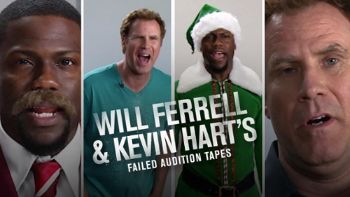
Will Ferrell And Kevin Hart’s Failed Audition Tapes

0

Before starring together in ‘Get Hard,’ Will Ferrell and Kevin Hart competed against each other for some of their most iconic roles.

Could Homer Simpson Still Be Collecting Royalties From The Be Sharps?

0

How are the Simpsons able to afford a large home, two nice cars, and hundreds of adventures and trips on Homer’s salary? A theory from Reddit postulates that Homer still receives royalties from The Be Sharps, his Beatles-esque barbershop quartet from the episode “Homer’s Barbershop Quartet.” This theory is supported by the fact that the other members of the band (Barney, Apu, and Principal Skinner) also have unexplained wealth. Barney has a bar tab so high that only NASA can calculate it, Apu drives a nice sports car, and Principal Skinner lives in a nice house in an affluent area.

Via 7 Wild ‘Simpsons’ Fan Conspiracy Theories

Well, they did strike it rich before the music streaming era. Or…you know…it’s a cartoon.