Home Blog Page 3183

Urban acts dominate BBC Sound Of 2017 longlist

0

The rude health of British hip-hop is reflected in the BBC’s Sound of 2017 line-up, with urban artists making up half of this year’s longlist.

Building on the success of grime acts Stormzy, Kano and Skepta – who won this year’s Mercury Prize – newcomers like Ray Blk and Nadia Rose are being tipped for success in the BBC’s annual list.

Soul singer Rag N Bone Man and rock provocateurs Cabbage also make the cut.

The list was compiled using tips from a panel of 170 DJs, critics and writers.

It aims to highlight 15 of the most promising rising musical acts for the coming year. Previous winners include Adele, 50 Cent, Ellie Goulding and Sam Smith.

Sound of 2017 longlist
AJ Tracey West London wordsmith
Anderson .Paak Dr Dre-endorsed rap prodigy
Cabbage Post-punk provocateurs
Dave Plaintive rapper with classical training
Declan McKenna Polemic singer-songwriter
Jorja Smith Heart-rending soul singer
Maggie Rogers Graceful songwriter who stunned Pharrell
Nadia Rose Witty wordplay and colourful beats
Rag N Bone Man Gravel-voiced soul revelation
Ray BLK Street smart R&B
Raye Electro beats with soaring pop melodies
Stefflon Don Wicked, dancehall-inspired wordplay
The Amazons Raucous rock revivalists
The Japanese House Enigmatic pop maven
Tom Grennan Gruff, soulful singer-songwriter


Previous BBC Sound Of… winners
2016 – Jack Garratt
2015 – Years and Years
2014 – Sam Smith
2013 – Haim
2012 – Michael Kiwanuka
2011 – Jessie J
2010 – Ellie Goulding (pictured)
2009 – Little Boots
2008 – Adele
2007 – Mika
2006 – Corinne Bailey Rae
2005 – The Bravery
2004 – Keane
2003 – 50 Cent


Via

Canadian Indie Music Sees Great Potential Investing In Global Export

0
The Canadian Independent Music Association (CIMA) today released a report examining how the global strategies employed by Canada’s independent record labels, managers and publishers help their artists export music globally. The report also analyzes the opportunity that music export represents for Canadian music companies, revealing challenges as well as support that exists through public funding.
Music In Motion: An Analysis of Exporting Canadian Independent Music explores how exporting is a vital but expensive proposition for Canadian companies, at a critical time in the commercial music industry. Market changes over the years have increased music companies’ reliance on export revenue, particularly from international touring. This results in missed or lost opportunities due to the limited capacity of companies to invest in their artists. Export barriers include: a lack of stable funding to offset higher-risk exporting, insufficient flexibility of funding programs (in terms of caps and artist-eligibility), timing (more multi-year funding is needed), and the complexity of the application process.
“Music is global and Canada must continually be on the world stage selling its music, pursuing business opportunities, and expanding the fan base,” says CIMA President Stuart Johnston. “The majority of the exporting strategies employed by the industry lack the public funding available from government programs, and the current structure of such programs is seen as a significant barrier to success. This is particularly burdensome, as the majority of the industry comprises of small businesses employing less than 15 people.”

Music In Motion reveals that Canadian companies spend 21 times more on exporting for ‘breakthrough artists’, and these artists make up 25% of the rosters of smaller companies. This puts a greater financial burden on such independent businesses, with the prohibitive costs forcing many companies to limit their participation in export activities due to financial risks.
Music In Motion also notes that, in the majority of exporting strategies employed by the Canadian music industry, insufficient public funding is currently available from government programs. This is evidenced by the existing over-subscribed funding programs, meaning that demand far exceeds the dollars currently available. The report finds there is a clear need for the government to invest in new funding programs, and for these programs to be flexible enough to allow music companies and artists to better respond to changing market forces and opportunities.

A significant return on investment (ROI) is seen in those companies that have the ability to diversify and undertake a variety of export strategies. Public funding programs enable Canadian music companies to leverage government investment as a means of developing new strategies and broader market opportunities. Such support also enables the industry to maintain its forward momentum and to engage artists on a global scale.
CIMA commissioned Nordcity to conduct the Music In Motion study, with support from the Ontario Media Development Corporation (OMDC). The study was designed to provide qualitative and quantitative insight into a number of issues affecting the global exporting component of Canada’s independent music industry.
Key findings from Music In Motion:
  • 90% of companies surveyed were small businesses with 15 or fewer full time employees.
  • Exports are extremely important to Canadian music companies, representing at least a key part of the business plan for 87% of companies, with 59% of companies viewing exports as necessary for their survival.
  • Export activities can cost over twice as much as comparable domestic activities.
  • An estimated $8 million to $10 million of government funding annually is used to support export activities undertaken by Canadian music companies.

  • The available pool of funds to support export activities is limited and continues to become more so, while the demand for export increasingly exceeds the capacity of funders to provide that support.
  • Canadian music companies do not perceive their export activities to be sufficiently supported by the existing suite of government funding programs.
  • Given the increasing importance of export activities, limited public resources and declining private contributions, funding is likely to be more limited in the future.
  • Prohibitive costs are the most significant barrier faced by music exporting companies, and companies reported that they limit their participation in export activities due to the significant financial risks.
  • Export activities are more profitable if they are undertaken as part of a diversified export approach. Prohibitive costs and limited government funding are constraining export opportunities for less diversified music companies.
A copy of the report, Music In Motion: An Analysis of Exporting Canadian Independent Music, can be found at www.cimamusic.ca.

Chris Price Head of Music, BBC Radio 1 & 1Xtra, discusses the changing state of play in listening patterns and platforms

0

Hits interview with Chris Price Head of Music, BBC Radio 1 & 1Xtra

What are you doing to adjust to the changes in the way people are consuming music?
At BBC Radio 1 we think everyone should be able to hear great new music as soon as it comes out, so in the past six months we’ve hosted listening parties for new albums by Kendrick Lamar, Drake, Beyoncé and Biffy Clyro, among others. Playing a brand new album front to back on the radio, contextualized by experts—sometimes even by the artists themselves—is the kind of excitement, immediacy and passion that only radio can deliver. We’re seeing massive interest in our listening parties, both from the audience and from other stations copying the idea!

We’re also transforming the way we make our programs in order to deliver them to listeners in a way that they increasingly tell us they want them: “Now, please, and on my phone.” We’ve just launched a series of “phone first” programs, including New Music Friday, The Radio 1 Specialist Chart and The Artist Takeover, that go out on air but are really designed to be listened to on demand. They follow our Summer Mixes series, which received over a million streams and half a million downloads. Young audiences want programs when it suits them, not when it suits the scheduler of a radio station.

All of this is an evolution of a strategy—Listen, Watch, Share—that has informed the way we engage young audiences for five years now. As the most watched radio station in the world, we’re as focused on our 3.5 million YouTube subscribers as we are on our 11 million radio listeners. It’s all about delivering the right content on the right platform at the right time.

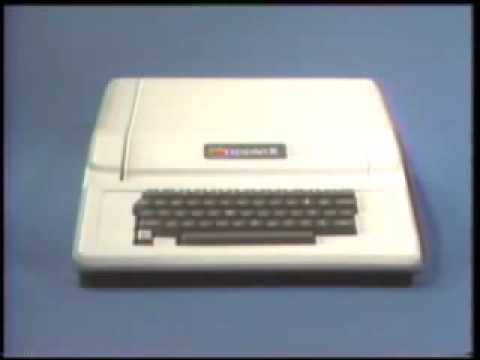
The first TV advertisement for the Apple II computer back in 1977

0

This ad is not quite a fully Apple commercial, but it should be. In 1977, Oklahoma computer seller High Technology, Inc. made what’s likely the first TV advertisement for the Apple II computer. It’s a quick journey into the abilities of computers back then, with visual effects that Apple still uses today. Ha! Just kidding. It looks like a million years ago.

How A Mistake With The Tape Recorder Gave Johnny Cash His Biggest Hit

0

In Cash: The Autobiography, Johnny Cash said that he purchased a reel-to-reel recorder “with savings from the eighty-five dollars a month Uncle Sam paid me to fight the Cold War.” A mistake actually caused his song to be the classic we all know now.

I was on the eleven-to-seven shift in the radio intercept room one night, listening in on the Russians, and when I got back to the barracks in the morning I discovered that someone had been messing with my tape machine. I put on a Barbarians tape to test it, and out came the strangest sound, a haunting drone full of weird chord changes. To me it seemed like some sort of spooky church music, and at the end there was what sounded like somebody saying “Father.” I played it a million times, trying to figure it out, and even asked some Catholics in my unit if they recognized it from one of their services (they didn’t), but finally I solved the puzzle: the tape had gotten turned around somehow, and I was hearing Barbarian guitar chords played backward. The drone and those weird chord changes stayed with me and surfaced in the melody of “I Walk the Line.”

A mistake isn’t a mistake until your next move.

25 Facts about the Science of Music

0

On this mental_floss List Show, John Green shares some little-known facts about the science of music.

Seth Rogen’s Insane Tiger Story

0

While on The Graham Norton Show, Seth Rogen talked about two bizarre experiences that came out of making The Interview: his security guard and the tiger they needed to use for the movie.

Steve Albini on artists respecting the creative impulse

0

It is imperative for an artist to be honest, to respect the creative impulse, wherever that may go. Anything less is just decoration or inconsequential humming. Sometimes the resulting art is repugnant, but I believe the world is better for it, that it is made richer by having those thoughts explored. Essentially any theme or subject could trigger memory of trauma depending on the context.

The reason we value art is its ability to move people, its ability to be larger than itself and engender a greater experience, an experience that can inform an entire lifetime. In some cases that greater experience is unpleasant or insulting, but it is there.

-Steve Albini, in Listen

The Beach Boys’ Isolated Vocals For God Only Knows, Sloop John B, and Wouldn’t It Be Nice

0

With one of the most in demand concert outings of the year, music legend Brian Wilson is extending the final performance run of his Pet Sounds 50th Anniversary World Tour and announcing a slate of new North American show dates for 2017 to celebrate and perform the iconic album Pet Sounds for a final time. Currently on the road and performing his last shows of the year, the tour will pick up again in the spring with an initial 37 new dates added to the Pet Sounds: The Final Performances tour run. VIP ticket presales begin today with general onsale beginning Friday. A full list of tour dates is below with up-to-date ticketing, show information and more at www.brianwilson.com.In addition, fans everywhere can now purchase the autobiography “I Am Brian Wilson: A Memoir” (De Capo Press), available at retailers everywhere.

So, a good enough reason to take a listen to three songs of isolated vocals and endless harmony. Released by The Beach Boys in 1966 on their Pet Sounds album, all three tracks were produced by group member Brian Wilson.

Want to build a career in music? Get this book.

0

A follow-up to the successful A Career in Music: the other 12 step program, A Career in Music: building your inner circle focuses on how to build your team as an artist. “A Career in Music: building your inner circle” answers the questions: How do I get a manager, a booking agent, a record label, a publisher, a producer and other important people and companies to help my career? How do these business relationships work? What do the contracts look like?

This book will help aspiring recording artists to surround themselves with the right people and companies to move their careers forward.

After over two decades in the Canadian music business, Bob D’Eith has learned a lot about how independent artists have succeeded or failed. This book delves into the basic tools that every independent artist should have in today’s complicated and ever changing music industry. More than ever before, artists are being expected to develop themselves. That means understanding many parts of the business both traditional and cutting edge.