Home Blog Page 36

The Milk Carton Kids Built ‘Lost Cause Lover Fool’ From the Room Up

0

The Milk Carton Kids have always trusted the room. On their new album ‘Lost Cause Lover Fool’, that trust becomes the entire philosophy, and the result is a record that sounds like it was caught, not constructed.

The Los Angeles folk duo, Kenneth Pattengale and Joey Ryan, recorded the album using AEA N22 and N28 ribbon microphones alongside AEA TRP3 preamps, building a stereo image that places the listener directly inside the performance. Vocals and guitars were tracked live together, letting each element breathe and interact naturally within the space.

Recording engineer Jason Cupp drove that approach with precision. Rather than isolating sources and assembling them later, he focused on microphone placement, phase relationships, and how each element sat within the combined image. “There’s a real symbiotic relationship between the way things sound and the way the song gets performed,” Cupp explains. “They really inform each other.”

The process was iterative and deliberate. A song would be played through several times, with each pass allowing Cupp to refine placement and balance until the stereo picture felt complete and dimensional. The N22 covered electric guitar, mandolin, and kick drum. The N28 handled drums and guitar, contributing to an image that feels physically present.

Midway through sessions, aging vintage equipment began introducing noise and dropouts, pulling focus away from the music. Cupp suggested cutting the problem entirely. Pattengale reached out to AEA, and 12 channels of TRP3 preamps arrived the following morning. The old signal chain came out. The sessions moved forward.

“It was a really great and inspired choice of Jason’s, solving a problem but also making the record sound so much better,” Pattengale recalls.

Grammy-winning mastering engineer Kim Rosen noticed the difference at the finish line. After mastering, she sent a note to the band specifically highlighting the stereo image and how naturally the drums translated. For Pattengale and Ryan, that confirmation meant the spatial decisions made in the room had carried all the way through.

‘Lost Cause Lover Fool’ delivers exactly what the process promises: a warm, alive, fully realized sound that rewards close listening. The duo’s chemistry comes through in every exchange between guitar and voice, and the recording gives that chemistry room to resonate.

“It’s about finding the simple beauty in things and presenting them in a way that feels alive,” Pattengale says. That’s precisely what this album does.

14 Direct Mail Platforms Ranked for Real Estate Professionals Who Want Results

0

By Mitch Rice

Few industries rely on direct mail as consistently and effectively as real estate. From farm area postcards and just sold announcements to investor letters and new development campaigns, physical mail remains one of the highest-performing channels in real estate marketing. The right platform can mean the difference between a reactive mailing process and a fully automated, data-driven outreach engine. This article ranks 14 platforms based on their features, integrations, and suitability for real estate use cases ranging from individual agents to large property management companies.

What Makes a Direct Mail Platform Right for Real Estate

Real estate direct mail spans a unique range of use cases and audiences. Consumer-facing campaigns target homeowners, buyers, and renters. Professional campaigns target property managers, commercial tenants, investors, and other agents. Effective platforms must handle EDDM for neighborhood saturation, support personalized variable data for custom market reports, integrate with real estate CRMs, and offer reliable address verification to ensure deliverability in geographies with frequent turnover. Speed matters too: just listed and just sold campaigns lose impact if they arrive after the market has moved.

Top 14 Direct Mail Platforms for Real Estate

1. PostGrid Direct Mail API

PostGrid direct mail automation is the most powerful direct mail platform available for real estate professionals and teams. Its REST API connects seamlessly with real estate CRMs, including Follow Up Boss, Salesforce, and LionDesk, enabling fully automated mailing workflows triggered by CRM events. From address verification that catches bad data before the print run to variable data printing that personalizes each piece with neighborhood market statistics, PostGrid delivers a complete mailing infrastructure for real estate at any scale.

Best For: Real estate brokerages, prop-tech companies, and high-volume teams seeking fully automated, CRM-connected real estate direct mail.

Key Features:

•        REST API with real estate CRM integrations

•        CASS-certified address verification and NCOALink processing

•        Variable data printing for personalized market reports and CMAs

•        Automated triggers for just listed, just sold, and farm area campaigns

•        Supports postcards, letters, self-mailers, and notecards

2. Sendoso

Sendoso is used by luxury real estate agents and commercial brokers for high-touch relationship marketing. Pairing a premium gift with a printed letter to a key prospect or past client delivers a memorable brand impression that email cannot replicate.

Best For: Luxury residential agents and commercial brokers focused on referral and retention.

Key Features:

•        Curated gift catalog alongside printed mail

•        CRM integrations for triggered sends

•        Team budget management and spend controls

•        Campaign performance reporting

3. Reachdesk

Reachdesk blends direct mail and gifting for multi-touch real estate prospecting sequences. Its digital-to-physical attribution capabilities help teams understand which mail touches are contributing to conversions.

Best For: Commercial real estate teams and prop-tech companies running multi-touch prospecting campaigns.

Key Features:

•        Multi-channel campaign sequencing with physical mail

•        Attribution and ROI reporting

•        Global fulfilment capabilities

•        Integrations with major CRMs

Triggered Direct Mail: The New Standard for Real Estate Farms

The most successful real estate agents treat their farm areas like subscription businesses: consistent, timely, and personalized touches throughout the year. Achieving this manually is unsustainable, but technology makes it entirely automatic. PostGrid Direct Mail Automation allows agents to set up triggered campaigns that send automatically when a new property lists in their farm, when a sale closes, or when a specific date milestone arrives. Read about PostGrid Direct Mail Automation to understand how real estate teams configure these triggers and maintain consistent farm presence without manual effort. When compared to platforms like PostcardMania or ClickSend that require manual campaign setup, PostGrid’s automation capabilities represent a significant competitive advantage for agents managing large farm areas.

4. PostcardMania

PostcardMania is one of the most widely adopted direct mail services in residential real estate. Its turnkey model covers design, printing, and delivery with real estate-specific templates that agents can customize in minutes. EDDM tools make neighborhood saturation straightforward.

Best For: Independent agents and small teams without in-house marketing capabilities.

Key Features:

•        Real estate postcard design templates

•        Every Door Direct Mail for neighborhood saturation

•        Mailing list targeting by demographics and geography

•        Digital follow-up ad integration

5. Lob

Lob is a developer-first direct mail API that competes with PostGrid on technical capabilities. Real estate technology companies embedding mailing into their platforms often choose Lob for its sandbox testing environment and active developer community.

Best For: Real estate technology companies building automated mailing into their platforms.

Key Features:

•        REST API with sandbox environment

•        CASS-certified address verification

•        Postcard and letter support

•        Bulk processing for high-volume sends

6. Postalytics

Postalytics enables triggered direct mail from within HubSpot and Salesforce, making it a natural fit for real estate teams already using those CRMs. Campaign analytics and delivery tracking are built into the familiar CRM interface.

Best For: Real estate teams managing their pipeline in HubSpot or Salesforce.

Key Features:

•        Native HubSpot and Salesforce integrations

•        Event-triggered postcards and letters

•        Delivery tracking and campaign reporting

•        Variable data personalization

7. PostPilot

PostPilot is gaining traction among real estate investors using data-driven postcard campaigns to target absentee owners, pre-foreclosure properties, and probate records. Its targeting tools are designed for data-rich investor outreach.

Best For: Real estate investors targeting off-market properties via data-driven postcards.

Key Features:

•        Data-driven targeting for investor campaigns

•        Automated postcard workflows

•        A/B testing for message and design optimization

•        Response analytics dashboard

8. PebblePost

PebblePost converts website browsing behavior into targeted physical mail, which large real estate portals and builder websites use to convert online property searchers into leads.

Best For: Real estate portals and large builder websites with high organic search traffic.

Key Features:

•        Website intent signals driving mail triggers

•        Household-level addressability

•        Privacy-compliant data practices

•        Integration with digital advertising platforms

9. ClickSend

ClickSend provides multi-channel communications including direct mail that is useful for smaller real estate offices and property management companies needing low-volume, flexible mailing alongside SMS and email outreach.

Best For: Small real estate offices and property managers needing multi-channel communications without platform minimums.

Key Features:

•        Multi-channel communications suite

•        No monthly minimums

•        API access for programmatic sends

•        Pay-per-use pricing

10. Docsmit

Docsmit handles secure document delivery, which real estate attorneys, title companies, and compliance-focused brokerages use for certified correspondence including disclosure notices, lease agreements, and lien-related documents.

Best For: Real estate legal, title, and compliance teams needing traceable, certified mail delivery.

Key Features:

•        Secure letter delivery with tracking

•        Certified and first-class mail options

•        Document archiving for transaction records

•        Batch processing dashboard

11. Quadient

Quadient serves large real estate enterprises and property management companies with high-volume transactional mail needs such as tenant statements, lease renewal letters, and regulatory notices.

Best For: Large property management companies and REITs with enterprise-scale transactional mail.

Key Features:

•        Enterprise communications management

•        High-volume statement and letter production

•        Multi-channel output for print and digital

•        Compliance and audit trail support

12. Letterstream

Letterstream offers affordable, API-accessible letter mailing for real estate back-office teams sending routine administrative correspondence like lease notices, move-in checklists, and maintenance notifications.

Best For: Property management back-office teams needing cost-effective administrative letter mailing.

Key Features:

•        Simple REST API for letter sends

•        PDF upload for custom letter designs

•        Certified and first-class options

•        Transparent per-piece pricing

13. PostalMethods

PostalMethods provides cloud-based print-to-mail for real estate organizations that need to programmatically send documents without managing a print infrastructure. It is commonly used for tenant correspondence and investor reporting.

Best For: Real estate investment firms and property managers needing programmatic document delivery.

Key Features:

•        Cloud-based print-to-mail service

•        PDF upload and delivery

•        First-class and priority mail options

•        Delivery tracking and confirmation

14. PebblePost (Extended Use)

For real estate teams running full-funnel digital-plus-physical campaigns, PebblePost offers an extended capability: connecting CTV advertising impressions with triggered physical mail to create a cohesive household-level experience that reinforces brand messaging across screens and mailboxes.

Best For: Real estate brands running connected TV and digital campaigns wanting to extend reach into the physical mailbox.

Key Features:

•        CTV-to-mail attribution and coordination

•        Household-level targeting across channels

•        Privacy-compliant audience data practices

•        Integration with programmatic ad buying platforms

How to Evaluate Direct Mail Platforms for Real Estate

Start with volume and automation needs. If your team sends more than 1,000 pieces per month or needs CRM-triggered mailing, only API-capable platforms like PostGrid Direct Mail API and Lob qualify. For agents sending a few hundred pieces per campaign without technical integration needs, PostcardMania and Postalytics offer friendlier interfaces. Address quality should always be evaluated: returned mail wastes budget and means your message never arrived. Platforms with CASS certification and NCOALink processing like PostGrid and Lob have the most robust address hygiene. Finally, consider the total cost of ownership including design time, per-piece pricing, and the cost of manual management when evaluating platforms without automation capabilities.

Final Thoughts

Real estate direct mail is most powerful when it is consistent, personalized, and automated. The platforms on this list range from enterprise API solutions to simple postcard printing services, each suited to different team sizes and technical capabilities. PostGrid stands alone at the top because it delivers all three pillars: consistency through automation, personalization through variable data printing, and reliability through CASS-certified address verification. For real estate professionals serious about building a sustainable, scalable outreach program, PostGrid is the platform built for the job.

Data and information are provided for informational purposes only, and are not intended for investment or other purposes.


82 Facts About George Lucas

0

5:37 AM

Claude responded: Happy birthday to George Lucas, who turns 82 today, born May 14, 1944, in Modesto, California.

Happy birthday to George Lucas, who turns 82 today, born May 14, 1944, in Modesto, California. He is the man who created Star Wars, co-created Indiana Jones, founded Lucasfilm, Industrial Light & Magic, LucasArts, and THX, and in doing so didn’t just make movies but rebuilt the entire infrastructure of modern cinema from the ground up. His decisions were consistently contrarian: he traded a director’s fee for merchandise rights, self-funded films that studios refused to touch, invented the companies that invented the tools every blockbuster now depends on, and ultimately walked away from the franchise he built rather than lose control of it. Few filmmakers have left a mark so deep and so wide. Here are 82 facts in his honour.


82 Facts About George Lucas

In honour of his 82nd birthday, May 14, 2026


  1. George Walton Lucas Jr. was born on May 14, 1944, in Modesto, California, a small agricultural city in the Central Valley.
  2. Before film, his great passion was cars. He spent most of his high school years racing on underground circuits at fairgrounds and hanging around garages.
  3. On June 12, 1962, just days before his high school graduation, Lucas was broadsided while driving his Autobianchi Bianchina. His seatbelt snapped and ejected him, which saved his life.
  4. The crash left him with a punctured lung, severe internal injuries, and a temporary loss of heartbeat. He was initially presumed dead and required four months of recovery.
  5. The accident ended his racing ambitions entirely and redirected his energy toward filmmaking as a safer outlet for his drive and creativity.
  6. His father, George Sr., owned a small office supply business and expected his son to take it over at 18. Lucas refused flatly and declared he would be a millionaire by 30.
  7. He made that deadline early, becoming a millionaire at 28 after the success of American Graffiti, which grossed over $140 million on a budget of $777,000.
  8. Lucas attended Modesto Junior College, where he studied anthropology, sociology, and literature, and began shooting with an 8mm camera, including footage of car races.
  9. He transferred to the University of Southern California School of Cinematic Arts, one of the earliest universities to have a dedicated film school, on the recommendation of a childhood friend.
  10. At USC, he shared a dorm room with Randal Kleiser and became part of a tight clique of film students known as The Dirty Dozen, which included Walter Murch, Caleb Deschanel, John Milius, and Matthew Robbins.
  11. He met Steven Spielberg when Spielberg attended a USC screening in early 1968 and was impressed by Lucas’s student short Electronic Labyrinth: THX 1138 4EB.
  12. One of his earliest student films, Freiheit (1966), was a 2-minute-48-second silent short depicting a lone figure’s futile dash across a fortified border inspired by the Berlin Wall.
  13. His 1967 student short The Emperor was a 20-minute black-and-white documentary about a San Francisco radio DJ, produced in ten weeks using purely observational footage.
  14. Electronic Labyrinth: THX 1138 4EB won first prize in the dramatic category at the 1967 to 1968 National Student Film Festival, earning Lucas a scholarship from Warner Bros. to observe a film of his choosing.
  15. The film he chose for that scholarship was Finian’s Rainbow (1968), which happened to be directed by Francis Ford Coppola, who was already revered among film students as someone who had made it in Hollywood.
  16. In 1969, Lucas was one of the camera operators on the Rolling Stones concert film Gimme Shelter.
  17. He co-founded American Zoetrope with Coppola in 1969, intending to create a liberating environment for filmmakers outside the perceived oppressive control of the Hollywood studio system.
  18. His feature debut, THX 1138 (1971), was produced on approximately $777,000, a budget that Coppola reportedly chose partly because of his affection for the number seven.
  19. THX 1138 was shot entirely on location in the San Francisco Bay Area using industrial spaces to evoke a sterile, subterranean dystopia, with no studio sets.
  20. The film grossed only about $2.4 million worldwide, making it a commercial failure despite considerable critical praise for its atmosphere and formal ambition.
  21. The sound design for THX 1138 was crafted by Walter Murch, who layered mechanical drones, distorted voices, and amplified environmental noises to create a sense of alienating immersion.
  22. Lucas married film editor Marcia Lou Griffin on February 22, 1969, after they met while he was working at the United States Information Agency. She later won an Academy Award for editing Star Wars.
  23. American Graffiti (1973) was directly autobiographical, inspired by Lucas’s own teenage years cruising the streets of Modesto in hot rods, listening to rock and roll radio, and racing at drive-ins.
  24. The film’s soundtrack featured over 40 authentic early rock hits licensed for roughly $90,000 through flat-fee deals with record labels, and the soundtrack album sold millions of copies separately.
  25. American Graffiti earned five Academy Award nominations including Best Picture and Best Director for Lucas, and introduced Harrison Ford to the world in one of his earliest significant roles.
  26. Lucas used his profits from American Graffiti, along with a mortgage on his home, to fund post-production on Star Wars, bypassing studio interference by financing it himself.
  27. He originally wanted to adapt the Flash Gordon serials he loved as a child. When he couldn’t secure the rights, he created his own space opera instead.
  28. Lucas drafted a 13-page treatment titled The Star Wars in April 1973, which he then pitched to multiple studios, receiving rejections from nearly all of them.
  29. Only Alan Ladd Jr. at 20th Century Fox, who admired American Graffiti, pushed through a production and distribution deal. It would go on to restore Fox to financial stability after a string of failures.
  30. Star Wars was heavily influenced by Akira Kurosawa’s samurai films, particularly The Hidden Fortress (1958), as well as Spaghetti Westerns and classic sword-and-sorcery fantasy.
  31. Lucas drew on Joseph Campbell’s monomyth framework in The Hero with a Thousand Faces when structuring the Star Wars saga, particularly the hero’s journey that drives Luke Skywalker’s arc.
  32. Rather than take a higher director’s fee, Lucas negotiated to retain ownership of licensing, merchandising, and sequel rights. That single decision generated billions of dollars over the following decades.
  33. Lucasfilm’s licensed games, toys, and collectibles from the Star Wars franchise have earned hundreds of millions of dollars, with the original trilogy’s merchandise alone eventually totalling over $12 billion.
  34. ILM was founded on May 26, 1975, in an empty warehouse in Van Nuys, California, staffed initially by college students, artists, and engineers assembled by effects supervisor John Dykstra.
  35. The name Industrial Light and Magic came from a zoning map. When Lucas saw the warehouse location was classified as light industrial, he simply named his new effects company accordingly.
  36. ILM pioneered the Dykstraflex, the first computer-controlled motion-control camera system for film, which enabled precise, repeatable model movements that produced the dynamic space battle sequences in Star Wars.
  37. Star Wars (1977) required over 360 visual effects shots, which ILM completed under intense time and budget pressure. The effects alone cost around $750,000 of the film’s total budget.
  38. The lightsaber sound was created by sound designer Ben Burtt by combining the hum of an old projector motor with interference feedback from a television set near a microphone.
  39. The blaster sound effects were made by hitting the guy-wire of a radio antenna with a hammer, recorded and manipulated by Burtt into the distinctive laser zap heard throughout the films.
  40. Star Wars won six Academy Awards at the 50th Oscars in 1978, including a Special Achievement Award for visual effects, recognising ILM’s groundbreaking work on the film.
  41. During the editing of Star Wars, Lucas suffered chest pains that were initially feared to be a heart attack. They turned out to be hypertension and exhaustion caused by the pressures of post-production.
  42. He also contracted stress-induced pneumonia during the production of Star Wars, which contributed to his decision not to direct the sequels, citing the toll it had taken on his health.
  43. Lucas received an initial $50,000 advance from 20th Century Fox to develop his Star Wars treatment into a full screenplay, with a development contract signed on August 21, 1973.
  44. Marcia Lucas co-edited Star Wars (1977) and won a shared Academy Award for Best Film Editing, one of the most significant contributions to the film’s pacing and emotional rhythm.
  45. Marcia and George divorced in 1983, after the completion of the original trilogy. The strains of production on the Star Wars films were a contributing factor to the breakdown of their marriage.
  46. Lucas adopted his first child, daughter Amanda Lucas, in 1981. Following his divorce he adopted two more children as a single parent: daughter Katie Lucas in 1988 and son Jett Lucas in 1993.
  47. He has no biological children. His youngest daughter, Everest Hobson Lucas, was born via surrogate in August 2013, with his second wife Mellody Hobson.
  48. The THX sound system was developed at Lucasfilm in 1983 by Tomlinson Holman to standardise cinema playback quality for Return of the Jedi, imposing rigorous criteria on speaker calibration, noise floors, and frequency response.
  49. By the late 1980s, THX certification had been adopted by over 2,000 theatres worldwide, measurably improving dynamic range and spatial accuracy in cinema sound reproduction.
  50. Pixar began as the Graphics Group, the computer division of Lucasfilm, founded in 1979. Steve Jobs purchased it in 1986 for $5 million, plus a $5 million capital injection into the company.
  51. Lucas sold Pixar partly because he needed to stop funding expensive long-term research projects and wanted his company to focus on entertainment production rather than technology tools.
  52. Lucasfilm’s EditDroid, launched in the mid-1980s, was a pioneering non-linear video editing system using laserdisc storage that allowed random access to footage, foreshadowing the digital editing workflows that now dominate the industry.
  53. LucasArts, originally called Lucasfilm Games, began releasing titles in 1984 and became celebrated for adventure games including the Monkey Island series, built on the innovative SCUMM scripting engine.
  54. Skywalker Ranch, Lucas’s 4,700-acre creative compound in Marin County, was developed after the release of The Empire Strikes Back in 1980 and designed as a secluded, pastoral retreat for film production and post-production work.
  55. The ranch features Victorian-style architecture blended with state-of-the-art production facilities and is not Lucas’s primary residence but a working creative hub and private sanctuary.
  56. Lucas was rejected by the United States Air Force after graduation because of his numerous speeding tickets. He was later drafted by the Army but exempted after medical tests revealed he had diabetes.
  57. He produced and served as executive producer on Kurosawa’s Kagemusha (1980), helping to bring the Japanese master’s work to international audiences at a point when Kurosawa was struggling to secure funding.
  58. He was executive producer on Jim Henson’s Labyrinth (1986), Ron Howard’s Willow (1988), and Don Bluth’s The Land Before Time (1988), among many other projects during his hiatus from directing.
  59. His biggest producing flop was Howard the Duck (1986), directed by Willard Huyck, which became one of the most notorious box office failures of the 1980s and remains a cult object for that reason.
  60. Lucas returned to directing in 1999 for the first time in over two decades with Star Wars: Episode I, The Phantom Menace, which opened to $64.8 million domestically and grossed over $1 billion worldwide.
  61. The Phantom Menace contained over 2,000 visual effects shots, including 448 fully CGI sequences, representing a fundamental shift away from the practical effects that defined the original trilogy.
  62. Jar Jar Binks is Lucas’s own favourite character in the Star Wars saga. He has stated this publicly on multiple occasions, including to the BBC, to the bafflement of much of the fanbase.
  63. The prequel trilogy collectively grossed over $2.5 billion worldwide, making it a commercial success despite the persistent and vocal critical disappointment from many fans of the originals.
  64. Lucas hired Jonathan Hales, a writer from The Young Indiana Jones Chronicles, to polish the first draft of Attack of the Clones, which was completed just weeks before principal photography began.
  65. By the early 2000s, reevaluations of the prequel trilogy began to emerge among younger viewers who had grown up with them, and by the 2020s, the prequels had undergone a substantial critical rehabilitation.
  66. Lucas co-wrote the story for Raiders of the Lost Ark (1981) with Steven Spielberg and Lawrence Kasdan. The character was originally called Indiana Smith before the name was changed to avoid similarity to Nevada Smith.
  67. Raiders of the Lost Ark grossed approximately $390 million worldwide on a $20 million budget and was the highest-grossing film of 1981, earning Academy Awards for Best Visual Effects, Best Sound Editing, and Best Sound.
  68. Indiana Jones and the Temple of Doom (1984) was so violent that it prompted the Motion Picture Association to introduce the PG-13 rating, a direct consequence of its scenes of human sacrifice and child labour.
  69. Indiana Jones and the Last Crusade (1989) is the highest-grossing of the original Indiana Jones trilogy, earning $474 million worldwide and ranking as the top film of 1989.
  70. In 1997, to celebrate the 20th anniversary of Star Wars, Lucas re-released the original trilogy as Special Editions with CGI enhancements, new scenes, and alterations including the infamous change to the Han and Greedo confrontation.
  71. The phrase “Han shot first” emerged from fan backlash against that edit and became a rallying cry for resistance to Lucas’s retroactive alterations, spawning fan-edited restorations using pre-1997 footage.
  72. Lucas defended all revisions consistently, stating that his films with his name on them need to be the way he wants them, and that authorial intent takes precedence over the versions audiences originally experienced.
  73. He donated $175 to $180 million to USC in 2006, the largest single gift ever made to a film school anywhere in the world, to expand the School of Cinematic Arts.
  74. Lucas founded the George Lucas Educational Foundation in 1991 to advance K-12 education through project-based learning, and its media outlet Edutopia launched in 1999 and has since influenced teacher training programmes internationally.
  75. He testified before the United States House of Representatives in 2008 as head of his foundation, advocating for a free wireless broadband educational network for schools.
  76. Lucas joined the Giving Pledge in 2010, committing to donate the majority of his wealth to philanthropic causes, with education as his primary focus.
  77. He sold Lucasfilm to The Walt Disney Company on October 30, 2012, for $4.05 billion, structured as roughly 50 percent cash and 50 percent Disney stock, making him Disney’s second-largest individual shareholder at the time.
  78. He stated that the majority of the proceeds would go to his philanthropic endeavours, writing: “For 41 years, the majority of my time and money has been put into the company. As I start a new chapter in my life, it is gratifying that I have the opportunity to devote more time and resources to philanthropy.”
  79. Lucas married Mellody Hobson, president of Ariel Investments and chairwoman of Starbucks, on June 22, 2013, at Skywalker Ranch in Marin County, California.
  80. The Lucas Museum of Narrative Art, self-funded at an estimated cost of $1 billion with a $400 million endowment, houses his personal collection of over 40,000 works focused on visual storytelling, including illustration, comics, and animation. It is due to open in Los Angeles in 2026.
  81. In July 2025, Lucas made his very first appearance at San Diego Comic-Con, where he previewed the museum and showcased pieces including original Iron Man comic drawings, Indiana Jones concept art, Frida Kahlo paintings, and Peanuts sketches.
  82. His net worth is estimated at $5.1 billion, making him one of the wealthiest people in the entertainment industry. He identifies religiously as “Buddhist Methodist,” a term he coined himself to describe the blend of traditions that have shaped his worldview and the mythology of his work.

MUTEK Montréal Completes Its 27th Edition Lineup With Over 120 Artists From 28 Countries

0

MUTEK Montréal has revealed the complete lineup for its 27th edition, running August 25–30 across the Quartier des Spectacles in downtown Montréal. The full programme now spans more than 120 artists from 28 countries across 18 programmes, with the latest additions including Kali Malone, Kara-Lis Coverdale, Debit, Zora Jones, Poirier, Julian Sartorius, Jump Source, Ah! Kosmos and Hainbach, and CUERPOS.

The festival spreads across 5 distinct series. The Nocturne Series at Society for Arts and Technology hosts late-night sets from Barker, Purelink with Mika Oki, gyrofield, and Mia Koden. The X/Visions Series takes over Maison symphonique for 3 nights of contemporary composition and experimental electronics, featuring Voices From The Lake and Kali Malone. MTELUS hosts 2 all-night Métropolis sessions with Ben UFO, Facta, Jeff Mills, and Polygonia. Les Grands Ballets’ Studio-Theatre joins the festival for the first time, hosting the Play Series dedicated to audiovisual performance. The Esplanade Tranquille continues its open-air strand with nightly performances from 5 pm.

The 2026 programme has been shaped with each venue’s specific architecture and atmosphere in mind. Artistic director Alain Mongeau pointed to the return to Maison symphonique as a meaningful milestone: “The only time MUTEK has taken over the Maison symphonique was back in 2013, during a memorable evening featuring Nils Frahm and Pantha du Prince and The Bell Laboratory. It is a moment that still resonates.”

Ahead of the festival, MUTEK has organized a takeover at New York’s Wire Festival on May 14 at Knockdown Center, and AVANT MUTEK, a Toronto pop-up, lands May 30 at Mooi Space featuring Satoshi Tomiie and others.

All ticket options, including individual tickets, passes, and festival passports, are on sale now at montreal.mutek.org, with 15% discounts available for students and groups of 4 or more.

Tove Lo Announces Sixth Album ‘ESTRUS’ and a World Tour Behind Pulsing Lead Single “I’m Your Girl Right?”

0

Tove Lo has announced ‘ESTRUS’, her sixth studio album, arriving September 18 via Pretty Swede Records, and launched it with lead single “I’m Your Girl Right?”, a pulsing electro-pop track accompanied by a video directed by Nogari, shot at a former monastery outside São Paulo with over 70 dancers.

The album takes its name from the biological term for a female mammal in heat, and Tove Lo makes no apologies for where it goes. “Estrus is an animal in heat. It’s primal. It’s my mind and my body wanting different things, wanting everything,” she says. “There’s no good advice on this album. Just a lot of feelings, no solutions.” Recorded in LA, Stockholm, and a small fishing village in Sweden where she spent summers as a child, the album draws on those formative roots directly. “Returning there brought everything back,” she says, “growing up, being depressed, struggling with my eating disorder, going through breakups, family drama, loss, everything.”

Produced with longtime collaborator Ludvig Söderberg alongside Elvira Anderfjärd and Luka Kloser, ‘ESTRUS’ was inspired by The Knife, Robyn, and the Swedish indie dance music that shaped Tove Lo’s early years. A standout collaboration with Stromae, “Des Fleurs,” sits among the 13 tracks.

The ESTRUS Tour launches September 15 in Nashville with 6 North American shows before heading to the UK and Europe in November for what Tove Lo calls her biggest UK and European tour to date. Mallrat supports the North American run, with Cobrah joining for the Brooklyn date only. Rose Gray supports all UK and European dates. The tour closes December 19 at Avicii Arena in Stockholm.

Tove Lo described the run with characteristic enthusiasm. “Finally. I’m gonna make this very special. Can’t wait to be absolutely unhinged together again.”

North American presale begins Monday May 18 at 1 pm local. General on-sale is Wednesday May 20 at 10 am local.

‘ESTRUS’ Tracklist:

“A Lot of Feelings, No Solutions”

“I’m Your Girl Right?”

“If I Could I Would”

“Des Fleurs” (with Stromae)

“DNH”

“F.A.M.T”

“I’m the Cake”

“The Bad One”

“Die for My Art with a Lonely Heart”

“Are We on a Break”

“Idiot”

“Roomie”

“Source of Life”

ESTRUS Tour Dates:

Sep 15 – Nashville, TN @ The Pinnacle

Sep 16 – Chicago, IL @ The Salt Shed

Sep 19 – Brooklyn, NY @ Under The K Bridge (with Cobrah)

Sep 22 – Toronto, ON @ Coca-Cola Coliseum

Sep 27 – Los Angeles, CA @ Greek Theatre

Oct 1 – Mexico City, MX @ Pepsi Center WTC

Nov 5 – Manchester, UK @ O2 Victoria Warehouse

Nov 7 – London, UK @ O2 Academy Brixton

Nov 9 – Brussels, BE @ Forest National

Nov 10 – Paris, FR @ L’Olympia

Nov 12 – Amsterdam, NL @ AFAS Live

Nov 14 – Berlin, DE @ Columbiahalle

Nov 16 – Copenhagen, DK @ Royal Arena

Nov 17 – Oslo, NO @ Spektrum

Nov 19 – Stockholm, SE @ Avicii Arena

Amp Season Is Here: RBC Amphitheatre Is Making 2026 Toronto’s Best Summer of Live Music Yet

0

Summer in Toronto just got its official soundtrack.

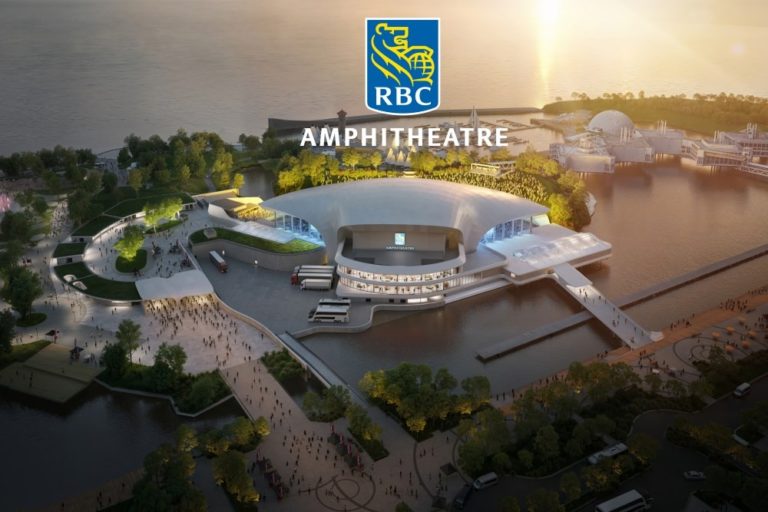
RBC Amphitheatre, the city’s beloved waterfront concert destination, is back for its 2026 season and it is bringing everything. More than 85 shows. Over 35 artists headlining the venue for the very first time. A brand new naming rights partnership with RBC. And a lineup so deep you are going to need a calendar and a good pair of shoes.

Imagine Dragons kick things off on May 21, which is exactly the kind of opening statement a summer season deserves. Multi-platinum, arena-filling, impossible-to-ignore. From that first night forward, the amphitheatre runs hot all the way through.

The range this year is genuinely something special. Timeless favourites like Paul Simon, Hilary Duff, and Evanescence share a season with hometown heroes Billy Talent, who are celebrating their 20th anniversary, plus Metric, Broken Social Scene, and Stars bringing their All the Feelings Tour home. Loud Luxury will be playing their biggest hometown show to date, which is going to be a moment. Hip hop and R&B fans get major co-headlining nights including TLC and Salt-N-Pepa with En Vogue, and Akon with NE-YO. Soca and reggae come through strong with Kes returning for a second consecutive amphitheatre headline and Sean Paul joining forces with Farruko. And the two-day All Things Go Festival returns with Kesha, Lorde, and The Beaches headlining, which is a lineup that speaks entirely for itself.

More shows are still to be announced, which means this summer keeps giving.

Beyond the music, RBC has come in as a partner with real intention. Fans this season can expect exclusive giveaways, new fan zone seating, immersive photo moments, and interactive activations that make the whole night feel like an event from the moment you arrive. There is a vintage photo booth from Simons so you can capture your concert outfit properly. The food game has been upgraded with comfort food mashups including bacon and cheese hotdogs topped with Kraft Dinner mac and cheese, plus a wide selection of bold Heinz mayo-style sauces in flavours like Mango Habanero and Forty Creek Whiskey BBQ. A brand new tequila bar is serving six specialty cocktails and margarita flavours, and the El Jimador Pier space on the Riverwalk gives fans a proper place to eat, drink, and soak up the waterfront before the show even starts.

RBC Amphitheatre has always been one of North America’s most dynamic live music destinations. This summer, it is making its strongest case yet. The skyline is the backdrop, the water is right there, and the music is going to be unforgettable.

Toronto, your summer has arrived.

True Fortune Casino Australia: Bonuses, Games & Banking

0

By Mitch Rice

Getting to the games quickly matters, and True Fortune Casino keeps that path tidy. Sign up, make a deposit, and a welcome bonus lands in your account with no complicated steps in the way. Before you press go, though, take a minute to read the terms. A bonus can stretch your budget nicely, but only when you understand what comes attached to it. Know the wagering requirements, check the eligible games, and decide if it suits how you like to play before you commit.

True Fortune Casino First Look for Australian Players

The site sits in the familiar online casino lane: pokies, table games, live dealer rooms, video poker and specialty games. The lobby does not try to be mysterious. You can move from registration to cashier, then into the games area without needing a treasure map. Nice.

For Australia, the main thing is fit. The casino should feel easy on mobile, clear with promotions, and direct about account checks. Still, slow down with bonus terms. That is basic self-defence with a kettle on.

Here is the quick version before the details.

AreaWhat You Get
GamesPokies, blackjack, roulette, video poker, live dealer tables and specialty titles.
BonusesWelcome offers, free spins, cashback-style deals and loyalty rewards.
BankingCard, e-wallet, bank transfer and crypto-style options, depending on account access.

The table helps, but the better read sits in the details.

True Fortune Casino Games: Pokies, Tables and Live Play

Pokies take the front seat, with titles built around wilds, scatters, free spins and bonus rounds. Fury Dragon has a punchy hold-and-win style for players who like visible bonus mechanics. Diamond Dragon also gets attention because it links neatly with some free spin promos.

Table players can go for blackjack and roulette, while live dealer rooms add a human element without making you leave the couch. Check the paytable before you play. It tells you how wilds work, what symbols trigger rounds, and which bet settings matter. Please read these statements to learn more about the game rules before your balance starts doing parkour.

True Fortune Casino Bonus Offers and Player Rewards

The welcome bonus at True Fortune Casino gives new players a 200% deposit match worth up to AUD 2,000, which is a fair bit of extra room if you plan to start with pokies or table games rather than poking around with tiny test bets. To claim it, you sign up, make a qualifying deposit, then activate the offer through the cashier or promotions page.

The True Fortune Casino no deposit bonus is the softer starting point when available. It comes as free spins or a free chip, usually tied to selected pokies rather than the full game library. Diamond Dragon and More Gold Diggin’ are good examples of titles that suit free spin promos, since their bonus features are easy to follow and don’t bury the fun under ten layers of buttons. Still, no deposit offers tend to carry tighter cashout limits and shorter expiry windows, so check the terms before you get carried away.

Returning players are not left staring through the window either. True Fortune Casino also runs reload bonuses, seasonal promotions, comp points and regular cashback-style deals.

Before claiming any promo, check the details that decide what you can really use:

  • the wagering requirement and expiry date;
  • the minimum deposit for deposit-based bonuses;
  • the maximum cashout on free chips or no deposit deals;
  • the eligible games, since pokies and table games may contribute differently;
  • bonus code rules, if the promotion asks for one.

The clean move is simple: pick one bonus, read its rules, then play within a budget that still feels sane tomorrow morning.

True Fortune Casino Login, Payments and Checks

The True Fortune Casino login area gives access to your balance, active bonuses, transaction history and account settings. Use a strong password, keep your email current, and do not share account details with anyone. Sounds boring. Saves drama.

Payments should be boring in the best way: deposit, play, withdraw, done. Australian players should look for AUD handling where available and choose methods that match their comfort level. Cards and e-wallets suit familiar banking, while crypto-style options suit those who already understand wallet transfers. If you do not, do not wing it.

Account checks may happen before withdrawals, especially if payment details need matching. Upload clear documents when asked, use the same name across your account and payment method, and do not try to run multiple accounts. A gentle reminder: if a casino finds bonus abuse through details such as device data or IP address, bonus winnings can be removed.

True Fortune Casino FAQ

Does True Fortune Casino offer a no deposit bonus?

Yes, the casino may run no deposit offers such as free spins or free chips for selected games. Read the rules first, especially wagering, game limits and max cashout.

How does True Fortune Casino login work?

You enter your username or email and password, then use the account area to view bonuses, balance, banking tools and settings. Reset your password through the login page if needed.

What games can you play at True Fortune Casino?

You can play pokies, blackjack, roulette, video poker, live dealer games and specialty titles. Start with the paytable, then pick a stake that leaves room to breathe.

Data and information are provided for informational purposes only, and are not intended for investment or other purposes.

How Billie Eilish Changed Pop Music’s Sound and Kept Her Punk Attitude

Something remarkable happened to pop music in the last decade, and it started in a bedroom in Los Angeles.

Born and raised in LA, homeschooled alongside her brother and collaborator Finneas O’Connell, Billie Eilish didn’t come up through the traditional industry pipeline. There was no years-long label grooming process, no team of outside producers shaping her into something more palatable, no radio-friendly formula applied to sand down her edges. She posted “Ocean Eyes” online as a teenager and let the music do the talking. The internet responded, and the rest followed at a speed that still feels almost impossible to comprehend.

When her debut album “When We All Fall Asleep, Where Do We Go?” arrived in 2019, it didn’t just top charts. It redefined what a pop album could actually be. Recorded largely in Finneas’s bedroom, it was minimal, eerie, bass-heavy, and emotionally raw in ways that mainstream pop rarely allowed itself to be. Tracks like “Bury a Friend” and “Bad Guy” were not built around big conventional hooks. They were built around atmosphere, space, tension, and whisper. Every pause was intentional. Every silence carried weight. Pop music had never quite sounded like that before, and suddenly everyone was paying attention to what happened when you trusted mood over formula.

The punk attitude was there from the start too, just not in the way people might expect. It wasn’t leather jackets or power chords. It was something quieter and arguably more radical: a total refusal to be told what she should look like, sound like, or talk about. While the industry still had plenty of established molds for female pop artists, Eilish showed up in oversized clothing and spoke openly about anxiety, body image, mental health, and the parts of fame that nobody glamorizes. She was unapologetically herself at an age when most people are still figuring out who that even is. That is a punk move. Full stop.

Her Grammy sweep was historic. Five wins at the 2020 ceremony, including Album of the Year, Record of the Year, Song of the Year, Best New Artist, and Best Pop Vocal Album, made her the youngest artist ever to win all four major categories in a single night. The records kept coming. “No Time to Die,” her James Bond theme, won her a first Oscar. “What Was I Made For?,” written for the Barbie soundtrack, won her a second, making her the youngest two-time Academy Award winner in history. By 2024, she had accumulated over 76 billion streams worldwide and 25 Grammy nominations with nine wins.

And then came “Hit Me Hard and Soft” in 2024, and if you thought she might ease into something more conventional, you thought wrong. Produced again entirely with Finneas, the album was intimate and bold in equal measure. It explored queer love, body dysmorphia, obsessive fandom, and the complicated inner life of someone who has grown up almost entirely in public view. “Birds of a Feather” became a phenomenon, climbing to number one on the Billboard Global 200 and surpassing one billion streams, but it sounded nothing like a calculated commercial play. It sounded like someone telling the truth in a melody. The album stayed in the Billboard 200 top ten for six months after release and earned seven Grammy nominations for 2025, including Album of the Year.

Billboard named her one of the greatest pop stars of 2024, and the reason they gave matters. After years of a meteoric rise, she had finally found the lane she was most comfortable in, one defined entirely on her own terms. That is the whole story, really. The punk spirit was never about volume or rebellion for its own sake. It was about ownership. It was about deciding that no external pressure, commercial expectation, or industry convention was going to determine what her art sounded like.

What Eilish has done for the broader pop landscape is significant and still unfolding. She helped open the door for a generation of artists who take emotional honesty seriously, who record in unconventional spaces, who resist genre labels, and who treat their audience as intelligent people capable of sitting with something complex. Artists like Olivia Rodrigo, Gracie Abrams, and a long list of others have spoken about her influence. Thousands of musicians online write in her style or cover her catalog. She became a catalyst not just for streams and awards but for a cultural shift in what people expect pop music to offer them.

She is 24 years old. She has already changed the genre. And based on everything she has done so far, the most interesting chapters are still ahead.

How to Use AI to Book Your First Tour (And Add a Whole New Superpower to Your Music Career)

. The world of tour booking is experiencing one of the most thrilling transformations in the history of the music industry. New AI tools are giving independent artists capabilities that simply didn’t exist before, and the result is more music, more shows, more opportunities, and more artists getting heard. Everyone wins.

Here’s the thing: live performance is still the single biggest revenue category for musicians, accounting for roughly 28% of total musician income. It’s the heartbeat of a music career. The connection between artist and audience, in a room, in real time, nothing replaces it. And now, for the first time, getting there is more accessible than ever.

Whether you’re working with a manager, an agent, a label, or going completely DIY, these AI tools can support your journey and amplify the work of every person on your team. This isn’t about replacing anyone. It’s about giving the music more room to breathe.

Step 1: Find venues that actually make sense for you

One of the most exciting developments in live music is how smart venue discovery has become. Booking-Agent.io is a real-time AI search engine that analyzes similar artist data, showing you exactly where artists with your sound and fanbase size are playing. Its map-based interface visually represents concert venues most relevant to your sound, and its contact discovery features help surface talent buyer information to make your outreach more targeted and meaningful. The strategy is beautifully simple: find venues that have hosted artists at a similar stage to where you are right now, and pitch yourself as a natural fit. It’s smarter, kinder, and way more effective than scattershot outreach.

Step 2: Know where your fans actually live

Before you map out a single tour date, it helps to know where your people are. This is where data tools completely change the game. un:hurd uses AI to analyze your Spotify and social data to build a custom marketing strategy, and its automated ad builder lets you run hyper-local Instagram and TikTok ads specifically in the areas surrounding your upcoming tour dates. You stop guessing and start knowing, and that means every city you book is a city where someone is already waiting for you.

Step 3: Route your tour efficiently

Routing is one of the most intricate parts of tour planning, and it’s an area where AI genuinely shines. TourSmart uses agentic AI to crawl venue data, fetch capacities, and map out fuel-efficient routes. It even cross-references your tour path with local media outlets, identifying radio stations and blogs in every city, so you can line up local press and promo at the same time as your dates. Your routing and your promotional outreach, working together, all in one place.

Gigwell, with its Tour IQ database, adds another layer of intelligence by suggesting dates based on your genre’s peak demand in specific regions, and helping manage the contract-to-payment workflow once shows are confirmed. The whole process becomes more organized, more intentional, and a lot less stressful.

Step 4: Get your technical rider sorted before you leave home

This is the part of touring that doesn’t get nearly enough love, and it can make or break a show. Soundcheck Live uses AI to automate technical riders, stage plots, and more. When you book a new venue, it automatically adapts your gear requirements to match that venue’s specific stage dimensions and house PA. You arrive prepared, the crew is happy, soundcheck runs smoothly, and the show is better for everyone in the room, including the audience.

Step 5: Market your shows like you have a whole team behind you

This is where it gets truly exciting. Symphony OS’s AI marketing assistant, Maestro, can launch hyper-local ad campaigns across Instagram, TikTok, and YouTube in under 60 seconds. You plug in your tour route, and it deploys targeted ads to fans in those specific cities who have already engaged with your music. It even aggregates your fan data, including emails, locations, and engagement history, into a single dashboard so you can see your audience clearly and speak to them directly.

And for building the kind of social buzz that actually sells tickets, Opus Clip uses AI to scan your live performance footage, identify the highest-energy moments, and automatically create short-form vertical videos with captions for Reels and TikTok. You’ve already played the show. Now let AI help the world see it.

Step 6: Keep everything organized with a smart backend

All of this activity, the outreach, the dates, the contracts, the contacts, the follow-ups, adds up fast. Overture brings it all together in one intelligent dashboard. You can ask it questions about your bookings, venues, or finances in plain language and get real-time answers. Upload a PDF or a spreadsheet and it automatically extracts the relevant details. It’s the organizational backbone that lets you focus on the creative work while keeping your business life running smoothly.

The bottom line

The music industry is full of incredible, passionate people, agents, managers, promoters, venue bookers, publicists, who have dedicated their lives to getting great music in front of great audiences. AI doesn’t change that. It adds to it. It gives every artist more tools, every team more leverage, and every show a better shot at success.

The artists who embrace these tools now are the ones who will build the most momentum going forward, with more dates, more cities, more fans, and more opportunity. The playing field isn’t shrinking. It’s expanding. And there is genuinely room for everyone.

So go book that tour. The world is ready to hear you.