Home Blog Page 4

Canadian Rock Legends April Wine Bring The Hits To Fallsview Casino In March 2027

0

One of Canada’s most enduring rock institutions is rolling into Niagara Falls. Fallsview Casino Resort has announced April Wine, with special guest Andy Curran, at the OLG Stage at Fallsview Casino on Friday, March 5, 2027. Tickets go on sale Friday, June 12 at 10 am through ticketmaster.ca.

April Wine carries one of the deepest catalogues in Canadian music. Formed in 1969 in Halifax, Nova Scotia, the group rode the 1970s and 1980s to international success, releasing more than 20 albums and selling over 20 million records worldwide. “Roller,” “I Like to Rock,” and “Just Between You and Me” became staples, and that last one made them the first Canadian band ever to air on MTV.

The hardware backs up the legend. April Wine have stacked up multiple gold and platinum releases, 11 Juno Award nominations, and inductions into both the Canadian Music Industry Hall of Fame and the Canadian Music Hall of Fame. These songs still land hard on a live stage, and a 5,000-seat room built for big rock nights is the right place to hear them.

Andy Curran makes the bill a genuine double feature. A founding member of Coney Hatch and a 1992 Juno winner, Curran has built a celebrated career across solo work, chart hits, and recent collaboration with Envy of None alongside Alex Lifeson. His set adds a second distinct voice to an evening rooted in homegrown rock.

Cathy Price, Vice President of Marketing and Resort Operations for Niagara Casinos, framed the pairing as two unforgettable voices in Canadian music sharing one high-energy night, noting April Wine’s run as a cornerstone of the country’s rock scene across five-plus decades.

Show Details:

April Wine with special guest Andy Curran

Friday, March 5, 2027

Showtime: 8:00 pm

OLG Stage at Fallsview Casino, Niagara Falls, ON

Tickets on sale Friday, June 12 at 10:00 am via ticketmaster.ca

SiriusXM Locks Down Live Coverage Of The 2026 U.S. Open

0

Golf fans get a front-row seat for the year’s biggest test, no screen required. SiriusXM has announced its broadcast coverage for the 126th U.S. Open Championship, delivering live shot-by-shot audio across all four rounds, June 18 to 21, from Shinnecock Hills Golf Club in Southampton, NY.

The schedule runs deep. Thursday and Friday coverage stretches from the first tee time (around 7 am ET) through the end of play. Saturday and Sunday, on-course coverage starts at 10 am ET and runs until the final putt drops. Subscribers can tune in nationwide in their cars on channel 92 and on the SiriusXM app.

The broadcast booth carries serious credentials. Brian Katrek handles lead play-by-play, with former tour pro Brendon de Jonge on analysis. Emilia Doran, Fred Albers, John Maginnes, and Carl Paulson work the course as reporters. Three-time U.S. Open champion Hale Irwin joins the team on air for the Saturday and Sunday rounds, bringing a winner’s read to the weekend pressure. After each round, Gary Williams and Jason Sobel host a two-hour wrap-up of the day’s play.

Championship week brings a full slate of talk programming, kicking off at 7 am ET each weekday. Radio Hall of Famer and Long Island native Christopher “Mad Dog” Russo brings “Mad Dog Unleashed” live from The Trophy Club at Shinnecock Hills on Tuesday, June 16, from 3 to 7 pm ET. SiriusXM’s golf hosts (de Jonge, Taylor Zarzour, Carl Paulson, Dennis Paulson, John Maginnes, and Brian Katrek) broadcast Monday through Wednesday from the set near the driving range, running interviews and breaking down the field and the course.

Rocco Mediate keeps things lively too. New episodes of “The Rocco Hour” air Monday, Tuesday, and Wednesday at 7 pm ET. Mediate played 14 U.S. Opens with three top-10 finishes, and his 19-hole playoff against Tiger Woods at the 2008 U.S. Open stands among the most gripping finishes in major championship history.

The U.S. Open, conducted by the USGA, remains the ultimate test for the best players on the planet. Played on America’s greatest courses, it opens the door each year for thousands of golfers from every background to qualify through a demanding two-stage process.

U.S. Open Week on SiriusXM:

Tuesday, June 16 – “Mad Dog Unleashed” live from The Trophy Club, 3-7 pm ET

Monday-Wednesday, June 15-17 – Daily golf host shows from the Shinnecock Hills broadcast set

Monday-Wednesday, June 15-17 – “The Rocco Hour” with Rocco Mediate, 7 pm ET

Thursday, June 18 – Round 1 live coverage from first tee time (approx. 7 am ET) through end of play

Friday, June 19 – Round 2 live coverage from first tee time (approx. 7 am ET) through end of play

Saturday, June 20 – Round 3 live coverage from 10 am ET through end of play

Sunday, June 21 – Round 4 live coverage from 10 am ET through end of play

Jack White Unleashes ‘Frozen Charlotte’ And A Sprawling World Tour

0

Jack White has a new record on the way, and the rollout is pure Third Man theater. The Rock & Roll Hall of Famer has announced his seventh studio album, ‘Frozen Charlotte’, landing via Third Man Records on Friday, July 10. The lead single “Dollar Bill” is out now across all streaming services. Listen here.

The vinyl program runs deep. ‘Frozen Charlotte’ comes on standard black, a Third Man exclusive “Zug Island Blue,” a “Chrome” pressing for the tour and webstore, and an “Ice Blue” edition for independent record stores. CD and cassette versions round it out, and pre-orders and pre-saves are live now.

The album’s arrival follows a clever bit of misdirection. Third Man just premiered Third Man Release Lab, a free two-part online series pulling back the curtain on how the label brings records into the world. Fans watching were quietly fed glitching album imagery, hints at the Frozen Charlatan character, and the first audio clip of “Dollar Bill” before they knew what they were hearing.

Two songs already in the wild give a taste of what’s coming. “Derecho Demonico” and “G.O.D. and the Broken Ribs” both premiered earlier this year, and White and his band tore through them during his sixth career appearance on NBC’s Saturday Night Live. The new material crackles with the raw, blown-out energy White built his name on.

‘Frozen Charlotte’ is White’s first new music since 2024, the year he dropped his sixth solo album ‘No Name’. That record earned a 2025 GRAMMY nomination for Best Rock Album, White’s 34th solo nomination and 46th overall against 16 wins. It also produced consecutive number 1 U.S. radio singles in “That’s How I’m Feeling” and “Archbishop Harold Holmes,” the latter carrying a video starring John C. Reilly that has topped 3.5 million YouTube views.

There’s been ink on the page too. October 2025 brought ‘Jack White Collected Lyrics and Selected Writing Volume 1’, edited by Third Man co-founder Ben Blackwell, with never-before-published poems, rare photos, and new essays from Blackwell, poet Adrian Matejka, and filmmaker dream hampton. White talked it through on CBS’s The Late Show with Stephen Colbert, reciting his poem “Just Suppose to Juxtapose,” then turned up on Colbert’s public access oddity Only In Monroe.

The 2026 world headline tour is already rolling. White and his longtime live band (Patrick Keeler on drums, Dominic Davis on bass, Bobby Emmett on keys) have been working through sold-out European rooms, with North American dates opening July 10 at a sold-out show at Washington, DC’s The Anthem. The run stretches through a two-night close at Atlanta’s Coca-Cola Roxy on November 20 and 21, with two-night stands in Brooklyn, Los Angeles, Chicago, Charlotte, and Miami Beach along the way. Toronto fans catch him July 14 at the RBC Amphitheatre with support from Angine de Poitrine.

2026 Tour Dates:

June 10 – Gothenburg, Sweden – Liseberg (Concert Series)

June 12 – Hilvarenbeek, Netherlands – Best Kept Secret Festival

June 13 – Paris, France – L’Olympia (Sold Out)

June 14 – Paris, France – L’Olympia (Sold Out)

June 16 – Brussels, Belgium – Ancienne Belgique (Sold Out)

June 17 – Brussels, Belgium – Ancienne Belgique (Sold Out)

June 18 – Lyon, France – Les Nuits de Fourviere (Sold Out)

June 19 – Camaiore, Italy – La Prima Estate

June 21 – Lignano Sabbiadoro, Italy – Arena Alpe Adria

June 22 – Zagreb, Croatia – INMusic Festival

July 10 – Washington, DC – The Anthem (Sold Out)

July 11 – Brooklyn, NY – Brooklyn Paramount (Sold Out)

July 12 – Brooklyn, NY – Brooklyn Paramount (Sold Out)

July 14 – Toronto, ON – RBC Amphitheatre (w/ Angine de Poitrine)

July 15 – Essex Junction, VT – The Midway Lawn at Champlain Valley Expo

July 17 – Boston, MA – MGM Music Hall at Fenway (Sold Out)

July 18 – New Haven, CT – College Street Music Hall (Sold Out)

July 19 – Port Chester, NY – The Capitol Theatre (Sold Out)

July 21 – Indianapolis, IN – Everwise Amphitheater at White River State Park

July 23 – Chicago, IL – Radius (Sold Out)

July 24 – Chicago, IL – The Salt Shed (Outdoors) (Sold Out)

July 25 – Clarkston, MI – Pine Knob Music Theatre (Sold Out)

August 17 – Seoul, South Korea – Yes24 Live

August 19 – Shanghai, China – Red Rock Center

August 21 – Almaty, Kazakhstan – Park Live Almaty

August 22-23 – İstanbul, Turkey – Babylon Soundgarden

August 25 – London, UK – Eventim Apollo

August 26 – London, UK – Eventim Apollo

August 28 – Bristol, UK – Prospect Building (Sold Out)

August 29 – Newcastle, UK – O2 City Hall (Sold Out)

August 31 – Belfast, UK – Telegraph Building (Sold Out)

September 1 – Dublin, Ireland – 3Olympia (Sold Out)

September 2 – Dublin, Ireland – 3Olympia (Sold Out)

September 18 – Newport, KY – MegaCorp Pavilion (Outdoor)

September 19 – East Aurora, NY – Borderland Festival

September 20 – Richmond, VA – Iron Blossom Music Festival

September 24 – San Francisco, CA – Bill Graham Civic Auditorium

September 25 – Pomona, CA – Fox Theater (Sold Out)

September 28 – Los Angeles, CA – Hollywood Palladium (Sold Out)

September 29 – Los Angeles, CA – Hollywood Palladium (Sold Out)

September 30 – Del Mar, CA – The Sound (Sold Out)

October 2 – Las Vegas, NV – Fontainebleau Las Vegas

October 3 – Phoenix, AZ – Arizona Financial Theatre

October 4 – Albuquerque, NM – Revel (Sold Out)

October 6 – Austin, TX – Moody Amphitheater

October 7 – Dallas, TX – The Bomb Factory

October 9 – Nashville, TN – The Truth (Sold Out)

November 8 – Minneapolis, MN – The Armory (Sold Out)

November 9 – Madison, WI – The Sylvee (Sold Out)

November 10 – Milwaukee, WI – Landmark Credit Union Live (Sold Out)

November 12 – Pittsburgh, PA – Citizens Live at The Wylie (Sold Out)

November 13 – Charlotte, NC – The Fillmore Charlotte (Sold Out)

November 14 – Charlotte, NC – The Fillmore Charlotte (Sold Out)

November 16 – Orlando, FL – Hard Rock Live Orlando (Sold Out)

November 17 – Miami Beach, FL – The Fillmore

November 18 – Miami Beach, FL – The Fillmore

November 20 – Atlanta, GA – Coca-Cola Roxy

November 21 – Atlanta, GA – Coca-Cola Roxy (Sold Out)

What U2 Can Teach You About Reinventing Your Business

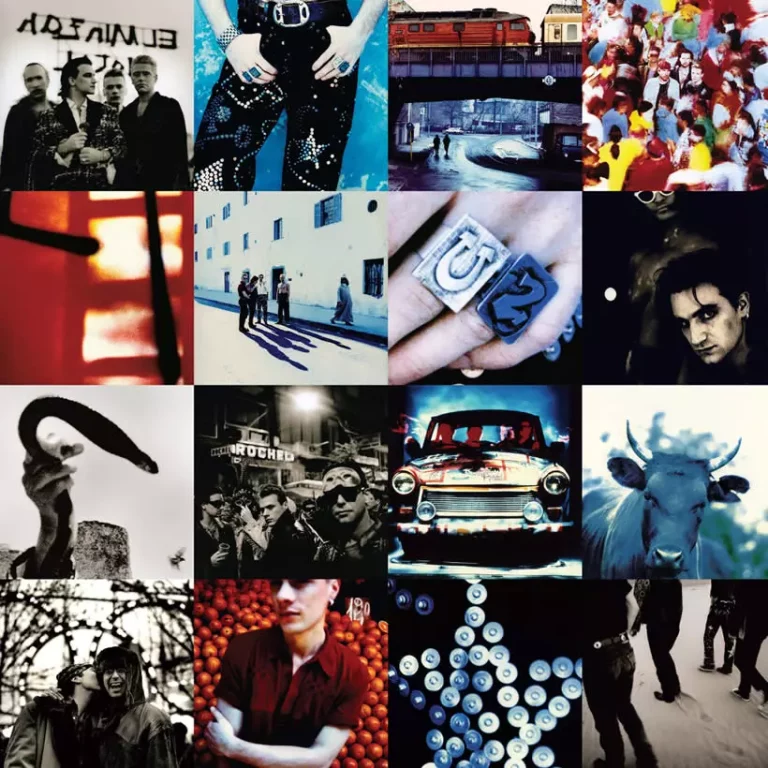
In 1991, U2 was one of the biggest bands on the planet. ‘The Joshua Tree’ had sold tens of millions. They were synonymous with earnest, soaring, arena-sized rock. By every metric, the smart move was to make ‘The Joshua Tree’ again.

Instead, they flew to Berlin and tried to blow the whole thing up.

The sessions for ‘Achtung Baby’ were a mess. Bono and The Edge wanted to chase alternative rock, industrial noise, electronic dance beats. Clayton and Mullen felt the ground shifting under them and pushed back hard. There were weeks of arguments and almost no progress. The band described what they were doing as “four men chopping down the Joshua Tree,” which tells you exactly how much it hurt to do.

The thing they were burning down was the thing that made them famous.

Then they stumbled into a song called “One” almost by accident, and the whole record cracked open. ‘Achtung Baby’ came out darker, stranger, funnier, and more human than anything they’d done. It sold close to 20 million copies and is now routinely called one of the greatest albums ever made.

But the album was only half of it. They built the Zoo TV tour around the new sound, and instead of the stripped-down, deadly-serious stage shows they were known for, they went the opposite way: a wall of TV screens, sensory overload, Bono playing a satirical character making prank calls to the White House on stage. They took their reputation for being too earnest and made fun of it in front of millions of people. The tour grossed $151 million.

Here’s what I keep coming back to as the actual lesson for anyone running a business.

They reinvented from the top, not from the bottom. Most companies only change when they’re already losing. U2 changed when they were winning, which is the hardest time to do it and the only time you have the resources and credibility to pull it off cleanly.

They were willing to kill the signature thing. The ‘Joshua Tree’ sound was their golden goose. They understood that the thing that got you here can quietly become the thing that traps you, and they were willing to take an axe to it on purpose.

And the resistance was a feature, not a bug. Half the band hated the direction at first. They didn’t paper over it, and they didn’t let the loudest voice steamroll the room either. The friction is what kept the reinvention honest instead of reckless.

The version of your business that made you successful has an expiration date. The question isn’t whether you’ll have to reinvent. It’s whether you’ll do it from a position of strength, while you still can, or wait until the market forces your hand and does it for you.

U2 chopped down their own tree at the peak. Then they grew a better one.

U2 Fans Are Stroking 2027 Stadium Rumours After Surprise ‘Days Of Ash’ EP

0

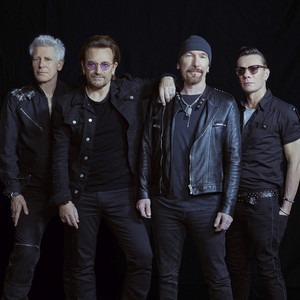
The whispers around U2 are getting louder. Multiple sources tracking the Irish four-piece point to a stadium tour in 2027 that could roll into 2028, which would mark their first proper road run since the 2019 leg of The Joshua Tree Tour.

According to U2songs, the band are eyeing an early 2027 start in South America, possibly opening in Mexico, before a European stadium leg in summer 2027. Venue holds are reportedly in place across the UK, Italy, and Germany, with four Croke Park dates in Dublin said to be on hold for summer 2027. Bono fueled it himself during a May 2026 visit to Mexico, telling fans that in his dream the tour would begin there. None of it is official yet, so treat the routing as rumour until the band confirms.

The music is real, though. On Ash Wednesday, February 18, 2026, U2 surprise-released the standalone six-track EP ‘Days Of Ash’, produced by Jacknife Lee. It collects five new songs and a poem: “American Obituary,” “The Tears Of Things,” “Song Of The Future,” “Wildpeace,” “One Life At A Time,” and “Yours Eternally” (featuring Ed Sheeran and Taras Topolia). Bono called the songs impatient, built from defiance and dismay.

These tracks carry real heaviness, even for the band. “Song Of The Future” honours Sarina Esmailzadeh, a 16-year-old killed during Iran’s Woman, Life, Freedom protests. “One Life At A Time” was written for Awdah Hathaleen, a Palestinian activist and teacher. The EP lands with urgency and melodic punch, some of the most direct writing U2 have committed to tape in years. Then in April 2026 came a second surprise, the six-track EP ‘Easter Lily’. Bono has confirmed a full studio album follows in late 2026, with songs he describes as different in mood from the EPs.

The drumming chair matters here too. Larry Mullen Jr. has recovered from a series of surgeries undertaken so he could keep playing, and he’s expected back for the tour. While he was out, the rest of the band logged 40 sold-out shows at the Las Vegas Sphere, the most ambitious production they’ve ever mounted.

The catalogue behind all this needs no inflation. ‘The Joshua Tree’ turned U2 into the biggest rock act on the planet in 1987, then its 2017 anniversary tour grossed over 316 million dollars. ‘Achtung Baby’ reinvented them four years later, trading earnestness for irony, distortion, and the towering spectacle of the Zoo TV Tour. Those two records remain the twin pillars of the U2 story, and a 2027 stadium run would put both eras back in front of a new generation.

For now, fans wait. The new music is out, Mullen is back behind the kit, the holds are reportedly booked, and the band sound ready to move.

How Lana Del Rey Built a World of Her Own

0

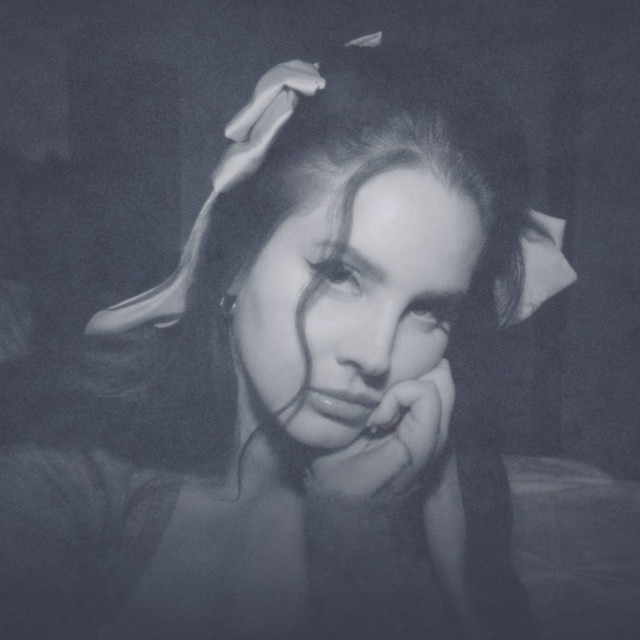
When Lana Del Rey arrived, fully formed and faintly suspicious, with the 2011 viral single “Video Games,” nobody could quite agree on what they were looking at. Here was a singer with a stage name, a vintage aesthetic, and a sound that felt both brand new and a hundred years old. Critics were skeptical, some openly hostile – if you were around, you’ll remember how mean the blogs were and her appearance on Saturday Night Live brought out the knives. More than a decade later, those same gatekeepers compare her to Joni Mitchell and Joan Didion. The story of how that reversal happened is really the story of an artist who ignored the noise and kept building, one record at a time, until the world she’d invented became impossible to deny.

From the start, Del Rey dealt in iconography. Following her breakthrough, her aesthetic combined the obvious touchstones of Old Hollywood glamour and postwar Americana with the artificially grainy sunset quality of early Instagram, layering pouty vocals over hip-hop beats and movie-melodrama strings, the lyrics all stars, stripes, and James Dean. To many critics, it felt contrived, and shoddily so. The name itself was part of the construction; her legal name is Elizabeth Grant, and the gap between Lizzie Grant and “Lana Del Rey” struck early observers as proof of inauthenticity rather than artistry.

But that reading missed what she was doing. Beginning with her 2012 debut Born to Die, Del Rey engulfed herself in visions of vintage Americana, donning those aesthetics to the point of borderline absurdity, until it became almost undeniable that she was satirizing the vapid materialism of American culture and national identity. That debut delivered a complex satire of American neediness far ahead of its time, combining babylike vocals with crushing instrumentals and lyrics rife with literary references from Walt Whitman to Vladimir Nabokov. The persona was the point. She was building a character through which to examine the country that produced her.

What separated Del Rey from a one-note nostalgia act was that she refused to stand still. Her third album, Ultraviolence (2014), leaned into guitar-driven instrumentation and debuted atop the Billboard 200, while Honeymoon (2015) and Lust for Life (2017) moved through different shades of her aesthetic. Each record deepened the world rather than repeating it, and the early accusations of hollowness grew harder to sustain against a body of work this consistent and this literary.

The full reversal came in 2019. Norman Fucking Rockwell!, was a magnificent career swerve, the only project in her catalog to fully transcend her brand of pulsing alt-pop melancholia and embrace sounds more acoustically driven yet no less alluring. Critics declared that she had defied them and graduated from the pop pantheon into the hall of legends, deserving comparison to American mythmakers like Joni Mitchell, Joan Didion, Hemingway, and Dylan. The album’s title told you everything about her method: name your record after the painter most associated with idealized mid-century American life, add an expletive, and you’ve captured the whole project in three words. The reference was almost sarcastically patriotic, poking fun at the fact that she’d been adopted as the Americana pop star, even as her biggest mainstream break came from a song placed in an adaptation of The Great Gatsby, the great American novel of the American Dream.

Her later work turned inward. After releasing two albums and a book of poetry across a 15-month stretch in 2020 and 2021 with Chemtrails Over the Country Club and Blue Banisters, she delivered her sprawling ninth album, Did You Know That There’s a Tunnel Under Ocean Blvd, in 2023. Across eight records and 11 years by that point, Del Rey had built a world and iconography of her own: cherry cola cans, white sundresses, sycamore trees, seedy dive bars, and American flags that fly both defiantly and depressingly. Where earlier work could be reactive, the ninth album was ruminative, with questions of family and legacy, memory and death swirling together, its opening track “The Grants” steeped in sepia-toned memory.

The clearest proof that Del Rey won the argument is the sound of pop music after her. Her 2010s-defining ennui steered Lorde, Billie Eilish, and even Taylor Swift, and you can trace her fingerprints across a generation of artists who learned from her that melancholy, cinematic scope, and a carefully built aesthetic universe could be the substance of pop rather than a costume worn over it. The woman once dismissed as a manufactured product turned out to be one of the most influential architects of her era’s music.

Del Rey’s real achievement was never a single song or even a single album. It was the world itself: a coherent, instantly recognizable America of her own invention, equal parts seduction and critique, that she built in public while half the room insisted it wasn’t real. It was always real. It just took everyone else a while to find the door.

Bharathiraja, “The Pinnacle of Directors” Who Reinvented Tamil Cinema, Dies at 84

0

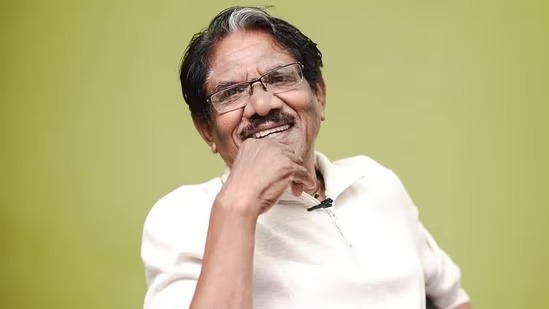
Bharathiraja, the visionary filmmaker who pulled Tamil cinema out of the studio and into the dust, fields, and sunlight of the Indian village, has died. The director, producer, screenwriter, and actor passed away on June 10, 2026, in Chennai, of age-related complications, at the age of 84.

Born Chinnasamy to K. Periyamaya Thevar and Karuthammal on August 23, 1941, in Allinagaram in present-day Theni district of Tamil Nadu, he rose from rural roots to become one of the most revered figures in Indian film. Across a career spanning nearly five decades, he was honored so completely by audiences and peers alike that he was known simply as Iyakkunar Imayam, “The Pinnacle of Directors.”

His arrival was a thunderclap. After serving as an assistant to the Kannada master Puttanna Kanagal and others, Bharathiraja made his directorial debut in 1977 with 16 Vayathinile, a film he also wrote. It broke with the conventions of its era to create an entirely new genre of village cinema and is today regarded as a milestone in the history of Tamil film. At a time when movies were shot almost entirely inside studios, he insisted on real locations, and an entire wave of village-set Tamil films followed in his wake. He even changed how characters looked on screen, dressing his male leads simply and casting dusky-complexioned heroines in an industry that had long favored fair-skinned stars.

He proved early that he refused to be boxed in. After being criticized as a director who could only speak to village audiences, he answered with Sigappu Rojakkal, a thoroughly westernized psychological thriller, then the experimental Nizhalgal and the taut Tik Tik Tik. Yet rural themes remained his great strength, and his run of poetic village love stories, including Alaigal Oivathillai, Mann Vasanai, and Muthal Mariyathai, defined the 1980s. Muthal Mariyathai, starring Sivaji Ganesan as an aging village head drawn to a poor young woman across barriers of age, caste, and class, remains a touchstone of tender, humane storytelling. With Vedham Pudhithu, he confronted caste discrimination head-on in one of the boldest films of his career.

Bharathiraja’s brilliance was recognized with an extraordinary haul of honors: six National Film Awards, four Filmfare Awards South, six Tamil Nadu State Film Awards, and a Nandi Award. His National Awards stretched from Seethakoka Chiluka in Telugu in 1982 through Mudhal Mariyathai, Vedham Pudhithu, Karuththamma, Anthimanthaarai, and his 2001 screenplay for Kadal Pookkal. In 2004, the Government of India awarded him the Padma Shri, the nation’s fourth-highest civilian honor, and the following year Sathyabama University conferred an honorary doctorate.

Perhaps his most enduring legacy is the talent he discovered. Bharathiraja introduced a remarkable roster of new faces who became stars, among them Karthik, Radha, Revathi, Radhika, and Vijayashanti, along with countless beloved supporting actors. Many filmmakers who later became household names, including K. Bhagyaraj, Manivannan, Manobala, and Ponvannan, first stepped before a camera in his films. He was instrumental in casting Sathyaraj in his first lead role, and later founded a film school, the Bharathi Raja International Institute of Cinema, to pass his craft to a new generation. He also coined the affectionate address that became his signature, opening with “En Iniya Thamizh Makkale,” meaning “My sweet Tamil people.”

In his later years he remained active as a character actor, earning a Vijay Award for Best Supporting Actor for Pandiya Naadu in 2013 and appearing in films up to 2025. His final years were also marked by personal grief: his son, the actor Manoj Bharathiraja, died of a heart attack in March 2025. Bharathiraja is survived by his wife, Chandraleela, whom he married in 1974, and his daughter, Janani.

A director who told complex truths in a language every common person could understand, Bharathiraja did more than make films. He taught Tamil cinema to look at itself, at its villages, its people, and its conscience, and find poetry there. The pinnacle, indeed.

John Loring, Who Defined Tiffany & Co.’s Style for Three Decades, Dies at 86

0

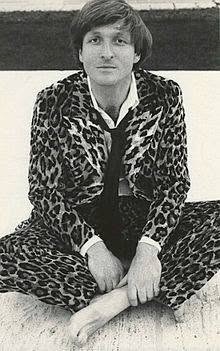
John Loring, the artist, author, and tastemaker who served as design director of Tiffany & Co. for thirty years and helped shape the look of one of America’s most storied luxury brands, has died at the age of 86. He passed away in June 2026 in Palm Beach, Florida.

Born John Robbins Loring in Chicago on November 23, 1939, he brought a rare combination of scholarship and artistry to everything he touched. He earned a Bachelor of Arts in English literature from Yale University in 1960, then spent four more years studying at the École des Beaux-Arts in Paris. From 1964 onward, his prints and paintings were exhibited across Europe and the United States, beginning a career as a working artist that ran in parallel with his life in design and publishing.

Before joining Tiffany, Loring made his name in the world of design journalism, serving as the New York bureau chief of Architectural Digest and as one of the magazine’s principal editorial contributors. He also taught as a professor of art at the graduate school of the University of California. In 1979 he joined Tiffany & Co. as design director, the role he would hold until 2009 and the one for which he is best remembered.

Over those three decades, Loring became the steward and storyteller of the Tiffany aesthetic. He chronicled the house’s history and design legacy in a remarkable shelf of books, more than two dozen in all, ranging from Tiffany’s 150 Years and Tiffany Style: 170 Years of Design to specialized volumes on the brand’s diamonds, pearls, silver, and timepieces. His writing extended well beyond the brand itself, taking in subjects from the designer Joseph Urban to his own photography, and he remained a longtime contributor to Architectural Digest.

Loring was also a serious artist and collector in his own right. His work entered the permanent collections of major institutions including the Museum of Modern Art, the Whitney Museum of American Art, the Metropolitan Museum of Art, the Art Institute of Chicago, the Museum of Fine Arts in Boston, the Yale University Art Gallery, and the Dallas Museum of Art. He served on the Acquisitions Committee of MoMA’s Department of Prints and Illustrated Books and was a dedicated collector of twentieth-century furniture and ceramics, while his passions for cooking and interior design were celebrated everywhere from The New York Times Magazine to French Vogue. In 1992, The New Yorker honored him with a feature profile.

His contributions were recognized with a long list of honors, among them a Lifetime Achievement award from the Museum of Art and Design in 2005, the Fashion Group International’s Distinction in Design award, the Edith Wharton Award for Excellence, and an honorary Doctor of Fine Arts from the Pratt Institute. The photojournalist Harry Benson, a friend, once wrote that Loring possessed one of the best eyes for photography in the world, praising the haunting elegance that lingered in his images.

John Loring leaves behind a body of work that spans galleries, museums, bookshelves, and the display windows of Fifth Avenue, a reminder that style, at its best, is a form of scholarship and devotion. Few people shaped the visual language of American luxury as quietly and lastingly as he did.

Dick Strahm, Hall of Fame Findlay Coach Who Won Four National Titles, Dies at 92

0

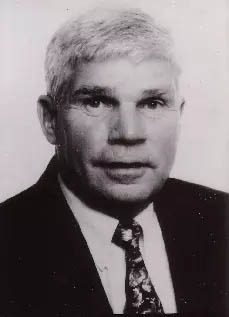
Dick Strahm, the legendary football coach who turned the University of Findlay into a small-college powerhouse and earned a place in the College Football Hall of Fame, has died. He passed away on June 9, 2026, at the age of 92.

Born in Toledo, Ohio, on February 23, 1934, Strahm built a coaching life that became synonymous with the city of Findlay. Before taking over the Oilers, he sharpened his craft as an assistant, serving as defensive coordinator at Toledo from 1970 to 1972 and as an assistant at Kansas State in 1973 and 1974. But it was the head job at Findlay, which he held from 1975 to 1998, that would define his career and his legacy.

The numbers tell part of the story. Across 24 seasons, Strahm compiled a remarkable record of 183 wins, 64 losses, and 5 ties. His teams captured four NAIA national championships, in 1979, 1992, 1995, and 1997, the last of those capping a perfect 14-0 season. He was named NAIA Division II Coach of the Year twice, in 1979 and 1995, and NAIA Coach of the Year in 1997. Along the way his Oilers piled up eight Hoosier-Buckeye Conference crowns and three straight Midwest League titles from 1995 to 1997.

His first season was humble, a 2-8 campaign in 1975. What followed was a steady, relentless climb that transformed the program. By the late 1970s Findlay was playing for national titles, and Strahm would keep the Oilers in the championship hunt for the better part of two decades, a stretch of sustained excellence rare at any level of the sport.

In 2004, Strahm was inducted into the College Football Hall of Fame, a fitting recognition of all he had accomplished. His story was preserved in his biography, Just Call Me Coach, written by John Grindrod of Lima, Ohio, and released in December 2008. In 2023, the University of Findlay announced plans to build an athletic facility in his honor, ensuring his name would remain part of the campus he served for so long.

More than the trophies and the record, Strahm leaves behind generations of players he coached and a community that came to regard him as one of its own. In announcing his death, the University of Findlay mourned the passing of a coach whose impact stretched far beyond the scoreboard.

Arvi Lind, “The Most Trustworthy Man in Finland,” Dies at 85

0

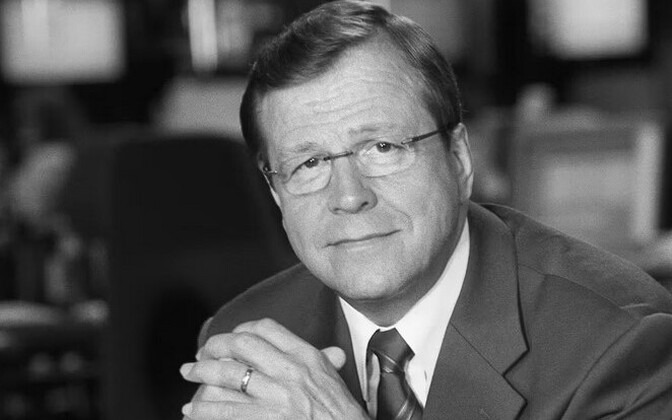
For nearly four decades, Finns ended their day with the same calm, steady voice. Arvi Lind, the news anchor who became a fixture of Finnish television and was so widely respected that the media simply called him “the most trustworthy man in Finland,” has died. He passed away on June 7, 2026, in Helsinki, at the age of 85.

Lind was born Arvi Kullervo Lind on December 21, 1940, in Lauritsala. He began his career as a reporter with Yleisradio’s television news on October 15, 1965, and went on to anchor the news on Yle TV1 for almost four decades. Alongside Kari Toivonen, he became one of the longest-serving employees of Yleisradio’s news operation, a constant presence through generations of Finnish life and the steady hand that guided viewers through the events of their times.

His final broadcast, fittingly, came on the anniversary of his first: Wednesday, October 15, 2003, at 20:30. More than 1.6 million viewers tuned in to say goodbye, an extraordinary number for a country of Finland’s size and a measure of just how deeply he had woven himself into the national fabric. He retired at the start of 2004.

Lind never fully stepped away from the work he loved. He went on to lecture about journalism at universities, and in 2005 the newspaper Keskisuomalainen appointed him as its reader ombudsman, a role that suited a man whose name had become synonymous with credibility. His life and career were chronicled in the biography Lindin Arvi, written by Heikki Hietamies, and his standing in Finnish public life was confirmed when he ranked 85th in the Suuret suomalaiset (Great Finns) poll.

Away from the anchor desk, Lind was a devoted sports enthusiast who played ice hockey for a team called Zoom. That passion carried into the next generation through his son, Juha Lind, who went on to play hockey at the national and NHL level.

Arvi Lind’s gift was not flash but trust, the rare ability to make millions of people feel informed, steadied, and respected night after night. In an era when that kind of quiet authority feels increasingly scarce, his passing marks the end of a remarkable chapter in Finnish broadcasting.