Home Blog Page 2050

Another cool music read: A New History of American and Canadian Folk Music by Dick Weissman

0

Building on his 2006 book, Which Side Are You On?, Dick Weissman’s A New History of American and Canadian Folk Music presents a provocative discussion of the history, evolution, and current status of folk music in the United States and Canada. North American folk music achieved a high level of popular acceptance in the late 1950s. When it was replaced by various forms of rock music, it became a more specialized musical niche, fragmenting into a proliferation of musical styles. In the pop-folk revival of the 1960s, artists were celebrated or rejected for popularizing the music to a mass audience. In particular the music seemed to embrace a quest for authenticity, which has led to endless explorations of what is or is not faithful to the original concept of traditional music.

This book examines the history of folk music into the 21st century and how it evolved from an agrarian style as it became increasingly urbanized. Scholar-performer Dick Weissman, himself a veteran of the popularization wars, is uniquely qualified to examine the many controversies and musical evolutions of the music, including a detailed discussion of the quest for authenticity, and how various musicians, critics, and fans have defined that pursuit.

Dick Weissman is Associate Professor Emeritus at the University of Colorado at Denver, USA, and has been involved with the North American folk revival as a musician, performer, composer and scholar. He is the author of many critically acclaimed books about American roots music and the music industry, including The Folk Music Sourcebook (1989), which won the Deems Taylor ASCAP Music Critics Award; The Music Business (5th edition 2003), which sold over 100,000 copies; Navigating the Music Industry (2003); Which Side Are You On?: An Inside History of the Folk Music Revival in America (Bloomsbury, 2006); and Songwriting: The Words, the Music, and the Money (2010).

You can get it here.

The New York Times Essential Library: Rock Music

0

Rock and roll has engendered a whole myriad of subgenres-from metal to reggae, folk rock to funk, country rock to hip-hop, punk to grunge, rockabilly to soul. In assertive and original essays, Jon Pareles, the rock music critic for The New York Times, addresses what he calls the “panopticon” of genres that grew out of the early traditions. He includes several of these seminal artists who laid the groundwork for later experimentation-Elvis, Chuck Berry, and Buddy Holly, for example. But he also ranges widely over some more unusual favorites: Marvin Gaye, Joni Mitchell, James Brown, Public Enemy, Parliament-Funkadelic, Nirvana, U2, and Talking Heads.

Pareles bases his selection of the hundred best albums on their innovativeness, historical significance, and pure listening pleasure. He tells us not just what the album sounds like but why it is so influential, and in many cases, why it’s still a thrill to hear after all of these years. This latest volume in the Essential Library series captures perfectly the way that rock has shaped and shaken both our culture and our minds.

You can get it here.

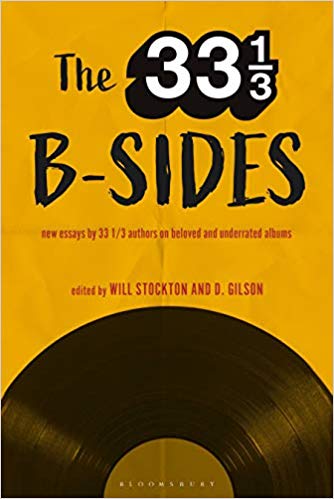
The 33 1/3 B-sides: New Essays by 33 1/3 Authors on Beloved and Underrated Albums

0

If given another chance to write for the series, which albums would 33 1/3 authors focus on the second time around? This anthology features compact essays from past 33 1/3 authors on albums that consume them, but about which they did not write. It explores often overlooked and underrated albums that may not have inspired their 33 1/3 books, but have played a large part in their own musical cultivation.

Questions central to the essays include: How has this album influenced your worldview? How does this album intersect with your other creative and critical pursuits? How does this album index a particular moment in cultural history? In your own personal history? Why is the album perhaps under-the-radar, or a buried treasure? Why can’t you stop listening to it? Bringing together 33 1/3’s rich array of writers, critics, and scholars, this collection probes our taste in albums, our longing for certain tunes, and our desire to hit repeat–all while creating an expansive “must-listen” list for readers in search of unexplored musical territories.

Co=edited by Will Stockton, heis Professor of English at Clemson University, USA, and the author of several books, including Members of His Body: Shakespeare, Paul, and a Theology of Nonmonogamy (2017) and Playing Dirty: Sexuality and Waste in Early Modern Comedy (2011). Thr book is also co-edited by D. Gilson, who teaches English at Missouri State University, USA. His books include Incarnate: Notes from an Evangelical Boyhood (2020) and I Will Say This Exactly One Time: Essays (2015).

You can get it here.

My Next Read: She Can Really Lay It Down: 50 Rebels, Rockers, and Musical Revolutionaries

0

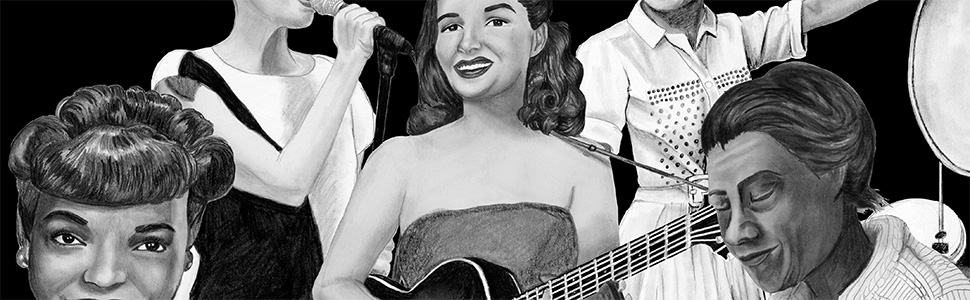
The artists in “She Can Really Lay It Down: 50 Rebels, Rockers, and Musical Revolutionaries” defied genre and social convention to shape the music industry as we know it. But many of these incredible musicians have been overlooked or cast in supporting roles in their own stories simply because they are women. Until now. Author and illustrator Rachel Frankel shines a spotlight on 50 groundbreaking musicians through vivid portraits and heartfelt biographies that bring each icon to life on the page. Featuring an exposed spine designed to look like the neck of a guitar, this book pays homage to the rock goddesses who shredded, sang, and stormed the stage with ferocity and passion, inspiring a whole new generation of fearless, talented performers.

You can get it here.

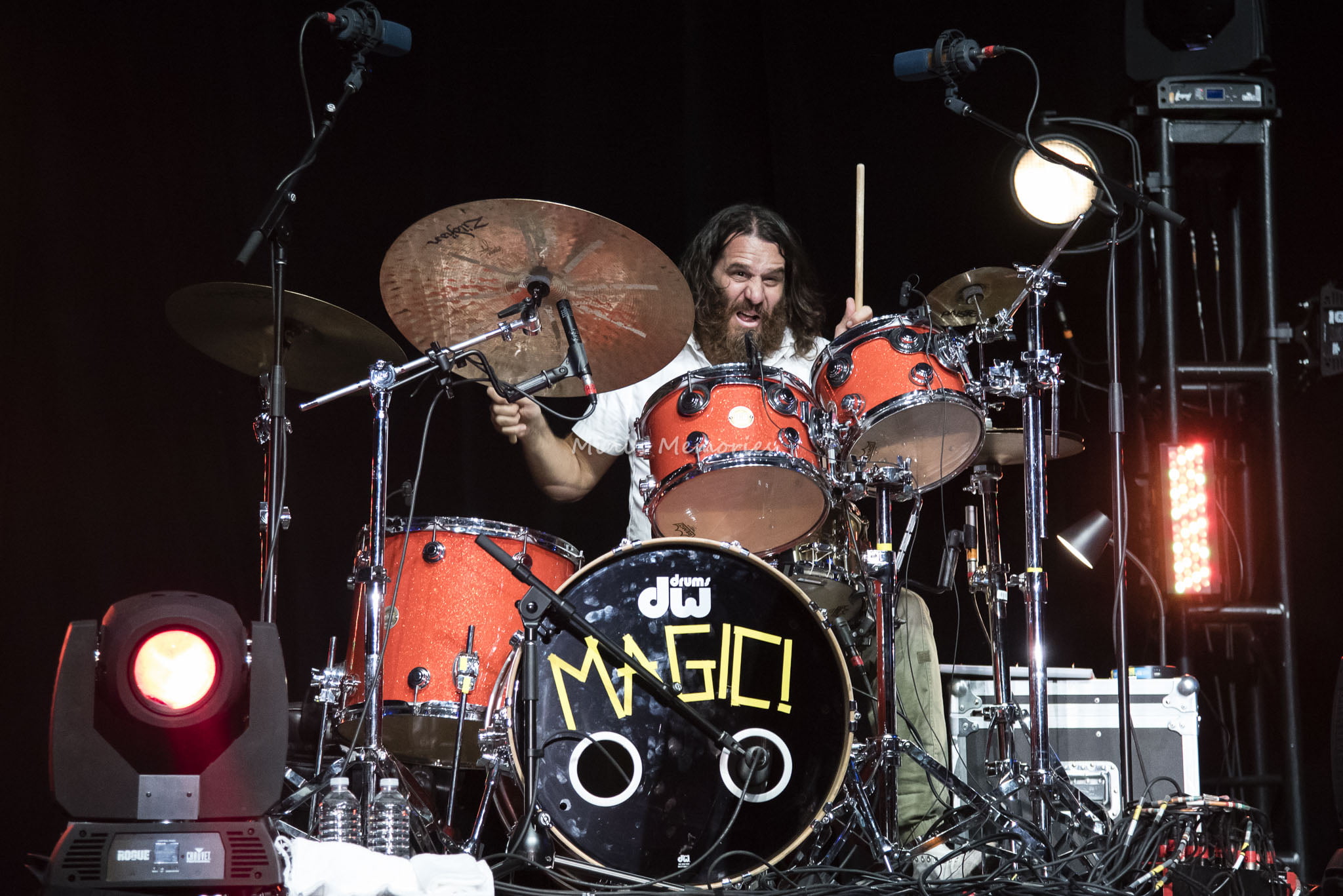
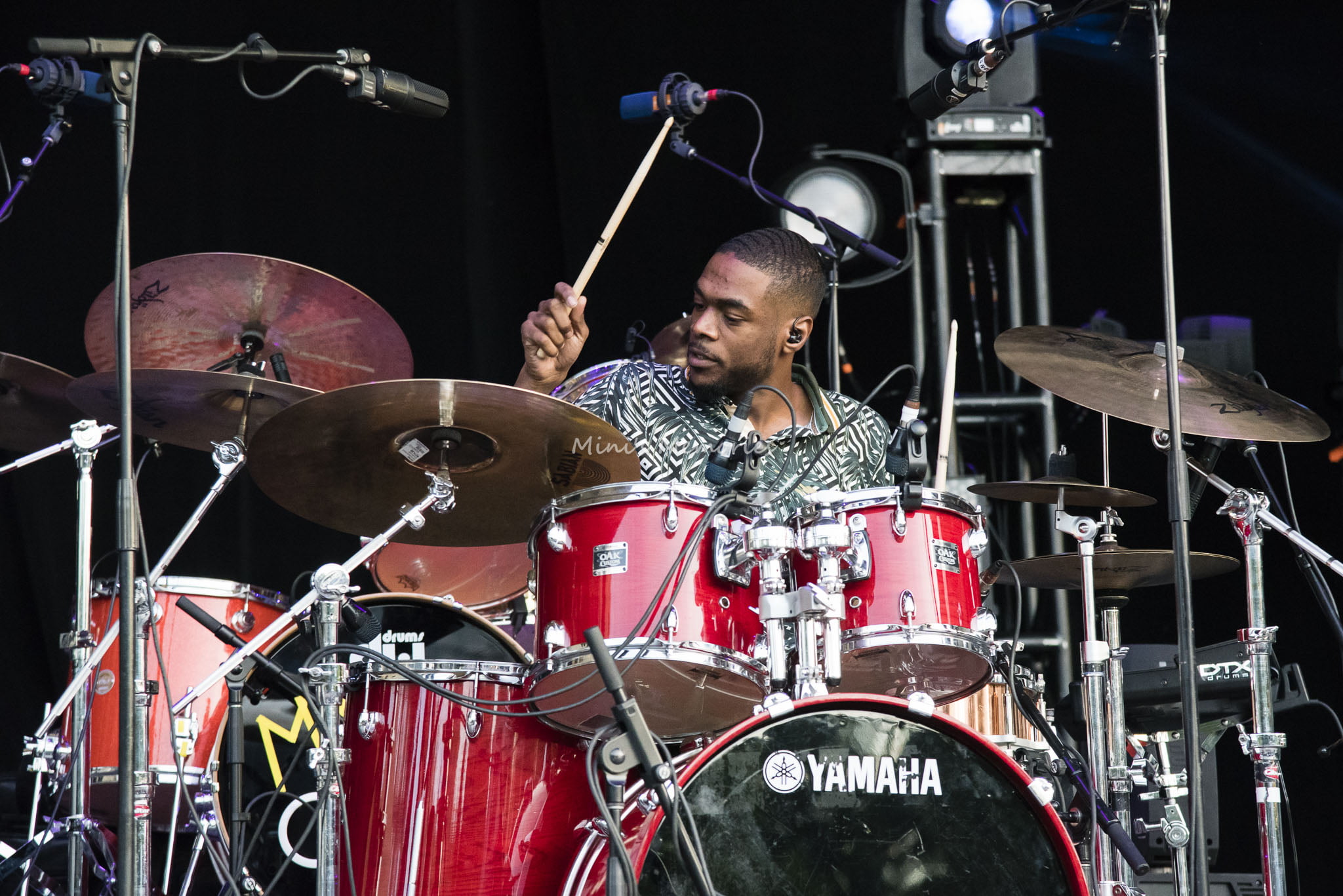
Photo Gallery: Magic! with Jon Vinyl at Toronto’s Canadian National Exhibition

0

All photos by Mini’s Memories. You can contact her at minismemories@hotmail.com

Magic!
Magic!
Magic!
Magic!
Magic!
Magic!
Magic!
Magic!
Magic!
Jon Vinyl
Jon Vinyl
Jon Vinyl
Jon Vinyl
Jon Vinyl

The Coolest Watches To Buy For A Musician

0

Everyone knows that musicians can be a picky bunch! Either the rider didn’t have their favorite brand of sparkling water, they’re on take #147 for that guitar solo, or simply won’t go on stage unless they’re wearing their lucky socks! Whatever the case may be, musicians are often perfectionists, which means they won’t settle for second-best when it comes to anything… and by anything, we also mean the gifts they receive.

Have a musical friend or loved one with a birthday coming up and no idea what to get? Well, even if they asked for a $25,000 Game of Thrones Fender guitar, you might want to get them something a bit smaller and more affordable… like a watch. Now, this doesn’t have to imply that they’re also late (there’s always one to band practice), but it’s still a cool, stylish, and useful gift to get for the musician in your life. However, we know that not any old watch will do, so get them a watch especially for musicians!

Probably the most metal watch in the world

Know someone who’s into thrash metal, with long hair and always dressing in black? Then there’s no watch more perfect than a Nixon/Metallica watch. The famous metal band recently teamed up with Nixon to create a truly epic range of wristwatches. You’ll have your choice of a few album covers displayed on the watch dial, combined with a black metallic strap and even a guitar as the watch hand in a few cases. There are a few artist/watch partnerships out there, but Metallica and Nixon have combined to create a truly cool watch that’s actually wearable.

A watch for the future

This option might be a tad more expensive, but perhaps you could combine it into a birthday and Christmas present for the next few years! The Tag Heuer Connected Modular 45 is a smartwatch that doesn’t necessarily look like one, which is great if the person you’re buying for hates the futuristic look of something like an Apple Watch. While the features like Maps, customizable dials, and a rechargeable battery are all pretty useful, the option of being able to store tracks on the watch and listen to them via Bluetooth headphones is definitely the most exciting part for a musician. If you think this is too expensive brand new, then try getting one second-hand online and maybe you’ll get lucky with a good price.

Finally… a watch you can actually play

For any musician, it can be hugely frustrating to think of an amazing melody but have nowhere to record it until you get home to your guitar or keyboard. Well, that is until we heard about the Audioweld Synthwatch. A little chunky for some, but this is nevertheless a keyboard synthesizer on your wrist. It even comes with its own sequencer, which means you can record and tweak all the sounds you play. It displays the time as any digital watch does, but if you’re after something with a bit more pizazz, then it’s hard to beat this musical watch.

Nine Inch Nails’ Trent Reznor on The Cure

0

I grew up in a small town—small town USA, Mercer, Pennsylvania to be precise, where there was nothing to look at but cornfields. It was a primitive time, long before the miracle of the internet arrived to devalue our wonderful art form. Even pre-MTV, with nothing to listen to on the radio and nothing to do but dream and escape.

When I left home, it was time for the big city—in my case the big city of Cleveland. And everything changed. It was the mid-’80s, and just being able to tune into college radio made my head explode with limitless possibilities. This was my baptism into the world of alternative and underground music—the sounds that informed what Nine Inch Nails would eventually become.

One of the most important aspects of being swept away by this tidal wave of music was getting to hear the Cure for the first time. Immediately, this band struck a deep chord in me. The first album I heard was Head on the Door, and I hadn’t heard anything like it before. And a lot of darkness I felt in my head was coming back at me through the speakers and it blew my mind. It was like this music was written just for me. Now I’ve struggled my whole life feeling like I don’t fit or belong anywhere, kind of like right now. Hearing this, I suddenly felt connected and no longer quite so alone in the world. That’s one of the things I find so unique and special about the power of music.

It wasn’t just the sound or the words or the presentation—all of it was anchored by the most exquisite of instruments—Robert Smith’s voice. That voice, capable of such a range of emotion from an expression for rage, sorrow, and despair to beauty, frailty, and joy. It might sound naive but until I heard The Head on the Door, I just didn’t realize it was possible to write about such difficult and profound ideas, but do it in the context of successful songs that might even get played on the radio, challenging norms from the inside.

Quite understandably, most musicians tend to differ from their carefully cultivated personas to one degree or another. As far as I can tell, Robert Smith is that rarest of things—a 100 percent authentically Robert Smith kind of person who lives a 100 percent authentically Robert Smith kind of life. He used that to create a completely self-contained world. It’s a sound, it’s a look, it’s a vibe, it’s an aesthetic that the fans get to visit and immerse themselves in whenever they like. It’s a custom world for anyone who has ever dreamed of escape.

Elton John Details The Making Of “Tiny Dancer” Back In 1970

0

In 1970, Elton John introduced and explained the structure of a new song he was working on with his musical partner Bernie Taupin. They would call it Tiny Dancer. The song’s lyrics were inspired by Taupin’s first visit to the US in 1970, and were intended to capture the spirit of California, where he found the women he met highly contrasted with those who he had known in his home country of England. Later, Taupin stated in a 1973 interview in Rolling Stone that the song is about Maxine Feibelman, his wife at the time.

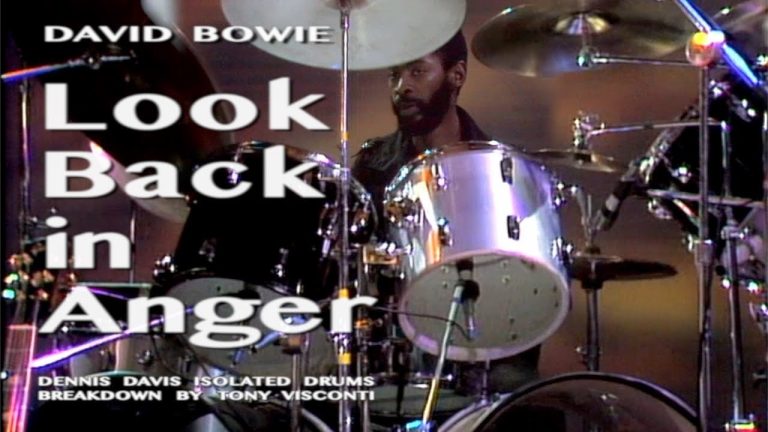
Isolated Drum Tracks Of Dennis Davis, David Bowie’s Drummer, As Explained By Producer Tony Visconti

The HD Projects is very proud to present the first in a series of video’s featuring our interview with world-famous music producer, Tony Visconti.

The interview took place in 2018. Tony generously and comprehensively answered our questions. He provided a lot of information and insight into the music he and David Bowie made, and the times they shared with drummer Dennis Davis.

As part of the interview, Tony provided some unique Bowie track breakdowns, to illustrate how important Dennis Davis drumming was to the sound of Bowie’s groundbreaking late 70’s music.

One such was of Look Back in Anger – the classic Bowie rocker from his 1979 album, Lodger. It is a track dominated by Dennis Davis’ drums, and is rightly regarded as one Dennis’ signature tracks with Bowie.

Dennis’ drum tracks for Lodger were in all likelihood recorded at Mountain Studios in Switzerland, in September 1978, during the break in Bowie’s Isolar II World Tour.

On Tony’s breakdown for The HD Projects, vocals and lead instruments are stripped away to fully reveal the drumming, and a previously unidentified Dennis Davis conga drum track, subtly hidden in the mix.

In places, elements of the original track, including Bowie’s vocal, have been mixed back to add context and enjoyment to the video.

Listen To “You Saved My Soul (With Your True Love)”, The Last Song John Lennon Ever Recorded

0

On November 14, 1980, John Lennon recorded three rough songs at the apartment he shared with Yoko Ono in New York City’s The Dakota apartments. “You Saved My Soul (With Your True Love)” was the last demo he recorded before he was murdered on December 8, 1980 outside his home. The appearance of ‘Serve Yourself’ is interesting indeed, as it shows that John was evidently still considering it for eventual release. ‘Real Love’ perhaps excluded, it certainly was the song he put most work into during the 1979—80 period. Also making an appearance is a brief, taped over vocal rap “pop is the name of the game”. It’s odd that aside from guitar overdubs for ‘Walking On Thin Ice’ in early December, this would actually be Lennon’s last musical (if it can be so termed) work laid on tape.

H/T