Kim Gordon and Bret Easton Ellis discuss the 2015 MTV Video Music Awards, Girl in a Band, the nihilism of Lana Del Rey, returning to Los Angeles after living in New York City, and the success of Sonic Youth.
“We didn’t really have expectations about being hugely commercial, and I don’t think ever. And I think everyone else did after Nirvana broke. People would say oh don’t you think your record is going to be as big and we’d be like, “No are you crazy? What’s your logic?””
Recognizing the achievements of Calgary’s music community, the YYC Music Awards is proud to announce their inaugural year in supporting and celebrating the wide range of musical talent based in the city. Honouring artists in 19 categories (list below), the YYC Music Awards is taking submissions until April 16th for this year’s first annual gala being held on September 25th at a venue later to be announced.
The YYC Music Awards are founded by music industry veterans Darren Gilbert (producer, Off The T-Can Studio), Shannon Ambrose (The Portal Magazine), Larry Mayell (artist manager) & Leanne Harrison (SIN Agency) to celebrate the artists that embrace Calgary at home, entertaining and supporting its arts and culture.
“With 2016 proclaimed as Calgary’s Year of Music, we felt it perfect timing to announce the YYC MUSIC AWARDS to take place this September. We think it’s deserving to shine the spotlight on Canada’s third largest city and its vibrant music scene.” comments Shannon Ambrose.
Submissions can be made at the following link until April 16th here.
Canadian Music Week is pleased to announce Nelly Furtado as the 2016 recipient of theAllan Slaight Humanitarian Spirit Award. The award, bestowed to outstanding Canadian artists, is in recognition of their contributions to social activism and support of humanitarian causes.
Celebrating Furtado’s extensive work with Free The Children and participation in We Day, the award will be presented at the Canadian Music & Broadcast Industry Awards gala to be held on Thursday May 5 at The Grand Ballroom of the Sheraton Centre in Toronto during Canadian Music Week 2016. “I am greatly honored to be recognized by the Slaight Family with this award and thrilled to join the ranks of a list of musical peers whom I greatly admire,” states Furtado.
Furtado travelled to Kenya with Free The Children in 2011. There, she met the 40 students at the first all-girls secondary school, Kisaruni, and other young women who hoped for a spot in the future. When she returned home, the new Free The Children Ambassador participated in her first We Day in Waterloo, Ont. and has been a regular ever since. During her last album, 2012’s The Spirit Indestructible, the singer raised money for a second girls high school in the community called Oleleshwa, and matched every dollar. Furtado has been back to Kenya with Free The Children three more times, including this past Christmas for the first graduation ceremony. She’ll travel there again at the end of this year – and for a long time to come.
“Not only has Nelly’s music brought joy to people all over the world, but through her many trips with Free The Children and generous financial donations, she has had a lasting impact on young women in rural Kenya who would otherwise not have an opportunity to go to high school. She has also boosted enthusiasm for Free The Children by telling her inspirational stories at many We Day events for students across the country. My father and I are honoured to make Nelly the latest recipient of the Allan Slaight Humanitarian Award. She is truly deserving,” says Gary Slaight, President and CEO, Slaight Communications.
Furtado, the Canadian-born singer, songwriter, actress, and philanthropist, who is of Portuguese descent, has enjoyed a vibrant and successful career as a multi-language superstar. By embracing different cultures and genres, she has helped define musical diversity for a new generation ever since unleashing her debut, 2000’s double-platinum Whoa, Nelly!, which spawned “I’m Like A Bird,” followed by 2003’s gold Folklore, whose “Forca” became the official anthem of the 2004 European Cup Football Championship.
In 2009, she released her first Spanish-language album, the Latin Grammy Award-winning Mi Plan, which reached No. 1 on the U.S. Latin Billboard chart and swept Canada’s Juno awards with five wins including Album of the Year. In total, Furtado has sold more than 16 million albums and 18 million singles worldwide. She has racked up many international honors, including a Grammy Award, a BRIT Award, a Latin Grammy Award, World Music Award and 10 Juno awards.
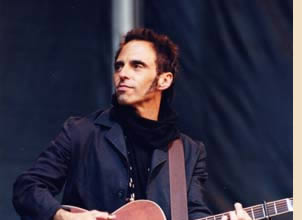
When Bruce Springsteen takes his East Street Band on the road this year, he will have trusted guitarist Nils Lofgren again, by his side. For more than 30 years, Lofgren has handled guitar duties for Springsteen and the greatest Rock N Roll band of all time. Don’t even argue with me on this. They’re out on the road performing their River album, promoting The Ties That Bind, the River Box Set. The River Tour isn’t the only thing that Nils is excited about in 2016. From his beginnings as an accordion playing kid on the Southside of Chicago, Nils parlayed his diverse musical gifts into a long term musical association with Neil Young, starting with the landmark After The Gold Rush album. Nils has also worked with Lou Reed and Ringo Starr and has recorded a wide array of solo albums, all now collected in a 10-disc box set called Face the Music. The set is a much-needed in-depth look at the groundbreaking solo work of one of rock’s most underestimated, creative, and irreplaceable musicians. Summing up his monumental project, the unfailingly modest Lofgren says, “We were just grateful to play our faces off, anywhere and everywhere. To look back 45 years and to hand-pick this music and to hear it all together is pretty stunning.” So please welcome from the heart-stopping, pants-dropping, house-rocking, earth-quaking, booty-shaking, viagra-taking, love-making, E Street Band, one of the greatest guitarist in the world, Nils Lofgren. Nils: Wow, that’s a hell of a wind-up. Thank you. Eric: Well, okay, between you and I, it’s better than how Bruce says it. Right? Nils: *laughs* Neck and neck. Eric: So you guys are coming up to Toronto in a couple of weeks, so here’s the thing. I have a meeting at 9 o’clock in the morning the next day. Are you guys going to be done by then? Should I book it off now? Nils: That remains to be seen. We got a whole 20-song River album to fit in our normal, crazy improv show. So we’ll see. Eric: You’ve been playing with the East Street Band for 32 years now. Your first show was in St. Paul, Minnesota where the shooting the Dancing in The Dark video with Courtney Cox took place. Nils: It was and I was freaked out because I’ve been seeing the band since 1970, I’ve been buying tickets to see them play. Of course, I didn’t get the job until 30 – like a month before opening night. Man, it was not enough time to think about that. They were all sweet and kind, gave me their time and advice but it was about 20 shows in before I really felt like I got my sea legs but nevertheless, I’m a performer at heart. I’ve been on the road professionally since ‘68. I figured that if anyone was up for it, it was me. I just studied my face off, banned all music except E Street and Bruce music and got the job done. But yeah, it was St. Paul. I still remember meeting Kevin McHale that night, got to be good buddies with one of my favourite basketball players. I am a basketball fan. He wound up coming to a lot of shows and I wound up getting to go play basketball with Celtics at their practices, which was a dream come true for me.
Eric: Long before the early E Street shows and since then, you’ve had a really good career on your own. You, of course, started in the 70’s band Grin and then on your own in 1975. Your compilation album, that 10-CD box set, Face the Music. How did you end up with 10? Nils: Well, that’s the funny thing. That 10-disc box set probably represents less than half of my work. Believe it or not, I’ve forgotten how busy I’d been since I was 17-year-old and hit the road. I’m always more focused on today and tomorrow, than yesterday. But, having Concord/Fantasy ask to do a comprehensive box set, with 40 bonus tracks and 48 years on the road, there’s a lot of stuff I wanted to share and never got to. A lot of beautiful demos and things…It was a beautiful stroll down memory lane. My job was to figuratively. I never wanted to get off the couch and move the needle on the record. So some albums would be three songs, some would be six but they went and got the rights to every single track I wanted and let me hand pick them and put them together. Dave Marsh encouraged me to write a 138-page book. Which I did and he edited it. Insisted I write the story. My wife Amy worked with all the art directors and produced the package. Thousands of photos and buddy Steve Smallen had thousands of old 45 sleeves, posters. I mean he had the poster when Grin opened for Jimi Hendrix opened on my 19th birthday. Just hundreds of items like that, that I did not collect. So it was a two-year labour of love and I’m just just very, very proud because all the old music is out of print. To hand-pick the best of and get to share it with this really solid box set really meant a lot.
Eric: In the liner notes of the box you talk about writing songs with Lou Reed for your Nils’ album in 1979 and he was dictating the lyrics to you. Nils: It was a beautiful thing. Bob Edison was producing the Nils’ album that had No Mercy and Shine Silently on it, had a lot of songs. Even Bob and I went, these songs, these songs the music’s great, the lyrics are average. What do we do? And Bob said, “what about co writing?” I said, “I don’t know”. Bob said, “Lou, would you consider doing some co writing with Nils? Lou said, “I don’t know. Let’s talk about it.” So I met Lou one night and unbeknownst to me, he was a football fan. It was a Redskins/Cowboys game on a Monday night. He rooted for the Cowboys and I rooted for the Redskins. I don’t even remember who won, which is strange, because I was so preoccupied with the potential for writing with Lou. You see, music comes out of me very naturally, but lyrics take a bit more work and Lou is the exact opposite. So we thought well look if you have all these songs, why don’t you send me a tape and we’ll see how it goes. I sent him a cassette, and we spoke on the phone a lot.
I spent a long night at his apartment and we decided before we got into a loft, with a piano and an acoustic and slog it out for those 7, 8-hour co-writing sessions. He said, “Let’s start with sending the cassette and let me check it out.” So I set him a 13 song cassette. Humming, singing lyrics I wrote that he knew I didn’t like, titles, whatever. Three weeks later, after kind of forgetting about it and carrying on with my own work. He wrote me up at like 4:30 in the morning. He said, “Hey Nils, it’s Lou”. I said, “Hey Lou”. I mean, I was wondering why the hell he was calling me at that hour, but I mean, I was glad to hear from him. But I had no idea why he was calling, literally. I had forgotten completely about it because I was very busy writing, demoing, working to get a record together because we had a recording date coming up. And he said, “Look man, I’ve been up three days and nights straight with this cassette. I love it. I just finished 13 complete sets of lyrics. If you want to get a pen and pencil or paper, I will dictate them to you”. I said, “Let me put on a pot of coffee,” and I did. I sat there for two hours and Lou dictated 13 songs, that were finished, that were now songs I’ve written for Reed.
He spent 3 days and nights pouring over it. I spent months and months and months of work to assemble the music that was on that cassette. Right away, he said, “Look, I would love to use 3 for my Bells album”. I said, “done”. I used 3, I’ve pulled some out since then. There’s two or three on the box set and there’s a brilliant one of my favourites, Life, with Branford Marsalis, just gorgeous. Right now actually, now that tragically we lost Lou, I’ve decided that one of my jobs in the next couple of albums I make is to revisit those co-writes and get them recorded. Just to pay honor to Lou and the work we did together. Brilliant, right? “Get a pen and paper and I will dictate the 13 songs you just wrote with me.”
Eric: I want to ask you about the idea of a hit because you certainly have a lot of amazing records in your catalog, a hero to a lot of guitar players, but you never had the hit. That one song might have eluded you throughout all those years. Do you see a similarity now between today’s veteran artists, that might not have their new music be heard on the radio? Nils: Personally, I make music to share with people. So the mythical idea that I’m still the teenager at heart that wants to have that heavy rotation hit, where every stations on the planet plays your song 17 times a day until people are sick of it. Then all of a sudden instead of playing 300 people in a bar – which I love and take seriously – it’s 3,000 people in a theater. You bring your own sound, you bring your own lights, you control the environment a little bit more and you feel like you have a little bit of control to make it a better show. But you know, I don’t over think it. Rather than look at record companies, promotion, radio. I rather take the brunt of that and say well look, you’ve made a lot of great music and a lot of people know about it. If you want to reach more people, get better at what you do. So I’m working on being a better writer, singer, player, musician, performer, all of that. In addition, now at 64, with my 48-years on the road to being a better husband, step father, brother, son, just human being, trying…That’s part of the journey; to have something to keep wanting to say and be passionate about but that’s the main thing. I got into that rut where, like in ‘82 where I got dropped from my record companies, no one would give me a record deal. In ‘82–‘83 it was, they said “Hey man you’re great. You’re a dinosaur, it’s over”. And I said, “Damn, what am I going to do with this?” I was pretty down, but I kept singing, I kept playing, I struggled to get a record deal. I said I’m going to have a website, I’m going to share music and I’m not going to ask record companies to help me. For twenty years now, it has served me very well. But if we had a hit record in the ‘69 or ‘70, if I didn’t kill myself, I would have never played with Neil Young, or Bruce, or Ringo. Eric: Everything would have changed for you. Nils: I would have just been too busy trying to make a record like my last one because that’s what the companies demanded. Or butting heads with them anyway and trying to find my own way. I don’t over think it. I’m still trying to make better records. Even if it’s that way, a year or two from now I might go to a town in England and they might put in a little bigger theatre. That’s the dream – to keep reaching more people. Keep the people that know about you inspired about what you do musically and for that to happen, I can’t get too hung up on politics. I’ve gotten close and learned my lesson that yeah, you can be disappointed that your song wasn’t on the radio, but it’s not in my best interest to let that keep me from doing the next round of shows I’m doing to be the best I’ve ever done.
Eric: As you get older do you prepare for the road differently than in the past? Have you changed your lifestyle in the last bunch of years? Nils: It’s more a function of finding a balance. I try to stay home a bit and help Amy with our four dogs and our house, it’s a lot of work for her alone. This is my 48th year on the road, I’ve beaten myself up quite a bit. I’ve got two metal hips, I’ve got torn shoulders, pains… Eric: All that on-stage trampoline jumping? Nils: Ha! Well you know, I was in agony with bone on bone hips for years and the surgeon replaced both hips many years ago. He looked at the trampoline and he looked at the dive rolls, and said, “You know what, if you do that you could be messed up for life”. So the trampoline is in the closet, I’ve knocked off the dive rolls because it scared the hell out of me. I’m dancing around, jumping around- pain free- having a ball but now part of preparation is going to the gym, even when you’re tired. You don’t have to beat yourself up with some three-hour workout but you chip away at injuries and try and get them in good shape. The goal is to go out and be uninhibited enough to be free, shut your mind down and let the musical instincts take over. You get this wash of insane energy from the audience. I don’t care if it’s 300 people in a nightclub or 20,000 people in a sports arena. You get this wash of energy and let it inspire, in my view, a gift I didn’t ask for. I mean, I worked hard at putting notes together that I hear. How I hear notes is not of my making. That’s a gift, not of my making. Between my folks’ DNA and some kind of higher power, whatever you want to call it. I’m not a fan of organized religion but I do believe in some kind of higher power. God’s fine with me and it’s a big mystery. I don’t know the rules; all I know is it’s out there. He gave me a gift, that I didn’t ask for, that I have put some elbow grease into but the goal is to do enough preparation with homework and music. Getting your body ready, mind and spirit to kind of just hook into that energy and let it flow through you. With gifts that I didn’t create but I have. So that’s still the way I look at it, so yes. Now, preparation is different; there’s a lot more physical therapy, just preparation from music to shut the mind down and really react and trust my instincts. We all have this endless list of a hundred things to do everyday and I’ve gotten better prioritizing what’s really critical for the show that night. On an off day, I might go run some errands, buy some stuff for the fridge or my health, or whatever. On a show day, it’s all about what do I need to do to get done to get ready for the show tonight because that’s really the only reason I’m away from home. Being away from home now, there’s a homesickness that my wife Amy calls a champagne problem and it’s true. A lot of people don’t have a home they miss. Nevertheless, it’s given me a deeper focus and gratitude for the show itself and help me actually have better discipline and prepare for it.
Eric: I’ve seen the band just under 20 or so times. When Bruce pulls signs out from the audience of songs to perform, do you ever have a moment of “I don’t know that one” or “I’ve got to take a couple of seconds and figure that one out?” Nils: Yes, but sometime there’s no couple of seconds, I’m not going to figure it out. But what I do, I have a good horse sense now, after 48 years on the road. For instance, it might be an old E Street Band song I never learned or it might be some song I’m really not familiar with. One night a couple of years ago they pull out a song “You Never Can Tell.” I’m like, “what’s that?” I go over and I see Steve (Van Zandt) talking to Bruce and say “What the hell is this?” He said, “It’s an old Chuck Berry song.” Okay, bang. Chuck Berry, the base and the blues. I got that. Then I realize Steve and Bruce are talking about it and they kind of know it, then Bruce picks a key. He sings up, he sings down, you hear it through the mic. So now I’m realizing Bruce and Steve kind of know it, we’ve got four guitar players or 5 with Tom Morello. You don’t need 5 guitar players hitting the down beat so rather than be panicked and worry about making mistakes in the song, I realize those guys kind of got it covered so I’m going to pick up a bottleneck blues slide. I’m going to play some great slide licks inside what has to be a blues, bass song because it’s Chuck Berry. It’s that kind of reasoning where you come to a bridge of an old E Street song you forgot you just do chuck, chuck-a-chuck percussion and sing. A lot of times you can the bridge and not know the chorus. So instead of panicking and being a deer in the headlights you contribute but you use common sense. I’m just going to chuck along here. Do that Hendrix chuck on the muted strings so when we get back to the verse I do remember; I’ll get back to the chords. You find a way, knowing that you’re going to play this song in 28 seconds, to figure out how I can contribute and not be in panic mode. Eric: And that’s what 48 years on the road teaches you. Nils: 48 years, man.
MusiCounts and TD banded together to expand programming designed specifically to create opportunities for youth in under served communities across Canada. The MusiCounts TD Community Music Program will provide musical instruments and equipment to community centres, after-school programs and other community non-profit organizations serving local communities that have great potential yet are in need of funding to ensure their sustained growth.
These instruments have the potential to be transformational and impact thousands of young Canadians and support diverse music programs in communities from coast to coast.
Applications will be accepted starting February 18 – May 20, 2016. Recipients will be notified in late July, 2016. The funding through the MusiCounts TD Community Music Program will be offered in allotments ranging from $10,000 to $25,000 to deserving programs.
MusiCounts TD Community Music Program will be open to non-profit organizations that operate outside of Provincial Departments of Education. Both non-profit and/or registered charitable organizations with pre-existing music programs and/or non-profit organizations that want to introduce a music program to complement their current programming are eligible for grant consideration.
SOCAN has presented the 2016 JUNO Awards and JUNO Week with a special Licensed to Play designation, which recognizes that all 15 of the venues hosting JUNO Week events are licensed by SOCAN. The 2016 JUNO Awards and JUNO Week will be the first major awards event to be Licensed to Play with SOCAN.
“We believe strongly that every awards festival, conference or business that uses music as its business, or to make its business better, should be Licensed to Play with SOCAN,” said Allan Reid, President & CEO of CARAS, The JUNO Awards. “2016 JUNO Week venues are playing their part to ensure that Canada’s music creators are fairly compensated through licensing, and we call on all awards shows, music festivals and businesses that use music to follow our lead.”
“Being Licensed To Play with SOCAN is a badge of honour and pride, and the 2016 JUNOs honour songwriters, composers and music publishers by stepping ahead to make a bold statement that they stand behind music creators’ right and need to be compensated fairly for their work,” said SOCAN CEO Eric Baptiste.
Parks Associates announced new consumer research today showing smartphone owners spend more time per day listening to music on their device compared to other major entertainment activities. The research, 360 View Update: m-Commerce and Entertainment Apps: Usage Trends, notes 68% of smartphone owners listen to streaming music daily, while 71% watch short video clips, but video viewers spend only 24 minutes on average watching short clips, while streaming music consumers spend 45 minutes per day on this activity.
“Currently Amazon Prime Music is the most popular paid music subscription service among U.S. broadband households, thanks to its inclusion in Amazon Prime, but the streaming music war has intensified as the large connected entertainment companies are driving to consolidate their offerings,” said Harry Wang, Director, Health & Mobile Product Research, Parks Associates. “Apple launched Apple Music, and Google is consolidating its music offerings across its Play content store and YouTube platform. Consumers are getting more music options as the competition for users escalates.”
Digital media usage also varies based on OS brand and carrier. iPhone users consume more media content than users of Android and other operating systems. T-Mobile and Sprint customers have the highest incidence of daily music consumption among U.S. carriers—over 75% of subscribers for T-Mobile or Sprint listen to streaming music daily, versus 66% of Verizon users.
m-Commerce and Entertainment Apps: Usage Trends addresses trends in payment app adoption and spending habits among mobile users, with results broken out by operating system, phone brand, and service provider. It examines music, video, and game consumption as well as payment app spending. Additional research from the study:
Smartphone owners spend an average of 28 minutes per day playing games on their mobile device.
40% of smartphone owners watch longer video clips such as TV or movies at least once per day.
45% of iPhone owners watch movies or TV shows on their phones daily; 40% of Samsung phone owners watch these longer video clips on their device at least once per day.
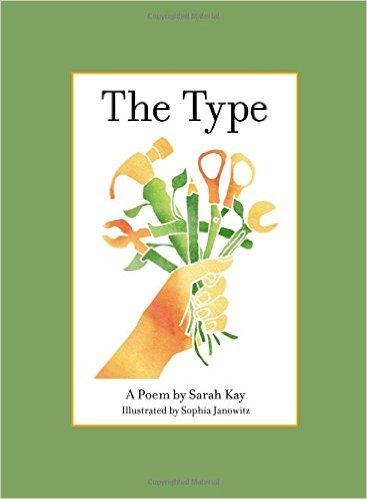
Sarah Kay’s powerful spoken word poetry performances have gone viral, with more than 10 million online views and thousands more in global live audiences. In her second single-poem volume, The Type, Kay takes readers along a lyrical road toward empowerment, exploring the promise and complicated reality of being a woman. The wonderful Brain Pickings blog sat down with her and talked about how we measure success.
Brain Pickings: And this brings us back to the legitimacy question — if making a living isn’t the metric of success in creative work, if academic credentials aren’t it, then what is? What is your internal barometer for your own legitimacy?
Sarah Kay: Oof, that’s a big question.
I think my work, from a broad perspective — by this I mean my work as a writer, teacher, organizer, human — is about trying to invite people in and create spaces where people feel welcome and comfortable with poetry, but are still creatively challenged. When that’s happening, that feels like success to me.
In terms of assessing the work itself — individual poems — that’s a lot harder. There’s a fable I like to tell, which I think is originally with a boy but I tell it with a girl. A girl walks up to a construction site and asks the first man she sees, “Excuse me, what are you doing?” And he says, “Oh, can’t you see I’m laying bricks?” She then walks up to the second man she sees, who is doing the exact same thing the first one was doing, and says, “Excuse me, what are you doing?” And he says, “Oh, can’t you see I’m building a wall?” And then she reaches the third man, who is doing the same thing as the previous two, and she says, “Excuse me, what are you doing?” And he says, “Oh, can’t you see I’m building a temple?”
I think of that fable a lot, because it’s not so much about what kind of a man you are — it’s about how you look at the work you’re doing. And I don’t think it’s a judgment on any particular way of looking at the world — in fact, I think we all probably contain all three of those, and we shift in and out depending on where we are in our lives, or even in our day.
For me, when I’m creating a poem, it feels like I’m laying bricks — it’s very logistical, a physical movement of words, putting them together, focused on the minutia of the poem. And when I’m in schools, working with young people, I’m focusing on building connections with them and for them — that feels like building a wall, creating something that’s part of something else. The temple part is a much rarer moment of being able to tap into something bigger than yourself. But what’s so wonderful about all of this is that if you focus on one of the three for too long, you lose sight of the other two — so it requires a lot of shifting and balancing in order to get anything done at all.
And in terms of success, although I spend a lot more time on the brick-laying and wall-building — I spend more time writing poems and teaching workshops — and I far less frequently get a chance to witness the visions of temple, when those visions do appear, they’re easier to identify as points of success than in those other two realms.
One vision-of-temple moment for me has come from my work with a community of poets in Katmandu and Nepal, whose work is so important to me and probably the thing I’m proudest of. When I first met them, they were a handful of young kids who were curious about spoken word but hadn’t really done it. I worked with them — I did a lot of workshops and brought them to schools — and when I left, they continued that work. They have since grown this immense spoken-word poetry community and received this huge grant from the government to do a two-year program supporting spoken-word programming in six different areas of rural Nepal, specifically working with marginalized groups like the LGBTQ community, recovering drug addicts, the physically disabled, and young women, who are deeply marginalized in that society right now.
The fact that they are using this art form to make community and allow people who are not listened to and not heard in the larger society have the opportunity to speak for themselves and be witnessed in their stories — that is the temple to me.
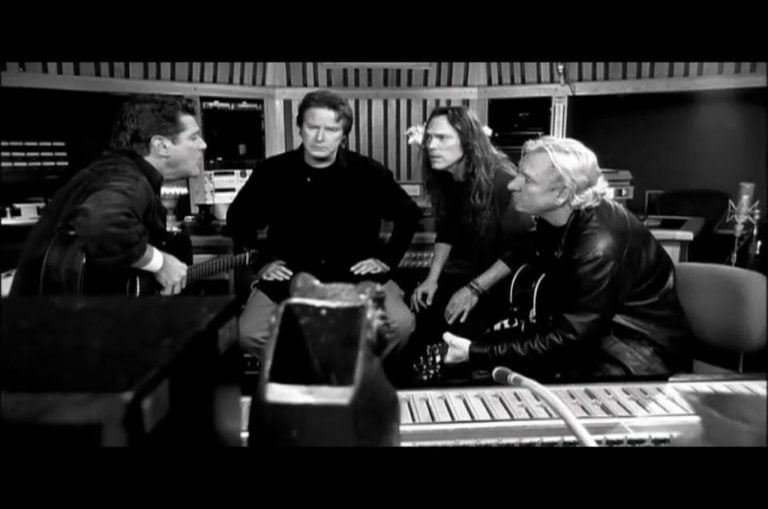
After selling 150 million records — 100 million in the U.S. alone — including 42 million copies of Their Greatest Hits (1971–1975) and 32 million copies of Hotel California, and the recent death of co-leader Glenn Frey, Don Henley has described The Eagles’ tribute to Frey as the band’s “final farewell”.
The remaining members of the group, accompanied by Jackson Browne, played a poignant version of Take It Easy at last month’s Grammys ceremony, just a month after Frey died at the age of 67.
Speaking to BBC Radio 2’s Simon Mayo, Henley described the performance as “very difficult and very emotional,” revealing “we almost didn’t do it. I think it was an appropriate farewell. I don’t think you’ll see us performing again.”
The Canadian Country Music Association (CCMA) has announced that Country Music Week 2015, hosted in Halifax, brought $11.8 million in economic activity to Nova Scotia, exceeding economic estimates and generating a total of $5.5 million in new money.
An economic impact assessment, administered by the Canadian Sport Tourism Alliance, found that more than 14,500 attendees took in one or more of the events between September 10 and 13, 2015. The event attracted more than 3,800 people from outside the province, 38% of which were first-time visitors.
“As we celebrate the CCMA’s 40th anniversary this year, we’re thrilled to be able to continue the tradition of bringing Country Music Week and the CCMA Awards Show to cities across Canada,” said Don Green, President of the CCMA. “To have the ability to deliver our mandate of educating, elevating and celebrating country music and to also bring significant economic value to our host city and province shows the cultural value of our CCMA initiatives – initiatives we hope Canadians from coast to coast will join us in embracing and celebrating.”
The economic impact assessment of Country Music Week 2015, administered by the Canadian Sport Tourism Alliance, can be found in full here.