Home Blog Page 2742

Why ‘Over the Rainbow’ takes us to a magical, musical place

0

What makes the song “Over the Rainbow” an indelible classic? Jeffrey Brown talks to composer and musician Rob Kapilow, who helps explain why we love the story of a girl caught yearning for both home and adventure.

Jeffrey Brown: “‘Over the Rainbow,’ right, one of the most — everybody knows this song, but why? What makes us know this song?” Rob Kapilow, composer: “You know, amazingly, the answer to that starts with the very first two notes. In this famous opening idea, there’s really only two ideas. One of them, I call ‘leap.’ The other one, I call ‘circle and yearn.’ And it’s important.

“So, you start on a note, you circle back to it, and then you yearn. That’s it, circle and yearn. She’s yearning for high C. She’s yearning for high C.

“Now, it’s really the harmony that makes it so exquisite. You know, Yip Harburg called this a song of yearning. So, here’s what she’s yearning about. He could easily have written kind of a cheery accompaniment to ‘way up high,’ like this.

“She would have been home, but she would never have gone to Oz. In a beautiful moment — and this is a fantastic moment — Arlen decides to bring back the middle of the song, but in the orchestra. There’s a beautiful quote from Yip Harburg, who wrote the words. He said, ‘Words make you think thoughts, music makes you feel a feeling, but a song makes you feel a thought.’ And you can feel her thinking. Just the orchestra. Then she comes back, just like in the B section, ‘If happy little blue birds fly.’ One last rise. ‘Why, oh, why,’ and where does she finally get to? Oz. From low C to high C, from Kansas to Oz, from reality to fantasy, and her transformation is complete.”

How To Survive A Free-Falling Elevator

0

It’s normal to feel uneasy about riding in an elevator. But considering how prevalent elevators are, it’s an inconvenient phobia to have. Thankfully, deaths due to elevator accidents are extremely rare. Just in case, researchers at the MIT Center for Biomedical Engineering have figured out the best way to survive if you ever find yourself stuck in a falling elevator.

NPR’s “The Impact Of CDs On The Music Industry” From 1983 Is A Fascinating Listen

0

Take a list to what seems to be NPR’s first reference to the CD in a story by Ira Flatow from March 18, 1983 entitled, “Digital Compact Audio Disc System.” NPR’s science correspondent Ira Flatow was explaining a soon-to-be released audio technology.

Is your social life in trouble because you panic when someone picks up one of your precious recordings, or are you just the opposite – one who couldn’t care less about the quality of the music but wants total convenience? Well, folks, for both of you, relief is in sight. It’s called the compact audio disc – the CD.

That Time In 1969 Mr. Rogers Went To Congress To Save PBS

0

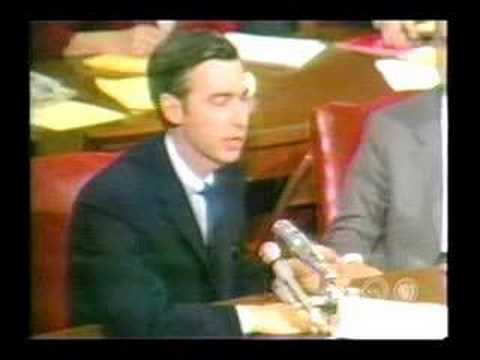
In 1969, Fred Rogers appeared before the United States Senate Subcommittee on Communications. His goal was to support funding for PBS and the Corporation for Public Broadcasting, in response to significant proposed cuts by President Nixon.

https://youtu.be/yXEuEUQIP3Q

Freddie Mercury’s First Video Footage From 1964 Shows The Future Frontman Of Queen Shy And Reserved

0

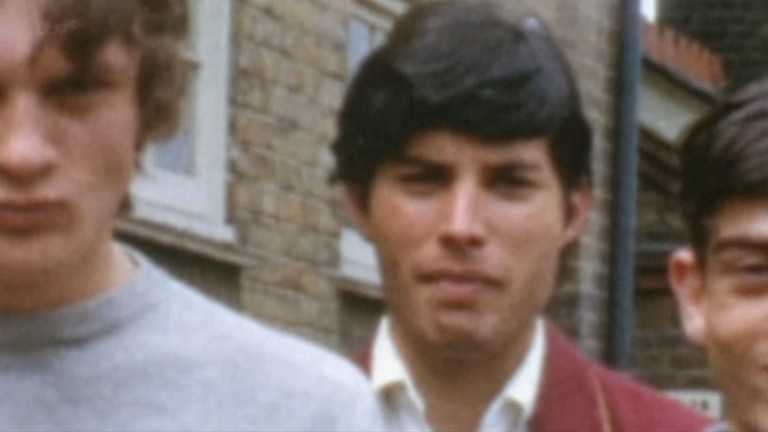
A short silent film clip of a teenage Freddie Mercury (or Farrokh Bulsara by his real name) has surfaced online. The footage was filmed by one of his friends at Isleworth Polytechnic College in West London during Freddie’s first semester there in 1964 – the year his family migrated to England from Zanzibar. It would be just 6 years before he changed his name, met Brian May, and joined a band called Queen.

Online posters, however, are doubting the year, thinking it’s closer to 1969 due to the hair and clothes. Anyone out there have any other clues to the footage?

Welcome To The Jungle: Reunited GUNS N’ ROSES Reveals Cities For North American Tour

0

It’s ON. Guns N’Roses have confirmedon a 21-city North American tour to follow the previously announced run of six comeback shows. They band has six concerts scheduled so far, all in April: two at the Coachella Music And Arts Festival, two in Las Vegas and two in Mexico City.

Shows will take place this summer in the following cities, and watch for cryptic billboards up in your city if it’s listed:

* Atlanta
* Boston
* Chicago
* Cincinnati
* Dallas
* Detroit
* Houston
* Kansas City
* Nashville
* New Orleans
* New York
* Orlando
* Philadelphia
* Phoenix
* Pittsburgh
* San Diego
* San Francisco
* Seattle
* St. Louis
* Toronto
* Washington, D.C.

Exact dates and venue details have not yet been announced.

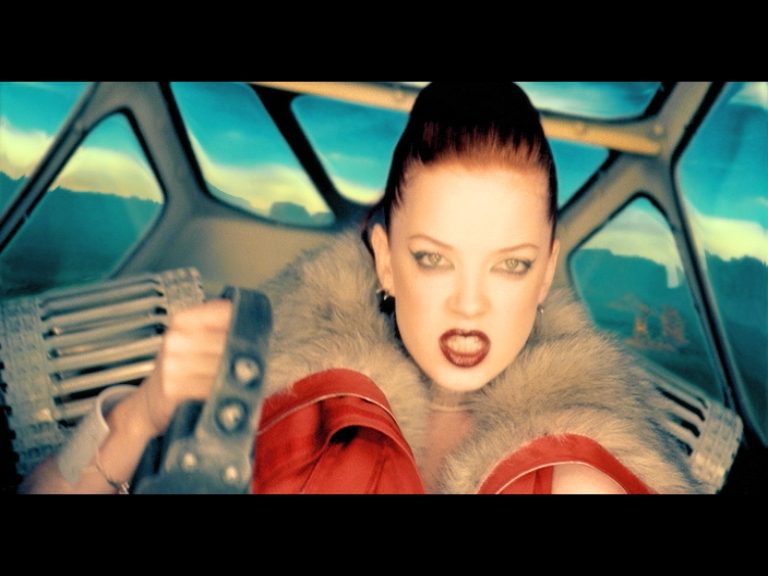
Garbage’s Shirley Manson on female artists and a revival in creativity: “Now’s the time, kids! Go for it!”

0

In thinking about that freedom and the mindset of creative liberation, it’s hard not to look back to the debut album and that time period in the context of those perceptions of female artists and how they were marketed to listeners and how or if those perceptions have changed even minutely in twenty years. Having witnessed that firsthand yourself, do you see any progression in the context of how we view and value female artists, or are we simply using different terms for the same stereotypes?
I think my generation when we came out in the 90s, as a result of our mothers’ endeavors, we were all of the mindset that we had to push, and I’m talking specifically of female artists of my peer group. I think all of us grew up understanding that we had to push. That is was possible for us to get ahead in the world, but we need to push, and we did. As a result, we managed to break through a certain glass ceiling that had existed up to that point, and all of a sudden you were hearing voices from women who were not playing the traditional female role in the music industry. That was incredibly exciting, because we had grown up with mothers who hadn’t enjoyed the same amount of freedom that we had, and we were all very aware of how unbalanced the world was. Then I think our generation started to breed, and young women grew up looking at these incredibly empowered women, and they took for granted their rights and their freedoms. Particularly in America and Europe, I think women enjoyed a certain period of freedoms that they’d never enjoyed up to that point, but then this new generation started refusing to identify with feminism and refusing to identify with the problems that still existed in our culture. They were either uneducated or chose not to look at the fact that women were getting paid less than men to do the same kind of jobs, and they were expected to look a certain way, act a certain way, and so on and so forth. I think that’s why we’re seeing right now what seems like a reversion back to the 1950s in terms of how women are presenting themselves in the public forum. I think they’ve misunderstood and mistaken what rights are, and what they actually mean, and how quickly they can be taken from you. I think they took it all for granted, and now they’re all flipping out. Now all of a sudden there’s a reversion where it’s cool to be a feminist, and every pop star on the planet is falling over themselves to align themselves with feminism, which is wonderful. I don’t care how we get there as long as we get there, but it’s kind of amusing. [Laughs.]

One thing that always comes to my mind with that is the fact that music’s history has always shown that some of its most significant paradigm shifts have been born out of challenges, whether it be something like the homogenization we’re seeing now or the resistance against generational obligation in the 1960s. Being a significant part of what happened in the mid-90s when the music scene was sort of undergoing another identity crisis, do you see a similar setting now for that same kind of revival in creativity?
[Laughs.] Well, I do hope so. I keep saying that to everybody, whispering in really dramatic terms, “The stage is set. It’s a perfect time for a band who’s got the right message to come in and clean up,” because bands have become almost obsolete, and yet there’s something so incredible when you have a bunch of people coming together and doing something collectively. It’s powerful. It’s romantic. It’s like a little microcosm of the perfect society in a certain way where everyone compromises and tries to sit together, and that’s incredible. We see so few bands now because they’re not economically viable for the record labels, but regardless they still come, they still form, and they still do exciting things. Sooner or later I think there’s gonna be a band that comes in soon to really shake things up, because things have gotten so homogenized and so bland and so unchallenging in a way. Everybody wants to fit in, and nobody wants to fluster anyone or ruffle anyone’s feathers, and it seems like now’s the time. Now’s the time, kids! Go for it! [Laughs.] Whatever comes now would have to frighten people like us, like you and me. It would have to be something that scared us and challenged us, and I can’t even begin to conceptualize what that would be, but in order to really connect with the youth, it’s gonna have to be something that you and I don’t particularly want to look at our listen to, and I don’t know exactly what shape that will be in. It’s gonna be something we’ve never seen before. It’s gonna be something multicultural and political. It’s exciting.

Via

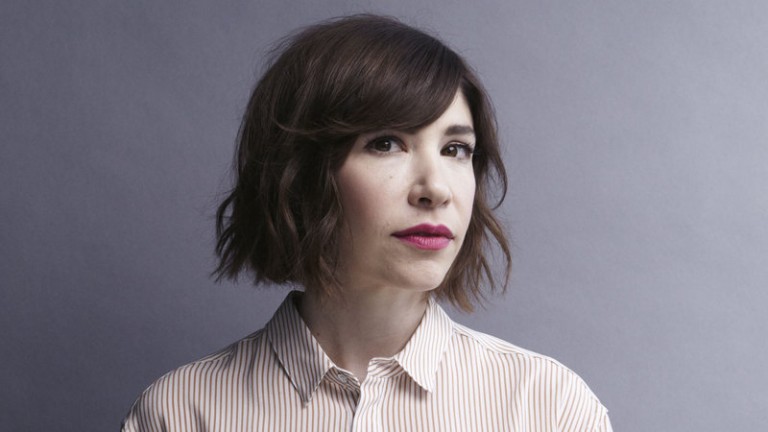
‘Modern Girl’ Carrie Brownstein on her father coming out as gay at 55

0

Guitarist and singer Carrie Brownstein is known for her defiant, kinetic performances in the band Sleater-Kinney. The child of an anorexic mother and a father who came out as gay in his 50s, Brownstein was an anxious, uncertain youth. She describes her search for identity and the sense of belonging she found in music in her new memoir, Hunger Makes Me A Modern Girl, in this talk with NPR’s Terry Gross.

On her father coming out as gay at 55:

My dad, as I describe in the book, he was sort of this series of signifiers — a generic office building in the suburbs, a three-piece suit, a soccer coach, a clean-cut haircut and clean-shaven, and he interacted with my sister and I through activities and much less so with emotions, and he really only ever had one story from his childhood. And there was just this blankness that was very difficult to penetrate. I always felt very close to him, but just almost sort of by default, and I really didn’t know him. I think none of us did. So, yeah, when he came out, it was like this moment where something goes from black-and-white into the realm of color. There was just this brightening, this sense of illumination. And within that gleaming came feeling. It just seeped into him, and into all of his relationships, and it was very enlightening.

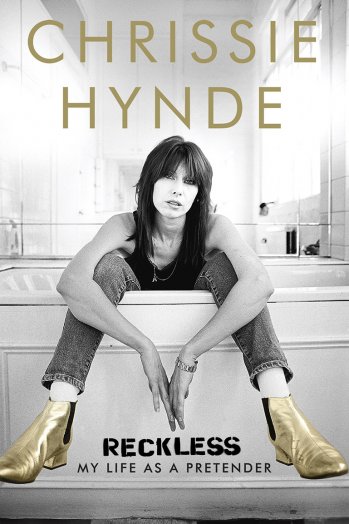
Chrissie Hynde on the sexual revolution: “Be Yourself”

0

Few other rock stars have managed to combine her swagger, sexiness, stage presence, knack for putting words to music, gorgeous voice and just all-around kick-assedness into such a potent and alluring package. From “Tatooed Love Boys” and “Brass in Pocket” to “Talk of the Town” and “Back on the Chain Gang,” Chrissie Hynde’s signature songs project a unique mixture of toughness and vulnerability that millions of men and women have related to. A kind of one- woman secret tunnel linking punk and new wave to classic guitar rock, she is one of the great luminaries in rock history. In this interview with The Globe and Mail, Chrissie talks about the artistic expression, and when sex needs to be involved (hint: it doesn’t).

In the book you describe being accosted by a group of bikers, who took you back to their headquarters for a ‘party.’ There was a strong response in the Internet cycle about your statement that you accept responsibility for the sexual violence –

See, I never said any of this, and I don’t read my press. I was talking to a journalist, and she was sort of prodding me – she was nice, I liked her, we had a fun afternoon. But I think she missed the point, that when this altercation happened I was so fucked up on Quaaludes I didn’t even care. So she kept prodding me to say, was I traumatized by this thing, or was I victimized, and all I was saying was that I was an idiot to even be there. She kept trying to get me to rephrase that. And it went into an article that I didn’t read. And the next thing you know I’m vilified for defending rapists! I never even said I was raped. And you know, frankly, if you’re being very provocative – let’s take a music video. You know, if you’re being sexually provocative, and you’re a woman, in a video, what’s the message?

What is the message?

I don’t know. I’m asking you. What do you think the message is?

I don’t know that there is necessarily one message. In general I think it’s fine to make a living with your body.

That’s a really interesting response. Because you’re just selling a song by being sexually provocative, and like you say, you’re using your body to sell something. I’m not sure that being sexually provocative is speaking to other women as much as it’s trying to get money out of men, and trying to get attention.

I can think of female musicians for whom sexuality is part of the package, and it doesn’t feel outside of the music. Someone like Madonna’s sexuality feels like part of her art.

What if you took her sexuality out of it, and just listen to the records? Do you think she would have sold as much of it?

No, I don’t.

That’s sex work. That’s still using sexuality to sell something. Why be sexual, that’s the question. Why? To what end? Why not just be a person? You see, to me, sex is an appetite. Better to play it down, because it causes a lot of problems.

Well, I think it’s natural to want to be looked at and admired.

Is it?! In a sexually provocative way? To be admired as an object of desire?

Absolutely. And I also think it’s reasonable to expect men not to violate your personhood just because you are desirable.

But what does that say about the mentality of someone who’s walking down the street trying to be sexy? I disagree with you; I don’t think that is natural. I never felt like that. Ever. I mean, I want to look pretty good. You don’t want to go out and look bad. But to go out and look sexually provocative and sexual, no. I’ve never tried to do that. And I think a lot of women don’t try to do that.

I think it’s natural, I don’t think it’s default. I think it’s natural to not want to be looked at as well.

I don’t know why anyone would. Why don’t you just look cool, why don’t you just look good? Why is sex so important? Why is it so important to be sexy, or desirable? I mean, ultimately, what does that lead to? It leads to sex. So if you don’t want to have sex, why are you trying to look like that? Are you trying to make someone think that you’re sexy but you don’t want to deliver? If you’re a sex worker, that’s got an end to it, and that means something. I’m not saying that everyone has to be completely covered, but why can’t you just be?

I guess I don’t see anything inherently wrong with wanting to look desirable or pleasing in that way.

I didn’t say that. I never thought there was anything wrong with it. All I’m saying is, Why do you want that?

Because it feels good, and it’s validating, and sometimes it makes people happy.

Well, I’ve gotten by without it. Not that I’m saying I’m any prize. Or that I’ve done anything right. I’m not comparing myself to anyone. It’s just an interesting question that you brought up. And I’ve been waiting for someone to bring this up, because of this kerfuffle I got in where I said look, if you’re drunk, and you’re walking down the street in your underwear, the message that puts out is the same message as a sex worker: Come and get it. That’s all I said! And that seemed to trigger off some kind of debate, which I wasn’t really a part of because I don’t read the press. In any one of the interviews or discussions I’ve had in the last few weeks, I’ve never said that I thought women should dress a certain way or do a certain thing. I was just talking about what happened to me. And then you know, only a total imbecile would have been where I was, and that applies to about 30 years of my life. Hence the name of the book. I don’t recommend it to anyone. And I lost a lot of people along the way.

My only advice is don’t kill animals. That’s the only advice I’ve ever given in my whole career. Dress how you want, do what you want, think what you want, be who you want, act how you want. Be yourself. The rest of it is – they’re interesting subjects, but they’re not really my subjects. They are now, I guess.

Via

Ben Swank of Third Man Records on the importance of artist, labels, and fans

0

How have practices changed at Third Man since it was founded?

“The label started mainly in name only in 2001, and then became really active with the brick-and-mortar offices/studio/record shop/venue location in 2008. In 2001, being buoyed by all these sloppy garage-rock bands getting national attention and touring the world, the possibilities felt kind of endless (we were young and dumb). In 2008, opening these offices released a torrent of inspiration and excitement that I think people really related too and engaged with, and now nearly seven years later I really do feel like new opportunities open up every day.

“It’s important to us to approach things in an unconventional, but wholly artist-friendly way, and that’s been really helpful in spreading a good rep around the “biz.” I think anyone can do what they want, as long as they don’t listen to how everyone else is doing it… It’s very much the wild west right now, and most bands have more control then ever, though the financial resources and backing aren’t what they used to be… but as long as you’re making music for your own reasons and have reasonable expectations and understand that it’s a partnership between artist and label, I think you’re going to meet your goals. Being excited about what you do (both labels and bands) goes a hell of a long way.” – Ben Swank, “Consigliere” for Third Man Records

Via