Music is a wonderful form of art and entertainment and is quite a unique one, too. Unlike visual art, which is appreciated spatially (not spending a significant amount of time to perceive and understand), music is perceived temporarily (meaning that you need to take some time to appreciate it). Moreover, music creates a vast area for experimentation and creative expression. This is especially evident with songs, the lyrics of which can be translated into many languages, while the music can be appreciated and understood by anybody.
Singing Internationally
The music in the 20th century has exploded with a variety of genres, forms, and names, from jazz and first recorded music to modern famous names like Billie Eilish, and the experimental stage. One prominent stream of music that emerged and garnered a huge audience around the world within the past 100 years or so is popular music or pop for short. Rather than being a genre, pop music represents the whole culture with a multitude of subcultures, which brought a huge impact socially and economically.
One of the most prominent characteristics of pop music is that its listeners tend to create a cult of personality around a certain artist and their works. This is one of the main reasons some pop songs become rerecorded and reinterpreted with time. In fact, many young artists start particularly by playing famous songs or, more simply, covering them. Yet, translating songs into another language requires quite a lot of talent, so you might need to address professional translation services online as you start. Some song covers are even more famous than the originals while cover versions translated to other languages might hit the charts in that country. Here are just a few examples of when translated songs got pretty high in their respective countries.
5 Popular Song Covers that Were Translated in Other Languages
“Tutto Nero” by Caterina Caselli.
The 1966 Italian version of the Rolling Stones’ “Paint it Black” (also recorded in 1966) sung by the actress and singer Caterina Caselli has become quite popular in Italy largely because it was also used in the film “Perdono” (“forgiveness” in Italian). This version does not differ much from the original, aside from Caselli’s delivery style, which is more aggressive rather than Jagger’s melancholic, and the song sounds as if Caselli is fighting with a depressive state rather than accepting it.
“This Love” by Bigbang.
Covering Maroon 5’s iconic hit from 2004 in 2008, a seemingly regular group of young Korean boys managed to blow up the charts in his native South Korea and give a relatively old song a new life. Although the song carries the same name, its lyrics were completely rewritten in Korean by one of the band’s members G-Dragon. This version became so famous, many people wonder who wrote the song in the first place, although both artists have contributed to its fame a lot.
“Helden” by David Bowie.
It was quite a popular trend in the past to cover one’s own songs in different languages to ensure greater reach. While Bowie’s German version of his own hit “Heroes” did not chart in Germany upon its release, the song became very popular in the neighboring Netherlands. This version is also regarded well retrospectively with “Helden” appearing as a part of an official soundtrack to the 2019 drama “Jojo Rabbit” directed by the New Zealand director Taika Waititi.
“Sie Liebt Dich” by the Beatles.
Another old-school song in German covered by the authors themselves. Reinterpreting their early hit “She Loves You” in 1964 specifically for their German audience, the Fab Four managed to top the German charts with “Sie Liebt Dich” entering at 7th position and its A-side “Komm, gib mir Deine Hand” (“I Wanna Hold Your Hand”) at 1st.
“Afrika” by Tukuleur.
A decent modern rendition of the 1980s hit “Africa” by Toto, this 2006 version manages to showcase the modern pop interpretation and demonstrate that the song sounds just as uplifting in French. While not becoming famous worldwide, this version of the legendary song became popular in Tukuleur’s native Senegal representing their African spirit at its best.
Music of the Soul
It’s true that truly talented people sing with their soul, regardless of language. Music unites people, and those who manage to write songs covering matters that are important can make the whole world sing with them. On the other hand, other talented people manage to rewrite or recompose those songs in their native language and make the song breakthrough in their country as well. All of this only confirms the extraordinary nature of music and its strong and undoubtedly positive influence on our lives.
BIO:
Learning by experience, Merissa Moore managed to not only make herself a career as a professional writer but also become well-known and respected for her works. Every time, she gets to her task, she makes sure to experience what she writes about. That’s why as you read Merissa’s articles, it feels like you gain that experience yourself.
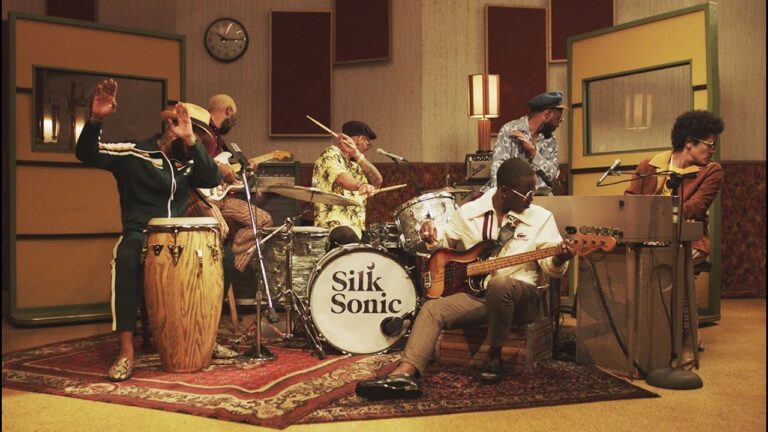
Multiple GRAMMY®Award winners Bruno Mars & Anderson .Paak today released the first single, “Leave the Door Open” from their highly anticipated new collaboration, Silk Sonic. Named Silk Sonic by the legendary Bootsy Collins, Bruno and Anderson have come together to create the setlist of doom. “Leave The Door Open” was produced by Mars and D’Mile, and written by Bruno, Anderson, D’Mile and Brody Brown.
“Leave the Door Open” is available everywhere today along with a very special intro track featuring special guest host Bootsy Collins. The official music video for “Leave The Door Open” is streaming now on YouTube. Silk Sonic’s debut album, AN EVENING WITH SILK SONIC will be available later this year.
Vancouver-based alt-rockers Mother Mother have released two new songs; “I Got Love” a propulsive, infectious, instantly hummable single and its companion “Stay Behind” a melodic, emotionally charged, airy track. The new music is Mother Mother’s first offering on the heels of their recent explosion on TikTok. After over a decade of releasing music and touring, a new global audience discovered and organically began using the band’s catalogue on the platform, resulting in rapid growth in the millions across all streaming and social platforms, and a Rolling Stone feature on this unique artist development story. The new music was written during the first wave of the COVID-19 pandemic and was produced by frontman Ryan Guldemond and Howard Redekopp, who produced much of the older music that is connecting with the global audience today. Both “I Got Love” and “Stay Behind” are available now.
“Finding these new fans, or them finding us rather, feels like a very generous and surreal gift from the universe,” says Ryan. “It’s always been about the joy of music, and sharing in this joy with others, so we are thrilled to be releasing new music, especially “I Got Love”, to new and old fans alike. This song is about the frequency of love, and less in the romantic sense, but more in terms of unification and interconnection, working as a guiding light in dark times. If people simply enjoy this song, we are so happy and grateful, and if they find any healing in it, slight or profound, we’re utterly ecstatic and deeply humbled.”
The release of “I Got Love” and “Stay Behind” marks the first under the band’s deal with their new label Warner Music Canada, and with international release partners Warner Records (US), Parlophone (UK) and other Warner Music Group companies in Germany, Switzerland, Austria, Australia and more.
Mother Mother, comprised of Ryan Guldemond, Molly Guldemond, Jasmin Parkin, Ali Siadat and Mike Young, have had a whirlwind decade; over 830 million streams and views, more than 14 million monthly listeners and counting on digital platforms and 2 million Shazam searches. The band has made several appearances of late in Billboard’s global Emerging Artist Chart, as well as topping Lyric Find’s global and US lyric search charts. In Canada, Mother Mother have had many top 10 singles on the alternative radio charts, including #1’s for weeks on end and the crown of most airplay for any alternative act at radio for multiple years running. The band has also found success on the road; their most recent pre-pandemic tours include sold-out headline dates across North America, selling out the historic Massey Hall in Toronto, Gramercy Theatre in New York, and a record-breaking five consecutive sold-out shows at the Commodore Ballroom in Vancouver as well as sold out shows including London (UK), Los Angeles, San Francisco, Portland, Seattle, Boston, Santa Ana, Minneapolis, all across Canada, and more.
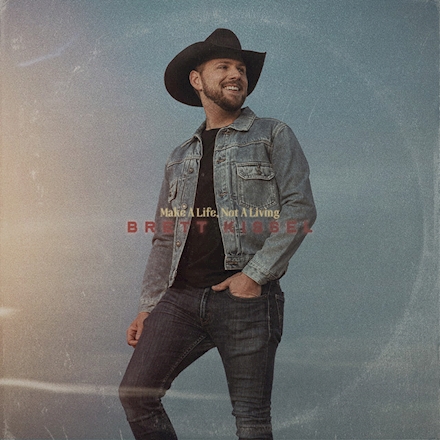
Brett Kissel has announced that his fifth major label studio album What Is Life? will be released on April 9. Fans of the 18-time CCMA-Award winning musician get their first taste of what is to come from the next phase of Kissel’s career today, with the release of the album’s first single, “Make A Life, Not A Living”.
“This song is truly representative of where I’m at in my life right now…and probably – or hopefully – where many people are as we’ve adjusted to the challenges we’ve all faced over the last year,” says Kissel. “It’s about doing your best to live your best life – whatever that might be; being in the moment, being present, having gratitude and making the most of the time we have – that’s what is most important.”
On his upcoming album What Is Life? Brett says: “That age-old question is one that I’ve really focused on and centered around for this next phase of my career and for my life. And each and every time, the one thought that is always front and center for me, is doing the best we can with what we have, and making the most of our lives – living the words that I sing in the first song – and I hope that everyone who hears it not just enjoys it, but is also inspired by it.”
If you’re a fan of country music, you probably already know Brett Kissel’s story – owned his first guitar before he was even in school, released his first album before he could even drive – leading to him becoming Canada’s most dynamic country music artist before he turned 30 years old. The farm-and-ranch-raised artist has 15 top 10 radio singles, 3 #1 songs, and a tractor bucket full of gold and platinum plaques. He set records on his 112-date cross-country tour, played over 20 shows with his hero Garth Brooks, and has won 18 CCMA Awards and 2 JUNO Awards.
While fans were still buzzing about last year’s Now Or Never album, Brett started looking towards his next release, but couldn’t get three words out of his head – What Is Life? The search for something “more” weighed heavily on the country star’s mind and with the new album, Brett Kissel invites fans to take a deep-dive with him into songs about love, celebration and gratitude.
Greg Keelor – the revered musician and songwriter and co-founding member of the iconic Blue Rodeo – has announced that his sixth solo album, “Share the Love,” will be released on April 16.
“Share the Love” is preceded today by the release of the first single “Wonder” (LISTEN HERE). The official music video for “Wonder” has also been released today.
Music fans spent 2020 mourning the loss of live music. We listened to old live albums. We watched our favourite musicians struggle with devices while feigning excitement for an isolated gig in their living room. A few of us went to drive-in concerts. It was certainly not a year in which Greg Keelor imagined he’d be making a new album – an album he would record live off the floor.
Keelor had a solo album, Share the Love, finished in early 2020. It was mastered and ready to manufacture, and he was scheduled to meet his record company for a marketing meeting when the world shut down. For months he laid low, like everyone else. Finally, he figured: fuck it. Everyone else is still releasing records, and it’s not like this is a Marvel movie. So he assembled a band, booked a community centre near his Kawartha farm, had everyone tested beforehand, and spent two days playing the new material live—physically distant, in a semi-circle, no headphones—while shooting a promotional film and rolling tape. It felt good—really good, in fact.
Then a funny thing happened. Listening back to the audio mixes, Keelor thought it was far superior to the finished studio record. There was a magic here. No surprise: for Keelor and likely everyone else, this was the longest period in their life when they’d gone without playing music with others. Everyone had been pent up. With only two rehearsals, they brought the material to life in ways Keelor couldn’t have imagined. Harmonious, in every way.
He soon made the decision: this should be the album. Leave the studio version on the shelf. Share the Love was reborn.
What might’ve been a morose acoustic album instead blossomed into an electric rock record with delicate acoustic textures and a psychedelic tinge. It spans many moods, and its success has as much—if not more—to do with the musicians in the room than the songwriter and bandleader. “It’s unified in a way a lot of my records may not have been—or if they were unified, it was only by gloom,” laughs Keelor. “I’ve made lots of records in a studio situation, and I’m happy with what ends up being finished. But there’s something about a group of people who for two days just sit and play music, concentrated on these songs, and just feeling the love. It’s magical. You can feel their presence, the currents running between the musicians. It’s a tangible feeling, a visceral thing.” That’s a rare thing for any album made in this decade, never mind one made during a pandemic.
Keelor considers the whole experience a gift: songs borne in darkness that, through a circuitous route, were brought to the light and resulted in such a joyous experience. “There’s no better feeling for me than when a song is coming through me,” he says. “The energy that is the furnace of it, the sorting out of the words of it, the yoga of singing and breathing, the vibration of singing. Then that song acts like a beacon and it attracts people and brings them into your life: musicians, other artists. It’s an amazing thing. It’s just a vibration that connects to the thing that connects us all, that river of love. I’m always humbled that these songs come through me and I’ve been truly lucky enough to make a living from them.”
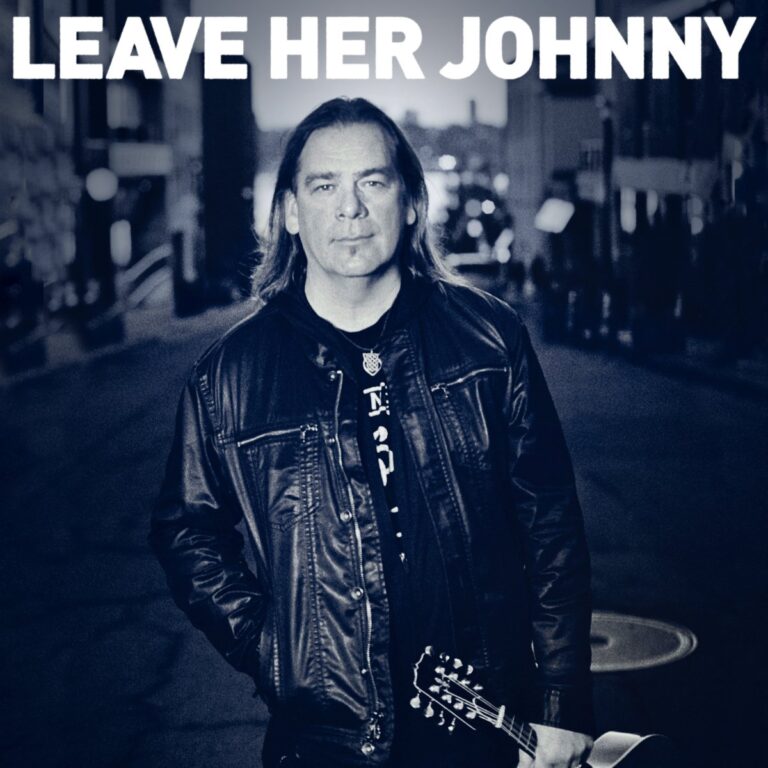
Alan Doyle will release a new EP, Back to the Harbour – a collection of songs to celebrate his love of folk music – on May 21. The album was produced by Joel Plaskett at The New Scotland Yard studio in Dartmouth, Nova Scotia. Featured on the album with Doyle are Kendel Carson and Cory Tetford from his touring band along with Plaskett.
Back to the Harbour features three original songs plus unique spins on three traditional classics: “Back Home on the Island” by one of Newfoundland’s most popular musical groups Wonderful Grand Band; “Let it Be Me” popularized by legendary duo The Everly Brothers; and the first single, the shanty “Leave Her Johnny.”
“This shanty of a ship’s last day is one of the dozen or more songs I don’t remember learning,” Alan says of “Leave Her Johnny.” “I realize this may seem odd to some, as in most parts of the world people have one or two songs they don’t remember learning, like Happy Birthday or Silent Night. But in Newfoundland we have so many songs that are just part of our language. I doubt many from around here could tell you when they learned I’se The B’y or Lukey’s Boat. We just know them.”
Back to the Harbour follows Rough Side Out, Doyle’s chart-topping country album released last February, and Songs from Home, a collection of music from Doyle and an all-star lineup of Newfoundland artists, which was released in November. Doyle – the songwriter, producer, actor and author – is a 12-time JUNO Award nominee for his solo material and work with his iconic band Great Big Sea. In 2018, he was awarded the Order of Canada for his contributions to the musical traditions of Newfoundland and for his commitment to numerous charitable initiatives. His most recent book, All Together Now: A Newfoundlander’s Light Tales for Heavy Times, was released in November 2020 and quickly became a national bestseller.
When an average person takes a quick look at the typical song lyrics, it may seem simple to translate them, yet it takes way more than that to explain the original meaning and explain the creativity and the poetic devices of the foreign language. While it may seem natural to translate it all precisely just like a machine translation would, the most popular approach is to create a poetic masterpiece in one’s native language that would transpose the emotional content and have a certain poetic value. Since a great share of slang words and specific expressions will be completely different from language to language, one must consider being creative and knowledgeable at heart to handle the translations of song lyrics correctly!
4 Steps to Translate Song Lyrics
Set Your Priorities. In most scenarios, you do not need a direct translation of the song lyrics unless you are dealing with analysis and the exploration of the foreign language literary devices. Likewise, if your task is to keep the singability and fit in within the original (or a slightly changed) musical background, you must consider the original content unless you already have a new set of lyrics that are completely different from the original. For example, we can take the famous “Love to Hate You” by Erasure, which has been translated more than once in Spanish, German, or Russian. As one can see, the lyrics have been changed a lot, yet the musical part and singability of the original have been kept.
Consider Country-Specific Content to Convey The Original Meaning. Another crucial part is the use of certain proverbs and slang expressions that can be encountered in any genre of music. It can be a reference to a country’s history or the slang used by jazz musicians or someone coming from the American South. Since your translation may be dealing with English to Japanese as an example, one has to find relevant proverbs or expressions in a target language to convey the meaning and express the same set of emotions if possible. You can approach the best translation companies in USA and discuss this aspect of lyrics translation before you start. As a rule, you will encounter creative personalities who may offer various options that will keep you satisfied!
Adapt The Context of The Song To Your Target Language. The final translation must remain true to the original context of the song while sounding natural in your language. For example, if you are dealing with a song that speaks of a Spanish festival and the local meals, it has to be adapted in terms of your local culture by using certain terms and additional explanations that will make sense to your target audience. In other words, some things that will sound clear and natural to Spaniards or your English-speaking audience may sound odd and out of place to Chinese.
Know Your Target Audience And Objectives. Most importantly, always consider your target audience and the list of professional goals that you want to achieve as a translator. Ask yourself about what matters more to you: the direct content and the meaning or the creative approach to song lyrics translation. Remember to read it aloud and compare it to the original meaning to ensure that nothing has been missed in terms of time, ideas, cultural context, numbers, or anything that is often lost in translation.
Direct Translation VS Creating Something New
In either case, you will always create something new, which is why one must consider the source and the intention of your translation. For example, if you want to translate certain song lyrics for a singer and meet the timing, it is one case while you may provide a translation that does not have a rhyme but sounds direct for subtitles or overdubbing in movies like what many of us have seen in Bollywood films or anime series. As long as you stay creative and true to the source, you are on the right track!
BIO
Merissa likes exploring various cultures and language specifics through various art forms. Her posts always see the world through the lens of being innovative and creative.
Is modern music crying out for the sort of icons that used to dominate the artistic landscape towards the end of the last millennium? Or are music fans simply being taken for a ride by record companies who own the rights to classic backlists and want to cash in?
It is a debate that will rage on for years to come. However, there can be no doubt that there is at least some genuine hunger for artists of the past.
This can manifest itself in the cultural zeitgeist in many ways, but one that is increasing in popularity is that of online games, some of which are being created almost as an homage to guitar and microphone heroes of yesteryear.
Here are some of the best online games that go out of their way to put music front and center of the entertainment experience they provide.
Music is so often vital in order to create an immersive in-game experience
Reels Spin in Time with the Classics
One genre of online game that has always paid particular attention to bands and recording artists is that of online slots.
Some of the titles that have been released in recent years include Guns N’ Roses, Jimi Hendrix, and Motorhead, all of whose titles leave little to the imagination when it comes to the sort of music and aesthetics they will exude. Many of these can be played using free spins which are collated at comparison websites like oddschecker.
The great thing about playing slots online is that players can either choose to enjoy a game’s music inspired sound effects, or they can mute them, and plug in an album or their favorite track.
There has always been a strong link between music and the world of online games
Entire Gaming Soundtracks Entrusted to Bands
When it comes to bands putting their mark on a gaming title, the gold standard is undoubtedly Quake, whose soundtrack was entirely put together by Nine Inch Nails.
Rappers Lend Their Voices and Lyrics to Online Games
Another trend that has been prevalent in many online battle royale games has been imbuing in-game avatars with the dulcet tones of a famous rap artist.
Perhaps the most well documented gaming voiceover was done by Snoop Dogg for COD: Ghosts, where, for a small additional price, the California native provided gamers with advice, encouragement, and commiserations, all in his inimitable tone and style of delivery.
Scatter symbol does not have a specific picture or graphics, oftentimes it is unique to a slots theme. Scattered symbols as the name implies can be scattered all about the reel. It does not have a particular arrangement pattern. The scatter symbol when it appears can bring about mini-game, free spins, and other types of bonuses.
In a slot game, the scatter symbol is a very important element in unlocking several fun bonus features in a slot game – visit Barbados Bingo. The scatter symbol is not new, but in today’s gaming, it can be used in diverse ways. Originally red cherries were the symbol of the scattered symbol.
How to know if a game has a scatter symbol
The paytable is one important place that every gamer must visit before deciding to play a slot. Access to the paytable can be gained through the gaming screen. When the paytable icon on the gaming screen is clicked, a box icon is opened up. This box icon will give information that is peculiar to that slot. It includes information on bonuses, scatters as well as wild. Once the paytable of a game is read beforehand it prepares the player and also gives adequate information on how those symbols work. They working individually or they work when they are combined with other elements.
Functions of the scatter symbol
For a win to occur the scatter symbol can appear anywhere on the reel. It doesn’t need to appear on the win line.
The scatter symbol cannot be replaced by the wild symbol.
The rules of scatter symbols in games are different. It is essential that a player examines the Payline of a game before playing.
Three or more scattered symbols can appear on the reel. As a result of this wins can be multiplied in several folds.
There exists a scatter icon that can be used to trigger the bonus game. You trigger a feature of the slot if you get three scatters on the Payline.
Scatters symbols are one of the biggest paying symbols in a slot game.
Types of scatter slot games
Unique scatter
Wild scatter
Scatter pays
Reasons for including Scatter symbols in slot games
Below we will be highlighting some reasons why developers of the game include scatter symbols in slot games.
Special feature- developers of gave include Scattered symbols in games so their gamers can have access to special features. Such special features include free spins, bonuses, and interactive mini-games.
Players satisfaction- developers of games include scattered symbols so that their players can have maximum satisfaction while gaming. It is natural that a gamer will be a regular visitor to a slot that presents him with a higher probability of winning.
·Extra free spins bonuses- as gaming keeps advancing so do the innovations of the developers. The scattered symbols are another avenue where the developers can bring out their innovation in terms of bonuses and free spins.
From the haunting, funereal bells and emotional wails of opening track “Mother,” it was immediate – John Lennon’s first solo studio album was unlike anything he had made before. Recorded in 1970, shortly after the demise of The Beatles, John Lennon/Plastic Ono Bandsaw John stripping away the artifice and ornamentation for a visceral artistic exorcism that was confessional, raw, painfully honest, and revelatory. Inspired by the primal scream psychotherapy he and wife Yoko Ono had been practicing with Dr. Arthur Janov, John, joined by the minimalist Plastic Ono Band – Ringo Starr on drums and Klaus Voorman on bass, and producer Phil Spector – confronted his demons, professed his love for his wife, railed against false idols and declared the dream was over on his most personal album. Today it stands as the towering achievement of his solo career – the moment the biggest rock star in the world bared his soul for all to hear – as real as it was revolutionary.
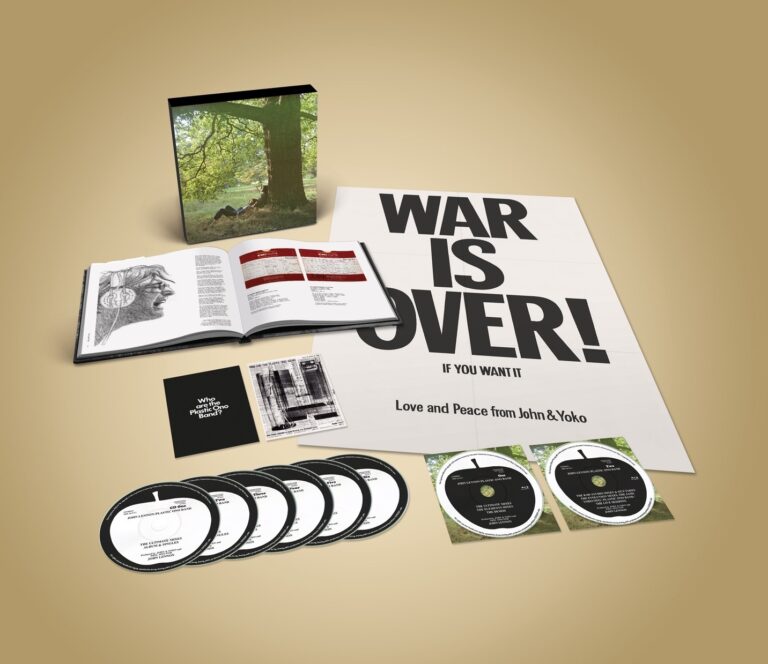
On April 16, Yoko Ono Lennon and Capitol/UMe will celebrate 50 years of Lennon’s transformational and influential masterpiece, with the eight-disc super deluxe box set, John Lennon/Plastic Ono Band – The Ultimate Collection, an immersive, deep listening experience and in-depth exploration of what John described as “the best thing I’ve ever done.” Fully authorized by Yoko Ono Lennon, who oversaw the production and creative direction, and from the same audio team that worked on 2018’s critically acclaimed Imagine – The Ultimate Collection, including triple GRAMMY®-Award winning engineer Paul Hicks and mixers/engineers Rob Stevens and Sam Gannon, the Ultimate Collection puts listeners in the center of the studio and explores the album’s 1970 recording sessions at EMI Studios 2 & 3, Abbey Road along with Lennon’s post-Beatles singles, “Give Peace A Chance,” “Cold Turkey” and “Instant Karma! (We All Shine On)” from inception to the final master through scores of unreleased and rare demos, rehearsals, outtakes, jams and studio conversations, revealing how these beloved songs came to be. Everything in this expansive box set has been newly mixed from scratch from brand new 192kHz/24bit hi-res transfers. In addition to the various new mixes, the set boasts 87 never-before-heard recordings.
This historical, remixed and remastered collection features 159 tracks across six CDs and two Blu-ray audio discs for more than 11 engrossing hours of music and includes two postcards (“Who Are The Plastic Ono Band?” and “You Are The Plastic Ono Band”) a “War Is Over!” poster and a comprehensive 132-page hardback book with lyrics, rare photos, tape box images, memorabilia and extensive notes. Designed and edited by Simon Hilton, the Compilation Producer and Production Manager of the Ultimate Collection series, the book tells the story behind each of the songs and the making of the album in John & Yoko’s words and the words of those who worked alongside them, through archival and brand new interviews.
Yoko writes in the preface of the book: “With the Plastic Ono Band albums, John and I liked the idea of this really raw, basic, truthful reality that we were going to be giving to the world. We were influencing other artists, giving them courage, giving dignity to a certain style of vulnerability and strength that was not accepted in society at the time. It was a revolution for a Beatle to say, ‘Listen: I’m human, I’m real.’ It took a lot of courage for him to do it.”
This truly unique expanded edition includes the lively improvised jams John and the band would play between takes, belying the intense subject matter of the album, and the full live recording session of Yoko’s companion LP, Yoko Ono/Plastic Ono Band, which for the first time presents the songs in their full, unedited lengths and speed, and includes three unreleased improvisations.
Similar to the previous Ultimate Collection, the set offers a variety of new listening experiences that are at once immersive and intimate, ranging from the brand new Ultimate Mixes of the timeless album, which put John’s vocals front and center and sonically upgrade the sound, to the Elements Mixes, which isolate and bring forth certain elements from the multitrack recordings to reveal even deeper levels of detail and clarity, and the Raw Studio Mixes, which allows listeners to experience the moment John and the Plastic Ono Band recorded each song, mixed raw and live without effects, tape delays or reverbs. The Evolutionary Documentary is a unique track-by-track audio montage that details the evolution of each song from demo to master recording via instructions, rehearsals, recordings, multitrack exploration and studio chatter. The Blu-rays present an array of listening options including high-definition, studio quality 192kHz/24bit audio in stereo and enveloping 5.1 Surround and Dolby Atmos mixes.
Plastic Ono Band will also be released in concurrent multiple physical and digital configurations, including as a 1CD that includes the Ultimate Mixes of the original album and the three non-album singles and as an expanded 2CD or 2LP version that adds a disc of outtakes of each song.
The original John Lennon/Plastic Ono Bandalbum has been faithfully remixed from the ground up by the aforementioned Paul Hicks at Abbey Road Studios under the supervision of Yoko Ono Lennon. Hicks utilized high-definition 192kHz/24bit audio transfers of the original first-generation multitrack recordings to create the best possible recreations of the originals. The result is these new Ultimate Mixes now reveal whole new levels of sonic depth, definition and clarity, especially in 5.1 Surround Sound and Dolby Atmos. “Yoko is very keen that in making The Ultimate Mixes Series, we achieve three things: remain faithful and respectful to the originals, ensure that the sound is generally sonically clearer overall, and increase the clarity of John’s vocals. ‘It’s about John’ she says. And she is right. His voice brings the biggest emotional impact to the album.”
The collection includes unreleased stereo outtakes of each song which have been mixed with a balance and EQ more akin to the original album mixes, with a little bit of additional effects – in the style of a “rough listening mix” that John & Yoko and Phil Spector would have used to play them back at Abbey Road. Highlights include “Mother” (Take 61) which removes the opening bell and has the drums mixed in mono, “Love” (Take 6) with Lennon performing the song on acoustic guitar without the aid of Spector on piano and the first rehearsal of “Remember” (Rehearsal 1),which started off as a slower, more subdued, song than the rollicking one it evolved into, “Well Well Well” (Take 2) which ends with an instrumental jam, the alternate clawhammer strumming on “Look At Me” (Take 2) and “Cold Turkey” (Take 1) with some seriously funky guitar playing by John and Eric Clapton.
In addition to the outtakes, the original recordings of each song, either from a home cassette, home tape, or the very first rehearsal or run-through in the studio are included. It’s remarkable to hear how fully formed many of the songs were before they were brought to the studio and what they transformed into. Most of these recordings have never been released until now.
The Elements Mixes mixed by Hicks bring some of the buried elements not otherwise heard, or in some cases used, up to the surface and presents them on a wider and brighter sound stage to reveal deeper levels of detail and clarity. The idea behind these is that once these elements have been heard listeners will hear details previously hidden in the album mixes in a completely way. These range from John’s isolated vocal track for “Mother,” the conga on “I Found Out,” the extra vocals on “Hold On,” the alternative organ take on “Isolation,” unused maracas on “Well Well Well” and the original guide vocal for “God.”
Mixed by Rob Stevens, the Raw Studio Mixes transport listeners to the center of the studio at Abbey Road to experience what it was like to bear witness to the recording sessions. The songs have been mixed without effects, tape delays or reverbs, recreating as close to possible what these performances sounded like raw and live. The Raw Studio Mixes stand on their own to provide a markedly different set of listening experiences, stripping away the sound-shaping techniques that were used in the production of the original 1970 album to reveal further nuance and depths in these unadorned studio performances.
The Evolution Mixes are mini-documentaries that explore the development of each song through their elements, arrangements and the musicians that play on them. Edited down from all the original 8-track multitracks, quarter-inch live recordings and mixes and a few demo cassettes by Sam Gannon, generally each Evolution Mix runs through each song’s sessions chronologically, starting with the demos and/or early takes and ending with the final mixes; documenting their creative journey from inspiration to finished work, exploring different, sometimes hidden parts of the multitracks and including all the best method, magic, craftsmanship and conversation during the development of the songs. Throughout the sessions, there is a sense of lightness and joviality that contrasts the heavy and, at times, very intense themes which run through much of the album. These mixes provide a window into that world, putting the listener in the center of the studio with John, Yoko, Phil and the Plastic Ono Band. Despite the serious nature of the album, John and the Plastic Ono Band, which sometimes included Yoko, Billy Preston and Phil Spector, had fun in between takes by spontaneously jamming classic rock ‘n’ roll songs, improvisations and even early versions of some of John’s other songs. For the first time, these 22 jams are being made available and are presented in the order they were recorded. Some of the many gems include impromptu performances of Chuck Berry’s “Johnny B. Goode,” Fats Domino’s “Ain’t That A Shame” Little Richard’s “Send Me Some Lovin’” and a hilarious sendup of Elvis Presley, illustrating John’s love for early rock ‘n’ roll. Other highlights include loose run throughs of “Hold On” and a couple early attempts of “I Don’t Want To Be A Soldier Mama, I Don’t Want To Die,” which would end up on his next album, Imagine.
On October 10th, the day after Lennon’s 30th birthday, Yoko, John, Klaus and Ringo recorded a freeform experimental jam session that would be edited into Yoko’s concurrent album, Yoko Ono/Plastic Ono Band. For the first time ever, the full session, more than three times the length of the original album, can be heard as part of the Blu-ray in its entirety. Newly mixed by Sam Gannon, it is being presented in high-res audio and in its originally performed speed with no edits, with tracks like “Why” clocking in at 18 mins and “Why Not” exceeding 21 minutes. The live session is bolstered by three improvisations that have never been released before: “Life,” “Omae No Okaa Wa” and “I Lost Myself Somewhere In The Sky.”
Released on December 11, 1970, John Lennon/Plastic Ono Band followed three hit singles John released in 1969 after the breakup of The Beatles – “Give Peace A Chance,” “Cold Turkey,” and “Instant Karma! (We All Shine On),” three avant-garde recordings released with Yoko (Two Virgins, Life With The Lions, and Wedding Album) and the live concert album, Live Peace In Toronto 1969, recorded with the ever-evolving Plastic Ono Band, which for this legendary performance featured Eric Clapton, Klaus Voormann and Alan White.
John Lennon/Plastic Ono Band was John’s first post-Beatles solo album so interest was high to see what he would do with his newfound creative freedom. The answer shocked the world. Gone was any florid instrumentation or psychedelia as on Sgt. Pepper’s or the kind of jaunty rock and abstract poetry of the band’s final album, Let It Be, and in its place were deeply emotional, profound, autobiographical songs about being abandoned by his mother and father, the loneliness of stardom, his dear Yoko and the end of the cultural revolution. Soundtracked by simple and sparse instrumentation and minimal yet majestic production, Lennon’s voice pierced listener’s hearts like never before as he revealed his true self. It marked his true birth as a solo artist. The album reached the top 10 in both the US and UK, despite the absence of a major hit single.
50 years on, John Lennon/Plastic Ono Band is widely considered one of the best albums ever made. Most recently Rolling Stone, who also dubbed it #4 on their list of Best Albums of 1967-87, ranked the album #85 in their 2020 reassessment of The 500 Greatest Albums Of All Time, hailing it ahead of its time: “a pure, raw core of confession that, in its echo-drenched, garage-rock crudity, is years ahead of punk.” Pitchfork awarded it #60 in their Top 100 Albums of the 1970s list and it was selected by Time as one of the 100 Best Albums of All Time, declaring: “Lennon’s writing was never sharper, and his still-underrated singing stands with rock’s finest.” As Rolling Stone’s retrospective review remarked, “left out in the open, without protective harmonies or racket, Lennon’s singing takes on an expressive specificity that anyone in search of the century’s great vocal performances would be foolish to overlook.” A 2010 review from the BBC perhaps summed it up best: “The reality of Plastic Ono Band is that it contains eleven of Lennon’s most accessible and gorgeous melodies and riffs; it’s pure Beatles, but with the layers of studio sophistry stripped away to reveal the nub of the confessional crux. The heartbreaking scream of loss that is ‘Mother.’ The mirror image of ‘My Mummy’s Dead’ and its invention of all things lo-fi. And, in-between, the savaging of aspiration in ‘Working Class Hero,’ the pinched proto-punk fury of ‘I Found Out’ and ‘Well Well Well,’ the fear and self-loathing of ‘Remember’ and ‘Isolation,’ the poignant grasps for comfort within ‘Love’ and ‘Hold On,’ and the slaughter of gods, monsters, The Beatles and the false idols of the 1960s in the peerless ‘God,’ which is still, very possibly, the most thematically ambitious and courageous rock song ever recorded.”
John Lennon/Plastic Ono Band – The Ultimate Collection continues the 50th anniversary celebration of this iconic album, which began in October 2020 with the release of the book, John & Yoko/Plastic Ono Band for what would have been Lennon’s 80th birthday. With first-hand commentary by John & Yoko, members of the Plastic Ono Band and other key figures in their lives – including Ringo Starr, George Harrison, Klaus Voormann, Rolling Stone founder and editor Jann S. Wenner and therapist Arthur Janov – and packed with evocative and revealing letters, artworks and photographs – many unseen – by Annie Leibovitz, Richard DiLello, Ethan Russell, Iain Macmillan, John Reader and David Nutter, this incisive volume offers new insights into the raw emotions and open mindset of Lennon after marriage to Ono and the breakup of the Beatles. Beautifully packaged, this landmark publication is hardbound with black-sprayed edges and stenciled with “Who are the Plastic Ono Band?” – riffing on an early teaser campaign for the album from 1970.