


Hollywood’s most talented everyman teaches you the two-ball action.
Cass McCombs on songwriting
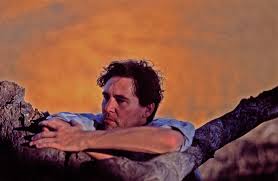
Cass McCombs is a critically acclaimed American songwriter. Blending genres such as rock, folk, psychedelic, punk, and alt country, his ninth album, Mangy Love, was released last year.
You mention that music-making isn’t as hard as it used to be. What changed?
When you’re young, you make anything hard on yourself. Anything. Everything. Your relationships are so fucking hard, and when they fall apart you’re so destroyed. Now I’m old and I don’t care anymore, you know? It’s bad, too. It’s a bad feeling sometimes, to not care as much. I was talking to a friend the other day, a friend who’s very adept at meditation, entrenched in zen. He’s totally entrenched in zen. We were talking about frustrations with other people. It can be anything. It can be a taxi driver snapping at you, or just how we interact with other people walking down the street, and the anxiety it gives us. What is tolerance? What would the yogis suggest we do with our intolerance? Where do we shove it? I think it was interesting even to just survey the topics of frustration with other people. Because even just talking about it is somehow soothing and makes it lighter. Everyone is so tightly wound these days, but you don’t know where the other guy is coming from. If some guy snaps at you for no reason, what if he just found out something terrible happened to someone he loved? You don’t know. Be nice. We’re all volcanoes at some point.
The Manager For Twenty One Pilots Explains Why Discovery On Social Media Sometimes Beats Radio

“We knew early on that the power of discovery was something that we were fortunate to have – and that true discovery cannot be found in three minutes and 30 seconds of a song on radio,” Chris Woltman, founder of Element 1 and the manager of the hottest rock band of 2016, Twenty One Pilots reasons.
“Discovery could be in an image on Instagram that makes a potential fan ask ‘what’s that all about?’, a video on YouTube or a friend sharing a band that they just discovered – [things] that were not what the industry has traditionally viewed as being the key to success.
“The most significant way of discovery is when a band delivers such a powerful live experience that people come back next time and bring their friends. It’s been the anchor to the greatest rock bands in the world.
“We knew the [Blurryface] songs could end up on radio but we had the power of discovery so much on our side that we couldn’t not give it time.
“That process requires much more discipline and patience than just running a single to radio and then finding out in five or six weeks whether or not you’re going to stay around.”
As The Years Go By …: Conversations With Canada’s Folk, Pop & Rock Pioneers
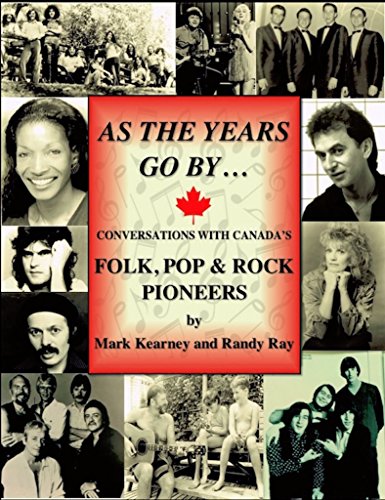
Anyone who grew up in Canada in the 1950s, ‘60s and ‘70s, knows how amazing Canada’s music scene was in those magical decades.
Etched in the musical memories of millions of Canadians are great tunes, television appearances and live shows featuring The Diamonds, Lighthouse, Steppenwolf, Mashmakhan, Patsy Gallant, Skylark, Bobby Curtola, Edward Bear, Susan Jacks, The Paupers, Moxy and Michel Pagliaro, among many others.
In their 10th book, As The Years Go By …: Conversations With Canada’s Folk, Pop & Rock Pioneers, best-selling authors Mark Kearney and Randy Ray compile in one place, newspaper articles they wrote in the mid 1980s to the early 1990s about hundreds of Canadian music personalities who years earlier had chased musical stardom. Many of the stories have been updated or offer web links that provide current information about the performers.
Based on interviews with musicians, managers, producers and promoters – and just in time for Canada’s 150th birthday party – As The Years Go By offers readers an inside look at the trials and triumphs, good times and bad encountered by performers, managers and producers, including many who hit the big time on the international stage.
Eminem Proves There Are Plenty Of Words That Rhyme With ‘Orange’

According to the Oxford English Dictionary, the only word that perfectly rhymes with “orange” is “sporange,” an uncommon botanical term for a part of a fern. But that just gets Eminem all riled up, like a door hinge.
Eric Hutchinson Has A GREAT Idea Called Songversations, And He Created A Game About It

The best part of social media for me is getting to ask silly and sometimes deliberately thoughtful questions and read through the answers. Eric Hutchinson is taking the art of conversation, juggling it with music, and has a wonderful idea. But first, a bit about Eric.
He’s is an international platinum recording artist, songwriter, and music lover, and best known for his 2008 hit single“Rock & Roll. Hutchinson’s albums include Sounds Like This; Moving Up, Living Down; Pure Fiction; and Easy Street, and he has appeared on The Tonight Show, Jimmy Kimmel Live!, and Conan, and has toured with artists such as Kelly Clarkson, Jason Mraz, and OneRepublic. So you know he breathes and lives music.
Songversations: Conversation Starters about Music and Life is coming out September 5 though Abram Books. Each of the 50 record-shaped cards in this conversation deck is printed with a music-themed question on each side (100 questions total). The questions range in format: some invoke songs that are tied to memories (name a song from your school dance); others prompt you to choose an ideal soundtrack for a hypothetical situation (if you were a major league baseball player, what song would blast when you’re up to bat?); some cards aim to get people comparing their favorite (and not-so-favorite) music moments. Created expressly to start a conversation about the music people love and the personal insights that their favorite songs evoke, Songversations is the perfect gift for serious audiophiles, casual listeners, and everyone in between.
Get it before the holiday rush starts!
Billy Bragg Explains Why Skiffle Was England’s First Teenage Subculture

The roots of skiffle as a musical genre and its influence on popular music is discussed in this book talk presented by singer and guitarist Billy Bragg at the Library of Congress.
In his book, “Roots, Radicals and Rockers: How Skiffle Changed the World,” Bragg examines the moment in history following World War II when British teens transformed the country’s pop music from a jazz-based musical form into the guitar-led sound that changed the world of music.
Steve Albini Just Didn’t Like Music Promotion For Shellac, He Hated It For Everyone Else
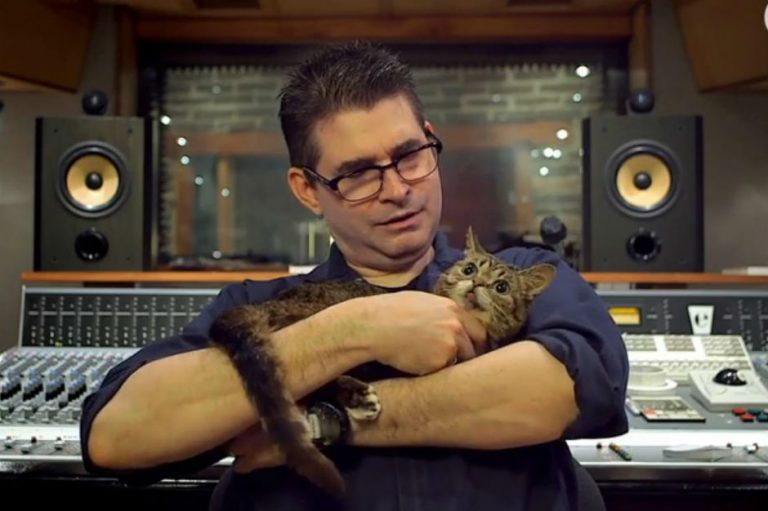
From the outset Shellac kept operations deliberately low-key. Their earliest music was released on 7″s with homemade covers, they performed in small atypical venues and refused to partake in any publicity. Their debut 7″ showcased three mid-paced tracks of thundering guitar noise over which singer/guitarist (and renowned recording engineer) Steve Albini snarled about fire and billiards. If early interviews are anything to go by, one of Shellac’s principal aims was to avoid acting anything like The Smashing Pumpkins.
Steve Albini: When we first started recording and doing stuff publicly in the 90s, it coincided with the beginnings of a feeding frenzy for underground bands. The greater entertainment industry had taken an interest in what had previously been an underground of experimental punk and post punk bands. On the part of a lot of bands from the underground there was an indulgence in that, where they were getting a public profile in a professional sense. They would have publicists and advertising and their record labels were doing promotions and journalists were being supplicated with free records and access to exclusive stuff. There was a branch of the underground that was playing along with this creeping professionalism and we wanted no part of that. From the beginning, we decided that we were just going to make records and put them out, and that was it. We weren’t going to do any act of promotion. We weren’t going to do any advances. We weren’t going to solicit interest from record labels, stores, journalists, media outlets or whatever. We were just going to go about our affairs as a band, play shows, make records and let people come across them as they would.
Part of it was the insult that all of us felt when stuff was being thrust at us. The “check out this hot new band” or “this is the record of the summer” kind of shit. It’s insulting and it makes me hate everyone involved. Whenever there’s active promotion on the part of somebody else, whenever I see somebody all dolled up for a fancy photograph and someone’s handing out flyers or whenever there’s active promotion for something like that, as an imposition on my day, I hate all those people and I want them to fail. I have a visceral reaction to advertising and promotion. There’s just something about salesmanship that grates on me on a very base level and I react very negatively towards it. I want those people to suffer and I want their enterprises to fail. Because of my feelings and the specific insult of having somebody tell you that you don’t know what music you like and that instead you should like this, we didn’t want to be a part of that. I didn’t want to trick anybody into buying our records. If you weren’t interested, we weren’t going to try to convince you. We’ve conducted ourselves that way ever since. I feel like it was the right decision then and I’ve been very happy with the way things have transpired in that we’ve never done anything embarrassing for attention and I don’t feel like anybody would have ever gotten into this band under false pretenses.
Slowdive’s Neil Halstead On When To Quit The Band…And Get Back Together
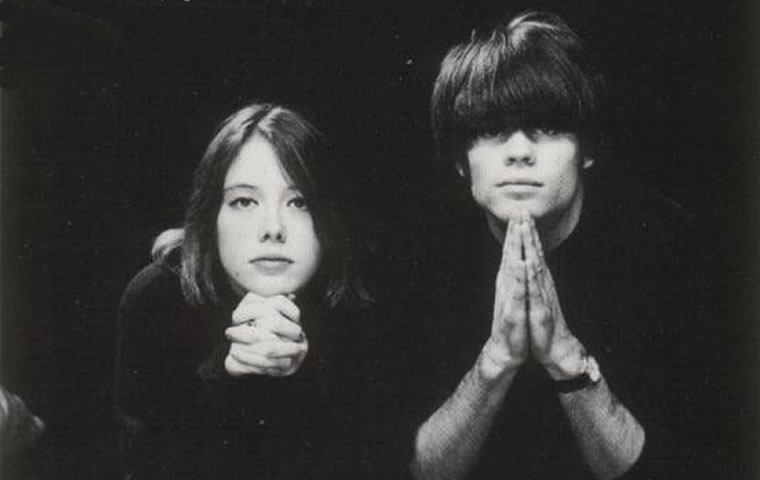
Neil Halstead is an English musician and songwriter best known for his work in the bands Slowdive and Mojave 3. both bands I love dearly. After releasing three albums and subsequently breaking up in 1995, all the original members of Slowdive reformed for a lengthy reunion tour in 2014. Earlier this year the band released their first new album in over twenty years to critical acclaim. Neil talks about the life of a band member, and going back home again.
As a musician or as a songwriter, do you feel like a radically different person now than you did when you made those early records?
In some ways I do and in some ways I don’t. It’s weird. I still connect with those songs, but you do think about them slightly differently. I can see the angst in them differently. We were 17 or 18 when we were writing those songs, so that’s just your life. Angst. You don’t necessarily view it from the outside. Like, I guess I can view them from the outside at this point but I can still connect with it in some way. Now that it’s 20 years on, we’re all different people in a way but interestingly enough, we still connect as a band in the same ways. In the way we interact with each other, there’s still that sort of gang mentality that we had when we first were putting out records. But you know, we’ve got nine children between us now, so it’s very different. It’s different to play in a band when you are just into your 20s than it is to do it when you’re in your 40s. Simple, practical things like finding chunks of time to work together becomes increasingly difficult. The main thing I think about now is the different way you think about time. Looking back, I think we did quite a lot in the six years we were initially together, but we had so much time to do stuff because the band was all we had. It was our only thing.
We stopped when we were all in our early twenties and at a point where we all wanted to do different things. We’d been doing the band for six years at that point and things had fallen apart to a certain extent. We were pretty empty creatively by the time we finished Pygmalion. We needed to move on and do other things as people, plus there were practical considerations. We weren’t really making much money and we’d been dropped by a label, so that all played a part as well. I genuinely don’t think anyone has any regrets that the band stopped when it did. It seemed like the right thing at the time and I still think it was. Sometimes things really need to end. When Slowdive broke up everyone went and did other things. It was actually a healthy thing. It’s good to be able to recognize when it’s time to stop… or when it’s time to start again.
Pussy Riot Are Kickstarting A Breakthrough Theatre Production To Remind Us What Is Worth Fighting For
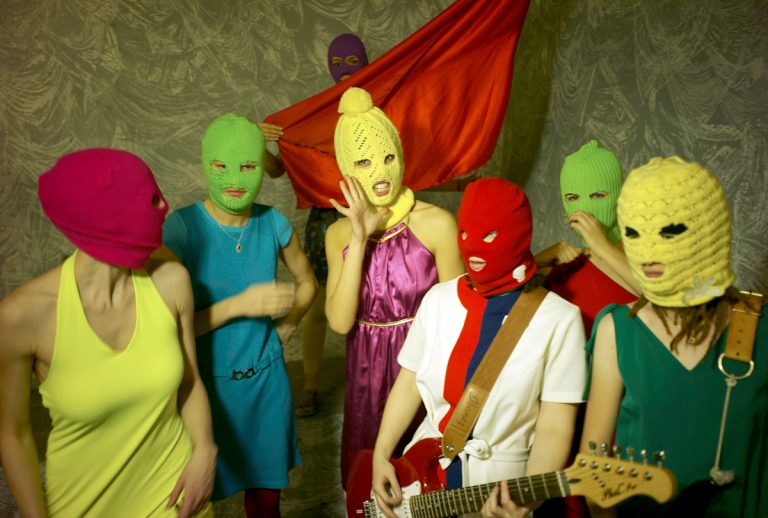
How wonderful is it to be living at the same time as Pussy Riot, the Russian feminist protest punk rock group based in Moscow, who continuously put their safety and lives on the line every single time they take a stand for what’s right. Founded in August 2011, their provocative guerrilla performances in public places, performances that were filmed as music videos and posted on the Internet, performances that mean something, is almost eclipsed by the fact these are real human beings behind their message. Instead of grumbling when we see something we don’t like, or agree with, we should just be happy that the brave and powerful Pussy Riot exist, that they changed music and politics, that they’re working towards a better world. I know many musicians inspired by Pussy Riot taking up causes like feminism, LGBT rights, and opposition to Russian President Vladimir Putin (or, in these artists’ cases, whoever is in power in their own country), to use music as a weapon, their lyrics as actions, and their voice to be heard.
This is why, right now, you need to support them. The group has a few weeks left of their Kickstarter campaign, and once I finish writing this line, I’m going over to the site to donate. I urge you to do the same. Below is a personal note from Nadya of the group, and below are photos of some of the photos and prints they’ll send you as a way to say thanks.
Hi, it’s me, Nadya from Pussy Riot.
’m asking for your support in an exciting new project. Pussy Riot, together with the award-winning, London-based theatre company Les Enfants Terribles, is working on a breakthrough immersive theatre project that will open in London this November.
This wild theatrical experience will allow the audience to become a participant, experiencing exactly what Pussy Riot went through during our imprisonment – from the original Church performance, to the court trial and prison cells. We’re going to recreate Russian courtrooms, a real Russian labour colony, solitary confinement cells, priests who shout about banning abortions and many more absurd, but real-life things that exist in Russia today.
The audience will actually get the chance to re-live each one of these experiences themselves, learning what it means to be a political opponent in Russia today. We’ll take you on a journey from the cathedral altar deep into the vaults of the Kremlin itself. Hopefully, this is a journey that you’ll only have to make once in your life.
We’re hoping that this production will be funded by regular people from around the world who are excited about the idea of political immersive theatre, and we need your help! In order to ensure its launch we need to pre-fund this high-tech production – and fast. All the money raised will be spent on renting the space, the set design, employing actors and staff for the show’s 6-week run and making those rooms in London look exactly like solitary confinement cells in the Russian prison I did my time in.
This is an important project that has immense educational value, especially given the trying times in which we are living and an increasingly scary political world order. If we do it right, the production is set to be mind-blowing.


