Home Blog Page 2623

My Morning Jacket’s Jim James on Tortoises and Being In A Band For 20 Years

0

Rolling Stone: You’re from Louisville, Kentucky, but lately you’ve been living in Los Angeles. What’s that like?

Jim James: There are so many people here trying to make their dreams come true, and it’s incredibly inspiring. I’m renting an Airbnb from an artist who kinda built the place. There are two 40-year-old giant desert tortoises that live here, and they’ve been amazing to live with. They don’t need you, but they also enjoy being around you. They’re so content to do very little, and I’m trying to learn from them: “You’re just gonna climb out of your hole and sit in the sun?” “Yeah, that’s all I’m gonna do today.”

Rolling Stone: You’ve fronted My Morning Jacket for almost 20 years. What have you learned about leading a band?

Jim James: The biggest part, as cliché as it sounds, is just being honest and never carrying a debt with anybody. If someone makes you mad, tell them. Work it out. Don’t carry it around like a burden. The same with love. If someone makes you happy, let them know how awesome they are. You can never say “I love you” enough.

Via

Jeff Tweedy: “Everybody looks back on Yankee Hotel Foxtrot and thinks it was a watershed moment. That’s just ridiculous.”

0

Faster Louder: I wanted to ask about the Star Wars album as well. Obviously the surprise release of that record was a little bit of a gamble but it created a lot of buzz around the record. I guess it maybe feels, from an outsider’s position, that the last couple of Wilco records have maybe slipped by, like you guys have become victims of your own success and that there’s a consensus of “Yeah, it’s a great record, but it’s just a Wilco record.” Was that the intention to shake up that idea?

Jeff Tweedy: Yeah, I think that the … I don’t know what people are thinking about the band as a whole. From our perspective, people keep showing up just to see us play and people tend to buy our records at a time when not many people are buying records and we feel very fortunate to be in a position where we could do whatever we wanted. I think, that being said, there are a lot of expectations that go along with being a band for a long time and having put out many records. Everything about the release and the way the record was packaged, everything about it, was really an effort to try and subvert expectation and to get people that care about the band to lead the discussion or the dialogue about the record.

With all due respect, I tend to think people like yourself are the ones that look at it like, “Oh, they just put out another record and it’s good.” Fans don’t think that. People that get paid to think about stuff like that think that, because your job is to find something new and be the cool guy that found the new thing. Wilco doesn’t really fit that category as much anymore, so there tends to be a certain amount of, I don’t know … I would never complain that we’re taken for granted but, certainly, within certain professional classes, that would be the case.

I didn’t mean to imply that I’m not excited when a new Wilco record comes out. I’ve been a fan for a long time and I always look forward to a new album. It just feels that there isn’t an explosion of attention and hype now the way maybe it did around Yankee Hotel days.

That’s bullshit. That’s complete bullshit, because, first of all, the internet wasn’t anything close to what it is. There was no social media when Yankee Hotel Foxtrot came out and people were telling us that the record was the end of the band for months and when the record finally came out, nobody gave a shit. It did well, but it didn’t do well right away.

Now everybody looks back on it and thinks that it was some sort of watershed moment and the record has sold a lot over this time period because of the story and it’s a good record. The whole idea that, I don’t know, that’s just ridiculous. That’s not what happened at the time. There was a ton of coverage, but it wasn’t social media buzz or anything.

Via

The Fall’s Mark E Smith Guide to Writing

0

In 1983, Mark E. Smith gave a talk on Greenwich Sound Radio on the – ahem – proper guide to writing. Who could argue with these tips?

Hello I’m Mark E. Smith and this is The Mark E. Smith ‘Guide To Writing’ Guide.

Day-by-day breakdown

Day One: Hang around house all day writing bits of useless information on bits of paper

Day Two: Decide lack of inspiration due to too much isolation and non-fraternisation. Go to pub. Have drinks.

Day Three: Get up and go to pub. Hold on in there a style is on it’s way. Through sheer boredom and drunkenness, talk to people in pub.

Day Four: By now, people in the pub should be continually getting on your nerves. Write things about them on backs of beer mats.

Day Five: Go to pub. This is where true penmanship stamina comes into its own as by now, guilt, drunkenness, the people in the pub and the fact you’re one of them should combine to enable you to write out of sheer vexation. To write out of sheer vexation.

Day Six: If possible stay home. And write. If not go to pub.

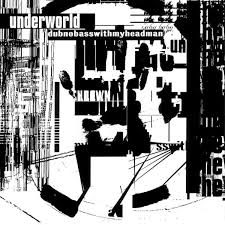
Underworld’s Karl Hyde on the record that changed everything for him

0

I love Underworld. The second version of them, not the Change The Weather-era, but then, who does? And I don’t mean that as a slight. It’s just their electronic Underworld just happens to be so stunning, it blew anything else they could have ever done in their wake. I’m always fascinated by artists who make a striking move, a dash across a new terrain with bravado, or skill, or fear, just to see what’s on the other side. Karl Hyde did one of those moves.

Do you remember one record that flipped the switch for you guys, something that made you understand this other world of dance music that was going on while you weren’t paying attention?

It was actually house on pirate radio. In the late ’80s, when we were making the second album [1989’s Change the Weather], we were hearing pirate radio. And the pirate radio stations were playing acid house.

Acid house, to me personally, was like the first time I had heard Tangerine Dream, the first time I had heard Hawkwind. These very long, soundscape-y, rhythm-driven, almost electronic orchestral pieces. And that’s what acid house sounded like to us, to me. It was like, “Oh my God, this is like the fruition of all the music I ever loved as a kid.” And it’s a massive movement.

And it’s underground, and yet it’s huge, it’s completely outside a culture. Revolutionary, really. Because it was self-sustaining, it didn’t need the music industry. It was pulling in tens of thousands of people. It was selling really large quantities of records, and yet, it wasn’t even showing up in the charts. It was fantastic.

When we were making that second record, we went to see Adrian Sherwood. And it blew us away, mostly because of what Adrian did with the sound system… you know, turning off the highs and the mids and the lows, and kind of playing with the sound. He was using the sound system like an instrument.

Shortly after that, we were taken to our first rave, and that completely sealed it for us. Because there we were seeing an audience that wasn’t looking at the stage. There were no lights on the DJ, none at all, they were all on the audience. The audience was the main act. And then in other rooms, there were bumper-car rides, and different videos being played… it was like the ultimate Pink Floyd gig. And it just felt like we were completely on one side of it. I wanted to be part of it.

But it was Rick who had finally had enough, when we got dropped the last time [afterChange the Weather] by Sire. He just said, “I can’t [be in this version of Underworld] anymore, I’ve got to follow my heart.” And that’s where he took us, very clearly, into clubland.

Via

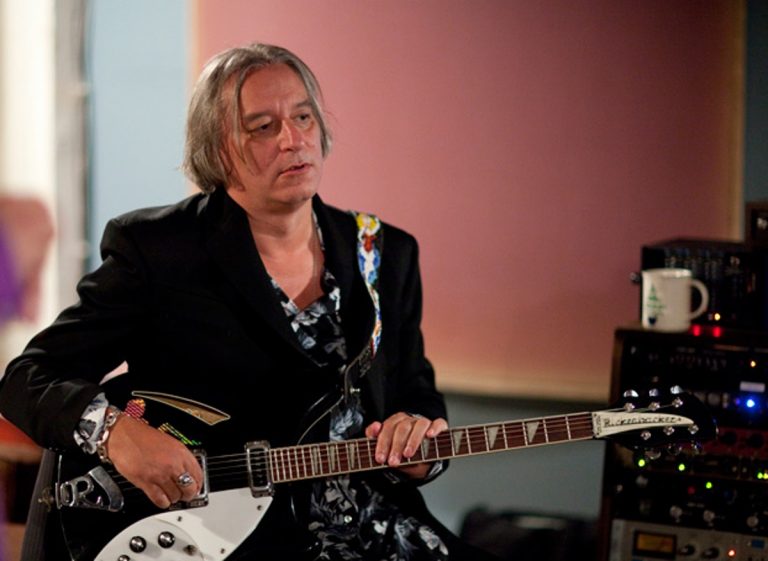
R.E.M. guitarist Peter Buck on why he hates the music business

0

R.E.M. guitarist Peter Buck discusses the band’s extensive archive, his friendships with his fellow members and why he’s happy to be done with major labels.

When the three remaining members decided to break up, Buck marked the occasion by compiling a list of the things he had come to hate, during R.E.M.’s lifespan, about the music business. “It was five pages long,” Buck said.

And what was on that five-page list? “Everything,” Buck replied curtly, sipping orange juice in a bar as his friends the Jayhawks were conducting a soundcheck across the street. “Everything except writing songs, playing songs and recording them. It was the money, the politics, having to meet new people 24 hours a day, not being in charge of my own decisions. But more than anything else, I hate the business, and I didn’t want to have anything to do with it.”

Via

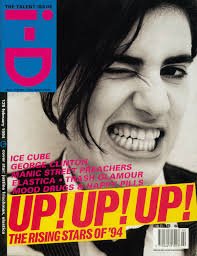
Elastica’s Justine Frischmann doesn’t miss the music or limelight at all

0

Elastica singer Justine Frischmann gave a rare interview, speaking about the Britpop band and her new career as a painter. Frischmann’s band split up in 2001 after two albums (1995’s ‘Elastica’ and 2000’s ‘The Menace’). Since Elastica’s demise, Frischmann has lived mainly out of the public spotlight, rarely giving interviews. She returned to music briefly in 2003 to co-write songs for MIA’s debut album. It is worth remiding ourselves how powerful of a presence her and the band was for the time, and her opportunity to reinvent herself was taken, and she’s much happier since those heady days.

“I don’t really have any desire to make music, to be honest. I really feel I’ve found my medium [with painting]. Also I think I’m a socially anxious person. I kind of deal with it but actually I’m really happy on my own. When I’m in the studio and things are unfolding and exciting I have that feeling that I’m exactly where I’m meant to be. I don’t think I ever really had that with music, it always felt like a rollercoaster ride and there was going to be a horrible smash. I got to go all over the world and have a real snapshot of the planet in ’95, ’96, and I got to meet a lot of my heroes. One of the most valuable lessons was to realize that success isn’t necessarily enriching or enlivening. We live in a culture where there’s so much emphasis on celebrity and we all grow up feeling like being famous must be really great.”

Via

CBC Radio 2 today announced new hosts for RADIO 2 MORNINGS and WEEKEND MORNING

0

CBC Radio 2 today announced new hosts for RADIO 2 MORNINGS and WEEKEND MORNING. On October 3, popular broadcaster Raina Douris will make her return to CBC to take the reins from Tom Power as the new host of RADIO 2 MORNINGS. After guest hosting on WEEKEND MORNING for several months, Angeline Tetteh-Wayoe joins as the new host, following the departure of former host Talia Schlanger for NPR. Also returning to Radio 2 this fall on November 4 is weekly R&B show MARVIN’S ROOM, hosted by Amanda Parris (CBC’s EXHIBITIONISTS).

“It’s an exciting time at CBC Radio 2,” said Mark Steinmetz, senior director, CBC Music. “As the saying goes, with change comes opportunity, and Raina, Angeline and Amanda are fresh and relevant voices who will engage and entertain Radio 2 listeners with their deep love and knowledge of music.”

Winner of NOW Magazine’s Best of Toronto Readers’ Choice poll for Best Radio Personality for the past two years, Douris joins CBC from Indie88, where she hosted Mornings with Raina & Matt. A rising star in broadcasting, Douris started her career at Corus Radio after graduating from Ryerson’s Radio and Television Arts program, before earning her first on-air job at 102.1 The Edge in 2009. She also created the video series Rain’s World, where she conducted unconventional interviews with musicians from her home. No stranger to CBC audiences, in 2012 Douris hosted a CBC Radio 3 show, which also aired on SiriusXM 162, and she served as guest host on RADIO 2 MORNINGS with Tom Power. Douris has served as a jury member for the Polaris Music Prize and JUNO Awards since 2014.

“The CBC has always been dear to my heart, and I can’t wait to return and share my love of music and stories with Canada,” said Douris. “Waking up early is a lot more fun when you know you’re doing it with the entire country!”

After graduating from the Northern Alberta Institute of Technology’s Radio and Television Broadcast Arts program, Tetteh-Wayoe got her start at Edmonton Radio Group working as a production assistant, promotions assistant, operator and part-time announcer. Following that, she moved to Astral Media Group, where she landed her first full-time gig as host of the evening show on Vibe 98.5 (98.5 Virgin Calgary). In 2010, Tetteh-Wayoe made the move to Toronto to host Flow 93.5’s The Beat of Toronto. For the past several months, she has served as guest host of WEEKEND MORNING.

“I’m thrilled to be hosting the weekend morning show on Radio 2,” said Tetteh-Wayoe. “I’ve been working toward this for my entire career and I’m beyond excited to share my passion for music, as well as stories and discovery, with listeners across Canada every weekend.”

RADIO 2 MORNINGS (weekdays 6 – 9 a.m. / 6:30 – 9:30 NT) offers listeners the widest variety of music on the radio – from the latest emerging artists, as well as classic tunes from the icons of the music world. RADIO 2 WEEKEND MORNING (weekends 6 – 9 a.m. / 6:30 – 9:30 NT) features an eclectic mix, from adult alternative to soul to folk and beyond, from familiar artists known and loved by Canadians as well as emerging musical talent.

Launched in July 2016, MARVIN’S ROOM (Fridays 8 – 9 p.m.) is a weekly CBC Radio 2 show that explores the world of R&B, from neo-soul to trap soul and everything in between. Inspired by the studio where Marvin Gaye recorded much of his legendary music and by the more recent Drake song of the same name, the show is a one-hour journey that brings back the old school and introduces what’s new. From Patti LaBelle to Party Next Door, host Amanda Parris is the guide for a whirlwind journey through R&B. The new season will premiere on Friday, November 4.

Watch In Full The 1979 “Disco Demolition Night” Record Burning In Chicago

0

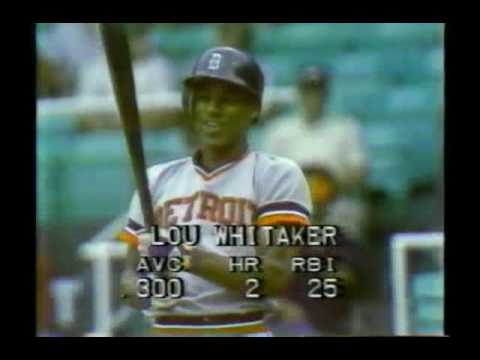
Disco Demolition Night was an ill-fated baseball promotion that took place on July 12, 1979, at Comiskey Park in Chicago, Illinois. At the climax of the event, a crate filled with disco records was blown up on the field between games of the twi-night doubleheader between the Chicago White Sox and the Detroit Tigers. Many of those in attendance had come to see the explosion rather than the games and rushed onto the field after the detonation. The playing field was damaged both by the explosion and by the rowdy fans to the point where the White Sox were required to forfeit the second game of the doubleheader to the Tigers.

In the late 1970s, dance-oriented disco music was very popular in the United States, particularly after being featured in hit films such as Saturday Night Fever. Despite its popularity, disco sparked a backlash from rock music fans. This opposition was prominent enough that the White Sox, seeking to fill seats at Comiskey Park during a lackluster season, engaged Chicago shock jock and anti-disco campaigner Steve Dahl for the promotion at the July 12 doubleheader. Dahl’s sponsoring radio station was 97.9 WLUP-FM, so attendees would pay 98 cents and bring a disco record; between games, Dahl would destroy the collected vinyl in an explosion.

White Sox officials had hoped for a crowd of 20,000, about 5,000 more than usual. Instead, at least 50,000 people—including tens of thousands of Dahl’s adherents—packed the stadium, and thousands more continued to sneak in even after gates were closed. Many of the records were not collected by staff and were thrown like flying discs from the stands. After Dahl blew up the collected records, thousands of fans stormed the field and remained there until dispersed by riot police. The second game was initially postponed, but was forfeited to the Tigers the next day by order of American League president Lee MacPhail. Disco Demolition Night preceded, and may have helped precipitate, the decline of disco in late 1979; some scholars and disco artists have described the event as expressive of racism and homophobia while others have denied this connection. Disco Demolition Night remains well known as one of the most extreme promotions in major league history.

https://youtu.be/I1CP1751wJA

iHeartMedia Introduces On Demand With New Services ‘iHeartRadio Plus’ And ‘iHeartRadio All Access’

0

iHeartMedia, the creator of iHeartRadio – the all-in-one streaming music and live digital radio service – announced today that it is reinventing live radio with the launch of its two new subscription services — iHeartRadio Plus and iHeartRadio All Access — set to debut in January 2017. While research shows that more than 90 percent of listeners say they listen to both FM radio and music collections, but at different times, for different reasons, this marks the first time ever that on demand functionality will be used to improve the radio experience, unlike current services which can only approach on demand through a music collection offering.

Because 73 percent of consumers, which include users of on demand music services, continually cite radio as their primary source of music discovery, iHeartRadio’s new on demand offering will allow listeners to bridge the divide between music discovery and music collecting by seamlessly incorporating true interactivity into the radio listening experience through a variety of new features.

“We’re now making it easier than ever for iHeartRadio users to think of music discovery and collecting in a brand new and easy-to-use way,” said Darren Davis, President of iHeartRadio. “For the first time ever, when listeners hear a new or favorite song on the radio they can instantly replay a song and even save it directly to a playlist. We are reimagining radio — with the new technologies and offerings powered by our on-demand options, music discovery, music collecting and the power of community and companionship fostered by live radio and influential and trusted personalities. iHeartRadio is now combining it all for the first time; there’s no other digital music service that can do this.”

“For decades radio has remained the No. 1 medium to reach consumers, fostering a sense of community and engaging listeners through entertaining on-air personalities and curated music and content,” said Bob Pittman, Chairman and CEO of iHeartMedia. “While other streaming services have taken a music collection approach to digital streaming, no one has yet built a service incorporating on demand technology with real live radio– and at a scale that only iHeartMedia can, with its reach of over a quarter of a billion people every month. And only iHeartMedia can leverage the power of radio and bring to market new and innovative ways to extend on-demand capabilities onto the iHeartRadio platform. It’s a monumental shift for the industry as we lead the way into a new era of interactive radio.”

The two new iHeartRadio services are iHeartRadio Plus, which will be focused on the enhanced radio experience, and iHeartRadio All Access, which will go beyond iHeartRadio Plus to include a full on demand music collection experience – but one still tied directly to radio.

Because iHeartRadio’s new service is the only one using on demand functionality to make radio even better, instead of simply duplicating the on demand music collection experience, this new service continues iHeartRadio’s important mission of partnering with artists and the music industry — presenting more opportunities to further grow revenue for them:

iHeartRadio Plus is designed to serve as an addition to other on demand services, not as a replacement. It’s a perfect add-on, enhancing the radio listening experience for both new on demand subscribers and those who currently subscribe to other, traditional on demand music collection service, and driving new revenue for both artists and music companies.

iHeartMedia reaches more than a quarter of a billion Americans a month through its broadcast stations alone. No other service comes close — and as a result, iHeartRadio has the ability to drive massive awareness, introducing iHeartRadio Plus and iHeartRadio All Access on a national scale to a large new audience — and the 84 percent of iHeartRadio users who do not currently subscribe to an on demand service and who for the first time may be interested in subscribing to a service that provides them with the best of live radio combined with easy-to-use on demand functionality that the can connect directly to their music collection.

​​
iHeartRadio has reached license agreements with Warner Music Group, Sony Music Group and Universal Music Group, and in addition has signed agreements with independent record labels and distributors including The Orchard, Entertainment One, INgrooves, DashGo, Naxos and CD Baby.

“Universal Music Group is pleased to welcome a new addition to the growing and dynamic music subscription space with iHeart’s launch of interactive services,” said Sir Lucian Grainge, Chairman and CEO of Universal Music Group. “We’re glad to build upon our relationship with iHeart, which under Bob’s leadership continues to innovate the radio experience by adding distinct features and services and attract a broad audience that remains deeply passionate about music.”

“I’d like to congratulate Bob Pittman and the team at iHeartRadio on their move into the subscription music business,” said Doug Morris, CEO of Sony Music Entertainment. “This deal further expands our long-running successful relationship, and creates promising new commercial opportunities to engage with the millions of music fans who listen to iHeart every day. We look forward to working with them to develop premium music solutions for radio users.”

“We’re pleased to be expanding our long-standing partnership with Bob and his team,” said Steve Cooper, CEO of Warner Music Group. “iHeart’s expertise and reach in radio programming and curation, combined with the full power of streaming technology, is a compelling prospect. These new services will open up the choice of experiences that iHeart offers music fans, while providing our artists and songwriters with a wider range of commercial and marketing opportunities.”

“iHeartRadio’s vast audience of digital radio listeners will now see the world of possibilities offered in a subscription service,” says Brad Navin, CEO of The Orchard. “We are excited to see what this opportunity will bring, both for our clients and for the industry as a whole.”

“We are excited to extend our relationship with iHeartMedia from on-air radio to their upcoming music subscription services,” said Bob Roback, CEO of independent music distributor INgrooves. “This is another fantastic opportunity to expand support for our vibrant and global music marketplace and give fans access to great music.”

iHeartRadio announced its upcoming services at the now-legendary iHeartRadio Music Festival, the iconic two-day celebration of music when today’s hottest artists converge on Las Vegas at one time, on one stage, for great performances and unique one-time-only collaborations. This year’s Festival will feature an extraordinary line-up, including performances by U2, Sting, Drake, Britney Spears, Sam Hunt, twenty one pilots, Billy Idol, Florida Georgia Line, OneRepublic, Sia, Cage the Elephant, Zedd, Tears for Fears, Ariana Grande, Pitbull and Usher.

iHeartRadio, which itself was introduced at the inaugural iHeartRadio Music Festival in 2011, is a free all-in-one service that offers listeners thousands of live radio stations, personalized custom artist stations created by just one song or seed artist and the top podcasts and personalities. On-demand offerings will be added in January, 2017.

iHeartRadio recently announced it has surpassed 90 million registered users. The streaming service continues to reach user milestones at a rate faster than Facebook or any other streaming music service. iHeartRadio has also been downloaded more than a billion times and is now available on 90 unique device platforms spanning in-home entertainment, wearables, gaming, mobile and auto. ​​​​​​​​​​​​​​

Internet Users In Canada Fear Social Media As The One Place To Damage Your Brand

0

Signal Leadership Communication Inc. (SLC), a social PR consultancy for executives dealing with digital disruption, today released the results of a new Nanos Research public opinion poll of 1,000 Canadians which has found that social media is seen as the medium most able to cause damage to public image.

84% of respondents surveyed said that social media ‘can do a great deal of damage to the image of an individual or organization’. Only 71% felt this was true of both online news and broadcast television, while just over half (52%) said it about print newspapers and just under half (48%) about radio.

“The danger of social media to inflict image damage is real, so leaders need to take this powerful PR threat to their reputation seriously,” said Bob Pickard, Principal of SLC. “Social media is not just about selling to a mass audience; it’s about relationships with real individuals who experience and share a wide range of emotions with their online communities. Corporate communicators – not just brand marketers – need to design social media presence accordingly and invest the necessary resources. It all starts with the leaders, with whom an often-demanding public increasingly seeks to have a direct personal connection through online networks.”

While social media is the channel that is most dangerous to reputation, people look to online news outlets when they want timely information. Asked to rate various sources for timely news delivery, 71% of Canadians viewed online news as ‘extremely timely’ followed by radio (60%), broadcast television (59%), social media (41%) and print newspapers (27%).

Screen Shot 2016-08-31 at 09.13.08

“Social media increasingly shapes the way that news is produced and perceived, so it is crucial for leaders to carefully plan their approach to both traditional and new mediums,” said SLC Principal Janice Mandel. “There is very little time today for public relations storytelling. Instead, there is a need to be nimble and respond appropriately as a story plays out. Good judgment and digital savvy are key to managing reputation. There’s far more risk for something to go wrong and explode virally. If it does, the public’s attention is on the leaders online — so they themselves need to understand this new digital dynamic.”

Via