Home Blog Page 2750

‘Modern Girl’ Carrie Brownstein on her father coming out as gay at 55

0

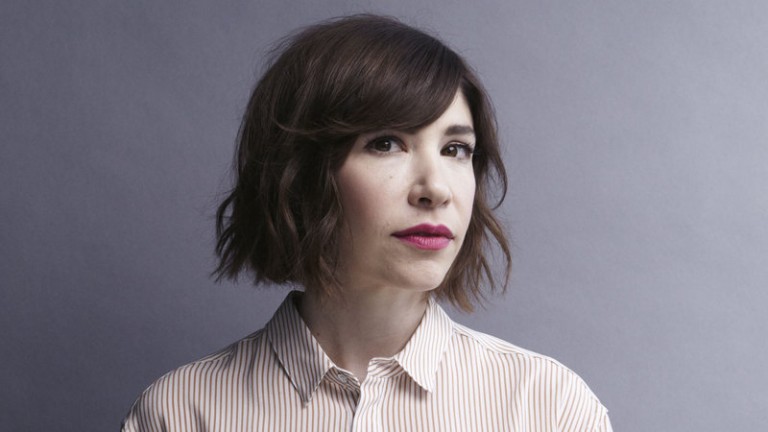
Guitarist and singer Carrie Brownstein is known for her defiant, kinetic performances in the band Sleater-Kinney. The child of an anorexic mother and a father who came out as gay in his 50s, Brownstein was an anxious, uncertain youth. She describes her search for identity and the sense of belonging she found in music in her new memoir, Hunger Makes Me A Modern Girl, in this talk with NPR’s Terry Gross.

On her father coming out as gay at 55:

My dad, as I describe in the book, he was sort of this series of signifiers — a generic office building in the suburbs, a three-piece suit, a soccer coach, a clean-cut haircut and clean-shaven, and he interacted with my sister and I through activities and much less so with emotions, and he really only ever had one story from his childhood. And there was just this blankness that was very difficult to penetrate. I always felt very close to him, but just almost sort of by default, and I really didn’t know him. I think none of us did. So, yeah, when he came out, it was like this moment where something goes from black-and-white into the realm of color. There was just this brightening, this sense of illumination. And within that gleaming came feeling. It just seeped into him, and into all of his relationships, and it was very enlightening.

Chrissie Hynde on the sexual revolution: “Be Yourself”

0

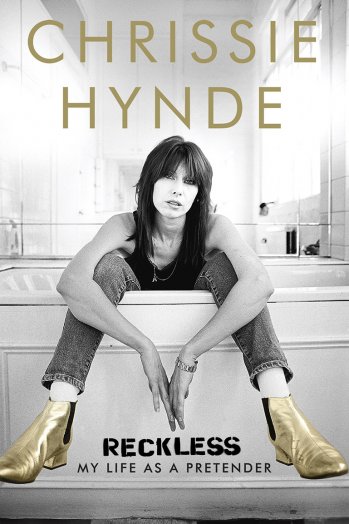
Few other rock stars have managed to combine her swagger, sexiness, stage presence, knack for putting words to music, gorgeous voice and just all-around kick-assedness into such a potent and alluring package. From “Tatooed Love Boys” and “Brass in Pocket” to “Talk of the Town” and “Back on the Chain Gang,” Chrissie Hynde’s signature songs project a unique mixture of toughness and vulnerability that millions of men and women have related to. A kind of one- woman secret tunnel linking punk and new wave to classic guitar rock, she is one of the great luminaries in rock history. In this interview with The Globe and Mail, Chrissie talks about the artistic expression, and when sex needs to be involved (hint: it doesn’t).

In the book you describe being accosted by a group of bikers, who took you back to their headquarters for a ‘party.’ There was a strong response in the Internet cycle about your statement that you accept responsibility for the sexual violence –

See, I never said any of this, and I don’t read my press. I was talking to a journalist, and she was sort of prodding me – she was nice, I liked her, we had a fun afternoon. But I think she missed the point, that when this altercation happened I was so fucked up on Quaaludes I didn’t even care. So she kept prodding me to say, was I traumatized by this thing, or was I victimized, and all I was saying was that I was an idiot to even be there. She kept trying to get me to rephrase that. And it went into an article that I didn’t read. And the next thing you know I’m vilified for defending rapists! I never even said I was raped. And you know, frankly, if you’re being very provocative – let’s take a music video. You know, if you’re being sexually provocative, and you’re a woman, in a video, what’s the message?

What is the message?

I don’t know. I’m asking you. What do you think the message is?

I don’t know that there is necessarily one message. In general I think it’s fine to make a living with your body.

That’s a really interesting response. Because you’re just selling a song by being sexually provocative, and like you say, you’re using your body to sell something. I’m not sure that being sexually provocative is speaking to other women as much as it’s trying to get money out of men, and trying to get attention.

I can think of female musicians for whom sexuality is part of the package, and it doesn’t feel outside of the music. Someone like Madonna’s sexuality feels like part of her art.

What if you took her sexuality out of it, and just listen to the records? Do you think she would have sold as much of it?

No, I don’t.

That’s sex work. That’s still using sexuality to sell something. Why be sexual, that’s the question. Why? To what end? Why not just be a person? You see, to me, sex is an appetite. Better to play it down, because it causes a lot of problems.

Well, I think it’s natural to want to be looked at and admired.

Is it?! In a sexually provocative way? To be admired as an object of desire?

Absolutely. And I also think it’s reasonable to expect men not to violate your personhood just because you are desirable.

But what does that say about the mentality of someone who’s walking down the street trying to be sexy? I disagree with you; I don’t think that is natural. I never felt like that. Ever. I mean, I want to look pretty good. You don’t want to go out and look bad. But to go out and look sexually provocative and sexual, no. I’ve never tried to do that. And I think a lot of women don’t try to do that.

I think it’s natural, I don’t think it’s default. I think it’s natural to not want to be looked at as well.

I don’t know why anyone would. Why don’t you just look cool, why don’t you just look good? Why is sex so important? Why is it so important to be sexy, or desirable? I mean, ultimately, what does that lead to? It leads to sex. So if you don’t want to have sex, why are you trying to look like that? Are you trying to make someone think that you’re sexy but you don’t want to deliver? If you’re a sex worker, that’s got an end to it, and that means something. I’m not saying that everyone has to be completely covered, but why can’t you just be?

I guess I don’t see anything inherently wrong with wanting to look desirable or pleasing in that way.

I didn’t say that. I never thought there was anything wrong with it. All I’m saying is, Why do you want that?

Because it feels good, and it’s validating, and sometimes it makes people happy.

Well, I’ve gotten by without it. Not that I’m saying I’m any prize. Or that I’ve done anything right. I’m not comparing myself to anyone. It’s just an interesting question that you brought up. And I’ve been waiting for someone to bring this up, because of this kerfuffle I got in where I said look, if you’re drunk, and you’re walking down the street in your underwear, the message that puts out is the same message as a sex worker: Come and get it. That’s all I said! And that seemed to trigger off some kind of debate, which I wasn’t really a part of because I don’t read the press. In any one of the interviews or discussions I’ve had in the last few weeks, I’ve never said that I thought women should dress a certain way or do a certain thing. I was just talking about what happened to me. And then you know, only a total imbecile would have been where I was, and that applies to about 30 years of my life. Hence the name of the book. I don’t recommend it to anyone. And I lost a lot of people along the way.

My only advice is don’t kill animals. That’s the only advice I’ve ever given in my whole career. Dress how you want, do what you want, think what you want, be who you want, act how you want. Be yourself. The rest of it is – they’re interesting subjects, but they’re not really my subjects. They are now, I guess.

Via

Ben Swank of Third Man Records on the importance of artist, labels, and fans

0

How have practices changed at Third Man since it was founded?

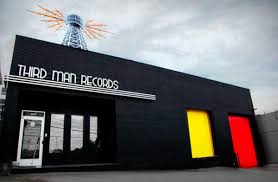
“The label started mainly in name only in 2001, and then became really active with the brick-and-mortar offices/studio/record shop/venue location in 2008. In 2001, being buoyed by all these sloppy garage-rock bands getting national attention and touring the world, the possibilities felt kind of endless (we were young and dumb). In 2008, opening these offices released a torrent of inspiration and excitement that I think people really related too and engaged with, and now nearly seven years later I really do feel like new opportunities open up every day.

“It’s important to us to approach things in an unconventional, but wholly artist-friendly way, and that’s been really helpful in spreading a good rep around the “biz.” I think anyone can do what they want, as long as they don’t listen to how everyone else is doing it… It’s very much the wild west right now, and most bands have more control then ever, though the financial resources and backing aren’t what they used to be… but as long as you’re making music for your own reasons and have reasonable expectations and understand that it’s a partnership between artist and label, I think you’re going to meet your goals. Being excited about what you do (both labels and bands) goes a hell of a long way.” – Ben Swank, “Consigliere” for Third Man Records

Via

Adele on Amy Winehouse’s impact will make you go back and listen to “Frank”

0

“If it wasn’t for Amy and Frank, one hundred per cent I wouldn’t have picked up a guitar, I wouldn’t have written Daydreamer or Hometown and I wrote Someone Like You on the guitar too. Contrary to reports, me and Amy didn’t really know each other, we weren’t friends or anything like that. I went to Brit School and she went for a little while. But a million per cent if I hadn’t heard Frank this wouldn’t have happened. I adored her.”

Via

The Beatles’ “A Day In The Life” Recent Video Is Still Brilliant

0

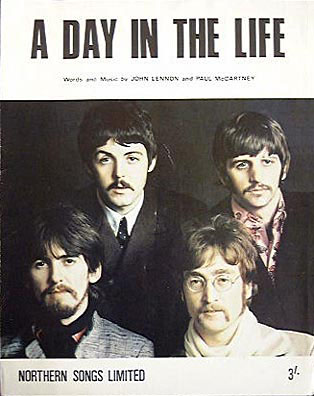
I’ll say it, ok? The Beatles’ “A Day in the Life” is their greatest song, and should be in anyone’s Top 10 list of best songs, ever. It sounds like nothing else before or since. The final song on the Beatles’ Sgt. Pepper’s Lonely Hearts Club Band album, and credited to Lennon–McCartney, the song comprises distinct sections written independently by John Lennon and Paul McCartney, with orchestral additions. While Lennon’s lyrics were inspired by contemporary newspaper articles, McCartney’s reminisce about his youth. The decisions to link sections of the song with orchestral glissandos and to end the song with a sustained piano chord were made only after the rest of the song had been recorded.

And that final note. My God.

Nick Koenig, aka Hot Sugar asks the question: Why do we need instruments anymore?

0

This is the first part of Hot Sugar’s Cold World, a new documentary on visionary producer Nick Koenig, aka Hot Sugar. Nick ventures out into the city and records the sounds around him, posing the question, “why do we need instruments anymore?”

On his adventure, Hot Sugar surreptitiously samples a $90,000 grand piano while posing as an interested buyer, records legendary filmmaker and musician Jim Jarmusch, and raps with Kool A.D. (formerly of Das Racist).

https://youtu.be/orBQp6aSF9I

Bieber, Drake, The Weeknd get heavy “metaldy” from JUNO Award metal-nominated acts

0

Metal always was a slightly open-ended musical sub-category, but the genre is sorely lacking a breakthrough band fronted by a woman – until now. Meet Priya Panda, lead singer of Toronto’s Diemonds, signed to Underground Operations (the label that first brought you Lights, Protest The Hero and more) for their Never Wanna Die album. Priya is causing quite a stir, becoming just the 2nd female-fronted band in 24 years to be nominated in the Hard Rock/Heavy Metal category at this year’s JUNO Awards, happening in Calgary from April 1-3rd.

Diemonds teamed up Cancer Bats for this heavy “metadly”, in celebration of both bands’ heavy metal album of the year Juno nominations. Here’s their take on The JUNO Awards’ Single Of The Year nominees: “Can’t Feel My Face” by The Weeknd, “What Do You Mean?” by Justin Bieber, “Hotline Bling” by Drake, “Here” by Alessia Cara and “Clothes Off” by Ria Mae.

Dave Grohl writes letter to town council in England on behalf of teenage metal band

0

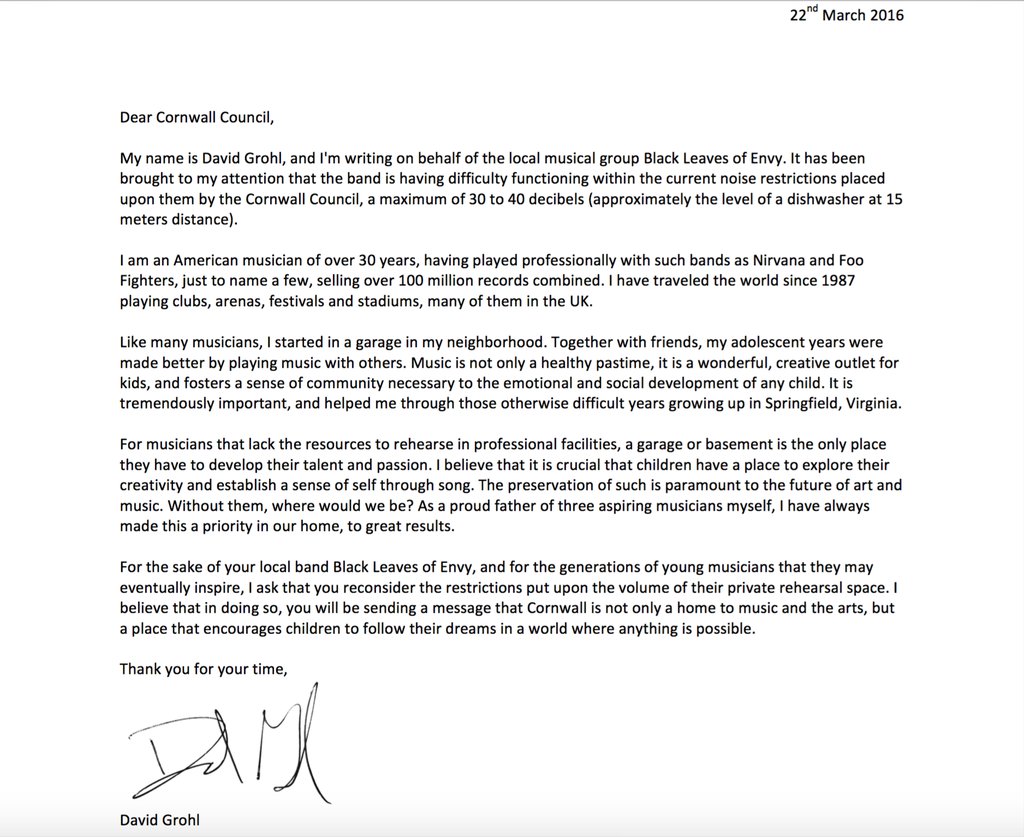
Rock hero Dave Grohl has penned a letter to the town council of Cornwall, England, asking the council members to allow teen metal band Black Leaves of Envy practice despite the fact that their playing is audible to those outside their practice space — a garage. “I believe it is crucial that children have a place to explore their creativity and establish a sense of self through song,” wrote Grohl, who shared the open letter along with tips on how bands can better soundproof their practice spaces.

ddfdddf

Reporter Drops A Tribe Called Quest Rhymes Into Traffic Report

0

In the wake of the death of A Tribe Called Quest member Phife Dawg, musicians and fans from around the world have been paying tribute. So have the media themselves – Reporter Mark Arum, at Atlanta station WSB-TV, paid tribute to Phife Dawg by incorporating A Tribe Called Quest rhymes into Wednesday’s traffic reports.

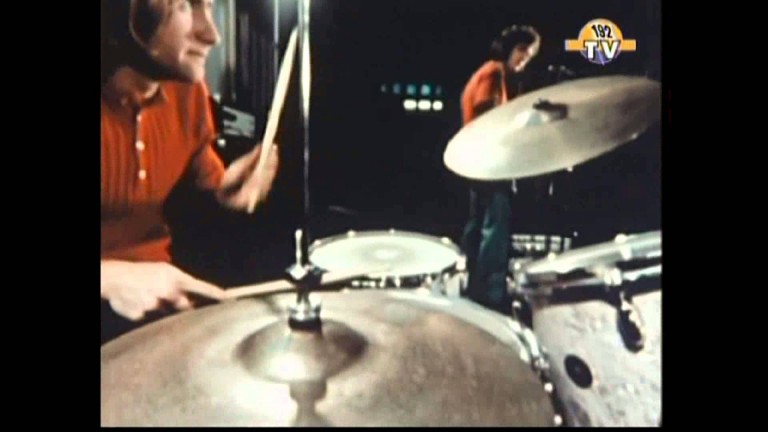
An 18-Year-Old Phil Collins On The Drums In Flaming Youth, A Year Before Genesis

0

In 1969, american singer John Walker of the Waker Brothers fame, toured in England, and was accompanied by four young British musicians, these were on keyboards Brian Chatton, who played with The Warriors – whose singer was Jon Anderson -, on guitar and bass guitar Gordon “Flash” Smith, on bass and guitar Ronnie Caryl and on drums, an 18-year-old by the name of Phil Collins.

The group released the album, Ark 2, in 1969. The LP was released on the Fontana Records in the UK to some critical but no commercial success. Then Collins and Caryl both auditioned for Genesis the following year, although Caryl was not successful, he played at a concert with them at Aylesbury, just before they met Steve Hackett. He later played with Collins as rhythm guitarist on his solo tours. Collins and Caryl are still very good friends to this day, too.

https://youtu.be/jzBYib_Pko8